Where AI in bioinformatics actually earns its keep
Vendor decks promise that bioinformatics AI will unlock breakthrough drug discovery. The durable wins sit one floor down: sequence-pattern recognition at lab scale, automated QC of high-throughput readouts, and predictive analytics that catch process drift before it contaminates downstream results. Labs that treat AI as a productivity layer for routine analytical workflows tend to compound value faster than those waiting for a discovery breakthrough.
The methodology is workflow-stage-first. Pick the analytical step where reviewer time is the bottleneck, not the step with the loftiest narrative. That is the lens we use, and it changes which problems get instrumented first.
What problem are we really solving?
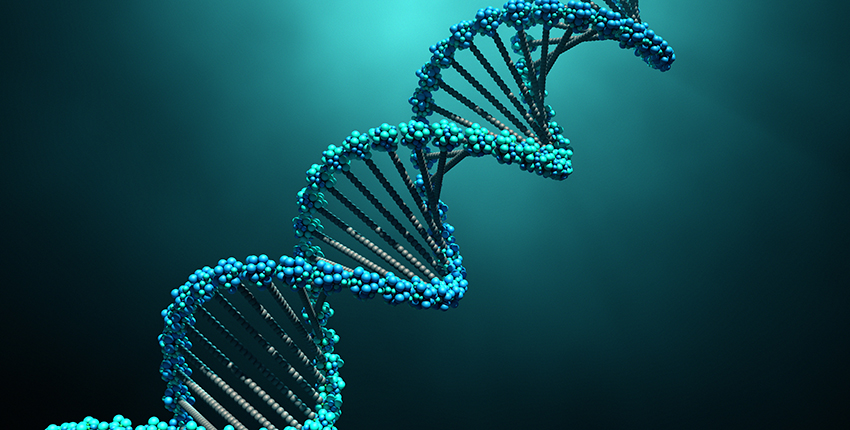
Cellular function rests on DNA. Four nucleotides — Adenine (A), Thymine (T), Guanine (G), Cytosine (C) — arranged in long sequences encode the instructions for protein synthesis. The human genome runs to roughly 3 billion bases. Errors in that order — mutations — sometimes matter and sometimes do not, depending on where they fall and what they affect.
That biological context is the easy part. The hard part is operational. A modern lab generates orders of magnitude more raw signal than any reviewer can read by hand, and the bottleneck is rarely the chemistry. It is the queue between the readout and the decision: variant calling, QC review, hand-off to a clinician or research lead. Every hour spent in that queue is an hour the lab is not running its next assay.
Which bioinformatics workflows have the clearest AI ROI today?
AI augmentation delivers measurable value across three workflow stages. The rest of the stack remains valuable but more experimental.
| Workflow stage | AI role | ROI signal | Maturity |
|---|---|---|---|
| Sequence alignment & variant calling | Pattern recognition over reference databases (BLAST, HMMER family) | Hours-to-result, reviewer-hours per readout | Production |
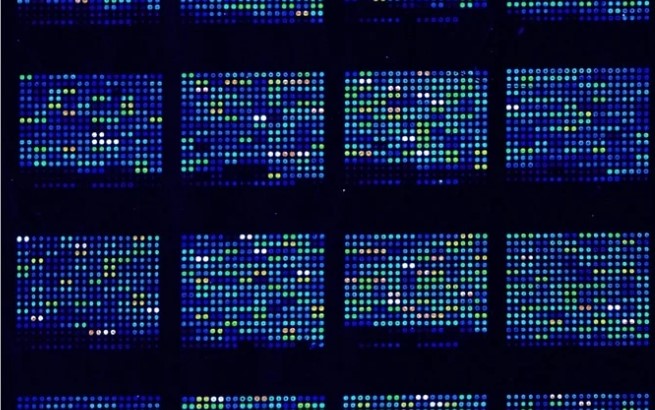
| High-throughput screening QC | Image and signal classification on plate readouts | Share of plates auto-passed without reviewer touch | Production |
| Predictive process control | Forecasting drift in upstream assay parameters | Out-of-spec rate prevented before downstream contamination | Emerging, project-specific |
| Protein structure prediction | 3D structure inference (AlphaFold-class models) | Hypotheses generated per researcher-week | Production for triage, exploratory for novel design |
| Cross-species evolutionary inference | CV-based morphology + sequence correlation | None operational at lab scale yet | Experimental |
The first two are where we see most labs justify the spend on observed reviewer-hour savings — an observed pattern across the engagements we work on, not a benchmarked rate. The third is project-specific: predictive analytics earns its keep when a measured baseline of out-of-spec rates exists to compare against. Without that baseline, you are buying a slide deck, not a productivity layer.
How does pattern recognition work at scale without creating reproducibility debt?
Pattern recognition excels in bioinformatics—but becomes hazardous when the model obscures the path from raw signal to reported result. Reproducibility debt accumulates whenever an inference depends on a model version, a pre-processing step, or a reference build that is not pinned alongside the result.
Three practices keep this under control:
- Pin everything that touches the inference. Model version, training-data hash, reference-genome build, pre-processing parameters. If the result will inform a regulated decision, the audit trail must reconstruct the inference end-to-end. This boundary maps to the GxP regulatory scope analysis used to separate exploratory outputs from validated ones.
- Treat the model as one signal, not the verdict. For variant calling and QC, present the model’s output alongside the underlying read depth, quality scores, or raw signal. Reviewers should be able to disagree with the model on visible evidence.
- Re-validate on a fixed benchmark set per release. A small, frozen evaluation set caught at lab onboarding is more valuable than an arbitrarily large one assembled later. Drift in model behaviour shows up against the fixed set before it shows up in production.
These are observed patterns from working on lab-automation projects rather than rules from a published methodology. The portability caveat matters: a lab running a single assay class can afford lighter controls than a contract lab running thirty.
What does a modern automated biotech lab look like in 2026?
Strip away the marketing and the data-flow architecture is deliberately mundane. A working automated lab looks like four loosely coupled stages:
- Instrument layer. Sequencers, plate readers, liquid handlers. Each emits structured output to a local capture point.
- Capture and pre-processing. Edge compute close to the instruments handles the heavy I/O — demultiplexing reads, normalising plate signal, attaching run metadata. This is where local hardware investment pays off; ferrying every raw read into the cloud is wasteful and slow.
- Analytical layer. Sequence alignment, variant calling, image classification, QC scoring. This is where the AI lives, and where the pinning discipline above applies.
- Decision layer. Reviewer interfaces, LIMS integration, hand-off to clinical or research workflows. The audit trail terminates here.
The boundary between data engineering and AI work falls between stages 2 and 3. Stage 2 is plumbing — schemas, throughput, metadata integrity. Stage 3 is modelling. Conflating them is the most common organisational failure we see, and it usually shows up as either AI engineers debugging ETL or data engineers retraining models neither team owns.
Edge computing matters at stage 2 because raw sequencing throughput exceeds most lab uplink budgets, and because round-tripping each read to the cloud adds latency that propagates into reviewer queues. Cloud compute is the right answer for stages 3 and 4, where the workloads are bursty and the data has already been compressed into something interpretable.
Predictive analytics in pharma operations: where it earns its keep
Predictive analytics in pharma analytical operations delivers less than the sales pitch implies. It earns its keep in three places:
- Drift detection on assay calibration. Forecasting when an instrument or reagent lot will fall outside spec, based on historical control readings. The KPI is out-of-spec runs avoided per quarter.
- Reviewer queue forecasting. Predicting where the bioinformatics-to-decision handoff will back up based on upstream sample volumes. The KPI is queue depth at that handoff.
- Reagent and consumable forecasting. Standard supply-chain prediction with biotech-specific lead times and stability constraints.
These are all observed-pattern wins from operational analytics, not breakthrough applications. They are also where the monthly KPI conversation actually lands: reviewer-hours per readout, queue depth at the handoff, share of analytical results shipping with a complete audit trail. Each is a measurable monthly metric. If predictive analytics cannot move at least one of them, it has not earned its keep — regardless of how good the demo looked.
Protein structure, computer vision, and where the moonshot framing breaks
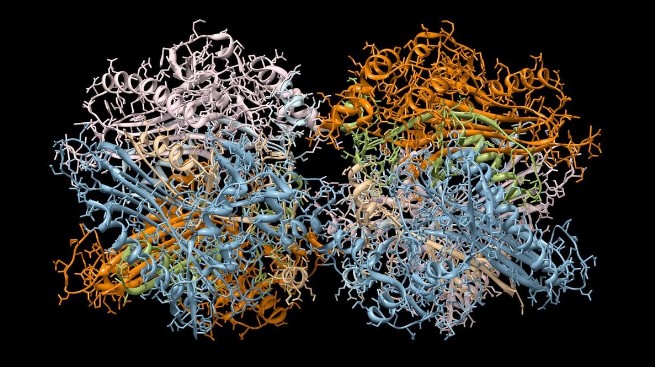
Protein structure prediction remains one of the rare domains where ambitious claims meet operational reality. Structures inferred by GPU-accelerated computer vision and deep learning models — AlphaFold-class systems and their successors — produce useful hypotheses for triage, especially when the alternative is crystallography on every candidate. Researchers we work with use these outputs to narrow the search space, not to finalise it.
What the framing misses is that scientists have catalogued an estimated 90% of the proteins in the human body (as reported in current proteome databases), while the interaction map between them — the “dark proteome” — remains largely uncharted. Predicting a structure is not the same as predicting an interaction, and the interaction is usually what matters downstream. CV models extract structural features reliably; inferring biological function from those features remains an experimental application.
The same caution applies to cross-species evolutionary inference. CV on morphological data combined with sequence-level alignment is interesting research, but it does not yet show up as a lab-operations workload. We treat it as TK3 generative-AI adjacent territory — sequence-to-text and text-to-sequence components attach naturally here — rather than as a methodology recommendation.
How do AI-augmented outputs satisfy reproducibility expectations for regulated submissions?
Whether the output informs a regulated decision or remains exploratory determines the compliance burden. The validation burden between the two diverges sharply, which is why the GxP scope analysis sits upstream of any platform choice.
For regulated outputs, four things must be true at submission time:
- The exact model artefact used at inference is retrievable.
- The pre-processing pipeline is version-controlled and replayable.
- The reference data used by the model is hashed and archived.
- A human reviewer’s sign-off, with the model output and the underlying evidence visible, is captured.
For exploratory outputs, the bar is lower but not zero. The minimum is enough provenance to reproduce a finding for an internal audit six months later. Labs that skip this minimum end up with a backlog of interesting results that cannot be defended or extended.
This is the boundary an AI-augmented R&D programme has to draw early. Drawing it late is one of the most expensive structural mistakes we see. That regulatory-scope discipline is central to the life-sciences AI work we build for biotech and pharma labs.
What this looks like in practice
Real KPI gains emerge from “AI in bioinformatics” work that lacks glamour. Pick the workflow stage where reviewer time is the bottleneck. Instrument the baseline before adding the model. Pin everything. Re-validate on a frozen evaluation set. Keep the model as one signal in a reviewer’s decision, not the verdict. And report the monthly KPIs honestly — reviewer-hours, queue depth, audit-trail completeness.
The labs that compound value treat AI as a productivity layer for the analytical workflow they already run. The discovery moonshot can wait until that layer is paying for itself.
What we offer
At TechnoLynx we partner with biotech and pharma teams on the foundational work: baseline instrumentation, GxP scope definition, audit-ready inference layers, and reviewer-workflow integration that preserves reproducibility. We pick the workflow stage with measurable reviewer-time savings first, and we leave the moonshot framing to the slide decks. If that approach matches how your lab thinks about AI, we are happy to talk.
FAQ
Which bioinformatics workflows have the clearest ROI for AI augmentation today vs which remain experimental?
Sequence alignment with variant calling and high-throughput screening QC are the two production-grade wins, justified on reviewer-hours per readout. Predictive process control is project-specific and depends on having a measured baseline. Cross-species evolutionary inference and protein-interaction prediction remain experimental.
How is pattern recognition deployed at scale across high-throughput screening pipelines without introducing reproducibility debt?
Pin everything that touches the inference — model version, training-data hash, reference build, pre-processing parameters. Present the model output alongside the underlying evidence so reviewers can disagree on visible signal. Re-validate against a fixed evaluation set per release. These are observed patterns from lab-automation engagements, not a universal prescription.
What does a modern automated biotech lab actually look like in 2026 from a data-flow perspective?
Four loosely coupled stages: instrument layer, edge capture and pre-processing, analytical layer (where the AI lives), and a decision layer that integrates with LIMS and reviewer interfaces. The data-engineering / AI boundary falls between stages 2 and 3.
Where does predictive analytics earn its keep in pharma analytical operations vs being a slide-deck claim?
Drift detection on assay calibration, reviewer-queue forecasting at the bioinformatics-to-decision handoff, and reagent forecasting. Each maps to a measurable monthly KPI. Without a baseline to compare against, predictive analytics cannot demonstrate it earned its keep.
How do AI-augmented bioinformatics outputs satisfy reproducibility expectations for regulated submissions?
The model artefact, pre-processing pipeline, and reference data must all be retrievable and replayable, and reviewer sign-off must be captured against the visible underlying evidence. Exploratory outputs need lighter provenance but still enough to defend a result at internal audit six months later.
What is the boundary between data-engineering and AI work in a working biotech lab?
Data engineering owns the instrument capture, schemas, throughput, and metadata integrity through pre-processing. AI work starts at the analytical layer — alignment, variant calling, image classification, QC scoring. Conflating the two is the most common organisational failure we see at this stage.
References
- B.Pharm, Y.S. (2017) DNA Sequencing, News-Medical.
- Fastest DNA sequencing technique helps undiagnosed patients find answers in mere hours, Stanford Medicine News Center.
- From Function to Form (2019), Harvard Medical School.
- DeepMind AlphaFold 3D protein structure coverage, CNET.
- Many of our proteins remain hidden in the dark proteome, Chemical & Engineering News.