
Why Choose Us?
Built for Production,
Not the Demo
Off-the-shelf vision models look strong in a notebook and fail on real inputs. We design the pipeline around the failure modes that actually bite: lighting drift, occlusion, edge-case classes, and data decay.

Classical Vision
We offer expertise in foundational computer vision techniques to deliver versatile and performance-optimised solutions.

Explainability
Transparency matters. Our solutions prioritise explainability, catering to markets with stringent legal and ethical requirements.

Cross-Disciplinary
Our peripheral knowledge across various fields enhances your projects with unique, cross-disciplinary insights for innovative solutions.

Scalable Solutions
We craft solutions with scalability in mind, combining optimisation, adaptability, and multi-GPU support for robust performance.

Frictionless Onboarding
We specialise in designing systems that streamline onboarding processes, thereby reducing costs and minimising time-to-adoption for your teams and workflows.

Multi-GPU Optimisation
Reduce cloud processing expenses with our expertise in multi-GPU optimisation, designed to handle demanding workloads efficiently.

Custom Models
We design bespoke models to overcome tooling limitations and ensure compatibility with even the most esoteric platforms.

Supervised Design
Need near-perfect reliability or compliance with legal frameworks like the AI Act? We excel at designing human-in-the-loop systems to meet these critical needs.

Video Optimisation
From video streaming to compression, we tackle potential bottlenecks in your pipeline with tools like FFmpeg.
Area of Expertise
Object Detection & Recognition
Object Tracking
Image Classification
Image Segmentation
Anomaly Detection
Face Recognition
Video Analytics
Point Cloud
Performance Optimisation
Quantisation
Pruning
CoreML Conversion
Our Promise to You
We Challenge the Scope
Before We Build
We only take on vision work we believe will pay off, and we will tell you when the model is not the real problem. In production, the hard part is rarely the network: it is the data pipeline, the edge cases, and the deployment target. We scope around those first, then build the system that holds up once real inputs arrive.

we say so when the model is not the bottleneck
pipelines that stay observable and testable in production
one client per niche, so your edge stays yours
Technology Stack
PyTorch
TorchScript
TensorFlow
LiteRT
TensorRT
Face Recognition
ONNX
OpenCV
YOLO
Python
NumPy
SciPy
Numba
C
C++
CUDA
Where This Goes Next
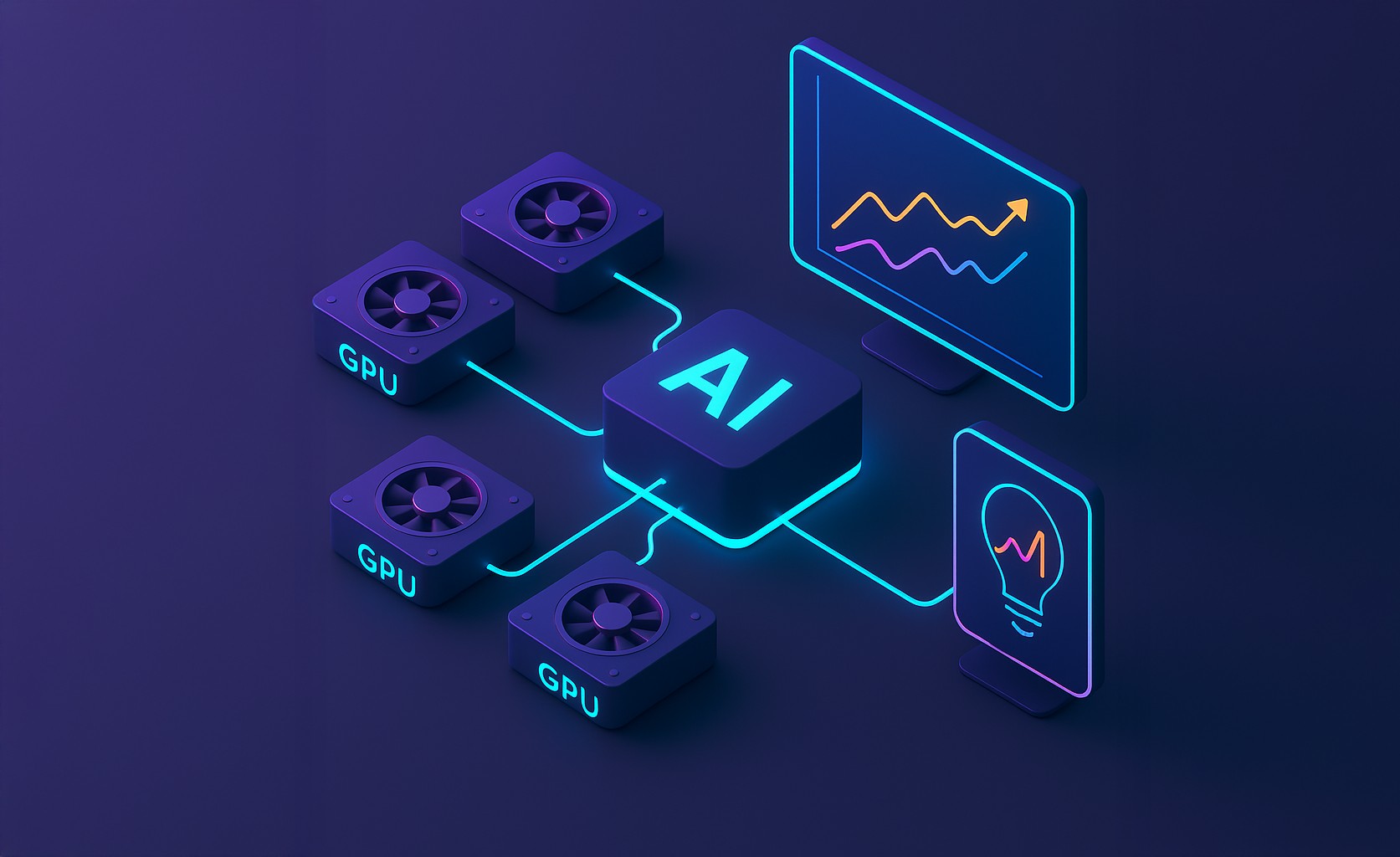
Computer vision is where many of our engagements start, but the next step depends on what you need. If a model already runs and the problem is cost or latency, that is the Inference Cost-Cut Pack. If it gives wrong answers in production with no release gates catching the regressions, that is the Production AI Monitoring Harness. If the bottleneck is the GPU and inference layer underneath, we engineer that too.
Client Testimonials

TechnoLynx delivered the project on time and provided quality outputs that met the client's expectations. The team was proactive in providing ideas and suggestions, and they were careful at properly planning the tasks. The client also praised the team's expertise in GPU programming and AI.


TechnoLynx's skill in low-level software development was impressive. TechnoLynx was able to create four prototypes with common components and an interface for easy maintenance. The client was extremely happy with the solution's speed. Moreover, their communication was seamless and straightforward.

TechnoLynx's unique aspect is that they're able to transform complex theories into practicable and applicable results. TechnoLynx provides research reports and architecture planning documents. The team is able to transform complex theories into practicable and applicable results. TechnoLynx's project management is strong and delivers work on time without hardware issues, being responsive through virtual meetings.
I’m delighted with our collaboration with their team. Thanks to TechnoLynx's work, the client has been able to co-author two patents. They lead responsive project management to solve problems quickly. The team also praises their skilled and knowledgeable team.
We had high-efficiency meetings. TechnoLynx’s work resulted in a successful breakthrough, and their input improved the client’s app. Their flexible and organised project management cultivated a healthy collaboration experience. Ultimately, their professionalism and commitment were impressive.
Frequently Asked Questions
How does TechnoLynx provide project cost estimates?
We provide a transparent, scoped quote following a free technical consultation. Our estimation process involves:
- Consultation: Assessing scope, technical complexity, and hardware requirements.
- Feasibility Study: Estimating development time and resource allocation.
- Detailed Breakdown: You receive a formal quote outlining specific timelines, milestones, and deliverables.
How does TechnoLynx protect IP and confidentiality?
Your Intellectual Property (IP) and data security are our top priorities. We ensure protection through:
- Legal Safeguards: Signing NDAs before project disclosure and adhering to EU data protection laws.
- Full IP Ownership: Contractual guarantees that all deliverables belong to you.
- Domain Exclusivity: To avoid conflicts of interest, we commit to only one client per specific technology niche.
What is TechnoLynx’s experience in Computer Vision?
TechnoLynx has years of expertise in traditional CV and Deep Learning-based vision systems. Our portfolio includes:
- Object Detection, Tracking, and Recognition.
- Semantic and Instance Segmentation.
- Production-grade optimization for high-accuracy, real-world deployments.
Which Deep Learning frameworks and libraries do you use?
We utilize the industry-standard AI stack to ensure high performance and maintainability:
- Core Frameworks: PyTorch, TensorFlow, and OpenCV.
- Data Science: NumPy, Pandas, SciPy, and Scikit-learn.
- Deployment: ONNX, TensorRT, and CoreML.
Can TechnoLynx deploy AI models to Edge and Mobile devices?
Yes, we specialize in resource-constrained AI deployment. We optimize models for:
- Edge Hardware: Using TensorRT and ONNX for high-throughput inference on NVIDIA Jetson and similar platforms.
- Mobile (iOS/Android): Leveraging CoreML and specialized quantization for seamless mobile integration.
What does production computer vision require beyond model accuracy?
Production reliability comes from modular, observable pipelines, not from squeezing a few more accuracy points out of a single model. Real-world inputs break the assumptions of off-the-shelf demos: lighting drift, occlusions, edge-case classes, and data quality decay all degrade end-to-end performance even when offline metrics look strong. We design CV systems where each stage (capture, pre-processing, detection, post-processing, escalation) is independently testable and instrumented. See why off-the-shelf CV models fail in production and how to architect a modular CV pipeline.
Featured Insights


Case Studies
Related Case Studies





Related Posts
Keystone deep dives
- Why Off-the-Shelf Computer Vision Models Fail in Production
- Machine Vision vs Computer Vision: Choosing the Right Inspection Approach for Manufacturing
- Aneurysm Detection with Computer Vision: What Works in Clinical Practice
- Camera Extrinsics Explained: Calibration for Manufacturing Vision Inspection
- What a Computer Vision Consultant Does: Scoping Edge Deployment Trade-offs in Practice
- Why AI Video Surveillance Generates False Alarms — And What Architecture Reduces Them
- SAHI + YOLO: Slicing-Aided Inference for Small Faces and Distant Objects
- 5G NSA vs SA: What the Architecture Choice Means for Edge CV Workloads
- 12-Factor Agents: Reliability Principles for Production CV Pipelines
- A/B Test Statistics for AV Computer Vision: Validating Perception Model Changes
- Auto Ordering with Computer Vision: How Automated Replenishment Works in Retail
- Smart Retail Shop: How Visual Search and CBIR Power In-Store and Online Retail
- Causality Trees for Diagnosing CV Failure in Uncontrolled Conditions
- The 12-Factor Agent: Design Principles for Reliable, Production-Grade AI Agents
- Facial Recognition in Computer Vision: How the Pipeline Actually Works
Show all 344 deep dives
- What Is OpenPose? Production Fit for Pose Estimation Tasks
- Mask R-CNN in Production: Architecture and Segmentation Trade-Offs
- Computer Vision in Autonomous Vehicles: Ten Production-Validated Applications
- Optimising Logistics with Computer Vision: Where the ROI Actually Lives
- Computer Vision and Image Understanding: From Pixels to Semantic Reasoning
- Fundamentals of Computer Vision: A Practitioner-Tuned Beginner's Guide
- Feature Extraction and Image Processing in Computer Vision: The Classical Layer That Still Matters
- NLP in Computer Vision: Where the Two Modalities Actually Meet
- Computer Vision in Modern Telecommunications: Network-Side Applications That Pay Back
- Computer Vision in Robotics and Autonomous Systems: Perception as the Bottleneck Layer
- Hardware Accelerators for Facial Recognition: What "Accelerate" Actually Means
- accelerate config: Setting Up Hugging Face Accelerate for CV Training
- How to Accelerate CPU-Bound Classical CV: Feature Extraction Without a GPU
- Accelerate + DeepSpeed: Scaling Multimodal Training Without Rewriting Your Loop
- ML Compilers Explained: How They Optimize Face Recognition Inference
- ML Experiment Tracking: How It Works and Why CV Teams Need It
- ML Model Deployment Tools: Shipping Classical and Deep CV Stages to Production
- ML Model Explainability in Multimodal CV+NLP Systems: What It Means in Practice
- Spec Workstation for Facial Recognition: Hardware to Run the Pipeline
- SPEC Benchmarks for Computer Vision Inference: What They Measure and What They Miss
- TensorFlow Benchmarks for Multimodal CV+NLP Models: Reading the Numbers
- 2D Convolutional Neural Networks Explained: How They Work in Robotics Perception
- Challenges for Autonomous Vehicles: Where CV Perception Breaks in Production
- Challenges of Autonomous Vehicles: Where Perception Breaks the Latency Contract
- Machine Learning in Self-Driving Cars: How the Learned Stack Actually Works
- mAP in YOLO: How Mean Average Precision Scores Object Detectors
- Self-Driving Machine Learning: How ML Powers the AV Perception Stack
- Self-Driving Car Machine Learning: The Perception Pipeline Under a Latency Contract
- How a 2D CNN Works — and Why It Matters for Production Inspection
- 3D Object Detection Explained: How It Works in Logistics CV
- Confidence Score in Computer Vision: What It Means and How to Use It
- Object Counting in Computer Vision: How It Works in Production
- Object Detection Metrics Explained: Precision, Recall, mAP & IoU for Inspection
- Object Detection Tools for Logistics CV: What to Use and When
- How Object Detection with YOLO Works — and Where Classical Preprocessing Still Earns Its Place
- Real-Time Object Detection: How It Works and What Throughput Really Costs
- Rotated Bounding Box Detection Explained: When Orientation Matters in Inspection
- RT-DETR vs YOLO: Choosing a Detector for Production Inspection Pipelines
- What a Perception Robustness Audit Tests Before You Stake a Release on Your Model
- Sensor Fusion in Automotive Perception: How It Works and Where It Fails Under Audit
- Document Automation for Perception Validation: Turning Audit Output Into a Release Evidence Pack
- Document Automation Tools in a Perception Validation Workflow: How They Work in Practice
- What Robustness Means for an Automotive Perception Model — In Practice
- Camera Intrinsic vs Extrinsic Parameters: What Automotive Perception Actually Needs Calibrated
- Machine Learning Model Versioning for Automotive Perception — In Practice
- Chain-of-Thought vs Tree-of-Thought: Choosing the Reasoning Strategy for Evidence-Pack Assembly
- SLIME Framework for Evidence-Pack Assembly: Structured Generation of Perception Validation Documents
- Autonomous Driving Challenges: Where the Infrastructure Layer Actually Bites
- Autonomous Driving Deep Learning: How Perception Models Actually Work in Production
- Autonomous Vehicle Challenges: The Perception Failure Modes That Survive Benchmarks
- How Autonomous Vehicle Deep Learning Works — The Perception Stack in Practice
- Camera Intrinsic Parameters Explained: Focal Length, Principal Point, and Distortion
- Deep Learning for Autonomous Vehicles: Where the Perception Data Path Fits
- Deep Learning in Self-Driving Cars: How Perception Models Actually Work
- Hand Keypoint Detection: How It Works and What It Means in Practice
- How Does ADAS Work? The Perception Pipeline Behind Driver Assistance
- Machine Learning in Self-Driving Cars: How the Perception Stack Actually Works
- R-CNN Object Detection Explained: How It Works in Automotive Perception
- Rotated Bounding Boxes in Automotive Perception — How They Work
- Self-Driving Car Machine Learning: How Perception Learns, and Where Calibration Fits
- Fine-Tuning YOLO for Automotive Perception: What Transfers and What You Must Retrain
- Pose Estimation Model: How Extrinsic Calibration Feeds Camera Pose in Perception
- How a Tracking Model Works in Automotive Perception — and Why Calibration Drift Breaks It
- When Industrial Computer Vision Inspection Actually Works — Feasibility Before Pilot
- How CV Defect-Detection Models Survive the Move from Pilot to Production Line
- How Computer Vision Systems for Manufacturing Work — A Practical Explainer
- How a Machine Vision Camera Works in Industrial Inspection — Sensors, Optics, Lighting
- Quality Control vs Quality Assurance: Where CV Inspection Fits
- What Is Machine Vision? How It Works in Industrial Inspection
- Industrial Computer Vision Hardware: What an Inspection Line Actually Runs On
- Statistical Process Control for CV Inspection: SPC on the Production Line
- Statistical Process Control Charts for CV Defect-Detection on the Production Line
- Quality Control Engineering: Where CV Defect Detection Fits on the Line
- Statistical Process Control Tools: Pairing SPC with CV Defect Detection on the Line
- Statistical Process Control Examples for CV Defect Detection on the Line
- SAM, MobileSAM, and FastSAM: Choosing a Segment-Anything Model for Industrial Inspection
- Fine-Tuning YOLO for Manufacturing-Line Defect Detection: What It Fixes, What It Doesn't
- How an Image Detection Model Works in Industrial Inspection
- Image Processing Object Detection: How It Works on a Production Inspection Line
- Instance Segmentation Models Explained for Manufacturing Inspection
- What mAP@50 Means for Defect Detection in Industrial Vision Inspection
- mAP in YOLO: What Mean Average Precision Means for Inspection Accuracy
- mAP50 Explained: Reading the Detection Metric for Inspection-Line Feasibility
- mAP50 vs mAP50-95: Reading CV Inspection Metrics on the Line
- mAP@50-95 Explained: Reading the Detection Metric Behind CV Inspection Accuracy
- Mobile SAM Explained: Lightweight Segment Anything for On-Line CV Inspection
- MobileSAM Explained: Lightweight Segment-Anything for On-Line CV Inspection
- Multi-Object Tracking on an Inspection Line: Linking Segmented Parts Across Frames
- Pose Estimation Models for Manufacturing-Line Vision QC: How They Work
- Print Inspection with Computer Vision: How It Works in Practice
- Print Inspection Systems: How CV Catches Defects on the Production Line
- How Printing Inspection Works — Computer Vision for Print Defect Detection
- R-CNN Object Detection Explained for Industrial Defect Inspection
- R-CNN Object Detection: How It Works for Industrial Inspection
- R-CNN Object Detection: How It Runs on an Inspection Line's Industrial Computer
- Re-ID in CV Inspection: Tracking Parts Across the Line for SPC
- Real-Time Object Detection on the Production Line: How It Works in Practice
- Real Time Object Recognition on the Inspection Line: How It Works
- Real Time Object Tracking Explained for Line-Side Inspection
- Real-Time Video Tracking on an Inspection Line: How It Works in Practice
- Tracking Multiple Objects on a Manufacturing Line: How Multi-Object Tracking Works in Practice
- YOLO Inference Explained: What It Means for Industrial CV Inspection
- Best Lightweight Vision Models for Real-World Use
- Machine Learning and AI in Modern Computer Science
- A Complete Guide to Object Detection in 2025
- Object Detection in Computer Vision: Key Uses and Insights
- AI in Object Detection: Why Production Performance Diverges from Benchmarks
- Applying Machine Learning in Computer Vision Systems
- Computer vision interprets visual data
- How to Architect a Modular Computer Vision Pipeline for Production Reliability
- AI for Textile Industry: Where Computer Vision Pipelines Actually Earn Their Keep
- Advanced decision-making with Computer Vision (CV) analytics
- Deep Learning for Image Processing in Production: Architecture Choices, Training, and Deployment
- Data Quality Problems That Cause Computer Vision Systems to Degrade After Deployment
- AI Datasets for Space-Based Computer Vision Research
- Computer Vision for Quality Control in Manufacturing
- Computer Vision for Production Line Inspections
- Computer Vision in Manufacturing
- Enhancing Manufacturing Efficiency with Computer Vision
- Automated Visual Inspection Systems: Hardware, Model Selection, and False-Reject Rates
- Machine Vision Image Sensor Selection: CCD vs CMOS, Resolution, and Illumination
- Visual Inspection Equipment for Manufacturing QC: Where AI Adds Value and Where Rules Still Win
- AI Visual Computing Simplifies Airworthiness Certification
- Machine Vision in Pharmaceutical Manufacturing: Where Rule-Based Inspection Beats Custom CV
- Machine Vision vs Computer Vision: Key Differences
- Automating Assembly Lines with Computer Vision
- How Does Computer Vision Improve Quality Control Processes?
- Streamlining Sorting and Counting Processes with AI
- Deep Learning Models for Accurate Object Size Classification
- Optimising Quality Control Workflows with AI and Computer Vision
- AI Object Tracking in Manufacturing QC: Where It Fits in the Vision Stack
- Computer Vision For Quality Control
- What ROI Computer Vision Actually Delivers in Retail: Loss Prevention, Analytics, and Store Operations
- How Computer Vision Transforms the Retail Industry
- AI Meets Operations Research in Data Analytics
- Computer Vision for Retail Loss Prevention: What Works, What Breaks, and Why Scale Matters
- Computer Vision Store Analytics: What Cameras Can Actually Measure in Retail
- Digital Shelf Monitoring with Computer Vision: What Retail AI Actually Detects
- Retail Shrinkage and Computer Vision: What CV Can and Cannot Detect
- The AI Innovations Behind Smart Retail
- How to Deploy Computer Vision Models on Edge Devices: Latency, Hardware, and Architecture Trade-offs
- Understanding the Tech Stack for Edge Computing
- Real-Time Vision Systems for High-Performance Computing
- What is IoT Edge Computing and Its Benefits?
- Embedded Edge Devices for CV Deployment: Jetson vs Coral vs Hailo vs OAK-D
- Cloud Computing and Computer Vision in Practice
- When to Build a Custom Computer Vision Model vs Use an Off-the-Shelf Solution
- Deep Learning vs. Traditional Computer Vision Methods
- Deep Learning for Computer Vision: Architectures, Training, and What Still
- AI vs Real Face: Anti-Spoofing, Liveness Detection, and When Custom CV Models
- Object Detection Model Selection for Production: YOLO vs Transformers, Speed/Accuracy, and Deployment
- 10-Bit HEVC Explained: What It Means for Video Analytics Pipelines
- 10-bit HEVC Explained: What It Means for CCTV Decode and CV Pipeline Inputs
- Atrous (Dilated) Convolution Explained: How It Works and When to Use It
- BEVDet Explained: How Bird's-Eye-View 3D Detection Works and Where Data Quality Bites
- Color Clustering in Computer Vision: How It Works and Where It Pays Off in Retail
- Image Patching in Computer Vision: How It Works and When It Matters
- PASCAL VOC Explained: The Dataset Format Behind Object Detection Labels
- The PASCAL VOC Dataset Explained: Annotation Format and What It Means for CV Pipelines
- R-CNN Object Detection Explained: How It Works in Practice
- SKU110K Explained: Dense Object Detection Benchmark and Its Practical Uses
- Computer Vision and the Future of Safety and Security
- Why AI Video Surveillance Generates False Alarms — And What Reduces Them
- 5 Real-World Costs of Outdated Video Surveillance
- Cutting SOC Noise with AI-Powered Alerting
- 4K Security Cameras and AI Analytics: When Higher Resolution Helps and When
- Intelligent Video Analytics: How Modern CCTV Systems Detect Behaviour Instead
- Driveway CCTV Cameras with AI Detection: Vehicle Classification, Night Performance,
- AI Video Surveillance for Apartment Buildings: Analytics, Privacy Zones, and
- Designing Observable CV Pipelines for CCTV: Modular Architecture for Security Operations
- DeepSeek on H100: What the Model-Hardware Pairing Means for Retail CV Cost
- DGX Spark Performance for Edge CV: Where It Fits in the Latency/Cost Trade-off
- 10-Bit HEVC Explained: How It Works and Why It Matters for Video Analytics
- 10-bit HEVC Explained: Bit Depth, Color Fidelity, and CCTV Pipeline Impact
- Computer Vision in Smart Video Surveillance Powered by AI
- GDPR and AI in Surveillance: Compliance in a New Era
- GDPR-Compliant Video Surveillance: Best Practices Today
- AI-Based CCTV Monitoring Solutions: Automation vs Human Review and What Each
- Best Wired CCTV Systems for AI Video Analytics: What Matters Beyond Resolution
- AI-Enabled CCTV for Building Security: Analytics, Camera Placement, and Infrastructure
- Hidden Costs of Fragmented Security Systems
- Aneurysm Detection with Computer Vision: How It Works in Practice
- Mechanomics Explained: How Cell-Mechanics Imaging Feeds Drug Discovery
- MedPerf Explained: Federated Benchmarking for Medical AI Generalisability
- 12-Factor Agents for Edge CV: Portability Principles for Deployable Vision Pipelines
- The 12-Factor Agent: Design Principles for Reliable, Data-Aware CV Agents
- 12-Factor Agents: Principles for Reliable Edge-Deployed CV Agent Systems
- A/B Testing Statistics for Clinical CV Models: Validation Evidence That Holds Up to FDA Review
- How Automated Ordering Systems Work in Retail: CV-Driven Shelf Data to Replenishment
- SKU110K Explained: Dense Retail Object Detection for Shelf and Intake CV
- Causal Trees Explained: Estimating Treatment Effects in Medical-Device CV Validation
- Aneurysm Detection with Computer Vision: How CV Diagnostics Flag Vascular Risk
- [email protected] in Medical CV: How Detection Accuracy Maps to FDA Validation Evidence
- mAP50-95 Explained: The Detection Metric Behind Medical-Device CV Validation
- SAM Model Training for Medical Segmentation: Fine-Tuning the Segment Anything Model
- SAM (Segment Anything Model) in Medical Imaging: How It Works and What It Means for FDA-Regulated CV
- Interactive Visual Aids in Pharma: Applied CV for Engagement
- 12-Factor Agents: Engineering Principles for Reliable, Portable Edge AI Agents
- Document Intelligence Explained: What It Means in Practice for Regulated Teams
- Auto Ordering in Retail: How CV-Driven Shelf Data Triggers Replenishment
- Vision RAG Explained: Grounding Retrieval in Visual Data for Retail CV
- GoogLeNet (Inception): Architecture Explained and When to Still Use It
- Panoptic Segmentation Defined: How It Differs from Instance and Semantic
- The Importance of Computer Vision in AI
- MIT
- CCTV Face Recognition in Production: Why It Fails More Than Demos Suggest
- Face Detection Camera Systems: Resolution, Lighting, and Real-World False
- Facial Recognition Cameras for Commercial Deployment: Matching, Enrollment,
- Facial Recognition in Video Surveillance: Why Lab Accuracy Doesn
- Facial Detection Software: Open Source vs Commercial APIs, Accuracy, and Production
- The Impact of Computer Vision on Real-Time Face Detection
- Image Recognition: Definition, Algorithms & Uses
- Core Computer Vision Algorithms and Their Uses
- How is Computer Vision Helpful in Agriculture?
- Your Personal AI Bartender: Computer Vision Behind the Bar
- Creating AR Experiences with Computer Vision
- Computer Vision and Cloud Computing: Where the Workload Actually Splits
- Computer Vision in Health and Safety: What the 2026 Stack Actually Does
- Computer Vision in a Painting: What CV Actually Does for Art
- Understanding Computer Vision and Pattern Recognition
- Computer Vision Applications in Autonomous Vehicles
- Computer Vision in Self-Driving Cars: Key Applications
- Artificial Intelligence in Supply Chain Management
- Inventory Management Applications: Computer Vision to the Rescue!
- AI in Computer Vision: How Modern Systems See, Reason, and Act
- 3D Visual Computing in Modern Tech Systems
- Recurrent Neural Networks in Computer Vision: When Temporal Memory Earns Its Cost
- Computer Vision in Media and Entertainment: Where the Capability Actually Pays
- Visual Analytic Intelligence of Neural Networks: Seeing What Models Actually Learn
- How Does Computer Vision Work? A Step-by-Step Walkthrough
- Mimicking Human Vision: Rethinking Computer Vision Systems
- Developments in Computer Vision and Pattern Recognition
- Explainability in Computer Vision: What XAI Actually Buys You in Production
- What is Feature Extraction for Computer Vision?
- Benefits of Classical Computer Vision for Your Business
- Image Segmentation Methods in Modern Computer Vision
- Computer Vision in Action: Examples and Applications
- Real-World Applications of Computer Vision: Where Production Actually Lives
- Computer Vision Trends 2026: What's Actually Shipping vs What's Still Demo-ware
- Content-Based Image Retrieval with Computer Vision: From Pixel Similarity to Embedding Search
- Real-Time AI and Streaming Data in Telecom: What the Latency Budget Actually Allows
- Large Language Models Transforming Telecommunications
- AI Analytics Tackling Telecom Data Overload
- Machine Learning and AI in Telecom Communication Systems: Where Network-Side CV Actually Pays Back
- AI-Driven Drug Discovery: Where Computer Vision Sits in the Biotech Pipeline
- Reinventing Pathfinding with AI-Driven Navigation Systems
- AI-Driven Nutrition and Supplement Guidance: Where Computer Vision Sits in the Stack
- AI in Pharmaceutical Supply Chains: Where Computer Vision and Predictive Analytics Deliver ROI
- AI-Enabled Medical Devices: The Computer Vision Layer Behind FDA-Cleared Tools
- Deep Learning in Medical Computer Vision: How It Works
- AI Computer Vision in Biomedical Applications: What Production Pipelines Actually
- The Impact of Computer Vision on the Medical Field
- Brain Analysis with 3D Computer Vision
- Computer Vision Advancing Modern Clinical Trials
- AI in Clinical Genetics: Where Computer Vision Sits in the Variant-Interpretation
- Human and Machine: Working Together in a New Era of AI-Powered Robotics
- Production CV Beyond Demo Conditions
- Multiple Object Tracking in Production: How MOT Works and Where It Breaks
- Axis-Aligned vs Oriented Bounding Box: When Rotated Detection Earns Its Cost
- 4-Bit Floating Point (FP4): What It Means for CV Model Precision
- 4-Bit Floating-Point (FP4) Explained: How It Works and When to Use It for Edge Inference
- Milvus BM25: How Sparse Keyword Retrieval Works Alongside Vector Search
- Mini SGLang for Edge Vision-Language Inference: How It Works in Practice
- SPECviewperf Explained: What GPU Benchmarks Mean for CV Deployment Hardware
- SPECweb Benchmarks for Edge CV: What They Measure and How to Read Them
- TensorBoard Logging for Computer Vision Pipelines: What to Track and Why
- 2D Convolutional Neural Networks Explained: The Perception Backbone of AV Camera Stacks
- 3D Object Detection in Practice: How It Works and Where It Feeds Tracking
- Autonomous Car Machine Learning: How Perception Detection Actually Works
- COCO Dataset Classes Explained: The 80 Categories and What They Cover
- COCO Labels Explained: The Annotation Format Behind Bounding-Box Detection
- [email protected] Explained: What mAP50 Measures and How to Read It in Practice
- mAP@50 vs mAP@50-95: Reading Detection Metrics for Localisation Quality
- Sensor Fusion Engineering: Combining Detection, Tracking, and Multi-Sensor Inputs
- How a Tracking Model Works: From Oriented Detections to Persistent Object IDs
- How a 2D Convolutional Neural Network Works — and What It Means for Your CV Pipeline
- 2D Convolutional Neural Networks Explained: How CNNs Power Visual Inspection
- Crack Segmentation for Industrial Inspection: How It Works in Practice
- Detection Head Explained: Where AABB vs Oriented Box Geometry Is Decided
- Object Detection in Videos: How Temporal CV Pipelines Work in Production
- Object Recognition Models Explained: Detection, Classification, and What Feeds a Tracker
- How an Object Tracker Works: Detection-to-Track Association in Practice
- Real-Time Object Tracking in Production CV Pipelines: How It Works
- Rotation Bounding Box (Oriented BBox): How It Works in Logistics CV
- SAHI + YOLO: Slicing Inference for Small-Object Detection Before Tracking
- SAM Models for Segmentation-Derived Oriented Boxes: How Promptable Masks Feed Detection
- Where Computer Vision Fits in Modern Agricultural Machinery
- How to Build a Perception Validation Evidence Package That Reviewers Trust
- Visual Perception in Automotive AI: How It Works and What It Means in Practice
- ASIL D Explained: What the Highest Safety Integrity Level Means for Perception Evidence
- Automotive Safety Integrity Level (ASIL): What It Means for Perception Evidence
- ASIL Explained: What Automotive Safety Integrity Levels Mean for Perception Validation
- Functional Safety in Automotive Perception: What ISO 26262 Means for Your Evidence Pack
- Functional Safety in Automotive Perception: What It Means in Practice
- Machine Learning Model Performance Metrics: What Each One Actually Proves
- SPEC2006 Explained: What CPU Benchmark Scores Mean for Perception Validation
- Autonomous Driving Machine Learning: How the Perception Pipeline Actually Works
- Autonomous Vehicle Machine Learning: How It Works and What the Model Owes an ASIL D Pack
- BEVDet Explained: Bird's-Eye-View Detection and Its ASIL Evidence Implications
- Body Pose Estimation in Automotive Perception: How It Works and What ASIL Demands
- Camera Extrinsic Calibration in Automotive Perception: Why It Belongs in Your Safety Evidence
- Camera Extrinsics in Automotive Perception: What They Mean in Practice
- DETR vs YOLO for Automotive Perception: What the Validation Pack Must Show
- Human Bounding Box Meaning: What a Detection Label Represents in ASIL D Perception Evidence
- In-Cabin Sensing: How ASIL Shapes the Perception Evidence It Needs
- Machine Learning and Autonomous Vehicles: How ML Perception Meets Automotive Safety Demands
- Machine Learning in Autonomous Cars: How Perception Models Meet Safety Evidence
- Machine Learning in Autonomous Vehicles: How Perception Models Work in Practice
- OpenImages V7 Explained: Using It to Bootstrap Automotive Perception Data
- PASCAL VOC Explained: Format, Labels, and Limits for Automotive Perception
- PASCAL VOC Dataset Explained: Format, Annotations, and Where It Fits in Perception Validation
- RT-DETR vs YOLO: Choosing a Detector When ASIL D Evidence Is the Constraint
- SAHI + YOLO: Slicing-Aided Inference for Small-Object Detection in Automotive Perception
- SAM (Segment Anything Model) in Automotive Perception: What It Does and What ASIL Demands of It
- Segment Anything Model (SAM) in Automotive Perception: What a Safety Reviewer Needs
- Segmentation Tracking in Automotive Perception: How It Works in Practice
- Car Parts Dataset: Building and Using Data for Automotive Perception
- Machine Learning in Self-Driving Cars: How Perception and Decision Models Work
- Self-Driving Cars and Machine Learning: How the Perception Stack Works
- Vision-QC in Manufacturing: Where Off-the-Shelf CV Stops Working
- AI in Manufacturing: Where the Real Gains Sit
- AI in Manufacturing: Transforming Operations
- Manufacturing Safety AI: Gun Detection and Threat Monitoring with Computer
- Medicine Manufacturing: From API to Patient-Ready Product
- Vision Systems for Manufacturing Quality Control: Inline vs Offline, Hardware and PLC Integration
- Vision-QC in Manufacturing: Where Off-the-Shelf CV Stops Working
- Object Detection in Videos: How It Works and What It Costs on the Decode Path
- Chatbot Arena Elo Explained: How to Read LLM Leaderboard Rankings
- Tensor Examples in Visual Search: How Image Tensors Drive Product Matching