AI Revolutionising Fashion & Beauty

Discover how AI is reshaping the fashion and beauty industries, from personalised virtual try-ons to trend forecasting. Learn how AI-powered solutions are enhancing customer satisfaction and loyalty.

AI Revolutionising Fashion & Beauty
Written by TechnoLynx Published on 16 May 2024

In the era of AI in fashion & beauty, each makeup brush stroke and every garment is infused with the power of artificial intelligence (AI), reshaping industries once thought immutable. In 2020, the global AI market in the fashion industry worth $270 million and is forecasted to hit $4.4 billion in 2027. Moreover, the makeup industry has seen an increase in the use of AI, with companies introducing AI-based solutions for personalised suggestions, virtual try-ons and trend forecasting.

In the past, forecasting trends were focused mainly on human intuition and historical analysis. However, AI can analyse a huge amount of data from social media platforms, runway shows, and consumer behaviour, which they then use to predict future trends with unsurpassed accuracy. This article will review how AI intelligent systems such as virtual try-ons, personalised recommendations and augmented reality (AR) apps are why customers are more satisfied and loyal.

AI/AR-based Virtual Try-on for Fashion Industry | Source: Medium

Use Cases

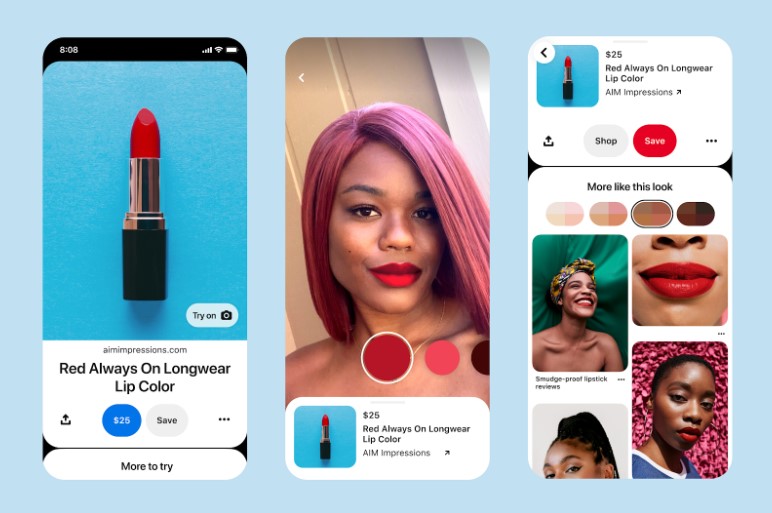
Virtual Try-Ons and Makeup Simulation

The AI tech based virtual try-ons and makeup simulations enable customers to visualise how the object of their purchase will look on them. Thus, it gives them satisfaction and reduces the number of returns. To check the beauty products will fit their skin tone and face shape, Sephora reduced 35% returns related to shades that matched or the product’s appearance.

Let’s break down how the AI technologies are helping in this use case step by step:

  • Facial Detection and Analysis

Once a user activates the virtual try-on feature, computer vision algorithms analyse the user’s facial features in real time. Computer vision acts like a smart camera that looks at your face. It can spot out different parts of your face like the lips, eyes, and skin colour. It helps a virtual makeup tool to understand where to put the make-up and how it should be on your face.

  • Tone Matching and Product Recommendation

Once facial features are identified, generative AI algorithms analyse the user’s skin tone and texture. The Generative AI utilises machine learning generative models trained on large skin tones and makeup product datasets. Based on the user’s skin tone, these algorithms recommend makeup shades and products that match the user’s complexion, ensuring a customised and realistic virtual makeup experience.

  • Virtual Makeup Application

After a skin analysis, virtual makeup is applied to the user’s face in real life. Computer vision algorithms precisely overlay virtual makeup onto the user’s facial features. Then, Generative AI algorithms generate realistic simulations of makeup application on the user’s face. These algorithms consider lighting conditions, skin texture, and product descriptions to ensure virtual makeup looks natural.

  • Real-Time Rendering and Performance

Throughout the virtual try-on process, GPU Acceleration renders smooth virtual makeup and facial features in real life. GPU enhances the speed and performance of virtual try-on platforms by offloading computational tasks to specialised graphics processing units. This real-time rendering of virtual makeup is done smoothly without consuming much processing power.

  • Immersive Visualisation (AR/VR/XR)

While the user interacts with the virtual try-on feature, AR/VR/MR/XR technologies produce the surrounding environment, which is immersive and interactive. Augmented reality (AR) transposes virtual makeup to the user’s face in real time and allows seeing the result from different perspectives. VR/XR technologies improve immersion by availing users with a 360-degree perspective of virtual shades of makeup items to look as if they indeed are handling real items.

L’Oréal’s makeup application demonstrates the fusion of AI in fashion and customer experiences. It utilises cutting-edge computer vision and AR technology to allow users to try out different makeup products virtually in real time, from lipstick shades to eyeshadows. The generative AI guarantees that the virtual makeup looks natural and genuine on the user’s face, and the GPU acceleration ensures fast processing for a smooth and seamless experience.

Product Recommendations with Virtual Makeup Try-on Platforms | Source: Medium

Personalised Fashion Recommendations

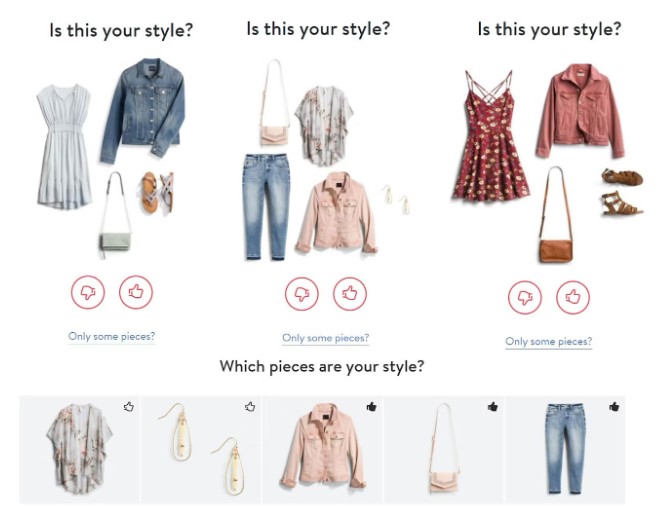
Imagine having your personal stylist who knows exactly what you like and what looks best on you. That’s what personalised fashion recommendations do- thanks to AI algorithms that analyse your past purchases, what you browse online and even your feedback and reviews to determine your style preferences. Let’s review how AI technology is helping step by step:

  • Understanding Customer Preferences with NLP:

When a customer interacts with the platform or provides feedback, it is analysed by Natural Language Processing (NLP) algorithms to understand customer preferences expressed through feedback, reviews, or style descriptions. The algorithms extract relevant information like preferred styles, colours, or brands, which serves as a valuable asset for generating personalised recommendations.

  • Personalised Recommendations through Generative AI:

Based on the extracted customer data, such as style preferences, size, budget constraints, and current fashion trends, the generative AI algorithms come up with suggestions specifically for you. Generative AI ensures the recommendations cover a wide range of styles, so there’s something for everyone. The AI considers what’s currently popular and available in your size and budget.

  • Optimised Performance with GPU Acceleration:

Throughout the recommendation generation process, GPU acceleration optimises the performance of AI algorithms, ensuring fast processing and real-time recommendation generation, even with large datasets. This ensures that customers receive personalised suggestions promptly, enhancing their overall experience and engagement with the platform.

  • Data Processing with IoT Edge Computing:

IoT brings computational power to where data is generated, such as on a customer’s device or a nearby network device. Think of a fitness-tracking device that tracks your daily activities. Instead of sending all the data it collects to a remote server for analysis, IoT edge computing enables the tracker to process and analyse the data either on itself or a nearby device connected to the same network.

When a customer interacts with an online fashion retailer platform via browsing products, providing feedback, or making purchases, data about these interactions is collected. With IoT edge computing, this data can be instantly analysed, right where it’s collected, without waiting for it to be sent to a central server for processing. This real-time analysis allows the fashion retailer platform to respond quickly to customer actions and provide personalised recommendations at the moment.

AI Fashion Styling and Make You Look Fabulous | Source: MakeUseOf.com

Trend Forecasting and Design Inspiration

Have you ever wondered why fashion designers are aware of what will be trendy next season? With the help of AI technology in forecasting trends and inspiring designs, fashion designers will always be on top of the game, creating collections that speak with consumers. This will help them understand their customers and get the inspiration to design something new and refreshing.

AI scans millions of posts and conversations on social media to see what people are discussing. AI searches for hashtags that include fashion trends, popular styles or new looks people love. AI is also tracking the fashion shows and runway events for the latest designs. Through AI fashion week analysis, algorithms can identify what styles are emerging and what will be the dominant trends in future.

Let’s break down how each AI technology contributes to the process of trend forecasting and design inspiration step by step:

  • Trend Analysis with Data Analytics:

The process starts with collecting and analysing different data from sources like fashion trends on social media, runway shows, historical sales data, and fashion publications. Algorithms of data analytics go through this information to discover patterns, connections and emerging tendencies. They offer invaluable information on consumers’ tastes, market trends, and popular styles, which serve as a basis for trend forecasting and inspiration for design.

  • Text Analysis for Consumer Insights with NLP:

NLP algorithms analyse text-based data like fashion-related content, customer feedback, reviews, and social media conversations. NLP extracts valuable insights from textual data, providing a deeper understanding of consumer sentiment, preferences, and trends. It helps identify emerging themes, popular brands, key influencers, and consumer perceptions, which inform trend forecasting & design inspiration.

  • Innovative Design Ideas with Generative AI:

Based on information gathered from data analytics & NLP, generative AI starts by learning from all data gathered about fashion trends, consumer preferences and styles. It analyses this information to understand what’s popular and what people like. Once it understands trends and preferences, generative AI produces new ideas for fashion designers and beauty brands, fostering innovation and creativity in the design process.

  • Enhanced Processing Speed with GPU Acceleration:

When computers analyse fashion trends and consumer preferences, they handle vast amounts of data. GPU acceleration helps them do this faster by using special graphics processors, good at processing large datasets swiftly. Once trained, these AI models swiftly generate design concepts based on learned patterns, with GPU acceleration ensuring prompt delivery of new ideas and inspirations to fashion professionals.

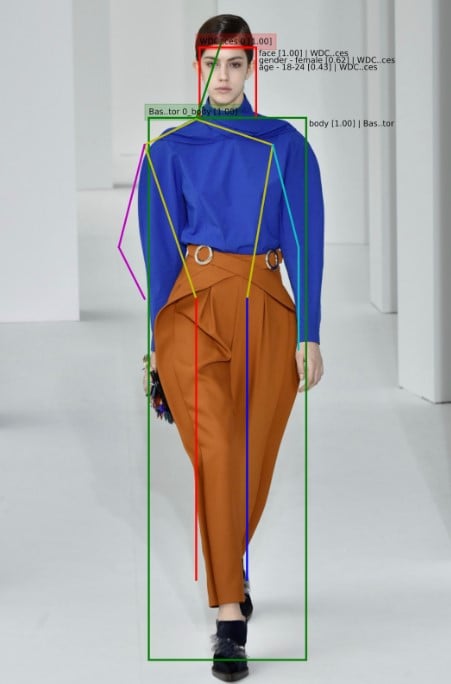
IBM Watson visual recognition tool analyses colours, shapes | Source: WWD.com

Customised Fit and Tailoring

Ever wished your clothes fit perfectly without needing to try them on? With the help of some smart technology, that dream is becoming a reality! AI technologies enable precise measurement of body dimensions, personalised fit recommendations, and tailored design solutions, enhancing customer satisfaction and reducing returns. Let’s see how AI technology contributes to the process step by step:

  • Virtual Fitting Room Experience with Computer Vision:

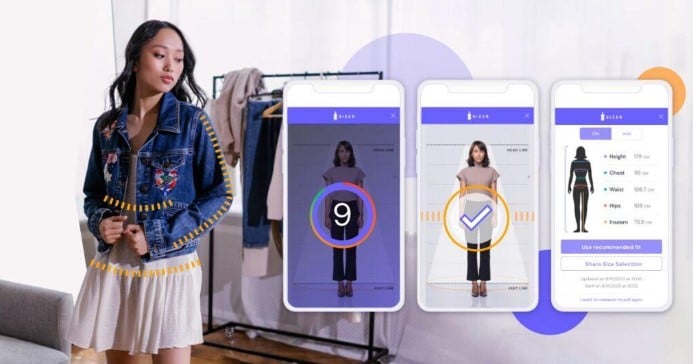
Imagine you are in a virtual fitting room equipped with computer vision technologies allowing your body measurements to be captured without needing to try on any clothes. Computer vision captures videos or images of your body, and its algorithms process them to get the analysis. It can accurately measure all the standard dimensions - the chest, waist, hips, and sleeve length- just like a tailor doing his measurements with a measuring tape.

  • Local Data Processing with IoT Edge Computing:

Once your body measurements are captured, IoT edge computing processes this data locally, right where it’s collected. This information doesn’t have to traverse long distances to be analysed, making the process faster and more responsive. With IoT computing, you get instant feedback and personalised fit recommendations. This means you can see how clothes will fit you immediately, without delays or waiting around.

  • Personalised Designs with Generative AI:

Once it has your body measurements and style preferences, generative AI creates custom patterns and designs just for you. It uses its creativity to come up with something that fits your body shape and matches your taste. The AI analyses your measurements and preferences to ensure that the designs it creates are unique to you, enhancing the customisation aspect of the tailoring process.

Virtual Try-On: Sizer Transforms The Digital Shopping Experience | Source: Nocamels.com

Fashion Image Recognition and Tagging:

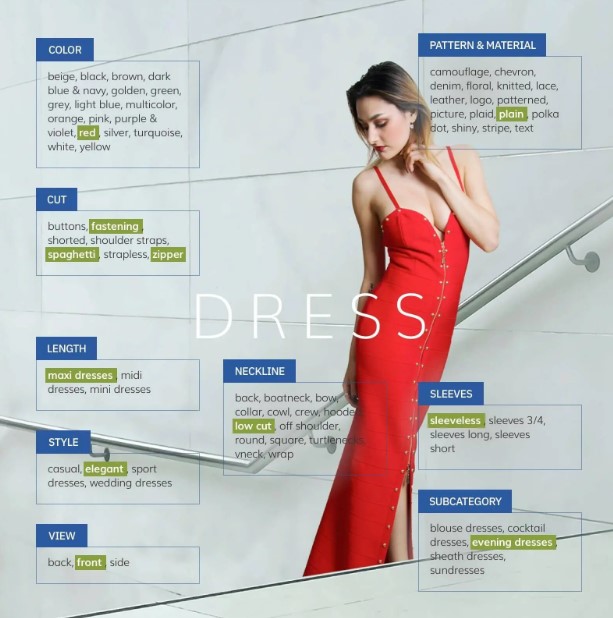
Have you spotted a clothing item online and wondered where to find something similar? AI analyses images of clothing and accessories, tagging the metadata like clothing types and colours with AI. Pinterest Lens, an AI powered image recognition tool, lets people find similar dresses and accessories by just uploading or taking a photo. Also, fashion trends and style discovery become much easier, making online shopping more fun and user-friendly.

Here’s a step-by-step breakdown of how AI technologies are helping fashion image recognition and tagging:

  • Image Recognition with Computer Vision:

Imagine a pair of shoes you see in a magazine and want to find something very similar. You may take a picture with your phone, Computer Vision technology will analyse the image to identify shoes and suggest similar ones. The algorithms identify visual aspects like dress types, clothing colours, patterns, and styles in the image, whether it’s a dress, shirt, shoes, or accessories. It will provide you with an ample choice of styles and trends that match your taste, thus making the shopping experience enjoyable and convenient.

  • Textual Analysis with Natural Language Processing (NLP):

While computer vision is busy analysing the image, NLP algorithms are reading any kind of text that goes along with it, like captions or descriptions. NLP interprets the textual information, extracting relevant metadata like clothing brands, styles, materials, and user comments. This textual analysis provides additional context and information about the fashion item, enhancing the accuracy and richness of the tagging process.

  • Tagging and Metadata Generation:

Based on image recognition and textual analysis results, the system generates relevant metadata tags for the fashion image. By combining the insights from computer vision and NLP technologies, the system assigns descriptive tags to the image, including details about the clothing items, colours, patterns, brands, and styles depicted. These tags serve as valuable metadata that enables efficient cataloguing and organisation of fashion images within the platform.

  • Search and Discovery:

Users interact with the platform to search for specific fashion items or discover new trends. When users input search queries or browse through image collections, the system leverages the AI-generated metadata tags to deliver relevant and accurate search results. This allows users to easily find desired fashion items, explore related styles, and discover new trends based on their preferences and interests.

  • Feedback and Iteration:

As people interact with the system and provide feedback, by clicking on search results or leaving comments, the system learns from these interactions. With machine learning techniques, the system continues improving its algorithms as it learns from user behaviour, needs and engagement patterns. The system gets better at recognizing fashion generated images and tagging them accurately. This means you get more relevant search results when looking for clothes and accessories online.

Fashion Tagging : Visual AI for Business | Source: ximilar.com

Challenges:

Integrating AI into the fashion and beauty industry presents some challenges businesses have to deal with to fully maximise the benefits of these technologies. These include:

  • Data Privacy Concerns and Regulatory Compliance:

Processing large quantities of sensitive customer information involves data protection and regulatory compliance issues, such as GDPR (General Data Protection Regulation). Firms have to comply with data protection laws and regulations to maintain customer privacy and prevent potential legal claims.

  • Integration Challenges with Existing Systems and Processes:

Integrating AI technologies with existing systems and processes is usually intricate and demanding, using large resources and knowledge. Businesses need to overcome the integration challenges of AI solutions so that it can work cohesively together with the existing infrastructure, thereby reducing interruptions and enhancing productivity.

  • Skills Gap and Workforce Readiness:

The constant development of AI technologies will create a need for skills and competence in the fashion and make-up industries that might not be available. Companies should invest in workforce training and upskilling so that the staff has the right knowledge and skills needed to apply AI technologies appropriately.

  • Use Case-Specific Challenges:

The development of precise virtual try-ons or tailored recommendations involves unique issues, mainly related to the resolution of produced images, the data quality, and the models’ accuracy and complexity. Delivering a smooth customer journey is about overcoming technical barriers and improving AI algorithms to provide personalised and tailored results.

What Can TechnoLynx Offer You as a Software Company?

At TechnoLynx, we pride ourselves on offering custom AI solutions that specifically address the needs and challenges of the fashion and makeup industries. Our expertise in Computer Vision, Generative AI, GPU acceleration, IoT edge computing, and NLP technologies allows us to develop customised solutions that fuel innovation, improve customer experience, and increase business value.

We offer solutions that make virtual try-on experiences more engaging, personalise fashion recommendations, and facilitate applications like facial recognition, product detection, and image analysis. Whether conceptualising or implementing, our team collaborates closely with clients and develops AI-driven solutions tailored to meet their needs and deliver results.

From being a fashion retailer to a cosmetics brand, we are with you from beginning to end, providing you all the support and guidance you need. With TechnoLynx as your partner, you can access our latest AI technology and innovation to stay ahead of your competition, opening up new growth opportunities.

Final Thoughts

In conclusion, AI can stimulate creativity in many aspects of the fashion and makeup industries, from designing and developing new products and marketing activities to customer relationships. Organisations can extract maximum benefits from AI through their growth, differentiation, and superior value delivery to customers. We encourage businesses to use AI-powered solutions to stay competitive in these dynamic markets. Work with TechnoLynx to embark on your AI expedition and get a new outlook for success. As a team, we are committed to driving innovation, enhancing consumer experiences, and shaping the future of these vibrant sectors. Contact us today to discover how AI can transform your business and drive growth.

References

Multi-Agent Architecture for AI Systems: When Coordination Adds Value

Multi-Agent Architecture for AI Systems: When Coordination Adds Value

8/05/2026

Multi-agent AI architectures coordinate multiple LLM agents for complex tasks. When they add value, common coordination patterns, and where they break.

Multi-Agent Systems: Design Principles and Production Reliability

Multi-Agent Systems: Design Principles and Production Reliability

8/05/2026

Multi-agent systems decompose complex tasks across specialized agents. Design principles, failure modes, and when multi-agent adds value vs complexity.

LLM Types: Decoder-Only, Encoder-Decoder, and Encoder-Only Models

LLM Types: Decoder-Only, Encoder-Decoder, and Encoder-Only Models

8/05/2026

LLM architecture type—decoder-only, encoder-decoder, encoder-only—determines what tasks each model handles well and what deployment constraints it carries.

LLM Orchestration Frameworks: LangChain, LlamaIndex, LangGraph Compared

LLM Orchestration Frameworks: LangChain, LlamaIndex, LangGraph Compared

8/05/2026

LangChain, LlamaIndex, and LangGraph solve different problems. Choosing the wrong framework adds abstraction without value. A practical decision framework.

Generative AI Architecture Patterns: Transformer, Diffusion, and When Each Applies

Generative AI Architecture Patterns: Transformer, Diffusion, and When Each Applies

8/05/2026

Transformer vs diffusion architecture determines deployment constraints. Memory footprint, latency profile, and controllability differ substantially.

Diffusion Models in ML Beyond Images: Audio, Protein, and Tabular Applications

Diffusion Models in ML Beyond Images: Audio, Protein, and Tabular Applications

7/05/2026

Diffusion extends beyond images to audio, protein structure, molecules, and tabular data. What each domain gains and loses from the diffusion approach.

Diffusion Models Explained: The Forward and Reverse Process

Diffusion Models Explained: The Forward and Reverse Process

7/05/2026

Diffusion models learn to reverse a noise process. The forward (adding noise) and reverse (denoising) processes, score matching, and why this produces.

Diffusion Models Beat GANs on Image Synthesis: What Changed and What Remains

Diffusion Models Beat GANs on Image Synthesis: What Changed and What Remains

7/05/2026

Diffusion models surpassed GANs on FID scores for image synthesis. What metrics shifted, where GANs still win, and what it means for production image generation.

The Diffusion Forward Process: How Noise Schedules Shape Generation Quality

The Diffusion Forward Process: How Noise Schedules Shape Generation Quality

7/05/2026

The forward process in diffusion models adds noise according to a schedule. How linear, cosine, and custom schedules affect image quality and training stability.

Autonomous AI in Software Engineering: What Agents Actually Do

Autonomous AI in Software Engineering: What Agents Actually Do

6/05/2026

What autonomous AI software engineering agents can actually do today: code generation quality, context limits, test generation, and where human oversight.

AI Agent Design Patterns: ReAct, Plan-and-Execute, and Reflection Loops

AI Agent Design Patterns: ReAct, Plan-and-Execute, and Reflection Loops

6/05/2026

AI agent patterns—ReAct, Plan-and-Execute, Reflection—solve different failure modes. Choosing the right pattern determines reliability more than model.

Agentic AI in 2025–2026: What Is Actually Shipping vs What Is Still Research

Agentic AI in 2025–2026: What Is Actually Shipping vs What Is Still Research

6/05/2026

Agentic AI is moving from demos to production. What's deployed today, what's still research, and how to evaluate claims about autonomous AI systems.

Agent-Based Modeling in AI: When to Use Simulation vs Reactive Agents

6/05/2026

Agent-based modeling simulates populations of interacting entities. When it's the right choice over LLM-based agents and how to combine both approaches.

AI Orchestration: How to Coordinate Multiple Agents and Models Without Chaos

5/05/2026

AI orchestration coordinates multiple models through defined handoff protocols. Without it, multi-agent systems produce compounding inconsistencies.

Building AI Agents: A Practical Guide from Single-Tool to Multi-Step Orchestration

5/05/2026

Production agent development follows a narrow-first pattern: single tool, single goal, deterministic fallback — then widen incrementally with observability.

Enterprise AI Search: Why Retrieval Architecture Matters More Than Model Choice

5/05/2026

Enterprise AI search quality depends on chunking strategy and retrieval pipeline design more than on the LLM. Poor retrieval + powerful LLM = confident wrong answers.

Choosing an AI Agent Development Partner: What to Evaluate Beyond Demo Quality

5/05/2026

Most AI agent demos work on curated inputs. Production viability requires error handling, fallback chains, and observability that demos never test.

LLM Agents Explained: What Makes an AI Agent More Than Just a Language Model

5/05/2026

An LLM agent adds tool use, memory, and planning loops to a base model. Agent reliability depends on orchestration more than model benchmark scores.

Best AI Agents in 2026: A Practitioner's Guide to What Each Actually Does Well

4/05/2026

No single AI agent excels at all task types. The best choice depends on whether your workflow is structured or unstructured.

Agent Framework Selection for Edge-Constrained Inference Targets

2/05/2026

Selecting an agent framework for partial on-device inference: four axes that decide whether a desktop-class framework survives the edge-target boundary.

What It Takes to Move a GenAI Prototype into Production

27/04/2026

A working GenAI prototype is not production-ready. It still needs evaluation pipelines, guardrails, cost controls, latency optimisation, and monitoring.

How to Choose an AI Agent Framework for Production

26/04/2026

Agent frameworks differ on observability, tool integration, error recovery, and readiness. LangGraph, AutoGen, and CrewAI target different needs.

How Multi-Agent Systems Coordinate — and Where They Break

25/04/2026

Multi-agent AI decomposes tasks across specialised agents. Conflicting plans, hallucinated handoffs, and unbounded loops are the production risks.

Agentic AI vs Generative AI: Architecture, Autonomy, and Deployment Differences

24/04/2026

Generative AI produces output on request. Agentic AI takes autonomous multi-step actions toward a goal. The core difference is execution autonomy.

GAN vs Diffusion Model: Architecture Differences That Matter for Deployment

23/04/2026

GANs produce sharp output in one pass but train unstably. Diffusion models train stably but cost more at inference. Choose based on deployment constraints.

What Types of Generative AI Models Exist Beyond LLMs

22/04/2026

LLMs dominate GenAI, but diffusion models, GANs, VAEs, and neural codecs handle image, audio, video, and 3D generation with different architectures.

Why Generative AI Projects Fail Before They Launch

21/04/2026

GenAI project failures cluster around scope inflation, evaluation gaps, and integration underestimation. The patterns are predictable and preventable.

How to Evaluate GenAI Use Case Feasibility Before You Build

20/04/2026

Most GenAI use cases fail at feasibility, not implementation. Assess data, accuracy tolerance, and integration complexity before building.

Visual Computing in Life Sciences: Real-Time Insights

6/11/2025

Learn how visual computing transforms life sciences with real-time analysis, improving research, diagnostics, and decision-making for faster, accurate outcomes.

AI-Driven Aseptic Operations: Eliminating Contamination

21/10/2025

Learn how AI-driven aseptic operations help pharmaceutical manufacturers reduce contamination, improve risk assessment, and meet FDA standards for safe, sterile products.

AI Visual Quality Control: Assuring Safe Pharma Packaging

20/10/2025

See how AI-powered visual quality control ensures safe, compliant, and high-quality pharmaceutical packaging across a wide range of products.

AI for Reliable and Efficient Pharmaceutical Manufacturing

15/10/2025

See how AI and generative AI help pharmaceutical companies optimise manufacturing processes, improve product quality, and ensure safety and efficacy.

Barcodes in Pharma: From DSCSA to FMD in Practice

25/09/2025

What the 2‑D barcode and seal on your medicine mean, how pharmacists scan packs, and why these checks stop fake medicines reaching you.

Pharma’s EU AI Act Playbook: GxP‑Ready Steps

24/09/2025

A clear, GxP‑ready guide to the EU AI Act for pharma and medical devices: risk tiers, GPAI, codes of practice, governance, and audit‑ready execution.

Cell Painting: Fixing Batch Effects for Reliable HCS

23/09/2025

Reduce batch effects in Cell Painting. Standardise assays, adopt OME‑Zarr, and apply robust harmonisation to make high‑content screening reproducible.

Explainable Digital Pathology: QC that Scales

22/09/2025

Raise slide quality and trust in AI for digital pathology with robust WSI validation, automated QC, and explainable outputs that fit clinical workflows.

Validation‑Ready AI for GxP Operations in Pharma

19/09/2025

Make AI systems validation‑ready across GxP. GMP, GCP and GLP. Build secure, audit‑ready workflows for data integrity, manufacturing and clinical trials.

Edge Imaging for Reliable Cell and Gene Therapy

17/09/2025

Edge imaging transforms cell & gene therapy manufacturing with real‑time monitoring, risk‑based control and Annex 1 compliance for safer, faster production.

AI in Genetic Variant Interpretation: From Data to Meaning

15/09/2025

AI enhances genetic variant interpretation by analysing DNA sequences, de novo variants, and complex patterns in the human genome for clinical precision.

AI Visual Inspection for Sterile Injectables

11/09/2025

Improve quality and safety in sterile injectable manufacturing with AI‑driven visual inspection, real‑time control and cost‑effective compliance.

Predicting Clinical Trial Risks with AI in Real Time

5/09/2025

AI helps pharma teams predict clinical trial risks, side effects, and deviations in real time, improving decisions and protecting human subjects.

Generative AI in Pharma: Compliance and Innovation

1/09/2025

Generative AI transforms pharma by streamlining compliance, drug discovery, and documentation with AI models, GANs, and synthetic training data for safer innovation.

AI for Pharma Compliance: Smarter Quality, Safer Trials

27/08/2025

AI helps pharma teams improve compliance, reduce risk, and manage quality in clinical trials and manufacturing with real-time insights.

Markov Chains in Generative AI Explained

31/03/2025

Discover how Markov chains power Generative AI models, from text generation to computer vision and AR/VR/XR. Explore real-world applications!

Augmented Reality Entertainment: Real-Time Digital Fun

28/03/2025

See how augmented reality entertainment is changing film, gaming, and live events with digital elements, AR apps, and real-time interactive experiences.

Optimising LLMOps: Improvement Beyond Limits!

2/01/2025

LLMOps optimisation: profiling throughput and latency bottlenecks in LLM serving systems and the infrastructure decisions that determine sustainable performance under load.

Case Study: WebSDK Client-Side ML Inference Optimisation

20/11/2024

Browser-deployed face quality classifier rebuilt around a single multiclassifier, WebGL pixel capture, and explicit device-capability gating.

Why do we need GPU in AI?

16/07/2024

Discover why GPUs are essential in AI. Learn about their role in machine learning, neural networks, and deep learning projects.

Back See Blogs
arrow icon