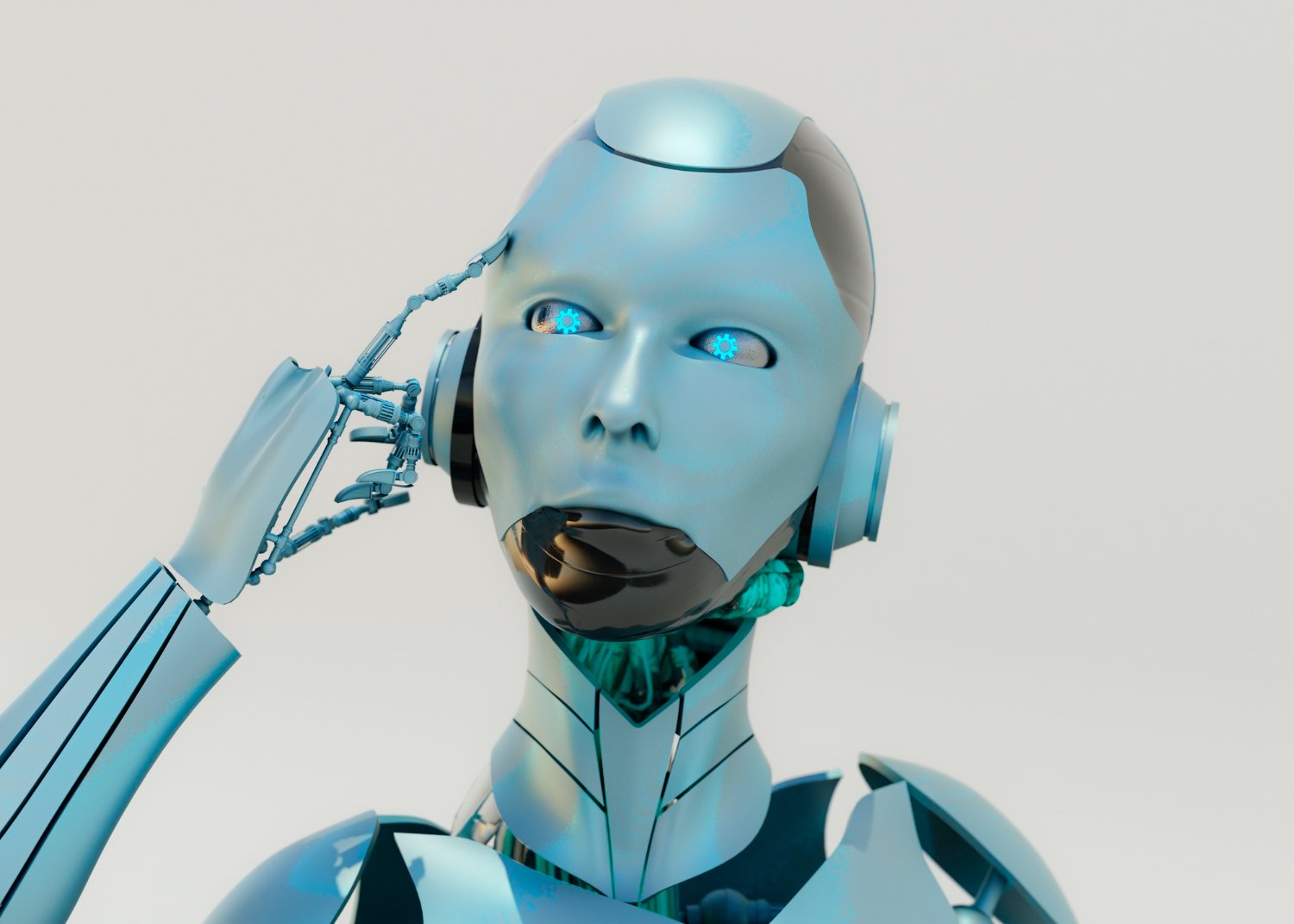
When teams talk about generative AI in 2025, the conversation defaults almost reflexively to large language models. That default is part of the problem. The interesting production deployments this year — the ones actually shipping value — are using a broader toolkit: generative adversarial networks (GANs) for adversarial training on small datasets, diffusion models for high-fidelity image and video synthesis, variational autoencoders (VAEs) for structured latent representations, and autoregressive transformers for sequential output. Picking the right architecture is the difference between a feasible project and a frustrated one.
We see this pattern regularly in scoping conversations. A team describes a problem — “we want to generate realistic product images from a few reference photos” — and arrives convinced an LLM with vision attached is the answer. Sometimes it is. Often a fine-tuned diffusion model or a Stable Diffusion variant with ControlNet does the work with less compute, less training data, and tighter control over the output. The applications below are organised around the architectural choices that actually matter in 2025, not around hype.
What kinds of generative AI applications matter in 2025?
Model architecture, data modality, and acceptable failure modes must align before any generative AI deployment reaches production in 2025. A chatbot can hallucinate a polite answer; a synthetic medical image used to train a downstream classifier cannot. The map below groups current applications by the family of models that does the heavy lifting.
| Application domain | Dominant architecture | Why this fit |
|---|---|---|
| Long-form text, summarisation, code | Autoregressive transformers (LLMs) | Sequential token prediction, large public corpora available |
| High-fidelity image synthesis | Diffusion models (Stable Diffusion, SDXL, Flux) | Iterative denoising gives controllable, photorealistic output |
| Small-data image generation, style transfer | GANs (StyleGAN3, conditional GANs) | Adversarial training learns from limited samples |
| Structured latent editing, anomaly detection | VAEs | Continuous, interpretable latent space |
| Speech and audio synthesis | Diffusion + autoregressive hybrids (e.g. VALL-E-style) | Captures both spectral detail and temporal structure |
| Video generation | Latent diffusion + temporal attention | Decouples spatial and temporal modelling |
| 3D and scene generation | NeRF variants, Gaussian splatting, 3D diffusion | Geometry-aware rather than 2D-only |
This is an observed pattern from our work across engagements — not a benchmark of model quality, and the boundaries shift as new architectures land. But it is the map we use when a client arrives with an outcome and no fixed opinion on how to get there.
Text generation with large language models
Large language models continue to attract the most attention and investment. Modern frontier models — GPT-4-class systems, Claude, Gemini, Llama 3 — are autoregressive transformers with parameter counts running into the hundreds of billions. They are trained on broad web corpora and then refined through instruction tuning and reinforcement learning from human feedback.
In production, the interesting work is rarely the base model. It is the layer around it: retrieval-augmented generation pipelines that ground answers in a customer’s own documents, fine-tuning on domain-specific corpora, structured output enforcement through tools like JSON schema validators, and guardrails that catch unsafe completions before they reach users. Newsrooms, legal teams, and customer support functions use these stacks to draft, summarise, and triage — with human review on the critical path.
The mistake we see most often is treating an LLM as the answer to every generative problem. They are excellent at language and surprisingly capable at structured reasoning over text. They are not the right tool for pixel-level image control or for learning from a dataset of fifty examples. For a fuller treatment of the LLM landscape, see Understanding Language Models: How They Work.
Image generation: diffusion, GANs, and the small-data question
Diffusion models have become the default choice for image synthesis this year. Stable Diffusion, SDXL, Flux, Midjourney’s underlying systems — they all share the same core mechanic: start with noise, iteratively denoise toward a target distribution conditioned on a text prompt or reference image. The training data is large (LAION-scale image-text pairs) and the inference is compute-heavy, but the controllability is unmatched. ControlNet, IP-Adapter, and LoRA fine-tuning let teams steer outputs with reference poses, depth maps, or a handful of brand-specific images.
GANs have not disappeared. They remain the better choice when training data is scarce and the output distribution is narrow — a few hundred product photos in a specific style, for instance. StyleGAN3 and conditional GAN variants still ship in production pipelines for face synthesis, texture generation, and style transfer where diffusion’s compute cost is prohibitive.
The decision rule we apply: if the use case is broad, prompt-driven, and the team can afford GPU inference, diffusion wins. If the dataset is small, the domain is narrow, and inference latency matters, a GAN is often the more honest choice. For a deeper dive on the mechanics, see What are AI image generators? How do they work?.
Audio, music, and voice cloning
Two distinct architectural philosophies divide the generative audio landscape. Music generation systems — Suno, Udio, and open-source equivalents — typically use latent diffusion over audio spectrograms or learned audio codecs. They produce coherent compositions in defined styles from short text prompts. Musicians use them for ideation and demo tracks; brands use them for background music in ads and short-form video.
Voice synthesis and cloning use a different stack. Modern systems are usually autoregressive over neural audio codec tokens, with a few seconds of reference audio enough to clone a voice convincingly. The applications are real — accessibility tools, dubbing, dynamic voice agents — and so are the misuse risks, which is why provenance and consent are now first-class concerns rather than afterthoughts. We cover the trade-offs in What are the benefits of generative AI for text-to-speech?.
Video, 3D, and the compute wall
2025 brought both unprecedented capability gains in text-to-video generation and a sobering collision with compute reality. Systems like Sora, Veo, and open-source latent video diffusion models produce short clips of remarkable coherence. They also consume orders of magnitude more compute per second of output than image generation, which is why production deployments are still concentrated in marketing, previsualisation, and entertainment rather than at-scale consumer applications.
3D generation sits in a parallel track. NeRF variants, 3D Gaussian splatting, and emerging 3D diffusion models can turn a handful of photos or a text prompt into navigable scenes or printable meshes. Product design, e-commerce visualisation, and game development are the early adopters. See 3D Visualisation Just Became Smarter with AI for how this lands in practice.
The honest framing here is that video and 3D generation are real but compute-bound. Architecture choice — which latent space, what temporal attention pattern, how aggressively to compress — has direct economic consequences.
Synthetic data: the application most engineers care about
Synthetic data generation delivers the highest ROI despite generating the fewest headlines. When real data is scarce, sensitive, or imbalanced, generative models can produce training data with the same statistical properties as the original. The technique is widely used in healthcare imaging, fraud detection, autonomous vehicle perception, and any domain where labelled data is expensive.
The architecture choice here is consequential. GANs and VAEs dominated this space for years. Diffusion models are now competitive and often produce higher-fidelity synthetic samples. Tabular synthetic data uses a different family again — typically conditional GANs (CTGAN) or specialised transformer architectures designed for mixed-type tabular inputs.
The trap is treating synthetic data as a free lunch. If the generative model has not seen the failure modes that matter for downstream training, neither will the synthetic samples. We treat synthetic data as a supplement to real data, validated against held-out real-world test sets — never as a replacement.
Code generation, agents, and the LLM-plus-tools pattern
Developers now treat code generation as infrastructure rather than experiment. GitHub Copilot, Cursor, Continue, and open-source equivalents wrap fine-tuned LLMs in IDE integrations. The productivity lift is real but uneven — strongest for boilerplate, weakest for code that depends on context outside the file the model can see.
The interesting evolution is the agent pattern: LLMs orchestrating tool calls, executing code in sandboxes, and iterating on their own output. This works when the task decomposes cleanly and fails when it does not. Most production “agent” deployments in 2025 are narrower than the demos suggest, and the engineering effort is in the orchestration layer, not the model.
When an LLM is the wrong default
A short checklist we use when a project arrives with “we want to use AI to generate X”:
- The output is an image, video, audio, or 3D asset. Default to diffusion or a GAN, not an LLM. LLMs that “generate images” are calling a diffusion model under the hood.
- The training data is small (under a few thousand examples). Diffusion and LLMs both struggle here. GANs, VAEs, or classical augmentation often win.
- Latency is tight and inference is cost-sensitive. Smaller architectures, distilled models, and specialised systems beat a frontier LLM hosted at a token-per-second cost.
- The output must be exactly reproducible from structured input. Templated generation with a small fine-tuned model — or no generative model at all — beats prompting a large one.
- The failure mode is catastrophic. Generative systems hallucinate. If the cost of a wrong output is high, the architecture must include verification, not just generation.
This is decision-grade framing, not an exhaustive rule set. The point is that “use an LLM” is a defensible default for a narrow set of problems and a dangerous one for many others.
How TechnoLynx approaches architecture selection
Our generative AI engagements begin with architecture assessment, not model selection. We map the use case, the data available, the failure tolerance, and the inference budget against the families of models that could plausibly fit. The output is a short shortlist of candidate architectures and the trade-offs between them.
That conversation matters because the wrong architecture is the most expensive mistake in a generative AI project. A team that spends six months fine-tuning an LLM for a task a diffusion model would solve in a fortnight has not just lost time; it has built infrastructure that points the wrong way. The right architecture choice early compounds; the wrong one accumulates technical debt.
If you are looking at a generative AI project and want a second opinion on the architecture before you commit, we are happy to help.