3D Visualisation Just Became Smarter with AI

We are all very familiar with 3D printers. Chances are that you want one, you already have one, or you have a friend who does. The concept of ‘Let’s make everything 3D’ is not new, yet the industrial applications of it mostly are. In this article, we will discuss how incorporating AI into 3D scanning, projecting, and modelling can transform the industry in so many fields.

3D Visualisation Just Became Smarter with AI
Written by TechnoLynx Published on 03 Feb 2025

Introduction

The concept of 3D inanimate things has been around for many years. There is no way you have not seen a sci-fi film where people have a video call with a hologram or watch a 3D recording of a specific queen asking Obi-Wan Kenobi for help. Surely, holograms are cooler than phones, and we are talking about films, yet the technology required for that to happen in a wide range of applications is almost here. Simply put, the two necessary aspects are adequate scanning and projection that allow for efficient, detailed reproduction of matter. Naturally, with the spread of Artificial Intelligence (AI) in different fields, commercialising scanning and projection is not limited to making calls but expanded to many industries that use 3D models, ranging from manufacturing to gaming with generative AI applications like extended (XR), augmented (AR), virtual (VR), and mixed reality (MR).

Computer Vision (CV) is the technology that allows machines to mimic human vision. Using cameras, optical data is encoded and translated into numeric, after which it can be analysed, categorised, or identified. Although the Internet of Things (IoT) has been around for a while, IoT edge computing and the rise of smaller, powerful devices allow users to process a large amount of data locally rather than sending them to a remote server. To this end, GPU acceleration is crucial due to the capability of GPUs to process multiple threads simultaneously, offering a much better performance-to-consumption ratio compared to traditional CPUs. The result is nothing short of high-quality real-time processing wonders.

Applications of Custom AI in Industries

Architecture

When it comes to 3D modelling, AI models and Machine Learning (ML) are the keys to automating and enhancing the 3D modelling process by enabling rapid generation and modification of complex models. For instance, tools like Autodesk Dreamcatcher utilise generative design to develop optimal designs based on user input, streamlining the modelling workflow and reducing the time required for traditional techniques. AI-driven software can also automate tedious tasks such as lighting and texturing, allowing users to focus on creative aspects rather than technical details, ultimately enhancing user experience and engagement with the project (Fitzmaurice, n.d.). Most likely, architecture is the first thing that comes to mind when talking about 3D modelling, yet there are many other fields where 3D models are of high importance, including:

Read more: AI in Architecture: Structure Beyond Limits

Aviation

One of the well-known simulator games out there is the Microsoft Flight Simulator. It is so famous not just because it is accurate cockpit-wise but because the scenery is amazing. All airports and cities are modelled to the last detail, and this is why people choose it instead of other simulators, despite the high requirements and the price tag (Flightsimulator, 2024). Wait, did you know that such programmes are not just for fun? If not all, most pilot academies in the United States use these as means of preliminary education for cadets. This gives them a significant advantage to practice in a safe matter, plus they can emulate all weather conditions, such as fog and icy or humid runways. Of course, this technology is not limited to commercial aviation. Air forces and artillery branches from different countries also use it to train cadets. Of course, you do not exactly feel the Gs, despite the immersive experience of VR glasses, but if you knew how much it costs to fly a fighter jet, you would surely prefer this method. As you understand, the better the 3D models in the simulation, the better the defence mechanism overall.

Read more: Propelling Aviation to New Heights with AI

Figure 1 – Night sky and city view in Microsoft Flight Simulator (Microsoft, n. d.)

Healthcare

If you have been with us for a while, you might have read our article on AI in Bioinformatics. If not, we would like to point out that one of the great achievements of generative AI is the ability to make predictions on proteins. However, that is not the prom queen. In April 2023, scientists at Duke University managed to map the entire mouse brain in extremely high resolution (Duke Today, 2023). Mice are important to healthcare due to their anatomical, physiological, and genetic similarity to humans. Now that their entire brain is mapped in high quality, who knows how AI can aid them in mapping the human brain? Keep in mind that mapping is not the endgame but a means to an end. If we had a digital twin of the human brain, can you imagine how many simulations of treatments we could run?

Figure 2 – AI-assisted imaging for the detection of electrical activity in the human brain (Vaccar, n.d.)

Logistics

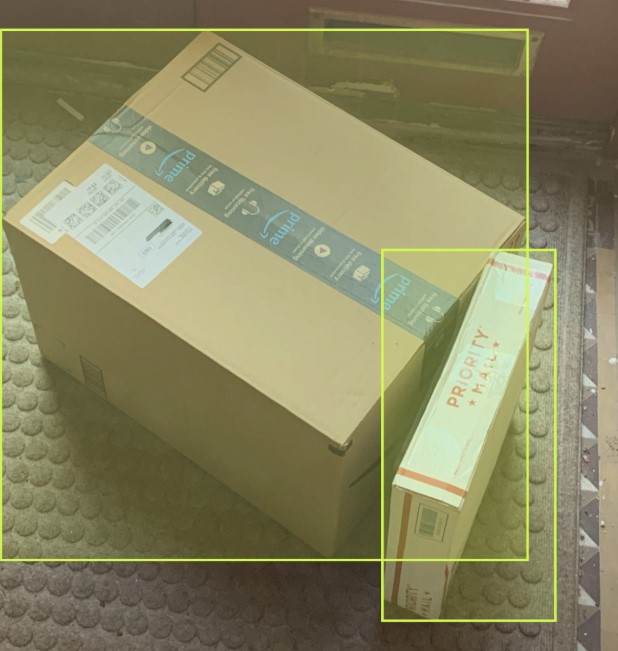
Whenever you place an order from abroad, your package goes through a vast global network and changes many hands. But if you consider how many people place online orders daily, you would be surprised! Companies and supply chains have found ways to automate parcel storage and dispatch using AI methods. Let’s take CV, for example. Most modern storage facilities are equipped with robots to move packages around. These robots use CV to navigate miles of shelves and extract useful information that can be used to locate your parcel at the right time for delivery.

Figure 3 – Package detection and identification using CV (Roboflow, 2021)

Psychology

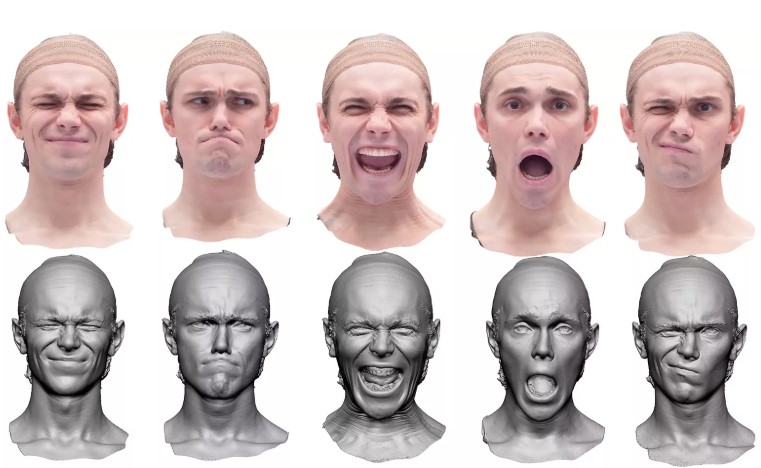
In our article on AI in Psychology, we mentioned how generative AI and Natural Language Processing (NLP) chatbots can be used to serve as your own mental health guru. As we disclosed in our article on Alan Turing, sometimes it is difficult for a human to understand if they are conversing with a machine, and there is also a limit to what a machine can compute. Yet, the Universal Turing Machine has taught us that any machine can compute anything, given the right instructions. What if the chatbot was not limited to a conversation but could ‘read’ the patient? Through 3D scanning and CV, the same AI chatbot could identify each of the 10000 expressions humans make, potentially recognising feelings and even personality disorders!

Figure 4 – Demonstration of human face scans (Twin3d, n. d.)

3D Printing

Owning a 3D printer allows you to create the most amazing prints of, well… anything. There are so many open-source designs to choose from! Well, if you ever get your hands on one, keep in mind that 3D printing comes with some downsides, the biggest of which is flaws during configuration. One mistake and the filament and the time you needed to wait to go to waste. AI is here to revolutionise 3D printing technology. Using machine learning algorithms, AI can analyse data from previous prints and simulations to identify optimal printing parameters such as speed, temperature, and layer thickness, leading to improved print quality and reduced material waste (3DX Additive Manufacturing, 2023). This includes not only household prints, but also commercial ones, including industries like aerospace and automotive, where material quality can be crucial (Team, 2024).

AI: Scan Speed Enhancer

So far, it should be clear that AI significantly enhances the accuracy and speed of 3D scanning technologies, making them vital for various real-world applications. Using advanced algorithms, AI improves data processing and noise reduction, resulting in highly accurate 3D models essential for various fields. For instance, modern scanners such as the iScanMagic can capture between 1,350,000 and 1,650,000 measurements per second, drastically reducing scanning time compared to traditional methods while maintaining high precision levels of 0.01 mm (Metrology, 2024). Additionally, AI facilitates the integration of colourised 360° images with scanned data, which not only accelerates workflows but also enhances the clarity of object geometries for better analysis (Hawkins, 2023).

Summing Up

The concept of 3D modelling, scanning, and projection has been around for a while. It has now become a reality, with applications ranging from architecture and logistics to healthcare and aviation. We get to see the transformation of a large number of industries in such a way that everything has become more efficient, user-friendly, and safe. Is this the endgame? Let’s just say that we are thrilled to see what the future holds!

What we offer

At TechnoLynx, we know what it means to be a pioneer, so we are always excited to offer AI solutions custom-tailored to every company’s needs. Our services are designed on demand from scratch, addressing tasks for each project individually. What distinguishes us is our ability to successfully deliver high-level custom software engineering services while ensuring human-machine interaction safety. We specialise in custom software development, managing and analysing large amounts of data while at the same time addressing ethical considerations.

We empower any given field and industry with our technological expertise, implementing AI solutions in 3D modelling, scanning, and projecting because we understand how beneficial AI can be to any business, increasing efficiency while reducing cost. We enjoy the challenge of the ever-changing AI landscape because we know we are up to it. Don’t hesitate to contact us. We know that our solutions are the best!

List of References

  • 3DX Additive Manufacturing (2023) – Building a Smarter Tomorrow: The Role of AI in Optimizing 3D Printing (Accessed: 3 January 2025).

  • Duke Today (2023) – Brain Images Just Got 64 Million Times Sharper (Accessed: 3 January 2025).

  • Editor, K.M.P. (2024) – ‘API Adds Two Groundbreaking 3D Laser Scanners To Its Scanning Portfolio’, Metrology and Quality News - Online Magazine.

  • Fitzmaurice, G. (n. d.) – Project Dreamcatcher: Generative Design Solutions in CAD, Autodesk Research (Accessed: 3 January 2025).

  • Freepik. (n.d.) - Architect engineer pointing at architectural building prototype analyzing construction model on computer. Businessman designer working remote from home at real estate project modeling sketch. DC Studio

  • Hawkins, C.L.E. (2023) – Artificial Intelligence Adding New Depths to 3D Scanning . Nasdaq (Accessed: 3 January 2025).

  • Microsoft (2024) – Microsoft Flight Simulator (Accessed: 3 January 2025).

  • Roboflow (2021)– Using Computer Vision to Detect Package Deliveries. Roboflow Blog (Accessed: 4 January 2025).

  • Team, E., DMS – (2024) How AI is Shaping 3D Printing (Accessed: 3 January 2025).

  • Twin3d (n.d.) – 3D Face Scanning . 3D Head Scan.

  • Vaccar, S. (n. d.) – Advancing dynamic brain imaging with AI (Accessed: 4 January 2025).

Cost, Efficiency, and Value Are Not the Same Metric

Cost, Efficiency, and Value Are Not the Same Metric

17/04/2026

Performance per dollar. Tokens per watt. Cost per request. These sound like the same thing said differently, but they measure genuinely different dimensions of AI infrastructure economics. Conflating them leads to infrastructure decisions that optimize for the wrong objective.

Precision Is an Economic Lever in Inference Systems

Precision Is an Economic Lever in Inference Systems

17/04/2026

Precision isn't just a numerical setting — it's an economic one. Choosing FP8 over BF16, or INT8 over FP16, changes throughput, latency, memory footprint, and power draw simultaneously. For inference at scale, these changes compound into significant cost differences.

Precision Choices Are Constrained by Hardware Architecture

Precision Choices Are Constrained by Hardware Architecture

17/04/2026

You can't run FP8 inference on hardware that doesn't have FP8 tensor cores. Precision format decisions are conditional on the accelerator's architecture — its tensor core generation, native format support, and the efficiency penalties for unsupported formats.

Steady-State Performance, Cost, and Capacity Planning

Steady-State Performance, Cost, and Capacity Planning

17/04/2026

Capacity planning built on peak performance numbers over-provisions or under-delivers. Real infrastructure sizing requires steady-state throughput — the predictable, sustained output the system actually delivers over hours and days, not the number it hit in the first five minutes.

How Benchmark Context Gets Lost in Procurement

How Benchmark Context Gets Lost in Procurement

16/04/2026

A benchmark result starts with full context — workload, software stack, measurement conditions. By the time it reaches a procurement deck, all that context is gone. The failure mode is not wrong benchmarks but context loss during propagation.

Building an Audit Trail: Benchmarks as Evidence for Governance and Risk

Building an Audit Trail: Benchmarks as Evidence for Governance and Risk

16/04/2026

High-value AI hardware decisions need traceable evidence, not slide-deck bullet points. When benchmarks are documented with methodology, assumptions, and limitations, they become auditable institutional evidence — defensible under scrutiny and revisitable when conditions change.

The Comparability Protocol: Why Benchmark Methodology Defines What You Can Compare

The Comparability Protocol: Why Benchmark Methodology Defines What You Can Compare

16/04/2026

Two benchmark scores can only be compared if they share a declared methodology — the same workload, precision, measurement protocol, and reporting conditions. Without that contract, the comparison is arithmetic on numbers of unknown provenance.

A Decision Framework for Choosing AI Hardware

A Decision Framework for Choosing AI Hardware

16/04/2026

Hardware selection is a multivariate decision under uncertainty — not a score comparison. This framework walks through the steps: defining the decision, matching evaluation to deployment, measuring what predicts production, preserving tradeoffs, and building a repeatable process.

How Benchmarks Shape Organizations Before Anyone Reads the Score

How Benchmarks Shape Organizations Before Anyone Reads the Score

16/04/2026

Before a benchmark score informs a purchase, it has already shaped what gets optimized, what gets reported, and what the organization considers important. Benchmarks function as decision infrastructure — and that influence deserves more scrutiny than the number itself.

Accuracy Loss from Lower Precision Is Task‑Dependent

Accuracy Loss from Lower Precision Is Task‑Dependent

16/04/2026

Reduced precision does not produce a uniform accuracy penalty. Sensitivity depends on the task, the metric, and the evaluation setup — and accuracy impact cannot be assumed without measurement.

Precision Is a Design Parameter, Not a Quality Compromise

Precision Is a Design Parameter, Not a Quality Compromise

16/04/2026

Numerical precision is an explicit design parameter in AI systems, not a moral downgrade in quality. This article reframes precision as a representation choice with intentional trade-offs, not a concession made reluctantly.

Mixed Precision Works by Exploiting Numerical Tolerance

Mixed Precision Works by Exploiting Numerical Tolerance

16/04/2026

Not every multiplication deserves 32 bits. Mixed precision works because neural network computations have uneven numerical sensitivity — some operations tolerate aggressive precision reduction, others don't — and the performance gains come from telling them apart.

Throughput vs Latency: Choosing the Wrong Optimization Target

16/04/2026

Throughput and latency are different objectives that often compete for the same resources. This article explains the trade-off, why batch size reshapes behavior, and why percentiles matter more than averages in latency-sensitive systems.

Quantization Is Controlled Approximation, Not Model Damage

16/04/2026

When someone says 'quantize the model,' the instinct is to hear 'degrade the model.' That framing is wrong. Quantization is controlled numerical approximation — a deliberate engineering trade-off with bounded, measurable error characteristics — not an act of destruction.

GPU Utilization Is Not Performance

15/04/2026

The utilization percentage in nvidia-smi reports kernel scheduling activity, not efficiency or throughput. This article explains the metric's exact definition, why it routinely misleads in both directions, and what to pair it with for accurate performance reads.

FP8, FP16, and BF16 Represent Different Operating Regimes

15/04/2026

FP8 is not just 'half of FP16.' Each numerical format encodes a different set of assumptions about range, precision, and risk tolerance. Choosing between them means choosing operating regimes — different trade-offs between throughput, numerical stability, and what the hardware can actually accelerate.

Peak Performance vs Steady‑State Performance in AI

15/04/2026

AI systems rarely operate at peak. This article defines the peak vs. steady-state distinction, explains when each regime applies, and shows why evaluations that capture only peak conditions mischaracterize real-world throughput.

The Software Stack Is a First‑Class Performance Component

15/04/2026

Drivers, runtimes, frameworks, and libraries define the execution path that determines GPU throughput. This article traces how each software layer introduces real performance ceilings and why version-level detail must be explicit in any credible comparison.

The Mythology of 100% GPU Utilization

15/04/2026

Is 100% GPU utilization bad? Will it damage the hardware? Should you be worried? For datacenter AI workloads, sustained high utilization is normal — and the anxiety around it usually reflects gaming-era intuitions that don't apply.

Why Benchmarks Fail to Match Real AI Workloads

15/04/2026

The word 'realistic' gets attached to benchmarks freely, but real AI workloads have properties that synthetic benchmarks structurally omit: variable request patterns, queuing dynamics, mixed operations, and workload shapes that change the hardware's operating regime.

Why Identical GPUs Often Perform Differently

15/04/2026

'Same GPU' does not imply the same performance. This article explains why system configuration, software versions, and execution context routinely outweigh nominal hardware identity.

Training and Inference Are Fundamentally Different Workloads

15/04/2026

A GPU that excels at training may disappoint at inference, and vice versa. Training and inference stress different system components, follow different scaling rules, and demand different optimization strategies. Treating them as interchangeable is a design error.

Performance Ownership Spans Hardware and Software Teams

15/04/2026

When an AI workload underperforms, attribution is the first casualty. Hardware blames software. Software blames hardware. The actual problem lives in the gap between them — and no single team owns that gap.

Performance Emerges from the Hardware × Software Stack

15/04/2026

AI performance is an emergent property of hardware, software, and workload operating together. This article explains why outcomes cannot be attributed to hardware alone and why the stack is the true unit of performance.

Power, Thermals, and the Hidden Governors of Performance

14/04/2026

Every GPU has a physical ceiling that sits below its theoretical peak. Power limits, thermal throttling, and transient boost clocks mean that the performance you read on the spec sheet is not the performance the hardware sustains. The physics always wins.

Why AI Performance Changes Over Time

14/04/2026

That impressive throughput number from the first five minutes of a training run? It probably won't hold. AI workload performance shifts over time due to warmup effects, thermal dynamics, scheduling changes, and memory pressure. Understanding why is the first step toward trustworthy measurement.

CUDA, Frameworks, and Ecosystem Lock-In

14/04/2026

Why is it so hard to switch away from CUDA? Because the lock-in isn't in the API — it's in the ecosystem. Libraries, tooling, community knowledge, and years of optimization create switching costs that no hardware swap alone can overcome.

GPUs Are Part of a Larger System

14/04/2026

CPU overhead, memory bandwidth, PCIe topology, and host-side scheduling routinely limit what a GPU can deliver — even when the accelerator itself has headroom. This article maps the non-GPU bottlenecks that determine real AI throughput.

Why AI Performance Must Be Measured Under Representative Workloads

14/04/2026

Spec sheets, leaderboards, and vendor numbers cannot substitute for empirical measurement under your own workload and stack. Defensible performance conclusions require representative execution — not estimates, not extrapolations.

Low GPU Utilization: Where the Real Bottlenecks Hide

14/04/2026

When GPU utilization drops below expectations, the cause usually isn't the GPU itself. This article traces common bottleneck patterns — host-side stalls, memory-bandwidth limits, pipeline bubbles — that create the illusion of idle hardware.

Why GPU Performance Is Not a Single Number

14/04/2026

AI GPU performance is multi-dimensional and workload-dependent. This article explains why scalar rankings collapse incompatible objectives and why 'best GPU' questions are structurally underspecified.

What a GPU Benchmark Actually Measures

14/04/2026

A benchmark result is not a hardware measurement — it is an execution measurement. The GPU, the software stack, and the workload all contribute to the number. Reading it correctly requires knowing which parts of the system shaped the outcome.

Why Spec‑Sheet Benchmarking Fails for AI

14/04/2026

GPU spec sheets describe theoretical limits. This article explains why real AI performance is an execution property shaped by workload, software, and sustained system behavior.

Generative AI Is Rewriting Creative Work

5/02/2026

Learn how generative AI reshapes creative work, from text based content creation and image generation to customer service and medical image review, while keeping quality, ethics, and human craft at the centre.

Cracking the Mystery of AI’s Black Box

4/02/2026

A guide to the AI black box problem, why it matters, how it affects real-world systems, and what organisations can do to manage it.

Inside Augmented Reality: A 2026 Guide

3/02/2026

A 2026 guide explaining how augmented reality works, how AR systems blend digital elements with the real world, and how users interact with digital content through modern AR technology.

Smarter Checks for AI Detection Accuracy

2/02/2026

A clear guide to AI detectors, why they matter, how they relate to generative AI and modern writing, and how TechnoLynx supports responsible and high‑quality content practices.

AI-Powered Customer Service That Feels Human

29/01/2026

Learn how artificial intelligence boosts customer service across chat, email, and social media with simple workflows, smart routing, and clear guidance, while keeping humans in charge. See how TechnoLynx offers practical solutions that lift quality, speed, and trust.

Choosing Vulkan, OpenCL, SYCL or CUDA for GPU Compute

28/01/2026

A practical comparison of Vulkan, OpenCL, SYCL and CUDA, covering portability, performance, tooling, and how to pick the right path for GPU compute across different hardware vendors.

Deep Learning Models for Accurate Object Size Classification

27/01/2026

A clear and practical guide to deep learning models for object size classification, covering feature extraction, model architectures, detection pipelines, and real‑world considerations.

TPU vs GPU: Which Is Better for Deep Learning?

26/01/2026

A practical comparison of TPUs and GPUs for deep learning workloads, covering performance, architecture, cost, scalability, and real‑world training and inference considerations.

How Does Computer Vision Improve Quality Control Processes?

22/01/2026

Learn how computer vision improves quality control by spotting defects, checking labels, and supporting production processes. See how image processing, object detection, neural networks, and OCR help factories boost product quality—and how TechnoLynx can offer tailored solutions for your needs.

CUDA vs ROCm: Choosing for Modern AI

20/01/2026

A practical comparison of CUDA vs ROCm for GPU compute in modern AI, covering performance, developer experience, software stack maturity, cost savings, and data‑centre deployment.

Best Practices for Training Deep Learning Models

19/01/2026

A clear and practical guide to the best practices for training deep learning models, covering data preparation, architecture choices, optimisation, and strategies to prevent overfitting.

Measuring GPU Benchmarks for AI

15/01/2026

A practical guide to GPU benchmarks for AI; what to measure, how to run fair tests, and how to turn results into decisions for real‑world projects.

GPU‑Accelerated Computing for Modern Data Science

14/01/2026

Learn how GPU‑accelerated computing boosts data science workflows, improves training speed, and supports real‑time AI applications with high‑performance parallel processing.

CUDA vs OpenCL: Picking the Right GPU Path

13/01/2026

A clear, practical guide to cuda vs opencl for GPU programming, covering portability, performance, tooling, ecosystem fit, and how to choose for your team and workload.

Performance Engineering for Scalable Deep Learning Systems

12/01/2026

Learn how performance engineering optimises deep learning frameworks for large-scale distributed AI workloads using advanced compute architectures and state-of-the-art techniques.

Back See Blogs
arrow icon