3D Models Driving Advances in Modern Biotechnology

Learn how biotechnology and 3D models improve genetic engineering, tissue engineering, industrial processes, and human health applications.

3D Models Driving Advances in Modern Biotechnology
Written by TechnoLynx Published on 12 Aug 2025

Introduction to Biotechnology and 3D Models

Biotechnology has become one of the most dynamic areas in the biological sciences. By combining modern biotechnology with 3D models, researchers can study structures and functions in ways not possible before. These models allow scientists to visualise processes, test designs, and create accurate simulations for plants and animals. The connection between biotechnology and 3D modelling reaches across medical, agricultural, and industrial fields.

Modern biotechnology involves techniques such as recombinant DNA technology, gene therapy, and tissue engineering. These methods work well with advanced modelling tools. They help improve human health.

They also strengthen the food supply and enhance industrial processes. Biotechnology products made with 3D models can move from the lab to use more easily. They also meet standards set by the Food and Drug Administration and the Environmental Protection Agency.

Read more: AI in Biotechnology: A Game Changer for Innovation

Genetic Engineering and Structural Modelling

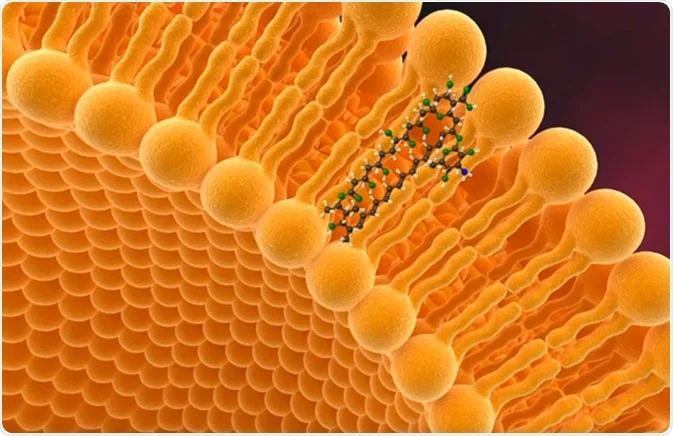
Genetic engineering works at the level of DNA to adjust traits in plants, animals, or microorganisms. With 3D models, scientists can represent DNA segments, protein shapes, and molecular interactions in precise detail. These visualisations support accurate modifications in genetic sequences. By seeing how a protein folds or how a molecule binds, biotechnology firms can create targeted solutions.

Recombinant DNA technology benefits greatly from this modelling. Researchers can simulate adding a gene to a host organism. They can then check for possible changes in behaviour or production.

In agricultural biotechnology, this can result in crops resistant to pests or tolerant to drought. In human health, the same process helps in the design of therapies for genetic disorders.

Read more: AI in Biotechnology: Nature in the Palm of our Hands

Agricultural Biotechnology and Food Supply Stability

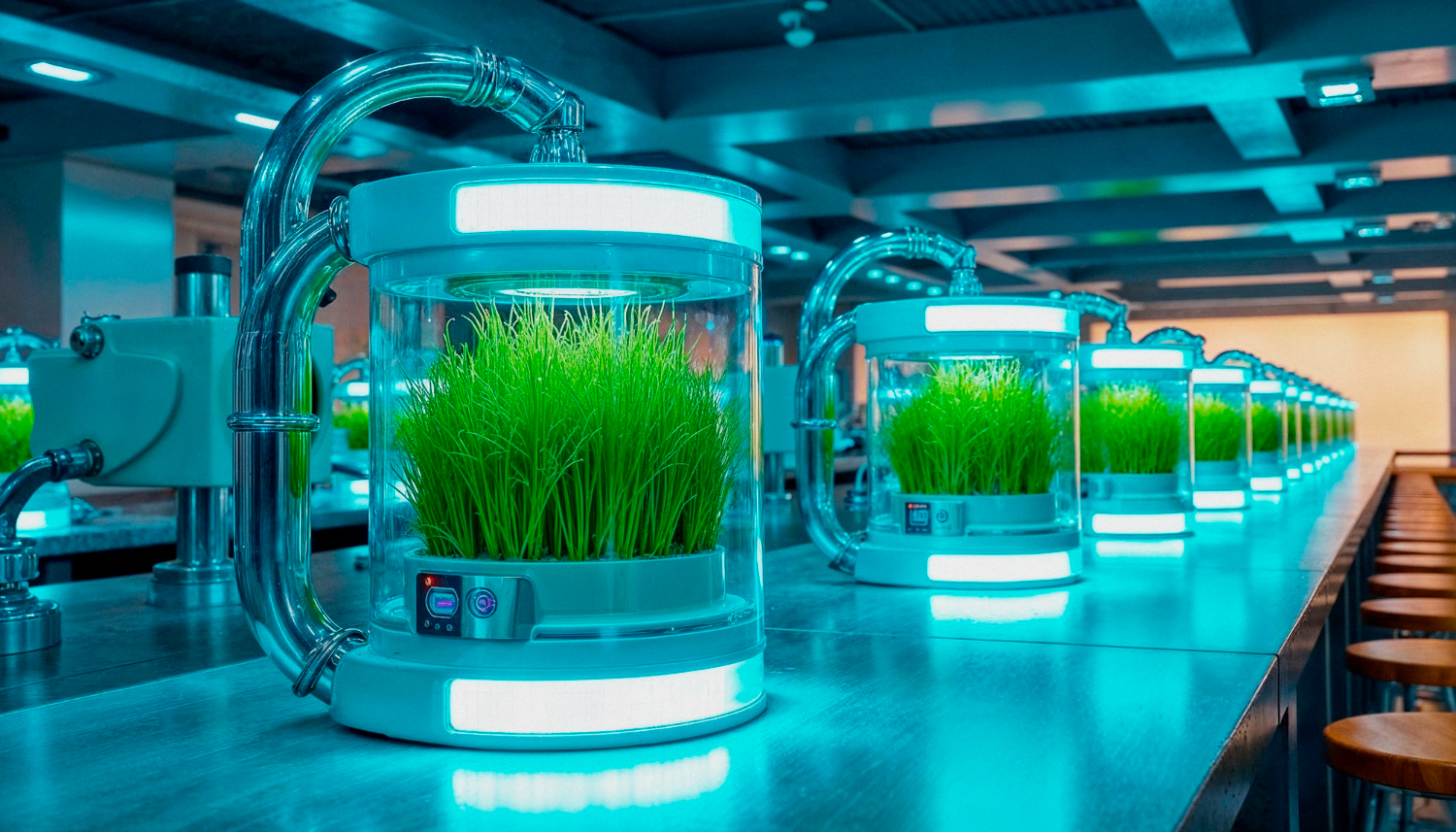
Agricultural biotechnology uses tools like gene editing and recombinant DNA technology to improve plants and animals. 3D models give a detailed picture of plant cell structures, root systems, and growth patterns.

Scientists can simulate different conditions. This helps them understand how crops respond to environmental stress. They do this before planting the crops in the real world.

The department of agriculture supports projects that use modelling to predict how agricultural biotechnology products will perform under varying soil and climate conditions. By combining genetic data with structural models, farming systems can become more efficient and resilient. This approach not only improves yields but also helps protect the food supply from the impact of disease or extreme weather.

Tissue Engineering and Medical Applications

Tissue engineering focuses on creating biological tissues for human health purposes, such as skin grafts or organ repair. 3D models are central to designing scaffolds, studying cell growth, and predicting how tissues will behave in the body. These models help engineers decide where to place cells and materials. This promotes the right structure and function.

Gene therapy can also benefit from accurate models. By visualising the delivery method of a genetic treatment, medical teams can choose the most effective course of action. Diagnostic tests gain accuracy when informed by structural predictions, leading to quicker treatment decisions. Modern biotechnology has made it possible to simulate these scenarios with high precision before any clinical work begins.

Industrial Biotechnology and Process Optimisation

Biotechnology industrial applications go beyond healthcare and agriculture. Industrial biotechnology uses living cells, enzymes, or microorganisms to create products in areas such as biofuels, chemicals, and materials. 3D models contribute by simulating industrial processes at the molecular level, predicting reactions, and improving efficiency.

In manufacturing, structural modelling helps optimise equipment design to handle biological materials without contamination. By applying these insights, biotechnology firms can meet production targets while maintaining quality control. Agencies like the Environmental Protection Agency regulate these processes to ensure they meet safety and environmental standards.

Read more: Generative AI: Pharma’s Drug Discovery Revolution

Collaboration Between Regulation and Innovation

The development of biotechnology products often requires approval from multiple authorities. The Food and Drug Administration oversees products related to human health, while the Environmental Protection Agency ensures environmental safety. The department of agriculture handles plant and animal biotechnology used in farming.

3D models help companies demonstrate compliance. By showing clear, visual evidence of safety and effectiveness, biotechnology firms can streamline the approval process. This teamwork between innovation and regulation helps new products enter the market. It ensures confidence in their performance and safety.

Read more: Generative AI Security Risks and Best Practice Measures

Education and Training in Biological Sciences

Biological sciences education now integrates modern biotechnology and 3D models into training programmes. Students can use simulations to study genetic engineering, tissue engineering, and diagnostic testing without handling live samples. This reduces costs and increases safety in training environments.

Practical skills in building and interpreting 3D models prepare future scientists for careers in biotechnology firms. By understanding how computer-generated structures represent real biological systems, students become more effective problem solvers in agricultural biotechnology, industrial biotechnology, and medical research.

The Future of Biotechnology with 3D Models

As technology advances, 3D models will become even more detailed and interactive. Biotechnology firms will integrate these models into every stage of research, development, and production. In human health, this could mean more personalised treatments and faster gene therapy deployment. In agriculture, models will allow continuous monitoring of crop performance with real-time adjustments to farming strategies.

Industrial biotechnology will also expand its use of modelling to refine processes, reduce waste, and meet sustainability goals. This evolution will depend on close cooperation between researchers, engineers, regulatory bodies, and industry leaders.

Read more: 3D Visualisation Just Became Smarter with AI

How TechnoLynx Can Help

TechnoLynx works with biotechnology firms to create advanced 3D models for genetic engineering, tissue engineering, and industrial processes. Our solutions support the design of biotechnology products for plants and animals, enhance diagnostic tests, and improve production efficiency. We follow guidelines from the Food and Drug Administration, Environmental Protection Agency, and Department of Agriculture. This helps our clients meet rules while still being innovative.

TechnoLynx provides accurate and reliable modelling solutions. We help improve human health with precise gene therapy planning. We also support agricultural biotechnology to strengthen the food supply. Our expertise helps clients move projects from concept to application with confidence and speed.

Let TechnoLynx help you in your next 3D modelling project!

Image credits: Freepik

Pharmaceutical Supply Chain: Where AI and Computer Vision Solve Visibility Gaps

Pharmaceutical Supply Chain: Where AI and Computer Vision Solve Visibility Gaps

10/05/2026

Pharma supply chains span API sourcing to patient delivery. AI addresses the serialisation, cold chain, and counterfeit detection gaps manual tracking.

Vision Systems for Manufacturing Quality Control: Inline vs Offline, Hardware and PLC Integration

Vision Systems for Manufacturing Quality Control: Inline vs Offline, Hardware and PLC Integration

10/05/2026

Industrial vision systems for manufacturing quality control: inline vs offline inspection, line-scan vs area cameras, PLC integration, and realistic.

AI Video Surveillance for Apartment Buildings: Analytics, Privacy Zones, and False Alarm Rates

AI Video Surveillance for Apartment Buildings: Analytics, Privacy Zones, and False Alarm Rates

9/05/2026

AI video surveillance for apartment buildings: access control integration, package detection, loitering alerts, privacy zones, and false alarm rates in.

Retail Shrinkage and Computer Vision: What CV Can and Cannot Detect

Retail Shrinkage and Computer Vision: What CV Can and Cannot Detect

9/05/2026

Retail shrinkage from theft, admin error, and vendor fraud: how CV systems address each, what they miss, and realistic shrinkage reduction numbers.

Object Detection Model Selection for Production: YOLO vs Transformers, Speed/Accuracy, and Deployment

Object Detection Model Selection for Production: YOLO vs Transformers, Speed/Accuracy, and Deployment

9/05/2026

Object detection model selection for production: YOLO variants vs detection transformers, speed/accuracy tradeoffs, edge vs cloud deployment, mAP vs.

Manufacturing Safety AI: Gun Detection and Threat Monitoring with Computer Vision

Manufacturing Safety AI: Gun Detection and Threat Monitoring with Computer Vision

9/05/2026

AI gun detection in manufacturing uses CV to identify weapons in camera feeds. What the technology detects, accuracy limits, and deployment considerations.

Machine Vision Image Sensor Selection: CCD vs CMOS, Resolution, and Illumination

Machine Vision Image Sensor Selection: CCD vs CMOS, Resolution, and Illumination

9/05/2026

How to select image sensors for machine vision: CCD vs CMOS tradeoffs, resolution, frame rate, pixel size, and illumination requirements by inspection.

Facial Recognition Cameras for Commercial Deployment: Matching, Enrollment, and Legal Framework

Facial Recognition Cameras for Commercial Deployment: Matching, Enrollment, and Legal Framework

9/05/2026

Commercial facial recognition deployments: enrollment management, 1:1 vs 1:N matching, false acceptance rates, consent requirements, and hardware.

Facial Detection Software: Open Source vs Commercial APIs, Accuracy, and Production Integration

Facial Detection Software: Open Source vs Commercial APIs, Accuracy, and Production Integration

8/05/2026

Facial detection software options: OpenCV, dlib, DeepFace vs commercial APIs, when to build vs buy, demographic accuracy, and production pipeline.

Face Detection Camera Systems: Resolution, Lighting, and Real-World False Positive Rates

Face Detection Camera Systems: Resolution, Lighting, and Real-World False Positive Rates

8/05/2026

Face detection camera prerequisites: resolution minimums, angle and lighting requirements, MTCNN vs RetinaFace vs MediaPipe, and real-world false positive.

Embedded Edge Devices for CV Deployment: Jetson vs Coral vs Hailo vs OAK-D

Embedded Edge Devices for CV Deployment: Jetson vs Coral vs Hailo vs OAK-D

8/05/2026

Embedded edge devices for CV: NVIDIA Jetson vs Coral TPU vs Hailo vs OAK-D — power, inference throughput, and model optimisation requirements compared.

Driveway CCTV Cameras with AI Detection: Vehicle Classification, Night Performance, and False Alarm Reduction

Driveway CCTV Cameras with AI Detection: Vehicle Classification, Night Performance, and False Alarm Reduction

8/05/2026

Driveway CCTV AI detection: vehicle vs person classification, IR vs starlight night performance, reducing animal and shadow false alarms, home automation.

Digital Shelf Monitoring with Computer Vision: What Retail AI Actually Detects

7/05/2026

Digital shelf monitoring uses CV to detect out-of-stocks, planogram compliance, and pricing errors. What systems detect and where accuracy drops.

Deep Learning for Image Processing in Production: Architecture Choices, Training, and Deployment

7/05/2026

Deep learning for image processing in production: CNN vs ViT tradeoffs, training data requirements, augmentation, deployment optimisation, and.

AI vs Real Face: Anti-Spoofing, Liveness Detection, and When Custom CV Models Are Necessary

7/05/2026

When synthetic faces defeat pretrained detectors: anti-spoofing challenges, liveness detection requirements, and when custom models are unavoidable.

AI-Based CCTV Monitoring Solutions: Automation vs Human Review and What Each Handles Well

7/05/2026

AI CCTV monitoring vs human monitoring: cost comparison, coverage capability, response time tradeoffs, and what AI handles well vs where human judgment is.

CCTV Face Recognition in Production: Why It Fails More Than Demos Suggest

7/05/2026

CCTV face recognition: resolution requirements, angle and lighting challenges, false positive rates, GDPR compliance, and why production performance lags.

AI-Enabled CCTV for Building Security: Analytics, Camera Placement, and Infrastructure

6/05/2026

AI CCTV for building security: intrusion detection, people counting, loitering analytics, camera placement strategy, and storage and bandwidth.

Best Wired CCTV Systems for AI Video Analytics: What Matters Beyond Resolution

6/05/2026

Wired CCTV for AI analytics needs more than resolution. Codec support, edge processing, and integration architecture decide analytics quality.

Automated Visual Inspection in Pharma: How CV Systems Replace Manual Quality Checks

6/05/2026

Automated visual inspection in pharma uses computer vision to detect defects in vials, syringes, and tablets — faster and more consistently than human.

Automated Visual Inspection Systems: Hardware, Model Selection, and False-Reject Rates

6/05/2026

Build automated visual inspection systems that work: hardware setup, model selection (classification vs detection vs segmentation), and managing.

Aseptic Manufacturing in Pharma: Process Control, Risks, and Where AI Fits

6/05/2026

Aseptic manufacturing prevents microbial contamination during sterile drug production. AI monitoring addresses the environmental control gaps humans miss.

4K Security Cameras and AI Analytics: When Higher Resolution Helps and When It Doesn't

6/05/2026

4K security cameras for AI analytics: bandwidth and storage costs, where higher resolution improves results, compression artifacts and AI accuracy.

Computer Vision in Pharmacy Retail: Inventory Tracking, Planogram Compliance, and Shrinkage Reduction

5/05/2026

CV in pharmacy retail addresses unique challenges: regulated product tracking, controlled substance security, and planogram compliance across thousands of SKUs.

Visual Inspection Equipment for Manufacturing QC: Where AI Adds Value and Where Rules Still Win

5/05/2026

AI-enhanced visual inspection replaces rule-based defect detection with learned representations — but requires validated training data matching production variability.

Facial Recognition in Video Surveillance: Why Lab Accuracy Doesn't Transfer to CCTV

5/05/2026

Facial recognition accuracy drops 10–40% between controlled enrollment conditions and production CCTV due to angle, lighting, and resolution.

Computer Vision Store Analytics: What Cameras Can Actually Measure in Retail

5/05/2026

Store analytics CV must distinguish 'detected' from 'measured with business-decision confidence.' Most deployments conflate the two.

AI in Pharmaceutical Supply Chains: Where Computer Vision and Predictive Analytics Deliver ROI

5/05/2026

Pharma supply chain AI delivers measurable ROI in three areas: serialisation verification, cold-chain anomaly prediction, and visual inspection automation.

Computer Vision for Retail Loss Prevention: What Works, What Breaks, and Why Scale Matters

5/05/2026

CV-based loss prevention must handle thousands of SKUs under variable lighting. Single-model approaches produce unactionable alert volumes at scale.

Intelligent Video Analytics: How Modern CCTV Systems Detect Behaviour Instead of Motion

4/05/2026

IVA shifts surveillance alerting from pixel-change detection to behaviour understanding. But only modular pipeline architectures deliver this in practice.

Cross-Platform TTS Inference Under Real-Time Constraints: ONNX and CoreML

1/05/2026

Cross-platform TTS to iOS, Android and browser stays consistent only if compression is decided at training time — distill once, export to ONNX.

Production Anomaly Detection in Video Data Pipelines: A Generative Approach

1/05/2026

Generative models trained on normal frames detect rare video anomalies without labelled anomaly data — reconstruction error is the score.

Designing Observable CV Pipelines for CCTV: Modular Architecture for Security Operations

30/04/2026

Operators stop trusting CV alerts when the pipeline is opaque. Observable, modular CCTV pipelines decompose decisions into auditable stages.

The Unknown-Object Loop: Designing Retail CV Systems That Improve Operationally

30/04/2026

Retail CV deployments meet products outside the training catalogue. The architectural choice: silent misclassification or a designed review loop.

Why Client-Side ML Projects Miss Latency Targets Before Deployment

29/04/2026

Client-side ML misses latency targets when the device capability baseline is set after architecture selection rather than before. Sequence matters.

Building a Production SKU Recognition System That Degrades Gracefully

29/04/2026

Graceful degradation in production SKU recognition is an architectural property: predictable automation rate as the catalogue grows.

Why AI Video Surveillance Generates False Alarms — And What Pipeline Architecture Reduces Them

28/04/2026

Surveillance false alarms are an architecture problem, not a sensitivity setting. Modular pipelines reduce them; monolithic ones cannot.

Why Computer Vision Fails at Retail Scale: The Compound Failure Class

28/04/2026

CV models that pass accuracy tests at 500 SKUs fail in production above 1,000 — not from one cause but from four simultaneous failure axes.

When to Build a Custom Computer Vision Model vs Use an Off-the-Shelf Solution

26/04/2026

Custom CV models are justified when the domain is specialised and off-the-shelf accuracy is insufficient. Otherwise, customisation adds waste.

How to Deploy Computer Vision Models on Edge Devices

25/04/2026

Edge CV trades accuracy for latency and bandwidth savings. Quantisation, model selection, and hardware matching determine whether the trade-off works.

What ROI Computer Vision Actually Delivers in Retail

24/04/2026

Retail CV ROI comes from shrinkage reduction, planogram compliance, and checkout automation — not AI dashboards. Measure what changes operationally.

Data Quality Problems That Cause Computer Vision Systems to Degrade After Deployment

23/04/2026

CV system degradation after deployment is usually a data problem. Annotation inconsistency, domain shift, and data drift are the structural causes.

How Computer Vision Replaces Manual Visual Inspection in Pharmaceutical Quality Control

23/04/2026

CV-based pharma QC inspection is a production engineering problem, not a model accuracy problem. It requires data, validation, and pipeline design.

How to Architect a Modular Computer Vision Pipeline for Production Reliability

22/04/2026

A production CV pipeline is a system architecture problem, not a model accuracy problem. Modular design enables debugging and component-level maintenance.

Machine Vision vs Computer Vision: Choosing the Right Inspection Approach for Manufacturing

21/04/2026

Machine vision is deterministic and auditable. Computer vision is adaptive and generalisable. The choice depends on defect complexity, not preference.

Why Off-the-Shelf Computer Vision Models Fail in Production

20/04/2026

Off-the-shelf CV models degrade in production due to variable conditions, class imbalance, and throughput demands that benchmarks never test.

Deep Learning Models for Accurate Object Size Classification

27/01/2026

A clear and practical guide to deep learning models for object size classification, covering feature extraction, model architectures, detection pipelines, and real‑world considerations.

Interactive Visual Aids in Pharma: Driving Engagement

2/12/2025

Learn how interactive visual aids are transforming pharma communication in 2025, improving engagement and clarity for healthcare professionals and patients.

Back See Blogs
arrow icon