Facial Recognition in Video Surveillance: Why Lab Accuracy Doesn't Transfer to CCTV

Facial recognition accuracy drops 10–40% between controlled enrollment conditions and production CCTV due to angle, lighting, and resolution.

Facial Recognition in Video Surveillance: Why Lab Accuracy Doesn't Transfer to CCTV
Written by TechnoLynx Published on 05 May 2026

The accuracy gap between lab and CCTV

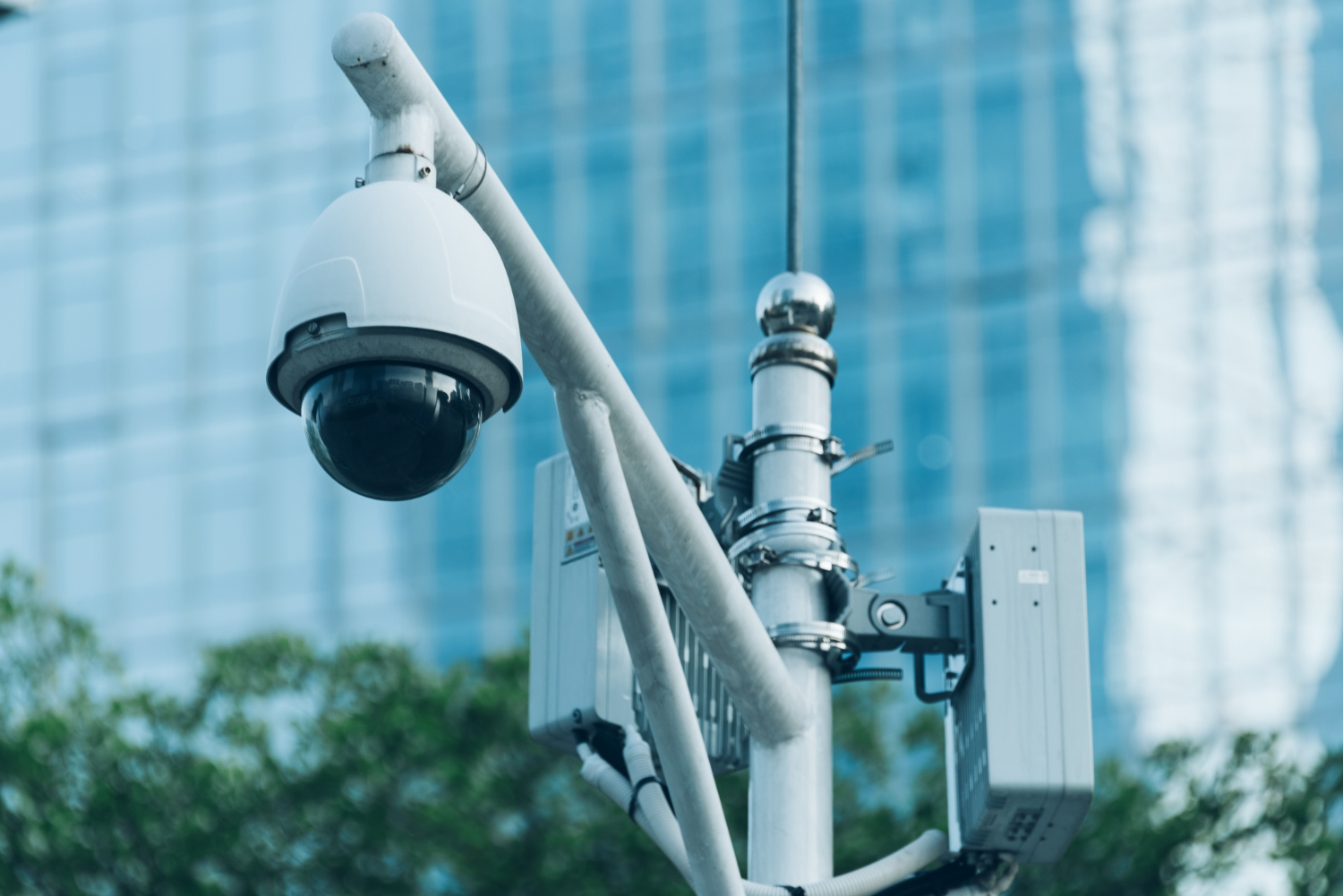
Facial recognition vendors report accuracy rates of 99%+ on benchmark datasets (LFW, MegaFace, NIST FRVT). These benchmarks use cooperative subjects, controlled lighting, frontal-facing poses, and high-resolution images. Production CCTV environments provide none of these conditions. Facial recognition accuracy drops 10–40% between controlled enrollment conditions and production CCTV — angle, lighting, and resolution are the primary degradation factors.

This isn’t a model quality issue. It’s a physics and deployment issue. The same algorithm that achieves 99.7% on NIST FRVT may achieve 65–80% in a real CCTV corridor with overhead angles, mixed lighting, and 720p resolution at 15 metres.

The three degradation factors

Factor Lab condition CCTV reality Impact on accuracy
Angle Frontal (±15°) 30–60° overhead, oblique 15–25% accuracy reduction at >30° off-axis
Lighting Uniform, consistent Variable (natural + artificial, shadows, backlight) 10–20% reduction under mixed/backlit conditions
Resolution 100+ pixels between eyes 20–40 pixels between eyes at typical camera distances Below 40 inter-pupillary pixels, recognition becomes unreliable

These factors compound. A subject at 30° angle, under mixed lighting, at 25 inter-pupillary pixels may produce a match confidence below any operationally useful threshold — even when the same subject at enrollment produced a near-perfect template.

What makes facial recognition work in production

Deployments that maintain useful accuracy in real conditions share characteristics: controlled enrollment (high-quality frontal images), camera positions chosen for facial capture (not general surveillance), illumination specifically designed for face imaging (IR illuminators), and narrow operating distances (access gates, not open corridors).

Observable CV pipeline architecture allows facial recognition to function as one signal in a multi-stage pipeline — where a face match contributes confidence alongside other identifiers (gait, clothing, badge) rather than serving as the sole identification mechanism. This architectural approach tolerates individual-stage inaccuracy because no single stage bears the full decision weight.

The operational implication

Teams considering facial recognition for CCTV applications should test with their actual camera infrastructure, at actual operating distances, under actual lighting conditions — before making deployment commitments. Vendor demonstrations using cooperative subjects at 2-metre distance under ring lighting tell you nothing about the system’s performance on your 15-metre corridor cameras at ceiling height.

Computer Vision in Pharmacy Retail: Inventory Tracking, Planogram Compliance, and Shrinkage Reduction

Computer Vision in Pharmacy Retail: Inventory Tracking, Planogram Compliance, and Shrinkage Reduction

5/05/2026

CV in pharmacy retail addresses unique challenges: regulated product tracking, controlled substance security, and planogram compliance across thousands of SKUs.

Visual Inspection Equipment for Manufacturing QC: Where AI Adds Value and Where Rules Still Win

Visual Inspection Equipment for Manufacturing QC: Where AI Adds Value and Where Rules Still Win

5/05/2026

AI-enhanced visual inspection replaces rule-based defect detection with learned representations — but requires validated training data matching production variability.

Computer Vision Store Analytics: What Cameras Can Actually Measure in Retail

Computer Vision Store Analytics: What Cameras Can Actually Measure in Retail

5/05/2026

Store analytics CV must distinguish 'detected' from 'measured with business-decision confidence.' Most deployments conflate the two.

AI in Pharmaceutical Supply Chains: Where Computer Vision and Predictive Analytics Deliver ROI

AI in Pharmaceutical Supply Chains: Where Computer Vision and Predictive Analytics Deliver ROI

5/05/2026

Pharma supply chain AI delivers measurable ROI in three areas: serialisation verification, cold-chain anomaly prediction, and visual inspection automation.

Computer Vision for Retail Loss Prevention: What Works, What Breaks, and Why Scale Matters

Computer Vision for Retail Loss Prevention: What Works, What Breaks, and Why Scale Matters

5/05/2026

CV-based loss prevention must handle thousands of SKUs under variable lighting. Single-model approaches produce unactionable alert volumes at scale.

Intelligent Video Analytics: How Modern CCTV Systems Detect Behaviour Instead of Motion

Intelligent Video Analytics: How Modern CCTV Systems Detect Behaviour Instead of Motion

4/05/2026

IVA shifts surveillance alerting from pixel-change detection to behaviour understanding. But only modular pipeline architectures deliver this in practice.

Cross-Platform TTS Inference Under Real-Time Constraints: ONNX and CoreML

Cross-Platform TTS Inference Under Real-Time Constraints: ONNX and CoreML

1/05/2026

Cross-platform TTS to iOS, Android and browser stays consistent only if compression is decided at training time — distill once, export to ONNX.

Production Anomaly Detection in Video Data Pipelines: A Generative Approach

Production Anomaly Detection in Video Data Pipelines: A Generative Approach

1/05/2026

Generative models trained on normal frames detect rare video anomalies without labelled anomaly data — reconstruction error is the score.

Designing Observable CV Pipelines for CCTV: Modular Architecture for Security Operations

Designing Observable CV Pipelines for CCTV: Modular Architecture for Security Operations

30/04/2026

Operators stop trusting CV alerts when the pipeline is opaque. Observable, modular CCTV pipelines decompose decisions into auditable stages.

The Unknown-Object Loop: Designing Retail CV Systems That Improve Operationally

The Unknown-Object Loop: Designing Retail CV Systems That Improve Operationally

30/04/2026

Retail CV deployments meet products outside the training catalogue. The architectural choice: silent misclassification or a designed review loop.

Why Client-Side ML Projects Miss Latency Targets Before Deployment

Why Client-Side ML Projects Miss Latency Targets Before Deployment

29/04/2026

Client-side ML misses latency targets when the device capability baseline is set after architecture selection rather than before. Sequence matters.

Building a Production SKU Recognition System That Degrades Gracefully

Building a Production SKU Recognition System That Degrades Gracefully

29/04/2026

Graceful degradation in production SKU recognition is an architectural property: predictable automation rate as the catalogue grows.

Why AI Video Surveillance Generates False Alarms — And What Pipeline Architecture Reduces Them

28/04/2026

Surveillance false alarms are an architecture problem, not a sensitivity setting. Modular pipelines reduce them; monolithic ones cannot.

Why Computer Vision Fails at Retail Scale: The Compound Failure Class

28/04/2026

CV models that pass accuracy tests at 500 SKUs fail in production above 1,000 — not from one cause but from four simultaneous failure axes.

When to Build a Custom Computer Vision Model vs Use an Off-the-Shelf Solution

26/04/2026

Custom CV models are justified when the domain is specialised and off-the-shelf accuracy is insufficient. Otherwise, customisation adds waste.

How to Deploy Computer Vision Models on Edge Devices

25/04/2026

Edge CV trades accuracy for latency and bandwidth savings. Quantisation, model selection, and hardware matching determine whether the trade-off works.

What ROI Computer Vision Actually Delivers in Retail

24/04/2026

Retail CV ROI comes from shrinkage reduction, planogram compliance, and checkout automation — not AI dashboards. Measure what changes operationally.

Data Quality Problems That Cause Computer Vision Systems to Degrade After Deployment

23/04/2026

CV system degradation after deployment is usually a data problem. Annotation inconsistency, domain shift, and data drift are the structural causes.

How Computer Vision Replaces Manual Visual Inspection in Pharmaceutical Quality Control

23/04/2026

CV-based pharma QC inspection is a production engineering problem, not a model accuracy problem. It requires data, validation, and pipeline design.

How to Architect a Modular Computer Vision Pipeline for Production Reliability

22/04/2026

A production CV pipeline is a system architecture problem, not a model accuracy problem. Modular design enables debugging and component-level maintenance.

Machine Vision vs Computer Vision: Choosing the Right Inspection Approach for Manufacturing

21/04/2026

Machine vision is deterministic and auditable. Computer vision is adaptive and generalisable. The choice depends on defect complexity, not preference.

Why Off-the-Shelf Computer Vision Models Fail in Production

20/04/2026

Off-the-shelf CV models degrade in production due to variable conditions, class imbalance, and throughput demands that benchmarks never test.

Deep Learning Models for Accurate Object Size Classification

27/01/2026

A clear and practical guide to deep learning models for object size classification, covering feature extraction, model architectures, detection pipelines, and real‑world considerations.

Mimicking Human Vision: Rethinking Computer Vision Systems

10/11/2025

Why computer vision systems trained on benchmarks fail on real inputs, and how attention mechanisms, context modelling, and multi-scale features close the gap.

Visual analytic intelligence of neural networks

7/11/2025

Neural network visualisation: how activation maps, layer inspection, and feature attribution reveal what a model has learned and where it will fail.

AI Object Tracking Solutions: Intelligent Automation

12/05/2025

Multi-object tracking in production: handling occlusion, re-identification, and real-time latency constraints in industrial and retail camera systems.

Automating Assembly Lines with Computer Vision

24/04/2025

Integrating computer vision into assembly lines: inspection system design, detection accuracy targets, and edge deployment considerations for manufacturing environments.

The Growing Need for Video Pipeline Optimisation

10/04/2025

Video pipeline optimisation: how encoding, transmission, and decoding decisions determine real-time computer vision latency and processing throughput at scale.

Smarter and More Accurate AI: Why Businesses Turn to HITL

27/03/2025

Human-in-the-loop AI: how to design review queues that maintain throughput while keeping humans in control of low-confidence and edge-case decisions.

Optimising Quality Control Workflows with AI and Computer Vision

24/03/2025

Quality control with computer vision: inspection pipeline design, defect detection architectures, and the measurement factors that determine false-reject rates in production.

Inventory Management Applications: Computer Vision to the Rescue!

17/03/2025

Computer vision for inventory counting and tracking: how shelf-state monitoring, object detection, and anomaly detection reduce manual audit overhead in warehouses and retail.

Explainability (XAI) In Computer Vision

17/03/2025

Explainability in computer vision: how saliency maps, attention visualisation, and interpretable architectures make CV models auditable and correctable in production.

The Impact of Computer Vision on Real-Time Face Detection

10/02/2025

Real-time face detection in production: CNN architecture choices, detection pipeline design, and the latency constraints that determine deployment feasibility.

Case Study: Large-Scale SKU Product Recognition

10/12/2024

Hierarchical SKU classification using DINO embeddings and few-shot learning — above 95% accuracy at ~1k classes, above 83% at ~2k.

Case Study: WebSDK Client-Side ML Inference Optimisation

20/11/2024

Browser-deployed face quality classifier rebuilt around a single multiclassifier, WebGL pixel capture, and explicit device-capability gating.

Streamlining Sorting and Counting Processes with AI

19/11/2024

Learn how AI aids in sorting and counting with applications in various industries. Get hands-on with code examples for sorting and counting apples based on size and ripeness using instance segmentation and YOLO-World object detection.

Case Study: Share-of-Shelf Analytics

20/09/2024

Per-shelf share-of-shelf measurement in area and count modes, with unknown-product handling treated as a first-class operational output.

Case Study: Smart Cart Object Detection and Tracking

15/07/2024

In-cart perception for autonomous retail checkout: detection, tracking, adaptive FPS sampling, and a session-scoped cart-state model.

The AI Innovations Behind Smart Retail

6/05/2024

How computer vision powers shelf monitoring, customer flow analysis, and checkout automation in retail environments — and what integration actually requires.

The Synergy of AI: Screening & Diagnostics on Steroids!

3/05/2024

Computer vision in medical imaging: how AI systems accelerate screening and diagnostic workflows while managing the false-positive rates that determine clinical acceptance.

A Gentle Introduction to CoreMLtools

18/04/2024

CoreML and coremltools explained: how to convert trained models to Apple's on-device format and deploy computer vision models in iOS and macOS applications.

Computer Vision for Quality Control

16/11/2023

Let's talk about how artificial intelligence, coupled with computer vision, is reshaping manufacturing processes!

Computer Vision in Manufacturing

19/10/2023

Computer vision in manufacturing: how inspection systems detect defects, verify assembly, and measure dimensional tolerances in real-time production environments.

Case Study: Barcode Detection for Autonomous Retail

15/10/2023

Camera-based barcode pipeline for in-cart capture: YOLO localisation, ensemble decoding, multi-frame polling — 86.7% vs Dynamsoft 80%.

Back See Blogs
arrow icon