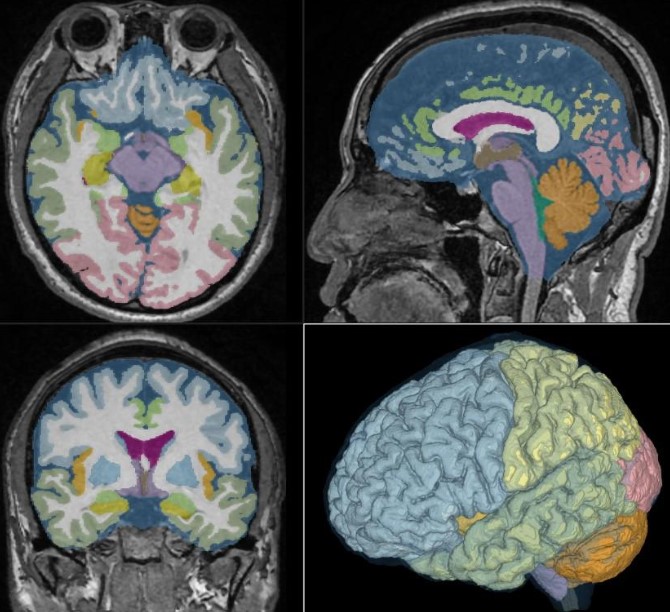
Computer vision is now a routine assistive layer in radiology and pathology workflows, not because it diagnoses on its own, but because it changes the economics of screening. A well-tuned detector can pre-read thousands of studies overnight, flag the small fraction worth a clinician’s full attention, and quietly drop the noise. The interesting question is no longer whether AI can identify a lesion on a scan — it is which screening and diagnostic tasks actually benefit, and which still belong firmly with a human reader.
We work on the computer-vision side of medical imaging, and the pattern we see across deployments is consistent: the value lives in triage, prioritisation, and second-read assistance — not in autonomous diagnosis. The systems that hold up under audit are the ones built around that frame from day one. Building that audit-ready frame is the core of the life-sciences AI work we do for imaging and diagnostics teams.
What Does AI Actually Do in Medical Screening?
Deep learning systems applied to radiology images execute three core functions: classification determines whether abnormalities exist, localisation maps their anatomical coordinates, and prioritisation ranks urgency for radiologist review. On chest radiographs, mammograms, retinal fundus photographs, and dermoscopy images, this kind of pipeline has moved from research to production over the last several years.
The honest framing is computer-aided detection and triage. The model surfaces candidates; a clinician adjudicates. The headline metric that determines whether such a system is useful is not raw accuracy — it is the sensitivity/specificity trade-off at the operating point chosen for that workflow. An observed pattern across deployed screening pipelines is that pushing sensitivity past roughly 95% causes false-positive rates to climb steeply, which then absorbs the radiologist time the system was meant to save. The deployment decision is fundamentally about where on that curve the workflow can sustainably sit, not about chasing a benchmarked accuracy number.
Where on the Pipeline Does AI Pay Off?
Certain imaging workflows offer far better conditions for algorithmic support than others. The pattern we see across screening, triage, and diagnostic workflows looks roughly like this:
| Imaging task | AI role today | Why it works (or doesn’t) |
|---|---|---|
| High-volume screening (chest X-ray, mammography, DR) | Triage and worklist prioritisation | Large labelled datasets exist; abnormalities are visually distinct; volume justifies pre-read |
| Second-read on flagged studies | Concurrent reader assistance | Reduces miss rate without removing human accountability |
| Quantification (lesion volume, ejection fraction) | Measurement automation | Replaces tedious manual segmentation; output is auditable |
| Rare-disease detection | Limited — research stage | Long tail of presentations; insufficient labelled data per class |
| Autonomous diagnosis | Not deployed clinically at scale | Regulatory framework requires clinician sign-off for diagnostic decisions |
The pattern is consistent: AI adds the most value where the volume is high, the labelled data is plentiful, and a human remains in the loop for the final read. Outside that envelope, performance degrades quickly and the regulatory path narrows.
How Is the Underlying Model Built?
Standard convolutional architectures underpin most clinical-grade detection systems, distinguished primarily by their training discipline rather than exotic model design. Models are typically convolutional architectures or vision transformers trained in PyTorch or TensorFlow, exported to ONNX for portability, and accelerated at inference with TensorRT or CUDA-backed runtimes on the local hospital GPU. Containerisation through Docker (and orchestration through Kubernetes for larger deployments) handles the integration with PACS and reporting systems.
The training data is where the work actually lives. A robust screening model needs imagery drawn from multiple scanners, demographics, and acquisition protocols. Without that breadth, the model overfits to one site’s equipment and quietly fails on transfer. Data augmentation — geometric transforms, intensity perturbations, and synthetic image generation through generative models — extends the effective dataset, but it cannot substitute for genuine site diversity. In our experience, the dataset audit (provenance, consent, labelling protocol, inter-rater agreement) takes longer than training the model itself.
A second non-negotiable: the pipeline must be reproducible. Reproducibility means versioned datasets, pinned model weights, deterministic preprocessing, and an MLflow-style record of every training run. Regulators expect to see the chain of custody from raw image to inference output, and so do hospital IT review boards.
Why Do False Positives Matter More Than the Headline Accuracy?
Ninety-nine percent sensitivity conceals as many problems as it solves. In a screening population with low disease prevalence — which is most screening populations — the absolute number of false positives at that accuracy can still flood the worklist. Each false positive consumes radiologist time on additional reads, sometimes triggers downstream imaging or biopsy, and erodes trust in the system.
This is why the operating-point decision is a workflow question, not a model question. The published-survey literature on radiology AI repeatedly shows that adoption stalls when the false-positive burden exceeds the time saved on true negatives. We treat that as a design constraint: pick the operating point that keeps the radiologist-hours equation positive, and accept that the maximum-sensitivity setting is rarely the right one for daily use.
What Are the Real Risks in Deployment?
Three failure modes show up regularly in observed clinical deployments:
- Distribution shift. The scanner gets replaced, a contrast protocol changes, or the patient demographics drift. Model performance silently degrades because nothing in the pipeline noticed the input changed. Defence: ongoing performance monitoring on a held-out audit set, not just at validation time.
- Automation bias. Clinicians who routinely see the AI flag a finding can start trusting it past the point of its actual reliability. Defence: the UI surfaces uncertainty, not just a yes/no, and the audit log records cases where the human disagreed and was right.
- Data quality at the edge. A poorly positioned image, motion artefact, or unusual acquisition can produce a confident-looking but wrong output. Defence: an input-quality classifier that rejects studies the model is not qualified to read, rather than producing a plausible-looking answer on bad input.
None of these are AI-specific problems exactly — they are deployment-discipline problems that AI makes more consequential because the inference is fast, plausible, and easy to over-trust.
How Should a Hospital Approach a First Deployment?
Experienced clinical-AI teams, working independently, arrive at a remarkably similar set of deployment principles. Start by identifying the screening or triage task with the highest volume and the longest current turnaround. Quantify the radiologist-hours spent on that task today. Define the operating point on the sensitivity/specificity curve that would meaningfully shift those hours. Only then choose or build the model.
Run the model in shadow mode first — generating predictions that clinicians do not see — for long enough to characterise its real performance on the local population. Move to concurrent reader assistance once the shadow-mode metrics are stable. Autonomous triage, where the model routes studies without a human pre-read, is the last step and only justified for narrow, well-characterised tasks.
The temptation is always to start with the most technically interesting problem. The discipline is to start with the one that pays back the deployment effort fastest, build the regulatory and monitoring infrastructure around it, and only then expand the scope.
FAQ
Which AI use cases in pharmaceutical manufacturing are already proven in production today?
Within the imaging-adjacent stack, computer-vision-based visual inspection on packaging lines, deep-learning-based particulate detection in fill-finish, and predictive-maintenance models on critical equipment are deployed in production today. Diagnostic-imaging AI sits in clinical care rather than manufacturing, but shares the same operating-point discipline.
Where on the manufacturing line does AI deliver measurable ROI — inspection, deviation triage, predictive maintenance, batch release?
Visual inspection and predictive maintenance are the two highest-ROI entry points because both have plentiful labelled data and a clear baseline (manual inspection time, unplanned downtime hours). Deviation triage and batch release are higher-value but require more validation effort before they pay back.
What separates the proven use cases from the still-experimental ones?
Proven use cases share three properties: high data volume, clear ground truth, and a human-in-the-loop checkpoint that absorbs the residual error. Experimental use cases typically fail on one of those — sparse data, ambiguous ground truth, or no realistic place for clinician adjudication.
How are existing pharma AI deployments structured to satisfy GMP and GxP requirements?
The deployed systems treat the AI as a validated piece of software: versioned model weights, deterministic preprocessing, documented training data provenance, and an audit log of every inference. The model is qualified against a frozen test set, and any retraining triggers a re-validation cycle.
Which use cases are pharma companies abandoning, and why?
End-to-end autonomous batch-release decisions and AI-driven root-cause attribution on complex deviations are the two most commonly scaled back. Both fail the human-in-the-loop test — the residual error has nowhere to land safely.
What does a credible AI roadmap for a pharma plant look like over the next 12 months?
A credible roadmap starts with one inspection or maintenance use case in shadow mode for 3–6 months, moves to concurrent operation once metrics stabilise, then adds a second use case in parallel rather than scaling the first to autonomy. We cover the broader pattern in proven AI use cases in pharmaceutical manufacturing today.
The shorter version: AI in medical screening and diagnostics works when it is deployed as an assistive layer with a clear operating point, a monitored input distribution, and a human reader who stays accountable. The systems that get into trouble are the ones that skip those steps in pursuit of a headline accuracy number.
Three steps to pilot AI screening in your workflow
Choose a single high-throughput screening use case with minimal interpretive ambiguity, where missed findings trigger established escalation protocols and physician judgment remains the final arbiter.