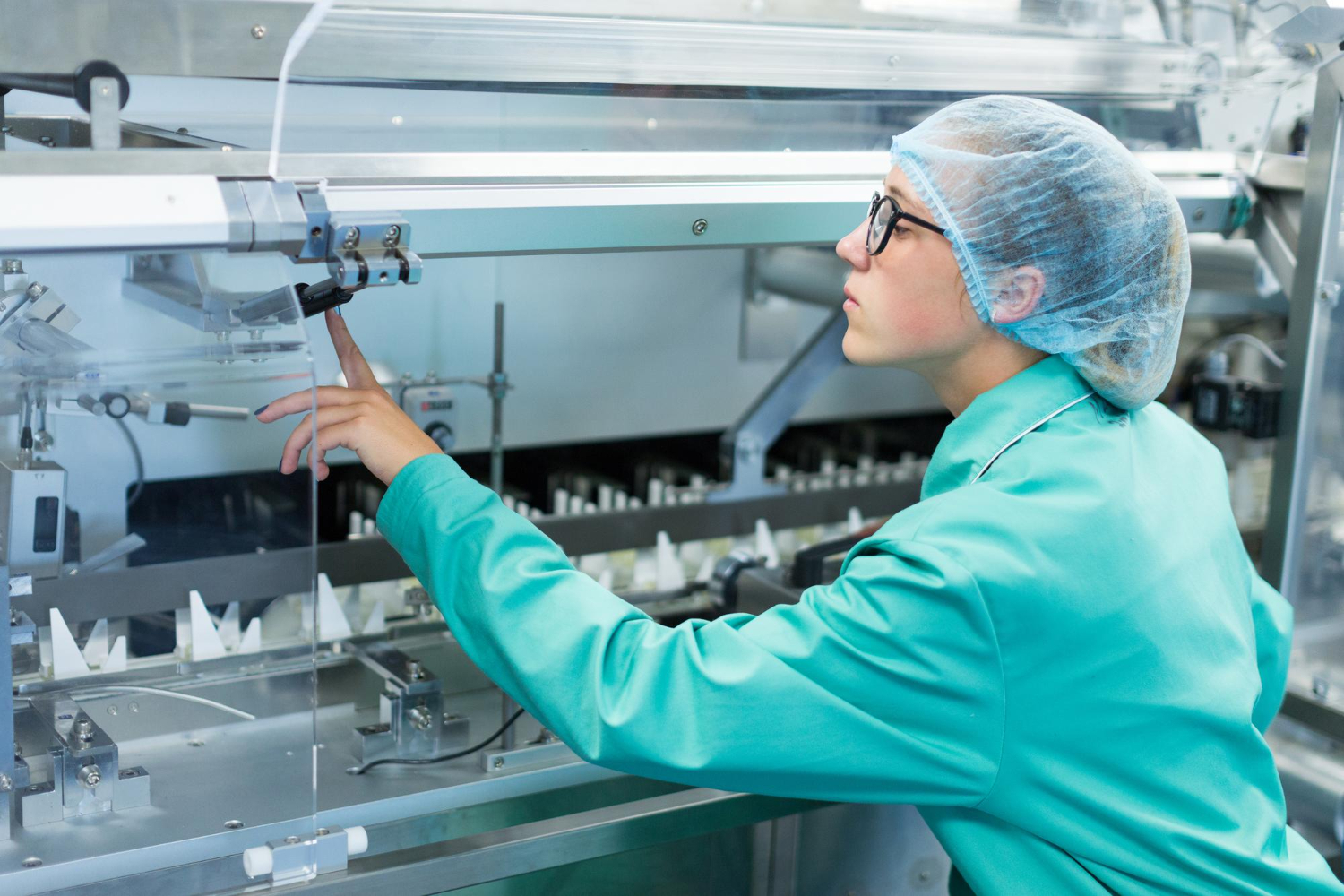
Pharmaceutical manufacturing and dispensing already run on a layer of proven AI applications — inventory projections, depot robotics, molecule visualisation, and pattern-checking on prescriptions. The drug-discovery headlines get most of the attention, but the deployable, measurable wins sit further down the supply chain. This article walks through where AI is already paying its way in pharmacy operations and pharmaceutical production, and where the gap between hype and practice still hides.
From appointment to prescription: the everyday bottleneck
Avoidable friction riddles the patient journey from initial appointment booking through final medication pickup. Phone trees, separate lab bookings, paper prescriptions, in-person pickup — each step is an integration boundary where information gets re-keyed or lost. We have written about how the Internet of Medical Things connects devices inside the hospital, and the same logic extends outward to the pharmacy.
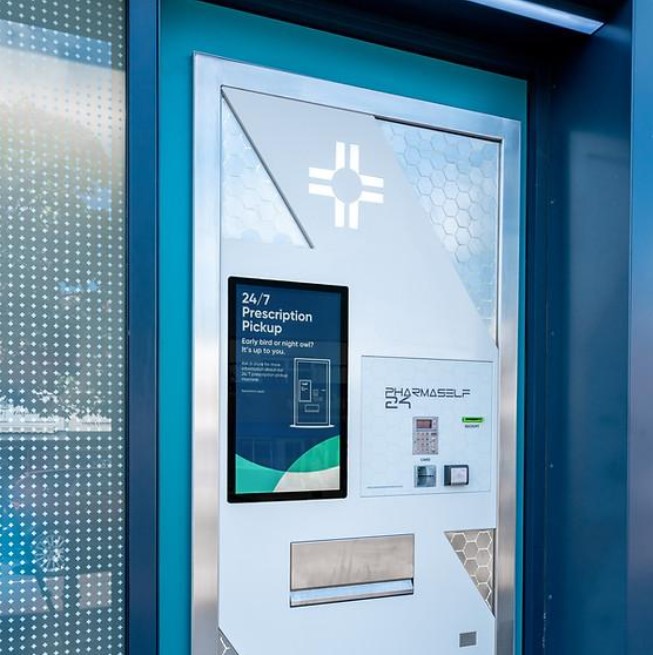
A connected flow looks different. Appointments are booked through a slot-picker app. The doctor’s prescription system writes directly to a Laboratory Information System (LIS) over a cloud connection, so the lab already knows which tests are due when the patient arrives. Results are returned to both the patient’s and the doctor’s inbox automatically. Electronic prescriptions land at the pharmacy of choice, and the patient picks up — or, increasingly, collects from a 24-hour pickup locker.
The locker piece is not theoretical. Vendors such as Omnicell have deployed automated medication pickup points — the Pharmaself24 PS24 Multi advertises a 180-item capacity per unit — across pharmacies in major cities. The technology stack is mundane (locker hardware, unique pickup code, inventory sync), which is precisely why it works. There is no AI breakthrough here; there is a workflow that finally closes the last-mile gap that kept patients tied to pharmacy opening hours.
What is AI’s role in prescription-pattern oversight?
Medication errors and inappropriate use remain persistent problems across the distribution chain. Patients can — deliberately or otherwise — accumulate prescriptions across multiple points of purchase that no single pharmacist sees end to end. This matters most for controlled medication. The NHS released mental-health medicines statistics for 2022/2023 in England showing antidepressant items rising roughly 2% year on year, and CNS stimulant / ADHD medication rising 32% for adults over 18 and 12% for under-17s (NHS Business Services Authority, 2023). Those are population-scale signals; what individual prescribers and dispensers need is point-of-sale checking.
An AI model trained on prescription history can do two things that human review at the counter cannot. First, it can correlate purchases across pharmacies tied to the same patient identifier to flag patterns — repeated early refills, overlapping prescriptions for interacting drugs, geographic dispersion of pickup points. Second, it can score the probability that a presented prescription is consistent with the patient’s prior history, raising an alert when something looks anomalous rather than refusing the transaction. The pharmacist remains the decision-maker; the model surfaces what would otherwise be invisible.
This is an observed pattern across pharmacy-operations work, not a benchmarked detection rate — the value depends entirely on data integration quality and on whether the alert workflow is one that pharmacists actually consult.

Inventory projection and automatic restocking
Inventory management at the drug-store level presents challenges that compound rapidly across networks. The SKU space spans tablets, capsules, liquids, inhalers, suppositories, injections, refrigerated biologics, and controlled substances with their own audit requirements. Most pharmacies use stock-management software; not all of them use software that projects forward.
Forecasting demand at the individual pharmacy level is a tractable machine-learning problem. The inputs are well-defined: prior dispensing history, seasonality, local prescriber patterns, and external signals like flu-season indicators. The output is a per-SKU forecast at daily, weekly, and monthly horizons, which can drive an automatic reorder against the wholesaler’s depot over a cloud-connected ordering system.
| Operational gain | Mechanism | Evidence class |
|---|---|---|
| Reduced stockouts on slow-moving SKUs | Per-SKU demand forecast vs. lead time | observed pattern in pharmacy operations |
| Lower carrying cost on overstocked lines | Reorder point tuned to forecast variance | observed pattern in pharmacy operations |
| Less manual stocktake time | Continuous reconciliation between PoS and stock | observed pattern in pharmacy operations |
| Faster response to demand shocks | Forecast retrained on rolling window | observed pattern in pharmacy operations |
The framing matters: these are observed patterns from pharmacy-operations deployments, not benchmarked rates. The actual numbers depend on the SKU mix and the baseline process the system is replacing.
Depot robotics and computer-vision-driven picking
Thousands of pharmacies depend on buffer stock held in pharmaceutical wholesale depots that occupy substantial floorspace across the supply network. Warehouses at this scale need a lot of personnel to function, and human picking errors carry direct patient-safety consequences in pharma.
Robotic pick-and-place is the most mature manufacturing-AI deployment in this space. The robots use GPU-accelerated computer vision combined with stored facility maps to navigate the shelf-row-column coordinate system of the depot, locate the requested SKU, verify it visually against the order, and transport it to the consolidation point. The 2018 commissioning of a £1.5M digital pharmacy in the UK — robot-driven dispensing replacing manual workflow — was reported as creating thirty jobs around supervision, exception handling, and patient consultation, not eliminating the human role (ResponseSource Press Release Wire, 2018).
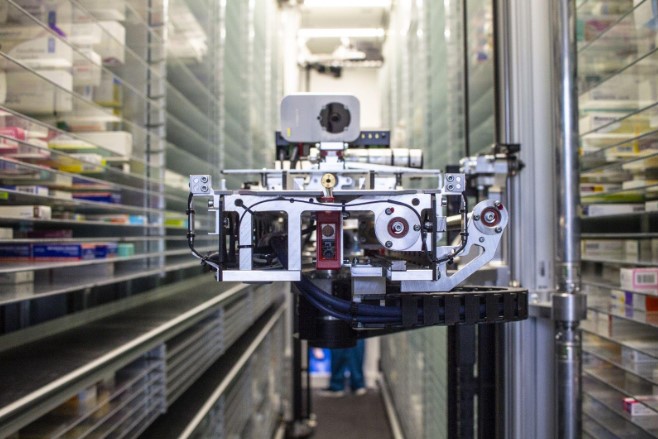
We have written more broadly about the role of AI in robotics — the depot case is a clean instance of the principle that visual perception plus deterministic navigation produces a system that is both faster than human picking and more consistent on the long tail of low-volume SKUs.
Drug design: XR, molecular visualisation, and where AI fits
Biology, chemistry, medicine, and genetics converge in the interdisciplinary effort that is drug discovery. Most of the public conversation about AI in pharma sits here — and most of it overpromises. Approval throughput at the FDA is one of the few hard reference points: from 2000 to 2008, 209 new medicines were approved; from 2009 to 2017, that figure rose to 302, with neurological disorders (12.91%), cardiovascular (9.09%), anticancer (11.96%), biologics (7.17%), antivirals (5.74%) and antibiotics (5.26%) forming the largest indication classes (Batta, Kalra and Khirasaria, 2020).
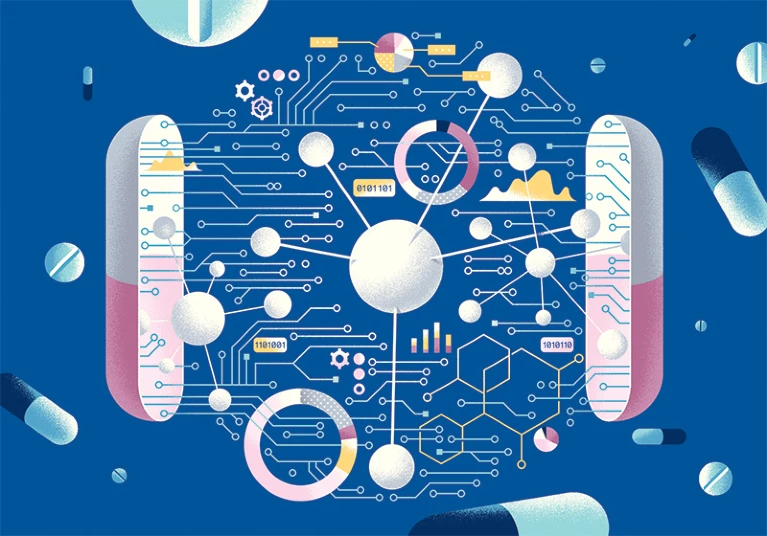
Where AI is genuinely useful in design work today is narrower than the headlines suggest: candidate molecule generation against a target, property prediction (solubility, toxicity, ADMET), and reaction-pathway suggestion. None of these replace synthesis-and-test loops; they prune the search space the chemist has to evaluate.
Augmented and virtual reality — branches of extended reality (XR) — bring a different kind of leverage. Molecular structures are inherently three-dimensional, and viewing them in shared, interactive 3D environments allows multi-disciplinary teams to discuss the same molecule simultaneously, rotate it, modify substituents, and run docking or delivery simulations against a visible binding site. The benefit is not algorithmic; it is coordinative. Teams converge faster when they are looking at the same thing.
Which use cases are proven, and which are still experimental?
A short decision rubric, organised by where each application sits on the proven-to-experimental axis:
| Application | Status | What makes it proven (or not) |
|---|---|---|
| Automated dispensing lockers | Proven | Vendor-deployed at scale; mechanical reliability, no model risk |
| Depot pick-and-place with CV | Proven | Multiple commercial deployments; clear ROI on labour and accuracy |
| Inventory demand forecasting | Proven | Standard ML problem; gains depend on data quality |
| Prescription-pattern flagging | Emerging | Works technically; deployment friction is data integration and clinical governance |
| Generative molecule design | Experimental | Useful for shortlisting; does not shortcut synthesis-and-test |
| Fully automated batch release | Experimental | Blocked on GxP validation, not on model capability |
The pattern across the table is consistent: the proven cases are ones where the AI sits inside a workflow whose failure modes are already well understood. The experimental cases are ones where AI changes what decisions are being made, which is a much harder regulatory and organisational problem.
Closing
Pharma’s near-term AI returns concentrate in supply-chain automation rather than in replacing chemists or regulatory professionals—that remains the honest assessment. Workflow automation, inventory projection, depot robotics, and decision-support overlays on prescription data are all deployable now with measurable outcomes. Generative drug design is real but narrower than the marketing suggests, and the regulatory perimeter around batch release will not move on model performance alone.
For a fuller treatment of how these applications connect into a roadmap for a pharma plant, we maintain the parent piece on proven AI use cases in pharmaceutical manufacturing. The structural question that decides which application to deploy first is rarely “what is technically interesting?” — it is “which manufacturing or dispensing stage carries the most costly failure that AI can detect or prevent?”
What we offer
Delivering tech solutions tailored to your specific operational context defines the specialisation at TechnoLynx. We work with pharmaceutical clients on AI integration across manufacturing, dispensing, and supply-chain applications — building software that is precise enough to operate inside regulated workflows and pragmatic enough to deliver measurable accuracy, efficiency, and productivity gains. That regulated-workflow discipline extends across the rest of our life-sciences AI practice. Contact us to share where the next deployable AI use case sits in your operation.
FAQ
Which AI use cases in pharmaceutical manufacturing are already proven in production today?
Automated dispensing lockers, depot pick-and-place robotics with computer vision, and per-SKU demand forecasting for inventory are the most mature. Each sits inside an existing workflow whose failure modes are well understood, which is what makes them deployable rather than experimental.
Where on the manufacturing line does AI deliver measurable ROI — inspection, deviation triage, predictive maintenance, batch release?
In the depot and dispensing layer covered here, the measurable returns come from CV-driven picking accuracy, locker-based last-mile reach, and forecasting-driven stock-out reduction. Inspection, deviation triage, and predictive maintenance on the production line sit upstream and are covered in adjacent material on pharma manufacturing automation.
What separates the proven use cases from the still-experimental ones?
Proven cases use AI inside a decision frame humans already make. Experimental cases ask AI to change what decision is being made — generative molecule design, automated batch release. The barrier on the latter is regulatory and organisational, not just model capability.
How are existing pharma AI deployments structured to satisfy GMP and GxP requirements?
Through scope: dispensing-side and depot-side deployments largely sit outside the GxP perimeter that governs production and release. Where AI does touch GxP-scoped processes, it is structured as decision support with a validated human-in-the-loop, with model versioning, audit trails, and change-control documentation aligned to the same lifecycle as the rest of the manufacturing software stack.
Which use cases are pharma companies abandoning, and why?
The pattern we see is abandonment of “AI for batch release” pilots that underestimated validation cost, and of generative-discovery projects that produced shortlists no faster than existing computational chemistry pipelines. The common cause is mismatched expectations between model output and the downstream process that has to act on it.
What does a credible AI roadmap for a pharma plant look like over the next 12 months?
Start with the highest-cost preventable failure on the line — typically inspection rejects, deviation backlog, or unplanned downtime — and deploy a narrow AI application against it inside the existing validated workflow. Defer generative-design and full-automation ambitions until the operational baseline is instrumented. The aim is one measurable win that proves the integration pattern, not a portfolio of experiments.
List of references
- £1.5M Digital Pharmacy Powered by Robots and AI to Create 30 Jobs (2018) ResponseSource Press Release Wire (Accessed: 3 April 2024).
- 24hr Prescription Collection, Medicine Vending. Pharmaself24 (no date) Pharmaself24.co.uk.
- Batta, A., Kalra, B.S. and Khirasaria, R. (2020) ‘Trends in FDA drug approvals over last 2 decades: An observational study’, Journal of Family Medicine and Primary Care, 9(1), pp. 105–114.
- Fleming, N. (2018) ‘How artificial intelligence is changing drug discovery’, Nature, 557(7707), pp. S55–S57.
- NHS Business Services Authority (2023) NHS releases mental health medicines statistics for 2022/2023 in England (Accessed: 3 April 2024).