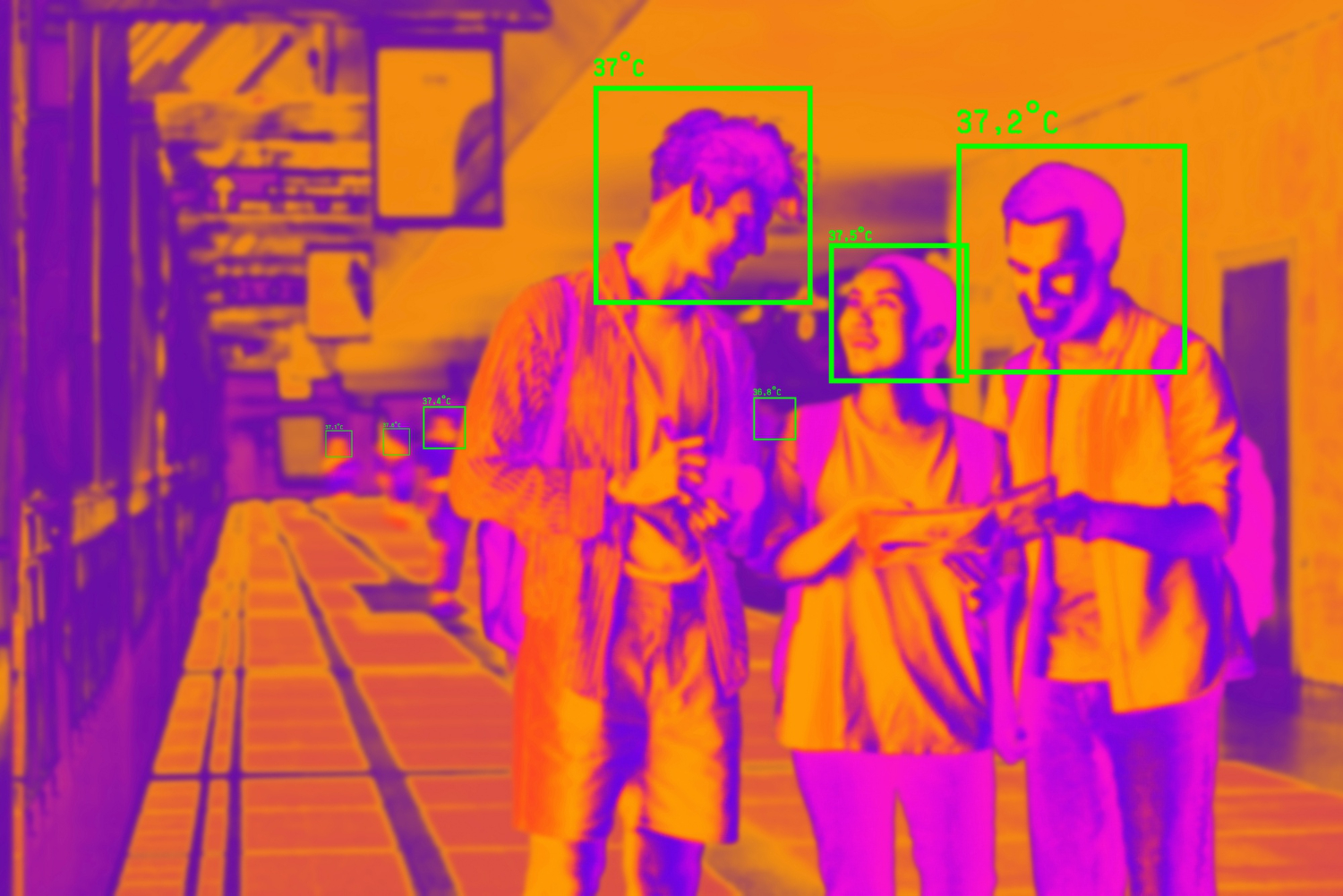
What retail shrinkage actually is
Inventory shrinkage represents the delta between recorded stock and actual merchandise available for sale or still on hand. It is not synonymous with shoplifting, though shoplifting tends to dominate the conversation. Industry data consistently shows that shrinkage breaks down across four categories, and the distribution matters because computer vision addresses some far better than others.
Typical retail shrinkage breakdown:
| Category | Typical Share of Total Shrinkage | CV Addressability |
|---|---|---|
| Employee/internal theft | 28–35% | Partial |
| External theft (shoplifting) | 35–42% | Partial |
| Administrative error | 16–20% | Low |
| Vendor/supplier fraud | 5–8% | Low |
| Unknown/unaccounted | 4–8% | N/A |
A retailer with 25% of shrinkage from vendor underdelivery (illustrative threshold) gets limited benefit from more cameras; one with 40% from organised retail crime (illustrative threshold) gets significantly more.
For the broader ROI context, see what computer vision actually delivers in retail.
What can computer vision actually detect at the shelf and the exit?
Vision systems address theft-related behaviors through pattern recognition, though detection accuracy varies widely by scenario and environmental conditions.
Dwell time and loitering analysis flags a person who spends extended time at a fixture without completing a transaction. The underlying stack is straightforward — person detection with a tracker such as ByteTrack or DeepSORT on top of a YOLO-class detector, with a dwell counter per fixture zone. It is a reliable signal for unusual behaviour patterns, but generates a significant number of false positives from genuinely browsing customers. We treat it as a triage tool for human review rather than a direct alert system.
Shelf monitoring detects when product is removed from a shelf without a corresponding purchase event. This needs shelf-level cameras (not standard overhead CCTV angles), product-presence models often built on planogram references, and a way to correlate movement with POS data. It is technically feasible but infrastructure-intensive — typically deployed in high-value sections (spirits, health and beauty, electronics) rather than throughout the store.
Exit zone monitoring detects items carried past a point without a POS transaction. This is where self-checkout fraud and concealment detection fall. The main technical challenge is distinguishing legitimate carry-in items from merchandise, and detecting concealment under clothing or in bags at low false-positive rates. Accuracy is highly scene-dependent: lighting, camera angle, and crowd density all shift the operating point.
Person re-identification across cameras links known offenders across entries and across store visits. This pulls in a face recognition or appearance-matching component, brings GDPR and biometric-consent requirements (and in many EU markets a Data Protection Impact Assessment), and in our experience carries higher operational friction than the shrinkage benefit justifies except for organised retail crime targeting.
How CV addresses internal theft
Internal theft is harder to address with CV than external theft for three structural reasons:
- Employees know camera positions and blind spots.
- A large share of internal theft involves POS manipulation — refund fraud, sweethearting, void abuse — rather than physical concealment. POS anomaly detection (analytics on transaction logs, not CV) is more effective for these patterns.
- CV is most useful for detecting physical actions — removing product from stock areas, manipulating self-checkout, bag-down moves at the till — that require line-of-sight at the right angle and adequate resolution at the target distance.
We see the best internal-theft CV results in stockrooms, receiving areas, and self-checkout environments where camera placement can cover the relevant actions and the analytics correlate with transaction events.
What CV cannot address effectively
Realistic assessment of computer vision’s current capabilities prevents budget waste and expectation mismatch.
Administrative error — pricing mistakes, inaccurate receiving, system entry errors — is an inventory management and process problem, not a vision problem. CV has no reliable path to detecting that a receiving team counted 98 units instead of 100, or that a price override was incorrectly entered.
Vendor fraud — short shipping, substitution, diversion — requires receiving-dock verification processes: weighing, counting, barcode scanning, sometimes RFID. CV can support this (verifying label accuracy, detecting count discrepancies in some pallet-scan scenarios) but is rarely the primary tool.
Organised retail crime (ORC) is a different challenge than opportunistic shoplifting. ORC rings are aware of store layouts and camera coverage and operate to defeat them. Across our retail engagements, CV contributes to ORC response primarily through post-incident evidence quality and re-identification on subsequent visits, rather than real-time prevention (observed pattern across our retail engagements; not a benchmarked detection rate).
Concealment under clothing is technically detectable in controlled settings but produces unacceptably high false-positive rates in live retail environments. Technologies that could detect concealment — millimetre-wave imaging, thermal — raise substantial privacy and legal concerns that prevent practical deployment in most markets.
Realistic shrinkage reduction numbers
Vendors routinely promise 20–40% shrinkage reduction, vendor figures drawn from case studies that warrant close scrutiny against deployment specifics. Those numbers typically come from deployments where the store had unusually high external theft prior to deployment, where CV deployment coincided with other loss prevention improvements (guard staffing, signage, layout changes), or where measurement methodology conflates deterrent effects with detection.
In our experience, well-implemented CV shrinkage programmes with robust before/after controls land in narrower ranges (observed range across our retail engagements; not a benchmarked rate that ports to any single store):
- 10–25% reduction in external theft losses in high-theft stores.
- 15–30% reduction in self-checkout shrinkage where CV monitors self-checkout lanes directly and integrates with the lane software.
- Minimal impact on administrative error and vendor shrinkage.
Deterrence — the behaviour change caused by visible cameras and signage — is real but difficult to measure cleanly, and diminishes over time as shoplifters habituate to the presence of cameras. Sustainable shrinkage reduction requires CV as part of a broader loss prevention programme, not as a standalone solution.
Pre-deployment checklist
- Shrinkage broken down by category using current inventory data (not assumptions)
- High-value or high-theft sections identified for priority deployment
- Legal review completed for relevant privacy regulations (GDPR, CCPA, local biometric law)
- Camera placement strategy reviewed against CV analytics requirements (resolution at target distance, angle coverage)
- Integration with POS and inventory systems scoped for analytics correlation
- Alert workflow defined — who receives alerts, what response is expected, how alerts are reviewed
- Baseline shrinkage measurement methodology established before deployment
- Staff communication plan completed (employee awareness and consent where required)
The honest ROI calculation
Infrastructure costs dominate: camera arrays, edge inference hardware (Jetson devices are typical), server-side analytics stacks running TensorRT, POS and VMS integration, plus continuous operational overhead. Payback periods are typically 18–36 months in high-shrinkage environments, longer in lower-shrinkage stores (observed range across our retail engagements; verify against your own shrinkage rate and margin before committing capital).
The ROI calculation must account for total shrinkage (not just the portion CV can address), a realistic detection rate (not the vendor-quoted maximum), alert response cost (human time to review and act on alerts), false-positive cost (customer and employee friction from incorrect interventions), and ongoing maintenance — including model retraining as merchandise and store layouts change.
A CV shrinkage programme that covers 40% of a retailer’s shrinkage and reduces that portion by 20% delivers an 8% total shrinkage reduction (as an illustrative scenario). Whether that justifies the capital cost depends on the store’s shrinkage rate, sales volume, and margin — numbers that need to be calculated for each deployment, not assumed from industry averages.
The retailers who get this right treat shrinkage CV the way we’d treat any other production CV system: scope it to the failure mode it can actually detect, measure against a real baseline, and don’t let vendor headline numbers substitute for a per-store ROI model. That scoping discipline is the same one behind our broader Computer Vision R&D practice. That per-store scoping discipline is what our retail computer-vision practice runs before recommending a shrinkage deployment.
FAQ
What ROI does computer vision actually deliver in retail today?
Measurable reductions in addressable shrinkage — typically 10–25% on external theft in high-theft stores and 15–30% on self-checkout losses where CV is integrated with the lane (observed pattern across our retail engagements; not a benchmarked rate). The honest figure for total shrinkage is the product of CV’s addressable share and its detection rate, often a single-digit total reduction.
Which retail use cases (loss prevention, shelf analytics, store operations) pay back fastest?
Self-checkout monitoring and high-value-section exit-zone monitoring tend to pay back fastest because the addressable loss is concentrated and the camera infrastructure is already partly in place. Shelf analytics and traffic-to-conversion analytics pay back over longer horizons because their value is operational, not loss-recovery.
How do I model the ROI of a retail CV deployment before committing capital?
Start from your own inventory data: break shrinkage down by category, identify the addressable portion, apply a realistic detection rate, then subtract alert response cost, false-positive cost, and ongoing maintenance. Do not start from vendor-quoted maximums.
What measurable improvements should I expect — and over what timeframe — from CV-driven loss prevention?
In high-shrinkage stores with disciplined deployment, an 18–36 month payback is a reasonable planning range, with shrinkage reductions concentrated in external theft and self-checkout (observed range across our retail engagements; portability to a specific store depends on the store’s shrinkage mix and margin).
Where do retail CV programs typically over-invest and under-deliver?
Two patterns: deploying cameras against shrinkage categories CV cannot address (administrative error, vendor fraud), and accepting vendor-quoted reduction numbers without controlling for deterrence and coincident loss prevention changes. Both produce CFO conversations no one wants.
How does CV ROI in retail compare to CV ROI in adjacent verticals like hospitality and logistics?
Retail CV ROI is dominated by loss prevention; logistics CV ROI is dominated by throughput and damage detection; hospitality CV ROI is dominated by occupancy and operational efficiency. The discipline is the same — quantify the business value of the information the model produces before selecting the model — but the metrics and payback shapes differ by vertical.
Shrinkage Prevention Without Customer Friction
Modern point-of-sale monitoring catches both accidental mis-scans and deliberate skip-scanning without slowing transaction flow or requiring customer identification. If Retail Shrinkage Computer Vision is on your roadmap, the next step is to map it onto your own constraints rather than copy a reference architecture.