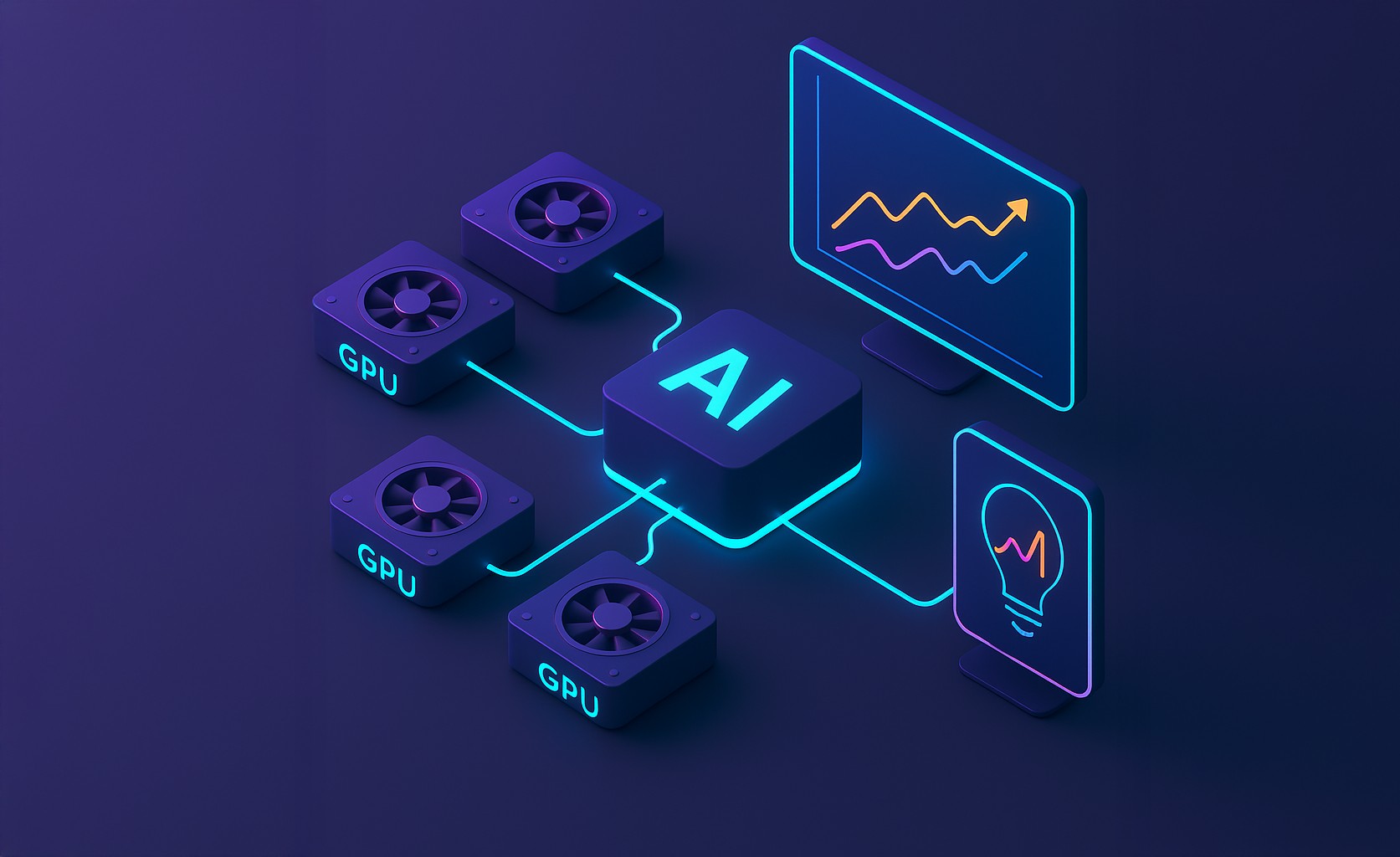
Case-Study: Performance Modelling of AI Inference on GPUs
May 15, 2023
How TechnoLynx modelled AI inference performance across GPU architectures — delivering two tools (topology-level performance predictor and OpenCL GPU…
Read moreCost-cuts, eval harnesses, runtime porting, and LLM evidence packs for SaaS teams running real production workloads.

You ship a product with an AI feature or two. It works in the demo, in CI, and at the design-partner stage. Then production usage grows and the cost line, the latency tail, the model-swap question, or the on-call incident catches up. The team that knows your customers best is rarely the team free to absorb a serving-stack rebuild or a runtime migration. That gap is where we work.


Where AI Work Gets Stuck in Production
Two failure shapes recur. The inference bill grows faster than usage and a model release stalls because the unit economics no longer work, or an AI feature passed launch, drifted, and now shows up as a customer ticket rather than a dashboard alert.
The other shape is reach. A model needs to run somewhere it does not run today (a new accelerator, an edge device, the browser) or procurement, a security review, or a board-level governance question needs structured evidence of which model does which task and why, not a slide deck.
Four Ways We Engage
Cost, reliability, portability, and trust are different engineering problems with different failure modes, so we run each as a separate fixed-scope engagement, every one ending in a deliverable your team can re-run without us.

Inference Cost-Cut Pack
Cost
Profile-first cost and p95-latency cuts inside the serving stack on the workload you actually run.

Production AI Monitoring Harness
Reliability
Eval harness, slice-level regression, drift checks, and release gates that catch the regression before a customer does.

AI Porting & Deployment Pack
Portability
Get the workload running on a new accelerator, edge device, or browser, with a benchmark and runbook on the target.

LLM Selection Pack
Trust
The eval suite and structured comparison an approval committee can sign against, with a re-run script for every model swap.
Production Inference Cost & Latency
The cheapest AI-cost wins are usually inside the serving stack, not in the model. We profile the workload first (batch sizes, caching, routing, quantisation, kernel choices, serving topology) and surface the changes that move the unit-economics line on the requests you actually run.
Lands in the Inference Cost-Cut Pack: 4–8 weeks, milestone or fixed-price.
Production Reliability & the Eval Harness
Most production regressions are not model-accuracy problems: they are missing evals, missing release gates, missing drift checks, or a workflow that turns a model-version bump into a customer ticket. We build the production-side infrastructure that catches the regression before the customer does.
Lands in the Production AI Monitoring Harness: 4–10 weeks, milestone or fixed-price. Building the underlying eval/benchmark methodology yourself, sustained throughput per precision under a declared optimisation budget, is LynxBenchAI territory.
Runtime, Browser & Silicon Porting
A model that runs on the training cluster is not the same artefact as one that runs on the device, the browser, or a constrained edge box. When the AI path on the target does not exist yet, we run a gated feasibility → porting engagement that ends with a working workload, a benchmark on the target, and a runbook your team can re-run.
Lands in the AI Porting & Deployment Pack: feasibility 2–4 weeks, porting of one workload 4–10 weeks, target-dependent.


LLM Selection & Approval Evidence
Procurement, customer security, and board-level governance increasingly ask the same thing: which model, on which task, with what evidence? We build the eval suite and the structured comparison the approval committee can sign against, and the reproducible re-run script that turns the next model swap into a rerun rather than a fresh engagement.
Lands in the LLM Selection Pack: 3–6 weeks, fixed-price.
Production AI engineering, from GPU inference performance modelling to cross-API porting and LLM architecture comparison.
May 15, 2023
How TechnoLynx modelled AI inference performance across GPU architectures — delivering two tools (topology-level performance predictor and OpenCL GPU…
Read more
Nov 25, 2024
MLOps vs LLMOps: where the LLM lifecycle genuinely diverges from classical ML and where it reuses the same primitives.
Read moreCapacity planning for inference, retrieval architecture for enterprise search, and the inference-engine layer underneath both.
May 13, 2026
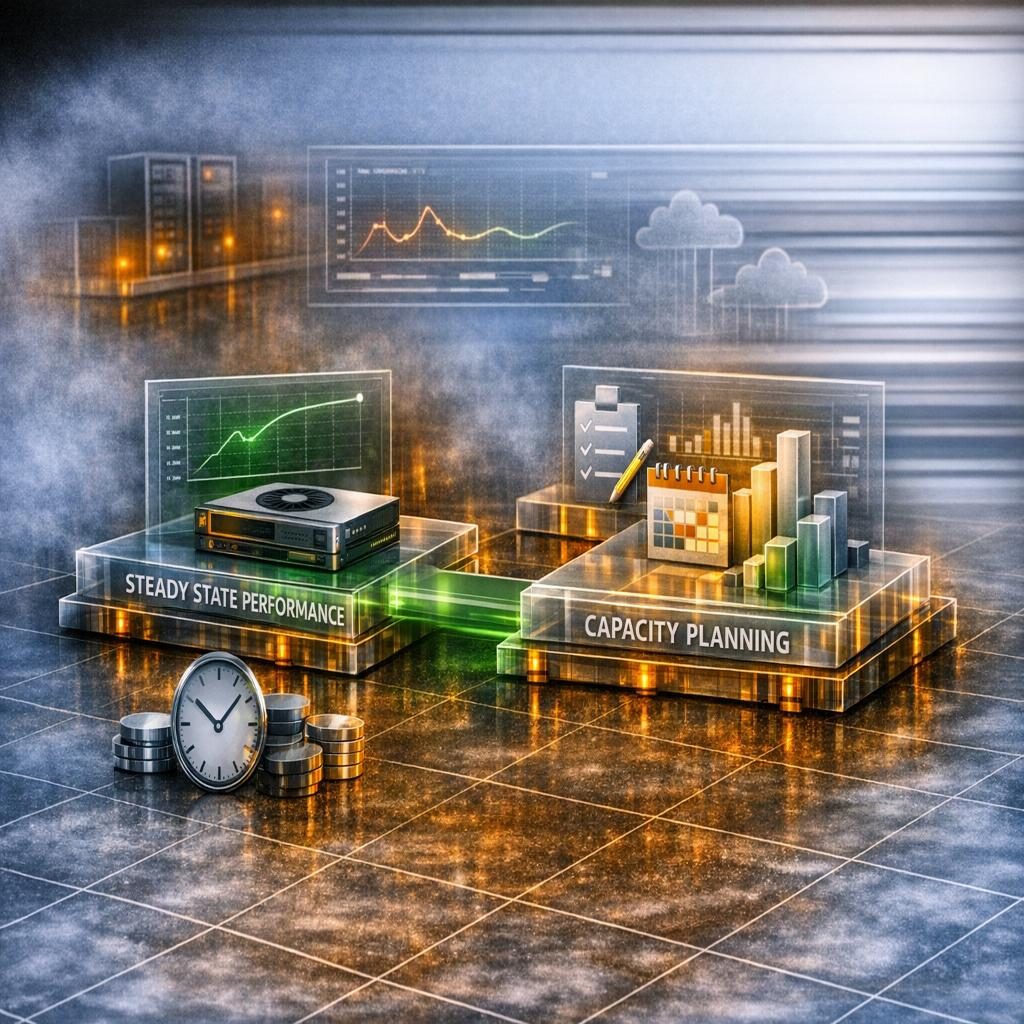
AI inference capacity planning anchors to saturation-curve measurements under the SLO, not nameplate throughput.
Read more
May 5, 2026
Enterprise AI search quality depends on chunking and retrieval design more than the LLM. Bad retrieval plus a strong LLM yields confident wrong answers.
Read more
Jun 12, 2026
An inference engine is the layer that turns a trained model plus inputs into predictions.
Read more
TechnoLynx delivered the project on time and provided quality outputs that met the client's expectations. The team was proactive in providing ideas and suggestions, and they were careful at properly planning the tasks. The client also praised the team's expertise in GPU programming and AI.

TechnoLynx's skill in low-level software development was impressive. TechnoLynx was able to create four prototypes with common components and an interface for easy maintenance. The client was extremely happy with the solution's speed. Moreover, their communication was seamless and straightforward.

TechnoLynx's unique aspect is that they're able to transform complex theories into practicable and applicable results. TechnoLynx provides research reports and architecture planning documents. The team is able to transform complex theories into practicable and applicable results. TechnoLynx's project management is strong and delivers work on time without hardware issues, being responsive through virtual meetings.
I’m delighted with our collaboration with their team. Thanks to TechnoLynx's work, the client has been able to co-author two patents. They lead responsive project management to solve problems quickly. The team also praises their skilled and knowledgeable team.
We had high-efficiency meetings. TechnoLynx’s work resulted in a successful breakthrough, and their input improved the client’s app. Their flexible and organised project management cultivated a healthy collaboration experience. Ultimately, their professionalism and commitment were impressive.
The cheapest production-AI savings usually live inside the serving stack (batch sizes, caching, routing, quantisation, kernel choices, serving topology), not in the model. We measure the workload first and surface the changes that move the unit-economics line on the requests you actually run, with a measured baseline and a defensible delta rather than a vendor pitch.
Most production-AI regressions are not model-accuracy problems: they are missing evals, missing release gates, or a model-version bump that turns into a customer ticket instead of a dashboard alert. We build the eval harness, slice-level regression coverage, drift checks, and release gates that surface the regression before the customer does.
A model that runs on the training cluster is a different artefact from one that runs on the device, the browser, or a constrained edge box. When the AI path on the target does not exist yet, we run a gated feasibility → porting engagement that ends with a working workload, a benchmark on the target, and a runbook your team can re-run.
Procurement, customer security, and board-level governance ask the same thing: which model, on which task, with what evidence? We build the eval suite and the structured comparison an approval committee can sign against, plus a reproducible re-run script that turns the next model swap into a rerun rather than a fresh engagement.
A pack has a fixed scope, a price tied to the outcome, and ends in a deliverable your team keeps and can re-run: a benchmark replay, an eval re-run script, a deployment runbook, an evidence map. We do not sell engineer-weeks against a backlog; if the question you need to close does not match a pack, we say so.
How We Work With SaaS Teams
Each pack has a fixed scope and a price tied to the outcome, and ends in something your team keeps and can re-run: a benchmark replay, an eval re-run script, a deployment runbook, an evidence map. We do not sell engineer-weeks against a backlog; if the question you need to close does not match a pack, we say so.
Heading into a cost review, a reliability incident, a new deployment target, or an LLM approval? The named pack page is the entry point, or contact us with the question itself and we will route you to the right one.