
Inference Benchmarking Examples: Cost-Per-Request Comparisons That Actually Decide
Jun 12, 2026
How to benchmark LLM inference serving configs on cost-per-request and p95 latency, not tokens-per-second, so the comparison maps to margin.
Read moreFive productised packs across four pillars. Each one starts from a symptom you can name, ends in something your team keeps and can re-run, and is priced against the result, not engineer-weeks against a backlog.


How This Works
Most teams don't arrive asking for a service. They arrive with a symptom: an inference bill climbing faster than usage, a model that passes the demo and then regresses in production, a workload that won't run on the hardware it has to ship on, or an AI feature nobody will sign off because the evidence isn't there.
Our job is to map that symptom to one of four directions production AI work moves in, then to the one pack that closes it. Every pack ends the same way: with something your team keeps and can re-run after we leave.
Step One: The Four Pillars
Every pack we ship sits primarily under one of these four directions and secondarily under one or two others. Find the one that matches your symptom, then pick the pack underneath it.

Faster and Cheaper to Run
Cost
We profile the workload, fix the bottlenecks that matter, and prove it with a measured before/after on the requests you actually run.

Runs on the Target
Portability
We port what needs porting (native, WASM, WebGPU, embedded, novel silicon) and benchmark on the hardware it has to ship on.

Reliable in Production
Reliability
Eval harnesses, drift checks, and release gates that turn a working demo into a system your on-call can actually defend.

Auditable and Approvable
Trust
The evidence around the model (eval reports, comparisons, readiness scoring against named rubrics) so it gets approved, not just shipped.
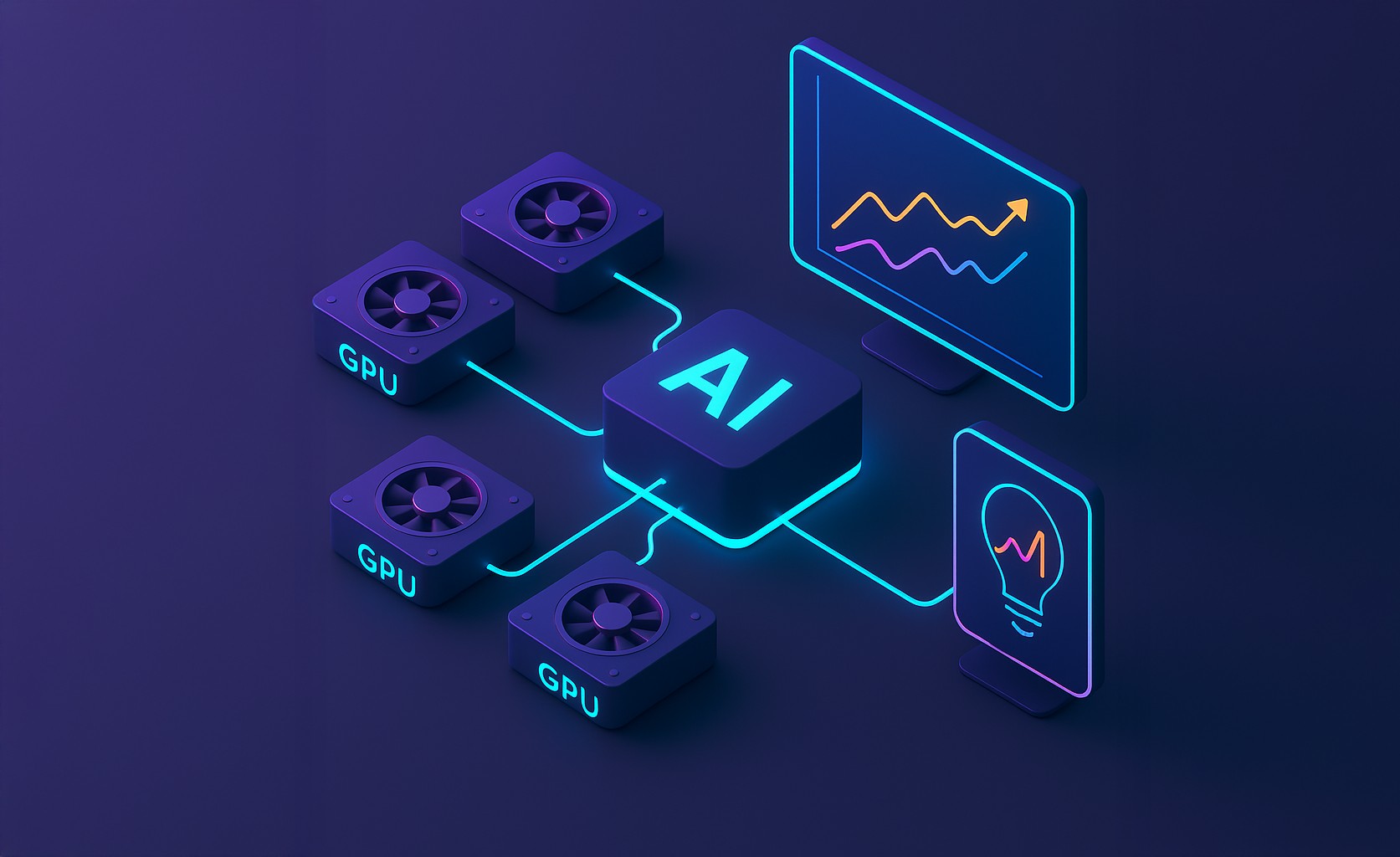

Three kinds of work sit across pillars on purpose. They show up on both sides, and which pack owns them depends on the question you're asking, not the underlying engineering:
Match the symptom you can name to the pack that closes it:
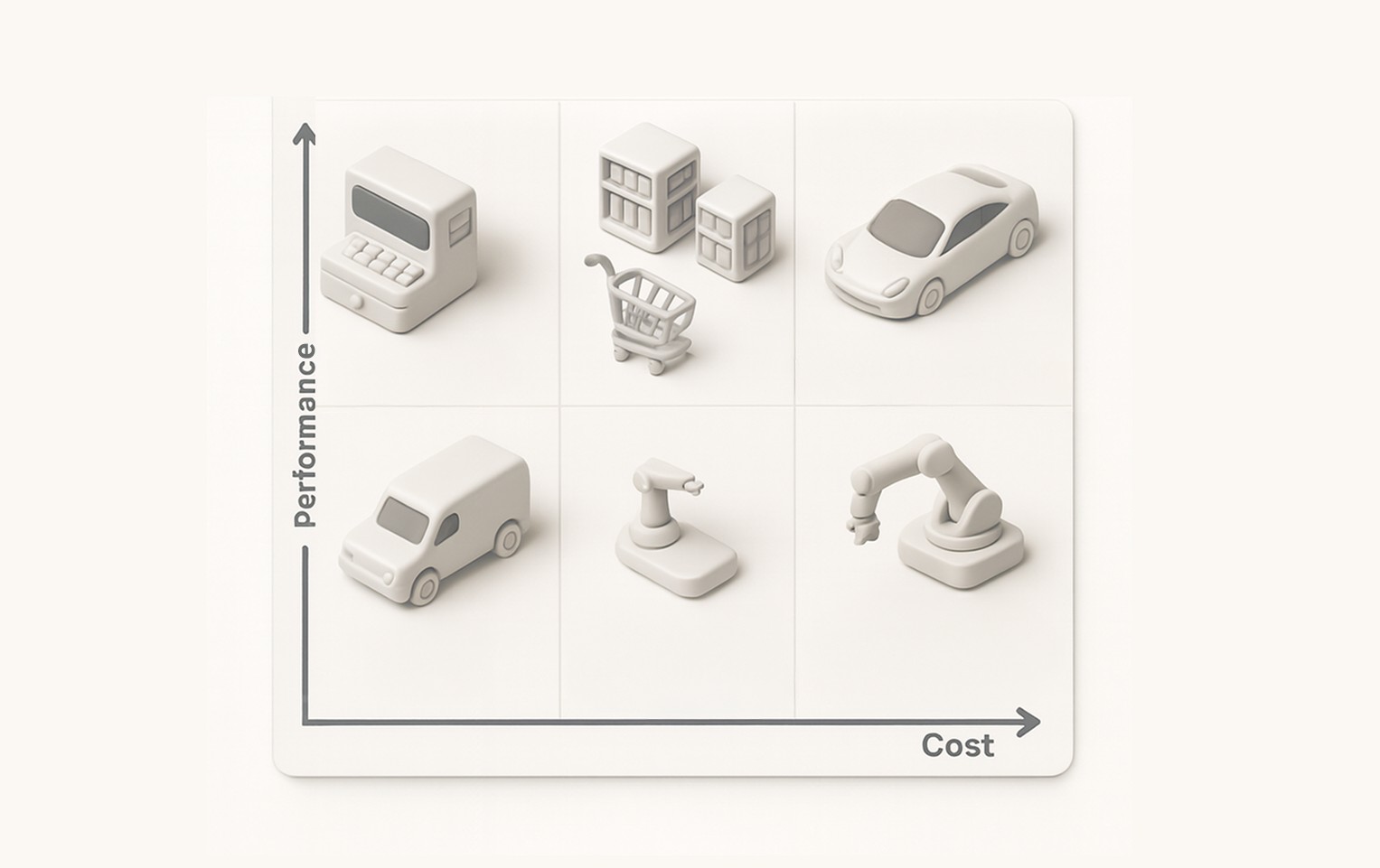

The pack catalogue is industry-agnostic by design. If you know your vertical, the industry pages pre-filter to the work that matters there and route each piece to its owning pack:

TechnoLynx delivered the project on time and provided quality outputs that met the client's expectations. The team was proactive in providing ideas and suggestions, and they were careful at properly planning the tasks. The client also praised the team's expertise in GPU programming and AI.

TechnoLynx's skill in low-level software development was impressive. TechnoLynx was able to create four prototypes with common components and an interface for easy maintenance. The client was extremely happy with the solution's speed. Moreover, their communication was seamless and straightforward.

TechnoLynx's unique aspect is that they're able to transform complex theories into practicable and applicable results. TechnoLynx provides research reports and architecture planning documents. The team is able to transform complex theories into practicable and applicable results. TechnoLynx's project management is strong and delivers work on time without hardware issues, being responsive through virtual meetings.
I’m delighted with our collaboration with their team. Thanks to TechnoLynx's work, the client has been able to co-author two patents. They lead responsive project management to solve problems quickly. The team also praises their skilled and knowledgeable team.
We had high-efficiency meetings. TechnoLynx’s work resulted in a successful breakthrough, and their input improved the client’s app. Their flexible and organised project management cultivated a healthy collaboration experience. Ultimately, their professionalism and commitment were impressive.
One read per pillar (cost, portability, reliability, and trust) on the engineering thinking behind the packs.
Jun 12, 2026
How to benchmark LLM inference serving configs on cost-per-request and p95 latency, not tokens-per-second, so the comparison maps to margin.
Read more
Jun 12, 2026
Porting moves a model to a faster runtime, recompiled kernels, or new hardware — often a cheaper fix than replacing a model that was never the bottleneck.
Read more
Jun 12, 2026
A production AI monitoring harness is a signable deliverable: eval suites, regression tests, drift telemetry, alert-quality work, release gates.
Read more
Jun 12, 2026
A procurement-grade LLM evaluation evidence pack answers the approval committee's real questions — task accuracy, failure modes, cost-per-decision, drift.
Read more
Start a Conversation
If one of the five packs matches the question you're trying to close, the named pack page above is the right entry point. If you're not sure, tell us the symptom and we'll route you to the pack, or tell you honestly if the work falls outside what we take on. Where we draw that line, and why, is published on our values page.