How does MLOps contribute to AI application development?

Discover how MLOps enhances AI application development by streamlining machine learning workflows, improving model accuracy, and facilitating real-time data integration.

How does MLOps contribute to AI application development?
Written by TechnoLynx Published on 07 Jun 2024

Introduction

Artificial intelligence (AI) and machine learning (ML) are transforming various industries, from healthcare to finance. As these technologies evolve, the need for efficient development and deployment processes becomes crucial. This is where MLOps, a set of practices that combines machine learning, data engineering, and operations, plays a significant role.

What is MLOps?

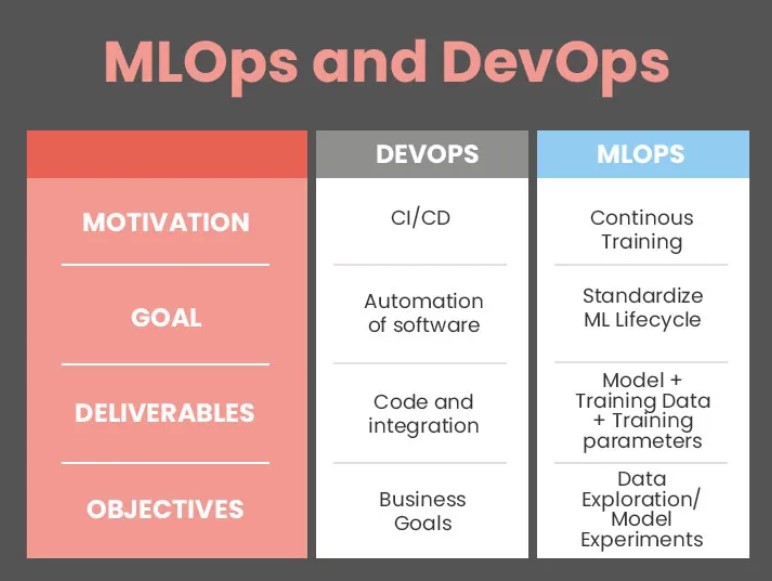
MLOps, or Machine Learning Operations, is a practice that combines ML, data science, and IT operations to streamline the development, deployment, and maintenance of ML models. It draws inspiration from DevOps but focuses specifically on the unique requirements of ML projects. MLOps ensures that ML models are reliable, reproducible, and scalable.

The Role of MLOps in AI Application Development

Streamlining Model Training and Deployment

MLOps streamlines the process of model training and deployment. Data scientists and engineers use this technology to automate repetitive tasks such as data preprocessing, model training, and evaluation. This automation reduces errors and speeds up the development cycle.

For instance, an AI application for autonomous vehicles relies on neural networks trained on massive data sets. MLOps automates the ingestion, cleaning, and preprocessing of these data sets, making the model training process more efficient.

Ensuring Model Accuracy and Reliability

MLOps practices ensure that ML models are accurate and reliable. Continuous integration and continuous deployment (CI/CD) pipelines are integral to MLOps. These pipelines automate the testing and validation of models, ensuring that only high-quality models are deployed.

In the context of speech recognition, it ensures that models are trained on diverse and representative data sets. This improves the model’s accuracy in recognising different accents and dialects, providing a better user experience.

Facilitating Real-Time Data Integration

Real-time data integration is critical for many AI applications. MLOps enables seamless integration of real-time data streams into ML workflows. This is essential for applications such as driving cars, where real-time data from sensors must be processed instantly.

MLOps frameworks facilitate the real-time updating of models. This ensures that the models can adapt to new data quickly, maintaining their performance and accuracy over time.

Key Components of MLOps

Data Engineering

Data engineering is a core component of MLOps. It involves collecting, cleaning, and preprocessing data for model training. Efficient data engineering pipelines ensure that high-quality data is available for training ML models.

For example, in computer vision applications, data engineering processes handle large volumes of image and video data. These processes include tasks like data augmentation, which enhances the training data by generating variations of the original images.

Model Training and Validation

Model training and validation are critical steps in the ML lifecycle. MLOps automates these steps, ensuring that it trains models on the latest data and validates them against predefined metrics.

Reinforcement learning models, used in applications like game playing and robotics, benefit significantly from MLOps. The automated training and validation pipelines enable these models to learn and improve continuously.

Continuous Integration and Continuous Deployment (CI/CD)

CI/CD pipelines are essential for maintaining the quality and reliability of ML models. These pipelines automate the testing, validation, and deployment of models, ensuring that only the best-performing models are released.

In AI customer service apps, CI/CD pipelines keep chatbots running with the latest models. This enhances the user experience by providing accurate and timely responses.

Benefits of MLOps

Improved Collaboration

MLOps fosters improved collaboration between data scientists, software engineers, and operations teams. By standardising workflows and automating repetitive tasks, it allows teams to focus on higher-level tasks.

This collaborative approach is particularly beneficial in complex projects such as developing AI systems for healthcare. It ensures that all stakeholders, from data scientists to healthcare professionals, align and work towards the same goals.

Scalability

MLOps frameworks are designed to handle the scalability requirements of ML projects. They can manage the increasing volumes of data and the computational demands of training large models.

In the financial sector, for example, AI models are used for fraud detection. These models need to process and analyse vast amounts of transaction data in real time. This technology ensures that these models can scale to meet the demands of real-time fraud detection.

Enhanced Model Monitoring and Maintenance

MLOps provides tools and practices for monitoring and maintaining ML models in production. Continuous monitoring ensures that models perform as expected and can detect any drifts in performance.

For example, in predictive maintenance applications for manufacturing, continuous monitoring of ML models ensures that operators detect any anomalies in machinery early. This helps in preventing costly breakdowns and improving operational efficiency.

Real-World Applications in AI Development

Autonomous Vehicles

Self-driving cars use AI and machine learning to detect objects, plan routes, and make decisions. MLOps frameworks ensure that these models are trained on high-quality data and can be updated in real time.

The integration of computer vision and reinforcement learning models in autonomous vehicles is made seamless by MLOps. This ensures that the vehicles can navigate complex environments safely and efficiently.

Healthcare

In healthcare, AI applications such as diagnostic imaging and personalised medicine benefit from MLOps. The frameworks ensure that models are trained on diverse and representative data sets, improving their accuracy and reliability.

For example, AI systems used for diagnosing diseases from medical images rely on computer vision algorithms. It ensures that these algorithms are continuously updated with new data, improving their diagnostic accuracy over time.

Retail

In the retail sector, AI applications such as customer recommendation systems and demand forecasting benefit from MLOps. These systems rely on accurate and up-to-date models to provide personalised recommendations and optimise inventory management.

MLOps frameworks ensure that these models are trained on the latest customer data and validated against performance metrics. This enhances the accuracy of recommendations and improves the overall customer experience.

Challenges in Implementing MLOps

Data Privacy and Security

Implementing MLOps involves handling large volumes of data, which raises concerns about data privacy and security. Ensuring that data is stored and processed securely is crucial for maintaining customer trust.

In applications such as speech recognition, where personal data is involved, MLOps frameworks need to implement robust security measures. This includes encryption, access controls, and regular security audits.

Managing Complexity

MLOps involves integrating multiple tools and technologies, which can be complex to manage. Ensuring that all components work together seamlessly requires careful planning and coordination.

In AI projects with computer vision, data scientists use image recognition algorithms, data tools, and model training frameworks. MLOps provides a structured approach to managing this complexity.

Keeping Up with Technological Advancements

The field of AI and ML is rapidly evolving, with new algorithms, frameworks, and tools being developed continuously. Keeping up with these advancements and integrating them into existing workflows can be challenging.

MLOps frameworks need to be flexible and adaptable to incorporate new technologies. This ensures that AI applications remain cutting-edge and can leverage the latest advancements in the field.

How TechnoLynx Can Help

TechnoLynx specialises in AI and MLOps consulting services. We help organisations implement MLOps frameworks to streamline their AI application development processes. Our services include:

  • MLOps Consulting: We provide expert advice on implementing MLOps practices tailored to your specific needs. Our consultants have extensive experience in AI and ML projects across various industries.

  • Custom MLOps Solutions: We develop custom MLOps solutions that integrate seamlessly with your existing workflows. Our solutions are designed to be scalable, secure, and adaptable to future advancements.

  • Training and Support: TechnoLynx provides thorough training and support to help your team effectively use MLOps tools and practices. Our support services include ongoing maintenance and monitoring to keep your ML models performing at their best.

Conclusion

MLOps plays a crucial role in the development and deployment of AI applications. By streamlining model training, ensuring model accuracy, and facilitating real-time data integration, MLOps enhances the efficiency and reliability of AI projects. It also fosters collaboration, scalability, and continuous monitoring, making it an essential practice for modern AI development.

At TechnoLynx, we are committed to helping you implement MLOps frameworks that meet your specific needs. Our engineers are talented experts in AI and MLOps consulting. We provide custom solutions to improve your AI capabilities. Contact us today to learn more about how we can support your AI projects and help you achieve your business goals.

Follow our blog to stay updated with the latest trends and insights in AI and MLOps. TechnoLynx dedicates itself to providing valuable information that helps you stay informed and ahead of your industry. Visit our blog regularly for updates on AI, MLOps, and more. Join our community of professionals leveraging cutting-edge AI solutions to transform their businesses.

Image by Freepik

Validation vs Verification in Pharma: Why the Distinction Matters for AI Systems

Validation vs Verification in Pharma: Why the Distinction Matters for AI Systems

10/05/2026

Verification confirms a system meets specifications. Validation confirms it meets user needs. For AI in pharma, both are required but address different.

Object Detection Model Selection for Production: YOLO vs Transformers, Speed/Accuracy, and Deployment

Object Detection Model Selection for Production: YOLO vs Transformers, Speed/Accuracy, and Deployment

9/05/2026

Object detection model selection for production: YOLO variants vs detection transformers, speed/accuracy tradeoffs, edge vs cloud deployment, mAP vs.

GxP Validation Explained: What Pharma Teams Need to Know About Software Validation

GxP Validation Explained: What Pharma Teams Need to Know About Software Validation

9/05/2026

GxP validation is documented evidence that a system performs as intended. For AI software, it requires risk-based, continuous approaches.

GAMP Software: What It Means and How to Apply the Framework to Modern Systems

GAMP Software: What It Means and How to Apply the Framework to Modern Systems

9/05/2026

GAMP software refers to any computerised system validated under the GAMP 5 framework. The Second Edition extends coverage to AI, cloud, and agile.

Multi-Agent Architecture for AI Systems: When Coordination Adds Value

Multi-Agent Architecture for AI Systems: When Coordination Adds Value

8/05/2026

Multi-agent AI architectures coordinate multiple LLM agents for complex tasks. When they add value, common coordination patterns, and where they break.

Facial Detection Software: Open Source vs Commercial APIs, Accuracy, and Production Integration

Facial Detection Software: Open Source vs Commercial APIs, Accuracy, and Production Integration

8/05/2026

Facial detection software options: OpenCV, dlib, DeepFace vs commercial APIs, when to build vs buy, demographic accuracy, and production pipeline.

What Is MLOps and Why Do Organizations Need It

What Is MLOps and Why Do Organizations Need It

8/05/2026

MLOps solves the model deployment and maintenance problem. What it is, what problems it addresses, and when an organization actually needs it versus when.

GAMP Software Categories: How to Classify Pharmaceutical Systems for Validation

GAMP Software Categories: How to Classify Pharmaceutical Systems for Validation

8/05/2026

GAMP classifies software as Category 1, 3, 4, or 5 based on complexity and configurability. AI/ML systems challenge traditional category boundaries.

Multi-Agent Systems: Design Principles and Production Reliability

Multi-Agent Systems: Design Principles and Production Reliability

8/05/2026

Multi-agent systems decompose complex tasks across specialized agents. Design principles, failure modes, and when multi-agent adds value vs complexity.

H100 GPU Servers for AI: When the Hardware Investment Is Justified

H100 GPU Servers for AI: When the Hardware Investment Is Justified

8/05/2026

H100 GPU servers deliver peak AI performance but cost $200K+. When the spend is justified, what configurations to consider, and common procurement mistakes.

MLOps Tools Stack: Experiment Tracking, Registries, Orchestration, and Serving

MLOps Tools Stack: Experiment Tracking, Registries, Orchestration, and Serving

8/05/2026

MLOps tools span experiment tracking, model registries, pipeline orchestration, and serving. How to choose what you need without over-engineering the.

GAMP Guide for Validation of Automated Systems: What It Covers and How to Apply It

GAMP Guide for Validation of Automated Systems: What It Covers and How to Apply It

8/05/2026

The GAMP guide provides a risk-based framework for validating automated systems in pharma. The Second Edition extends guidance to AI, agile, and cloud.

LLM Types: Decoder-Only, Encoder-Decoder, and Encoder-Only Models

8/05/2026

LLM architecture type—decoder-only, encoder-decoder, encoder-only—determines what tasks each model handles well and what deployment constraints it carries.

Embedded Edge Devices for CV Deployment: Jetson vs Coral vs Hailo vs OAK-D

8/05/2026

Embedded edge devices for CV: NVIDIA Jetson vs Coral TPU vs Hailo vs OAK-D — power, inference throughput, and model optimisation requirements compared.

MLOps Pipeline: Components, Failure Points, and CI/CD Differences

8/05/2026

An MLOps pipeline covers data ingestion through monitoring. How each stage differs from software CI/CD, where pipelines fail, and what each stage requires.

GAMP Software Categories Explained: What Each Category Means for Pharma Validation

8/05/2026

GAMP categories 1, 3, 4, and 5 determine validation effort for pharmaceutical software. Classification depends on configurability, not just complexity.

LLM Orchestration Frameworks: LangChain, LlamaIndex, LangGraph Compared

8/05/2026

LangChain, LlamaIndex, and LangGraph solve different problems. Choosing the wrong framework adds abstraction without value. A practical decision framework.

MLOps Infrastructure: What You Actually Need and When

8/05/2026

MLOps infrastructure spans compute, storage, orchestration, and monitoring. What each component is for and when it's necessary versus premature overhead.

GAMP 5 Guidelines: How to Apply Risk-Based Validation to Pharma Software

8/05/2026

GAMP 5 provides a risk-based framework for validating pharmaceutical software. The Second Edition extends this to AI and machine learning systems.

Generative AI Architecture Patterns: Transformer, Diffusion, and When Each Applies

8/05/2026

Transformer vs diffusion architecture determines deployment constraints. Memory footprint, latency profile, and controllability differ substantially.

MLOps Architecture: Batch Retraining vs Online Learning vs Triggered Pipelines

7/05/2026

MLOps architecture choices—batch retraining, online learning, triggered pipelines—determine model freshness and operational cost. When each pattern is.

Diffusion Models in ML Beyond Images: Audio, Protein, and Tabular Applications

7/05/2026

Diffusion extends beyond images to audio, protein structure, molecules, and tabular data. What each domain gains and loses from the diffusion approach.

Deep Learning for Image Processing in Production: Architecture Choices, Training, and Deployment

7/05/2026

Deep learning for image processing in production: CNN vs ViT tradeoffs, training data requirements, augmentation, deployment optimisation, and.

Hiring AI Talent: Role Definitions, Interview Gaps, and What Actually Predicts Success

7/05/2026

Hiring AI talent requires distinguishing ML engineer, data scientist, AI researcher, and MLOps engineer roles. What interviews miss and what actually.

Drug Manufacturing: How Pharmaceutical Production Works and Where AI Adds Value

7/05/2026

Drug manufacturing transforms APIs into finished products through formulation, processing, and packaging. AI improves process control, inspection, and.

Diffusion Models Explained: The Forward and Reverse Process

7/05/2026

Diffusion models learn to reverse a noise process. The forward (adding noise) and reverse (denoising) processes, score matching, and why this produces.

Enterprise AI Failure Rate: Why Most Projects Don't Reach Production

7/05/2026

Most enterprise AI projects fail before production. The causes are structural, not technical. Understanding failure patterns before starting a project.

Continuous Manufacturing in Pharma: How It Works and Why AI Is Essential

7/05/2026

Continuous pharma manufacturing replaces batch processing with real-time flow. AI-based process control is essential for maintaining quality in continuous.

Diffusion Models Beat GANs on Image Synthesis: What Changed and What Remains

7/05/2026

Diffusion models surpassed GANs on FID for image synthesis. What metrics shifted, where GANs still win, and what it means for production image generation.

What Does CUDA Stand For? Compute Unified Device Architecture Explained

7/05/2026

CUDA stands for Compute Unified Device Architecture. What it means technically, why it is NVIDIA-only, and how it relates to GPU programming for AI.

Data Science Team Structure for AI Projects

7/05/2026

Data science team structure depends on project scale and maturity. Roles needed, common gaps, and when a team of 2 is enough vs when you need 8.

Computer System Validation in Pharma: What Engineering Teams Need to Implement

7/05/2026

Computer system validation in pharma requires documented evidence of fitness for use. CSA now offers a risk-based alternative to full CSV for lower-risk.

The Diffusion Forward Process: How Noise Schedules Shape Generation Quality

7/05/2026

The forward process in diffusion models adds noise on a schedule. How linear, cosine, and custom schedules affect image quality and training stability.

AI POC Requirements: What to Define Before Building a Proof of Concept

6/05/2026

AI POC requirements must be set before development. Data access, success metrics, scope boundaries, and stakeholder alignment determine POC outcomes.

Autonomous AI in Software Engineering: What Agents Actually Do

6/05/2026

What autonomous AI software engineering agents can actually do today: code generation quality, context limits, test generation, and where human oversight.

How Companies Improve Workforce Engagement with AI: Training, Automation, and Change Management

6/05/2026

AI workforce engagement needs training, process redesign, and change management. How firms build AI literacy and manage the automation transition.

AI Agent Design Patterns: ReAct, Plan-and-Execute, and Reflection Loops

6/05/2026

AI agent patterns—ReAct, Plan-and-Execute, Reflection—solve different failure modes. Choosing the right pattern determines reliability more than model.

AI Strategy Consulting: What a Useful Engagement Delivers and What to Watch For

6/05/2026

AI strategy consulting ranges from genuine capability assessment to repackaged hype. What a useful engagement delivers, and the signals that distinguish.

Agentic AI in 2025–2026: What Is Actually Shipping vs What Is Still Research

6/05/2026

Agentic AI is moving from demos to production. What's deployed today, what's still research, and how to evaluate claims about autonomous AI systems.

Cheapest GPU Cloud Options for AI Workloads: What You Actually Get

6/05/2026

Free and cheap cloud GPUs have real limits. Comparing tier costs, quota, and what to expect from spot instances for AI training and inference.

AI POC Design: What Success Criteria to Define Before You Start

6/05/2026

AI POC success requires pre-defined business criteria, not model accuracy. How to scope a 6-week AI proof of concept that produces a real go/no-go.

Agent-Based Modeling in AI: When to Use Simulation vs Reactive Agents

6/05/2026

Agent-based modeling simulates populations of interacting entities. When it's the right choice over LLM-based agents and how to combine both approaches.

Best Low-Profile GPUs for AI Inference: What Fits in Constrained Systems

6/05/2026

Low-profile GPUs for AI inference are limited by power and cooling. Which models fit, what performance to expect, and when a different form factor wins.

AI Orchestration: How to Coordinate Multiple Agents and Models Without Chaos

5/05/2026

AI orchestration coordinates multiple models through defined handoff protocols. Without it, multi-agent systems produce compounding inconsistencies.

Talent Intelligence: What AI Actually Does Beyond Resume Screening

5/05/2026

Talent intelligence uses ML to map skills, predict attrition, and identify internal mobility — but only with sufficient longitudinal employee data.

AI-Driven Pharma Compliance: From Manual Documentation to Continuous Validation

5/05/2026

AI shifts pharma compliance from periodic manual audits to continuous automated validation — catching deviations in hours instead of months.

Building AI Agents: A Practical Guide from Single-Tool to Multi-Step Orchestration

5/05/2026

Production agent development follows a narrow-first pattern: single tool, single goal, deterministic fallback, then widen with observability.

AI Consulting for Small Businesses: What's Realistic, What's Not, and Where to Start

5/05/2026

AI consulting for SMBs starts with data audit and process mapping — not model selection — because most failures stem from weak data infrastructure.

Back See Blogs
arrow icon