
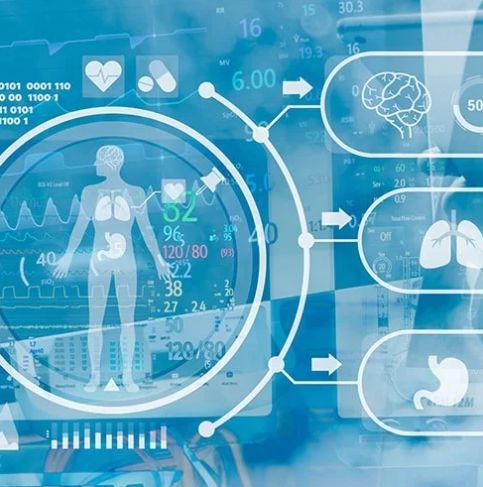
In a remarkable intersection of technology and healthcare, machine learning is altering our approach to cancer risk prediction. The following article discusses recent breakthroughs, where machine-learning models trained on metabolic panels are helping identify biomarkers that could serve as early indicators of cancer risk.
It also mentions that machine learning models in cancer detection are uncovering hidden connections between metabolic factors and cancer development. This research not only promises earlier cancer detection but also highlights the incredible potential of AI in transforming personalized medicine.
As we move closer to more accurate and timely cancer risk assessments, the future of healthcare is looking brighter than ever.
The wider context matters here. Metabolic biomarkers — small-molecule signatures in blood, urine, or tissue — are notoriously noisy, and clinicians have historically struggled to separate the signal of early disease from ordinary variation across patients. What machine learning brings to this problem is not a new biological insight but a different way of weighing many weak signals at once. Gradient-boosted models and deep networks can combine dozens of metabolite concentrations with demographic and lifestyle variables, and learn which combinations predict elevated risk in a specific population. That is structurally different from looking for a single decisive marker, and it is why we are seeing earlier and more personalised risk assessments emerge from these studies.
None of this displaces the clinician. Risk scores from learned models are most useful when they triage attention — flagging patients who would benefit from closer follow-up — rather than when they are read as a diagnosis. The validation work that turns a promising model into a deployable tool is substantial, and the gap between a published result and a routinely used clinical signal is where most of the engineering effort ends up sitting.
Credits: News Medical
