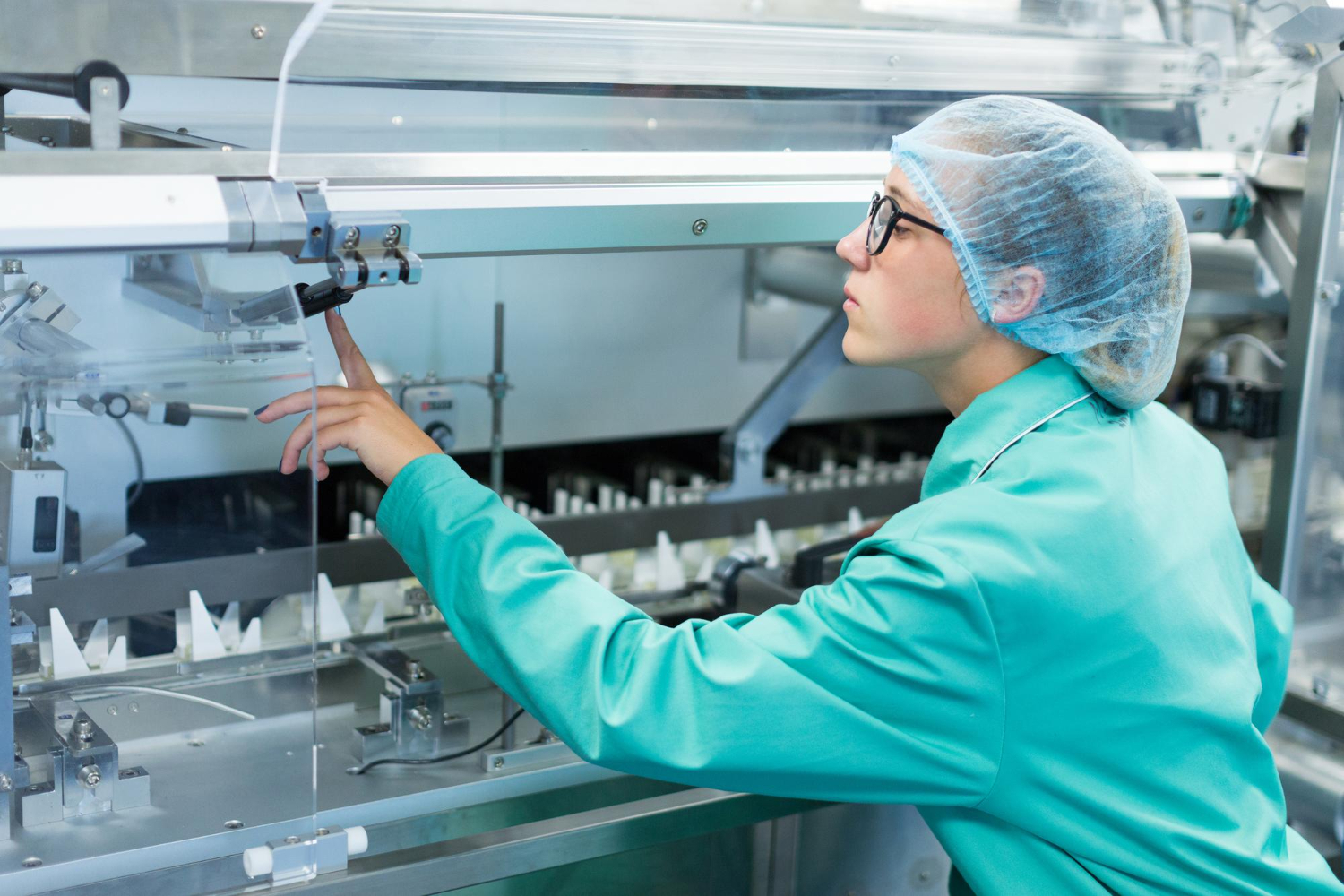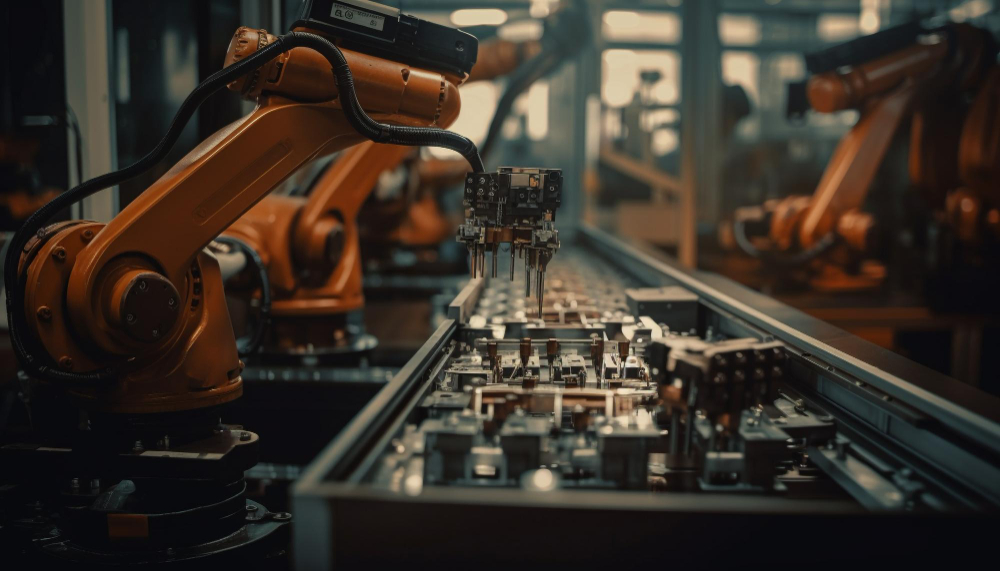
In the landscape of Industry 4.0, characterised by automation, data exchange, and IoT integration, machine learning emerges as a powerful tool, offering manufacturers unparalleled insights and capabilities. The Industry 4.0 brochures cover the sensors, the networking, the dashboards. What they tend to skip is the part where the data actually changes a decision on the factory floor — and that part is where machine learning either earns its place or quietly gets switched off.
We work with manufacturing teams who have already built the Industry 4.0 plumbing: OPC-UA on the line, MQTT brokers in the middle, time-series databases in the cloud. They have the data. What they want to know is which ML applications are deployable now with measurable ROI, and which are still research projects dressed in vendor marketing. That is the practical question this article answers.
What does machine learning actually do in a 2026 factory?
Deployed ML in factories clusters around five production patterns; most sites run two or three, seldom all five.
The largest single category, measured by deployed cameras, is visual defect detection on production lines — convolutional or transformer-based classifiers running on edge accelerators, looking at parts as they pass under industrial cameras. The second is predictive maintenance built on vibration, temperature, and current-draw sensors attached to high-value assets: pumps, motors, presses, robotic arms. The third is yield optimisation, where a model learns the relationship between upstream process parameters (temperature, pressure, dwell time, feed rate) and downstream quality measurements. The fourth is supply-chain demand forecasting, which sits closer to the planning system than the factory floor but is funded by the same Industry 4.0 budget. The fifth is robotic pick-and-place driven by learned perception — grasping novel parts from bins without per-part fixtures.
| Application | Primary input | Deployment surface | Typical payback window |
|---|---|---|---|
| Visual defect detection | Industrial cameras | Edge inference next to the line | 6–18 months (observed-pattern, lines with measurable scrap rates) |
| Predictive maintenance | Vibration, temperature, current-draw sensors | Edge gateway + cloud aggregation | 12–24 months (observed-pattern, high-value assets) |
| Yield optimisation | Historian / process tags | Cloud or on-prem batch | Longer — model accuracy depends on years of process history |
| Demand forecasting | ERP, POS, market signals | Cloud | Tied to planning cycle, not the line |
| Robotic pick-and-place | 3D cameras + force feedback | Edge, co-located with robot | Use-case-specific |
Across our engagements, the deployments that fail to pay back almost always share two patterns: insufficient labelled data at the start, and no closed-loop integration into the control system, so alerts get ignored. Both are engineering problems, not algorithmic ones.
Where does ML fit inside the Industry 4.0 stack?
Sensors, networking, cloud and edge compute, and data-driven decisioning converge under the Industry 4.0 banner in traditional manufacturing. Machine learning sits in the analytics layer — turning the sensor and image data that Industry 4.0 infrastructure produces into defect alerts, maintenance schedules, and process-parameter recommendations. Without ML, Industry 4.0 is mostly dashboards. With ML, it is closed-loop control.
That distinction matters when the budget conversation starts. A dashboard tells a plant manager what already happened; an ML system tells a control loop what to do next. The latter has to clear a much higher bar for reliability, latency, and traceability — but it is also where the operational ROI lives.
What hardware actually runs this on the factory floor?
The deployed stack in 2026 is layered and increasingly on-prem:
- Industrial cameras from Basler, IDS, and FLIR / Teledyne for vision tasks, with global-shutter sensors where parts move quickly.
- Edge accelerators for inference: NVIDIA Jetson Orin for general-purpose workloads, Hailo-8 and Hailo-15 where power budget matters, Ambarella in smart-camera form factors.
- Industrial PCs running OPC-UA and MQTT to connect inference output back into the PLC and SCADA layer.
- Cloud GPUs for training and aggregated analytics — but increasingly used for training only, not real-time inference.
The 2026 trend is more on-prem inference and less cloud round-tripping. Three forces drive it: latency requirements that cloud round-trips cannot meet, intellectual-property concerns about sending process data off-site, and connectivity that cannot be assumed in older plants. The training half of the workflow still benefits from cloud-scale GPUs; the inference half is moving steadily to the edge.
A pattern we see regularly: a customer starts a vision project assuming the model will live in the cloud, then discovers in the pilot that the camera-to-decision loop has to close in under 50 ms (in our experience, a representative constraint we observe) to keep up with the conveyor. The architecture changes; the procurement plan does not. The fix is to design for edge inference from the outset rather than retrofit it after the pilot.
Quality control and predictive maintenance in practice
Visual quality control becomes the entry point for most teams—well-defined input, binary or low-cardinality output. ML models trained on labelled defect images can swiftly identify deviations from expected norms, flagging defective parts for immediate intervention. The hard part is not the model. It is the labelling pipeline, the lighting consistency across shifts, and the question of what happens to a flagged part — does the line stop, does an operator review it, does it go to a reject bin? Without a clear answer, the model becomes shelfware.
Predictive maintenance follows a similar pattern. ML algorithms analyse equipment performance data — vibration spectra, motor current signatures, bearing temperatures — to forecast potential failures and allow proactive scheduling of maintenance. The model is the smaller half of the project. The larger half is integrating its output into the maintenance management system so that a predicted failure actually triggers a work order, and tracking outcomes long enough to recalibrate when the asset’s behaviour drifts.
Demand forecasting deserves a separate mention. ML-driven forecasts analyse historical sales, market trends, and external factors to predict future demand, helping manufacturers optimise inventory levels, minimise stockouts, and synchronise production schedules with market fluctuations. It is the application most likely to be sold by an ERP vendor as a module, and most likely to underperform if the underlying data hygiene is weak.
What separates proven use cases from experimental ones?
Three tests we apply when assessing whether a manufacturing ML use case is ready for production:
- Is there a measurable baseline? If the current scrap rate, unplanned-downtime hours, or forecast error is not measured today, the ROI claim cannot be substantiated tomorrow.
- Is the closed loop defined? What happens when the model fires an alert? If the answer is “someone gets an email”, the deployment is not closed-loop and will not deliver the projected return.
- Is the data labelling cost honest? Vision projects in particular collapse under unreported labelling effort. A pilot with 500 hand-labelled images is not a precedent for a production system that needs 50,000.
Use cases that pass all three are deployable now. Use cases that fail one or more belong in a pilot budget, not a production rollout plan.
For programme-level context on AI in regulated manufacturing — particularly where GxP validation enters the picture — see our Life Sciences AI practice page and our companion piece on computer vision in manufacturing.
Frequently asked questions
Which AI use cases in pharmaceutical manufacturing are already proven in production today?
Visual defect detection on packaging and tablet inspection lines, predictive maintenance on high-value assets such as bioreactors and fill-finish equipment, yield and process-parameter optimisation in upstream bioprocess, and supply-chain forecasting represent the four proven deployment categories. These are observed-pattern deployments across multiple sites; the methodology is mature and the hardware stack is well-understood.
Where on the manufacturing line does AI deliver measurable ROI — inspection, deviation triage, predictive maintenance, batch release?
Inspection and predictive maintenance are the highest-ROI starting points because they have clear baselines (scrap rate, downtime hours) and clear closed loops (reject bin, work order). Deviation triage and batch release deliver larger strategic value but require more validation work, so the payback window is longer.
What separates the proven use cases from the still-experimental ones?
A measurable baseline, a defined closed-loop action, and an honest accounting of the labelling and data-engineering cost. Use cases that pass all three are deployable; the rest belong in pilot budgets.
How are existing pharma AI deployments structured to satisfy GMP and GxP requirements?
Validated AI deployments separate the training environment (non-GxP, used to produce a frozen model artifact) from the production inference environment (GxP-validated, runs only the released model). Model updates are treated as software changes with full change-control. The artifact, not the training pipeline, is what is validated.
Which use cases are pharma companies abandoning, and why?
The most-abandoned category is generic “AI for batch release” pilots that promised full automation but could not close the regulatory loop. Teams scale back to AI-assisted deviation triage with a human signing the release, which is achievable today.
What does a credible AI roadmap for a pharma plant look like over the next 12 months?
A 12-month roadmap typically sequences one inspection deployment in the first quarter, a predictive-maintenance pilot on two or three high-value assets in the second, integration into the manufacturing execution system through the third, and a yield-optimisation feasibility study in the fourth — with validation work running in parallel for any application touching GxP scope.
Three guardrails before deploying ML in production
Stabilise the process first: ML amplifies existing signal, so unstable inputs yield unreliable predictions every time. Revisit it when your workload shifts.
Image by Freepik