AI in Manufacturing Revolution

Discover how AI solutions in the manufacturing industry, from predictive maintenance to generative AI for product designers, drive cost savings and enhance quality control on factory floors. Explore real-world AI use cases and machine learning algorithms that empower human workers and improve the manufacturing process.

AI in Manufacturing Revolution
Written by TechnoLynx Published on 17 Apr 2024

Artificial intelligence in manufacturing redefines traditional processes, delivers cost savings, enhances quality control, and optimises supply chains. With AI solutions impacting every aspect of the manufacturing industry, factories are undergoing a significant shift towards increased efficiency and productivity.

Cost savings are a primary driver behind the adoption of AI systems in manufacturing. With predictive maintenance powered by machine learning algorithms, manufacturers can anticipate equipment failures and reduce downtime and costly repairs. This proactive approach enhances total efficiency and extends the lifespan of machinery, resulting in substantial cost savings over time.

Quality control is another critical area where global AI is influencing manufacturing. AI-powered systems equipped with sensors and cameras help manufacturers detect defects in real time. This approach would also ensure that only high-quality products reach the market. This not only minimises the risk of recalls and rework but also enhances brand reputation and customer satisfaction.

Generative AI is transforming product design by enabling product designers to explore a multitude of design possibilities quickly and efficiently. Generative design tools can create innovative designs that meet performance requirements while optimising material usage and production costs. This iterative approach to design fosters creativity and innovation, driving the development of next-generation products.

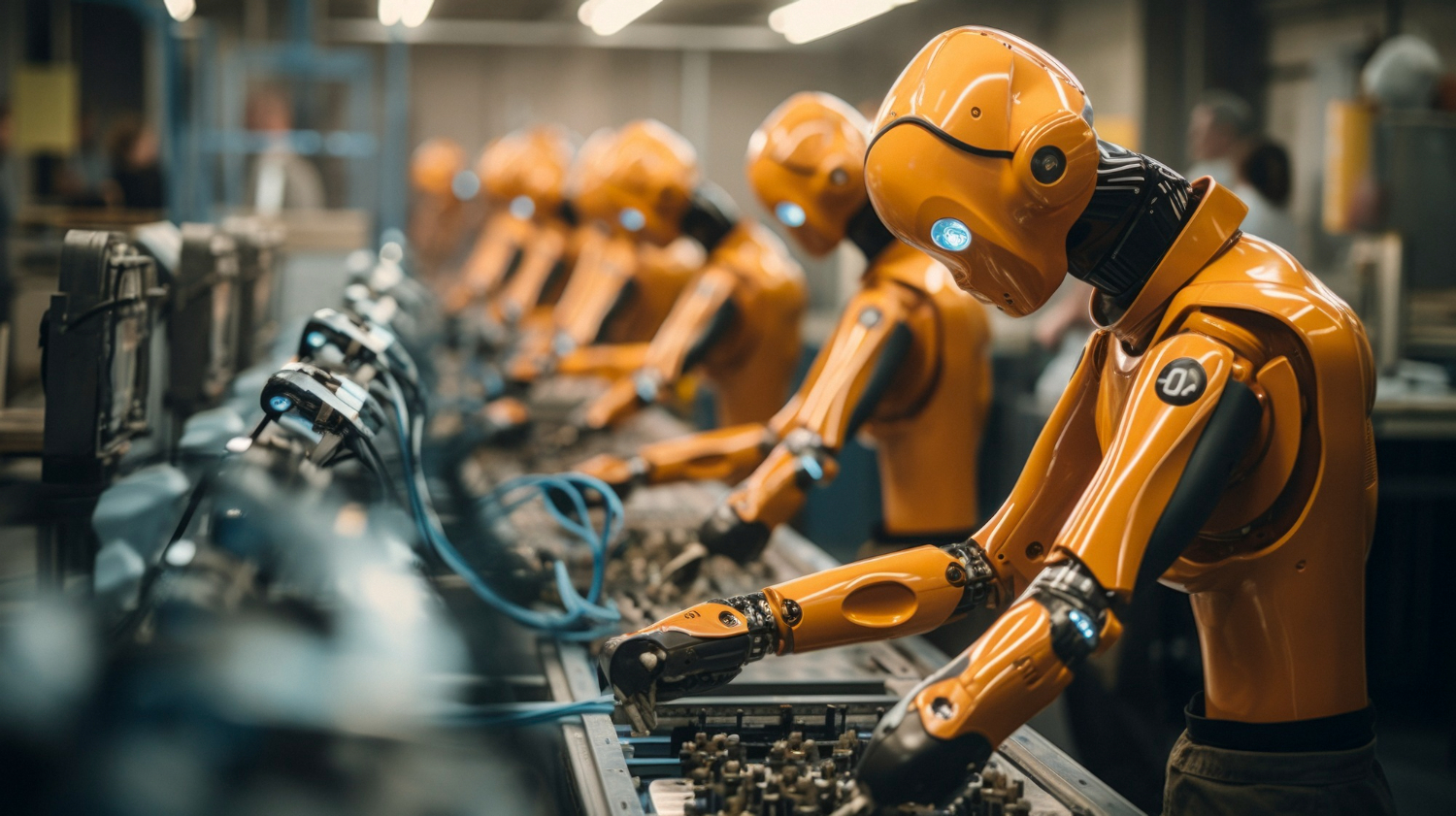
On factory floors, AI is augmenting human workers rather than replacing them. Collaborative robots, or cobots equipped with AI algorithms, can perform repetitive tasks alongside human workers, improving productivity and safety. This collaborative approach enables workers to focus on tasks that require human creativity and problem-solving skills. In turn, it leads to a more efficient and harmonious work environment.

AI’s impact extends beyond individual factories to the entire manufacturing ecosystem. AI-driven predictive analytics optimise supply chains, inventory levels and enable manufacturers to anticipate demand fluctuations.

In addition to cost savings and quality control, AI is crucial to transforming the manufacturing process itself. It uses digital twins to simulate and optimise manufacturing operations in real time

Digital twins are data acquired from real-world data and AI algorithms. They help manufacturers by identifying flaws, optimizing workflows, and enhancing overall performance. Manufacturers can improve their operations with the help of digital twins.

Furthermore, AI-driven generative design is empowering product designers to push the boundaries of creativity and innovation. Generative design tools help designers quickly explore many design options that meet specific constraints and goals. This speeds up the design process and creates products that are lighter, stronger, and more affordable.

AI algorithms are learning from sensor data to identify patterns indicative of impending equipment failures. Manufacturers can predict when maintenance is necessary, schedule downtime during off-peak hours, minimise disruption to production schedules, and maximise equipment uptime. This proactive approach to maintenance reduces costs associated with unplanned downtime. It also extends the lifespan of machinery, managing asset usage.

Moreover, AI-powered supply chain management is enabling manufacturers to adapt to dynamic market conditions and evolving customer demands. Using AI algorithms, manufacturers can optimise inventory levels, streamline logistics operations, and mitigate supply chain risks. Manufacturers can quickly make data-driven decisions by having real-time visibility into supply chain operations. This allows them to respond promptly to changes in market demand or supply disruptions.

Also, AI has a wide range of use cases, each delivering significant benefits to businesses. One main use case is predictive maintenance, where AI algorithms analyse sensor data to anticipate equipment failures in time.

By predicting when maintenance is necessary, manufacturers can proactively address issues, minimise downtime, and optimise asset performance. Another AI use case in manufacturing is generative design, which uses AI to explore vast design possibilities and create innovative product designs. AI-powered quality control systems ensure product consistency, detect defects with greater accuracy, and reduce waste on factory floors.

Additionally, AI-driven supply chain management enables manufacturers to streamline logistics, minimize inventory costs, and respond effectively to market fluctuations. These AI use cases demonstrate the potential of artificial intelligence in enhancing efficiency, productivity, and rivalry within the manufacturing industry.

AI’s impact on the manufacturing industry is massive, encompassing cost savings, quality control and supply chain management. As AI technologies continue to advance, manufacturers must embrace these innovations to stay competitive in a rapidly evolving landscape. Companies can use AI to make manufacturing processes better, improve product quality, and innovate.

Luckily, it is something our talented engineers have a deep expertise and skillset. At TechnoLynx, we specialise in developing tailored AI solutions, addressing specific challenges faced by our clients. Using advanced machine learning algorithms and AI techniques, we offer predictive maintenance systems. It can enable manufacturers to optimise their maintenance schedules and minimise equipment downtime.

Our knowledge in generative AI tools aims to assist product designers to explore innovative design options, improving the product development process and fostering creativity. Additionally, we can provide AI-driven quality control solutions that enhance product consistency and reduce defects on factory floors.

Through our expertise in AI systems and real-time analytics, we aim to help manufacturers and product designers. By that, they can improve production efficiency, drive cost savings, and stay ahead in the competitive manufacturing landscape.

Do not hesitate to contact us to step up your AI efforts!

Check out this related article on our blog on Computer Vision in Manufacturing!

Image by Freepik

Vision Systems for Manufacturing Quality Control: Inline vs Offline, Hardware and PLC Integration

Vision Systems for Manufacturing Quality Control: Inline vs Offline, Hardware and PLC Integration

10/05/2026

Industrial vision systems for manufacturing quality control: inline vs offline inspection, line-scan vs area cameras, PLC integration, and realistic.

Machine Vision Image Sensor Selection: CCD vs CMOS, Resolution, and Illumination

Machine Vision Image Sensor Selection: CCD vs CMOS, Resolution, and Illumination

9/05/2026

How to select image sensors for machine vision: CCD vs CMOS tradeoffs, resolution, frame rate, pixel size, and illumination requirements by inspection.

Automated Visual Inspection Systems: Hardware, Model Selection, and False-Reject Rates

Automated Visual Inspection Systems: Hardware, Model Selection, and False-Reject Rates

6/05/2026

Build automated visual inspection systems that work: hardware setup, model selection (classification vs detection vs segmentation), and managing.

Visual Inspection Equipment for Manufacturing QC: Where AI Adds Value and Where Rules Still Win

Visual Inspection Equipment for Manufacturing QC: Where AI Adds Value and Where Rules Still Win

5/05/2026

AI-enhanced visual inspection replaces rule-based defect detection with learned representations — but requires validated training data matching production variability.

AI Enables Real-Time Monitoring of Aseptic Filling Lines — Here's What's Changing

AI Enables Real-Time Monitoring of Aseptic Filling Lines — Here's What's Changing

5/05/2026

New AI-driven monitoring systems detect contamination risk in aseptic filling by analysing environmental and process data continuously rather than via batch sampling.

Machine Vision vs Computer Vision: Choosing the Right Inspection Approach for Manufacturing

Machine Vision vs Computer Vision: Choosing the Right Inspection Approach for Manufacturing

21/04/2026

Machine vision is deterministic and auditable. Computer vision is adaptive and generalisable. The choice depends on defect complexity, not preference.

The Real Cost of Pharmaceutical Batch Failure and How AI Prevents It

The Real Cost of Pharmaceutical Batch Failure and How AI Prevents It

21/04/2026

Pharmaceutical batch failures cost waste, rework, and regulatory exposure. AI-based process control prevents the failure classes behind most rejections.

Cracking the Mystery of AI’s Black Box

Cracking the Mystery of AI’s Black Box

4/02/2026

A guide to the AI black box problem, why it matters, how it affects real-world systems, and what organisations can do to manage it.

Smarter Checks for AI Detection Accuracy

Smarter Checks for AI Detection Accuracy

2/02/2026

A clear guide to AI detectors, why they matter, how they relate to generative AI and modern writing, and how TechnoLynx supports responsible and high‑quality content practices.

TPU vs GPU: Which Is Better for Deep Learning?

TPU vs GPU: Which Is Better for Deep Learning?

26/01/2026

A practical comparison of TPUs and GPUs for deep learning workloads, covering performance, architecture, cost, scalability, and real‑world training and…

CUDA vs ROCm: Choosing for Modern AI

CUDA vs ROCm: Choosing for Modern AI

20/01/2026

A practical CUDA vs ROCm comparison for AI in 2026: performance, framework support, developer experience, real cost trade-offs, and what is still missing.

Best Practices for Training Deep Learning Models

Best Practices for Training Deep Learning Models

19/01/2026

A clear and practical guide to the best practices for training deep learning models, covering data preparation, architecture choices, optimisation, and…

Measuring GPU Benchmarks for AI

15/01/2026

A practical guide to GPU benchmarks for AI; what to measure, how to run fair tests, and how to turn results into decisions for real‑world projects.

GPU‑Accelerated Computing for Modern Data Science

14/01/2026

Learn how GPU‑accelerated computing boosts data science workflows, improves training speed, and supports real‑time AI applications with…

CUDA vs OpenCL: Picking the Right GPU Path

13/01/2026

A clear, practical guide to cuda vs opencl for GPU programming, covering portability, performance, tooling, ecosystem fit, and how to choose for your team and workload.

Performance Engineering for Scalable Deep Learning Systems

12/01/2026

Learn how performance engineering optimises deep learning frameworks for large-scale distributed AI workloads using advanced compute architectures and…

Choosing TPUs or GPUs for Modern AI Workloads

10/01/2026

A clear, practical guide to TPU vs GPU for training and inference, covering architecture, energy efficiency, cost, and deployment at large scale across…

Energy-Efficient GPU for Machine Learning

9/01/2026

Learn how energy-efficient GPUs optimise AI workloads, reduce power consumption, and deliver cost-effective performance for training and inference in…

Accelerating Genomic Analysis with GPU Technology

8/01/2026

Learn how GPU technology accelerates genomic analysis, enabling real-time DNA sequencing, high-throughput workflows, and advanced processing for large-scale genetic studies.

Data Visualisation in Clinical Research in 2026

5/01/2026

Learn how data visualisation in clinical research turns complex clinical data into actionable insights for informed decision-making and efficient trial processes.

Computer Vision Advancing Modern Clinical Trials

19/12/2025

Computer vision improves clinical trials by automating imaging workflows, speeding document capture with OCR, and guiding teams with real-time insights from images and videos.

Modern Biotech Labs: Automation, AI and Data

18/12/2025

Learn how automation, AI, and data collection are shaping the modern biotech lab, reducing human error and improving efficiency in real time.

AI Computer Vision in Biomedical Applications

17/12/2025

Learn how biomedical AI computer vision applications improve medical imaging, patient care, and surgical precision through advanced image processing…

Large Language Models in Biotech and Life Sciences

11/12/2025

Learn how large language models and transformer architectures are transforming biotech and life sciences through generative AI, deep learning, and advanced language generation.

Generative AI in Pharma: Advanced Drug Development

9/12/2025

Learn how generative AI is transforming the pharmaceutical industry by accelerating drug discovery, improving clinical trials, and delivering cost savings.

Digital Transformation in Life Sciences: Driving Change

8/12/2025

Learn how digital transformation in life sciences is reshaping research, clinical trials, and patient outcomes through AI, machine learning, and digital health.

AI in Life Sciences Driving Progress

5/12/2025

Learn how AI transforms drug discovery, clinical trials, patient care, and supply chain in the life sciences industry, helping companies innovate faster.

Interactive Visual Aids in Pharma: Driving Engagement

2/12/2025

Learn how interactive visual aids are transforming pharma communication in 2025, improving engagement and clarity for healthcare professionals and…

Pharma 4.0: Driving Manufacturing Intelligence Forward

28/11/2025

Learn how Pharma 4.0 and manufacturing intelligence improve production, enable real-time visibility, and enhance product quality through smart data-driven processes.

Pharmaceutical Inspections and Compliance Essentials

27/11/2025

Understand how pharmaceutical inspections ensure compliance, protect patient safety, and maintain product quality through robust processes and regulatory standards.

Machine Vision Applications in Pharmaceutical Manufacturing

26/11/2025

Learn how machine vision in pharmaceutical technology improves quality control, ensures regulatory compliance, and reduces errors across production lines.

Cutting-Edge Fill-Finish Solutions for Pharma Manufacturing

25/11/2025

Learn how advanced fill-finish technologies improve aseptic processing, ensure sterility, and optimise pharmaceutical manufacturing for high-quality…

Vision Technology in Medical Manufacturing

24/11/2025

Learn how vision technology in medical manufacturing ensures the highest standards of quality, reduces human error, and improves production line efficiency.

Predictive Analytics Shaping Pharma’s Next Decade

21/11/2025

See how predictive analytics, machine learning, and advanced models help pharma predict future outcomes, cut risk, and improve decisions across business processes.

Generative AI for Drug Discovery and Pharma Innovation

18/11/2025

Learn how generative AI models transform the pharmaceutical industry through advanced content creation, image generation, and drug discovery powered by machine learning.

Scalable Image Analysis for Biotech and Pharma

18/11/2025

Learn how scalable image analysis supports biotech and pharmaceutical industry research, enabling high-throughput cell imaging and real-time drug discoveries.

Real-Time Vision Systems for High-Performance Computing

17/11/2025

Learn how real-time vision innovations in computer processing improve speed, accuracy, and quality control across industries using advanced vision systems and edge computing.

AI Vision for Smarter Pharma Manufacturing

13/11/2025

Learn how AI vision and machine learning improve pharmaceutical manufacturing by ensuring product quality, monitoring processes in real time, and optimising drug production.

The Impact of Computer Vision on The Medical Field

12/11/2025

See how computer vision systems strengthen patient care, from medical imaging and image classification to early detection, ICU monitoring, and cancer detection workflows.

High-Throughput Image Analysis in Biotechnology

11/11/2025

Learn how image analysis and machine learning transform biotechnology with high-throughput image data, segmentation, and advanced image processing techniques.

Pattern Recognition and Bioinformatics at Scale

9/11/2025

See how pattern recognition and bioinformatics use AI, machine learning, and computational algorithms to interpret genomic data from high‑throughput DNA sequencing.

Visual Computing in Life Sciences: Real-Time Insights

6/11/2025

Learn how visual computing transforms life sciences with real-time analysis, improving research, diagnostics, and decision-making for faster, accurate outcomes.

AI-Driven Aseptic Operations: Eliminating Contamination

21/10/2025

Learn how AI-driven aseptic operations help pharmaceutical manufacturers reduce contamination, improve risk assessment, and meet FDA standards for safe, sterile products.

AI Visual Quality Control: Assuring Safe Pharma Packaging

20/10/2025

See how AI-powered visual quality control ensures safe, compliant, and high-quality pharmaceutical packaging across a wide range of products.

AI for Reliable and Efficient Pharmaceutical Manufacturing

15/10/2025

See how AI and generative AI help pharmaceutical companies optimise manufacturing processes, improve product quality, and ensure safety and efficacy.

Sterile Manufacturing: Precision Meets Performance

2/10/2025

How AI and smart systems are helping pharma teams improve sterile manufacturing without compromising compliance or speed.

Biologics Without Bottlenecks: Smarter Drug Development

1/10/2025

How AI and visual computing are helping pharma teams accelerate biologics development and reduce costly delays.

Nitrosamines in Medicines: From Risk to Control

29/09/2025

A practical guide for pharma teams to assess, test, and control nitrosamine risks—clear workflow, analytical tactics, limits, and lifecycle governance.

Back See Blogs
arrow icon