Artificial intelligence and machine learning get used as if they were the same thing. They are not. One names a goal — building systems that behave intelligently in some domain. The other names a method — getting a model to improve on a task by exposing it to data. Conflating them is harmless in a press release and expensive in an engineering review, because the design decisions, failure modes, and accountability structures differ.
The practical version of the distinction: every machine learning system is an AI system, but plenty of AI systems contain little or no machine learning, and most production deployments mix the two in ways that look nothing like the textbook diagram.
What does artificial intelligence actually refer to?
Call it AI when you describe what the system achieves; call it machine learning when you describe how it got there. It covers any system designed to perform tasks that, when a human does them, we call intelligent: perceiving, reasoning, planning, deciding, generating language. The methods used to reach that goal are deliberately open. Symbolic rule engines, search algorithms, constraint solvers, optimisation routines, and learned models all count. A chess engine running alpha-beta search with hand-tuned heuristics is AI. So is a neural translation model trained on hundreds of millions of sentence pairs. They share almost nothing structurally.
This breadth matters because much of what gets shipped as “AI” in industry is not learned at all. Fraud-screening pipelines often combine a small learned classifier with a much larger set of explicit business rules. Route planners use graph search. Schedulers use mixed-integer programming. Calling the whole stack “an AI system” is technically correct and operationally misleading — the rule layer and the learned layer fail in entirely different ways and need entirely different testing regimes.
What is machine learning, and how is it narrower?
Function versus mechanism. A model is given data, an objective, and a parameter space, and an optimisation procedure adjusts those parameters until the model performs well against the objective. The three broad families:
- Supervised learning — the data carries labels. The model learns the mapping from input to label. Image classifiers, spam filters, and most demand forecasters sit here.
- Unsupervised learning — no labels. The model finds structure: clusters, low-dimensional representations, density estimates. Used heavily in anomaly detection and exploratory analysis.
- Reinforcement learning — the model interacts with an environment and improves through reward signals. Production use is narrower than the press suggests, concentrated in recommendation, control, and a handful of game-like domains.
The defining property of machine learning is that behaviour is not specified directly. It is induced from data. This is the source of both its power (it handles problems where rules cannot be written down) and its fragility (it inherits whatever is wrong with the data).
How AI and machine learning differ — a side-by-side
| Dimension | Artificial intelligence (the goal) | Machine learning (a method) |
|---|---|---|
| What it names | A capability target — intelligent behaviour | A technique — learning from data |
| Scope | Any system that exhibits the capability | A subset of AI methods |
| How behaviour is specified | Anything from hand-coded rules to learned models | Induced from training data |
| Primary failure mode | Wrong reasoning, missing cases | Distribution shift, label noise, data drift |
| What you debug | Logic, knowledge representation, search | Data, loss surface, generalisation gap |
| Engineering disciplines | Software engineering, formal methods | Data engineering, MLOps, statistical validation |
Before accepting that “the AI decided,” ask which component generated the answer: a gradient-trained model, a policy encoded in conditionals, or a pipeline where both contributed. The accountability story depends on the answer.
Where the two combine in production
Few commercial systems are purely one or the other. A self-driving stack is a useful example because it makes the layering visible. Perception is dominated by learned models: convolutional networks for object detection, transformer variants for trajectory prediction, deep neural networks running on accelerators like TensorRT for low-latency inference. Planning and control are largely classical: optimisation, model-predictive control, finite-state logic for behaviours that must be provably bounded. Calling the whole vehicle “an AI car” obscures the fact that the learned and the engineered components are tested, certified, and held accountable in very different ways.
The same pattern shows up in less glamorous places. A customer-service routing system might use a learned intent classifier (machine learning) feeding a decision tree of routing rules (no learning). A medical-imaging pipeline might use a segmentation network (machine learning) whose outputs are post-processed by morphological rules tuned by radiologists. We see this layering repeatedly across the machine learning engagements we run, and the layer boundaries are usually where production incidents originate.
When the distinction matters in practice
The terminology split matters concretely in three deployment scenarios.
Procurement and scoping. “Add AI to our workflow” is not a scope. It can mean adding a learned model (with all of the data, labelling, retraining, and monitoring burden that implies) or adding a rule engine (with none of those, but rigidity in return). Pinning down which one is being requested usually halves the proposal size.
Failure analysis. A rule-based system fails when the rules are wrong or incomplete. The fix is to write better rules. A machine learning system fails when its training distribution no longer matches what it is seeing. The fix involves data, not code. Mixing the two diagnoses produces fix attempts that target the wrong layer.
Governance and audit. Regulators are increasingly explicit about the difference. Documentation requirements for a learned model — training-data provenance, validation methodology, drift monitoring — do not transfer cleanly to a rule-based system, and vice versa. Treating the entire stack as one indivisible “AI” makes the audit harder, not easier.
Why does data quality matter more for machine learning than for classical AI?
Learned models treat their training corpus as implicit instruction; the dataset is the program. A rule-based component encodes human judgement directly; if the rule is wrong, you change the rule. A trained model encodes whatever regularities exist in its training set, including the regularities you did not intend to teach it. Biased labels produce biased predictions. Stale data produces models that perform well on yesterday’s distribution and quietly degrade on today’s. The discipline around dataset construction — sampling, labelling protocols, holdout design, drift monitoring — is not optional adjacent work. It is the work.
Compute frameworks like PyTorch and CUDA make it easy to train models that look impressive on the validation set. Sustaining that performance under production load, across distribution shifts and adversarial inputs, is a different problem entirely.
Where generative models sit in this picture
Text generation, image synthesis, and audio modeling all fall under generative machine learning, sharing a focus on producing novel outputs rather than labeling inputs. Instead of predicting a label, the model learns the distribution of its training data well enough to draw new samples from it. The underlying machinery is still neural networks trained with gradient descent. What changed is scale and the consumer-facing surface.
This matters for the AI-versus-ML conversation because generative models have, for many readers, become the prototype of “AI”. They are not. They are one method, with specific failure modes — confident fabrication, training-data leakage, instability under prompt drift — that do not generalise to AI systems built on other techniques. A symbolic planner does not hallucinate. A rule engine does not silently shift outputs when the input style changes. Treating generative-model failure modes as the default failure modes of “AI” leads to misplaced governance effort.
What this means for teams shipping production systems
Teams that extract reliable returns from AI and ML consistently practice two disciplines. They name which parts of their stack are learned and which are engineered, and they instrument the seams between them. When a learned classifier feeds a rule engine, the interface — confidence thresholds, fallback behaviour, what happens when the classifier abstains — is where most production incidents originate. It is also where the AI-versus-ML distinction stops being terminology and starts being design.
In our experience, the engagements that go wrong tend to share a pattern: a learned model is treated as a drop-in replacement for a deterministic component, without anyone redesigning the surrounding system to handle probabilistic outputs. The model works in isolation. The system around it does not.
A useful closing question, when someone proposes adding “AI” to a workflow: which specific decision is being delegated, what does the system do when the model is wrong, and how will anyone know when that starts happening? The answers separate serious deployments from demos.
Frequently Asked Questions
Is machine learning a type of artificial intelligence?
Artificial intelligence encompasses the broader ambition of creating machines that think, while machine learning represents one specific approach—teaching systems to improve through data exposure. Machine learning is one method within the broader field of AI. AI names the goal — building systems that behave intelligently. Machine learning names a specific approach to reaching that goal: getting a model to improve at a task by learning from data rather than by being explicitly programmed.
Can an AI system exist without machine learning?
Easily, and many production systems do. Chess engines built on alpha-beta search, route planners using graph algorithms, fraud-screening rule engines, and constraint-based schedulers are all AI systems with little or no learned component. They reach intelligent behaviour through engineered logic rather than through training.
Why does the difference matter for engineering teams?
Because the two have different failure modes and need different disciplines. Machine learning systems fail through data drift, label noise, and distribution shift — problems you fix by working on data. Rule-based AI systems fail through incorrect or incomplete logic — problems you fix by working on code. Diagnosing one as the other produces wasted effort.
Where do deep neural networks fit in?
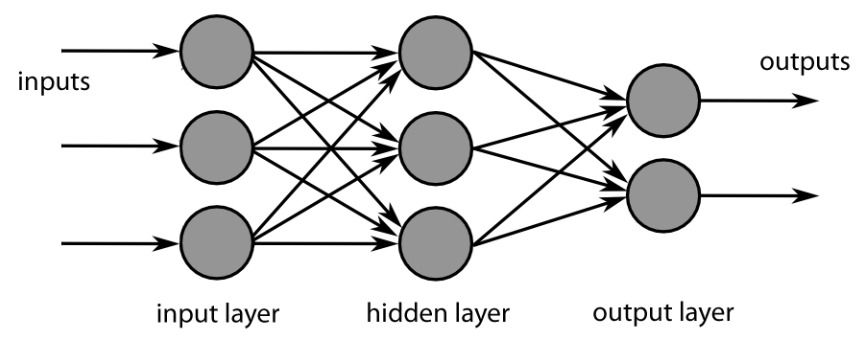
Deep neural networks are a family of machine learning models built from layered, interconnected nodes. They are particularly effective for perception tasks — image recognition, speech processing, language modelling — and they power most modern generative AI systems. They are a subset of machine learning, which is in turn a subset of AI.
How does generative AI relate to traditional machine learning?
Generative AI is machine learning with a particular objective: instead of predicting a label, the model learns the distribution of its training data well enough to produce new samples from it. The underlying training machinery is the same as for other neural models. The failure modes — confident fabrication, sensitivity to prompts — are specific to the generative setting and do not generalise to all AI.
Choosing between AI and ML for your project
Establish first whether the challenge requires statistical inference from observations or the application of crafted decision trees. Artificial Intelligence vs Machine rewards teams that measure first and argue later — start with the smallest instrumented slice and let the numbers settle the design.