
Researchers have developed a machine learning algorithm that can analyze and predict energy consumption patterns in urban areas, enabling more efficient energy management.
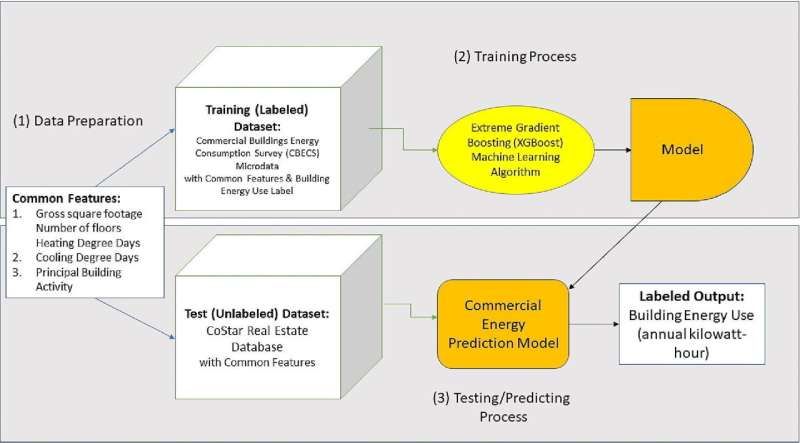
The technology utilizes a combination of data sources, including historical energy consumption data, weather forecasts, and building characteristics. By training the machine learning algorithm on this data, it can identify patterns and correlations that help predict future energy usage.
This predictive capability allows for proactive energy management strategies. By anticipating peak energy demand periods, city planners and energy providers can optimize energy distribution, adjust supply accordingly, and potentially avoid overloads or blackouts.
There are several potential benefits of this technology, such as cost savings, reduced environmental impact, and enhanced energy resilience. It also highlights how technology can contribute to achieving sustainability goals and building smart cities.
Three forecasting problems converge
Urban energy systems sit at the intersection of three forecasting problems that have historically been handled in isolation: weather-driven demand, building-level load characteristics, and grid-side supply constraints. The contribution of a machine learning approach here is not that any one of those signals is novel — utilities have used weather-normalised load forecasts for decades — but that a single model can ingest them jointly and produce a coherent prediction at the granularity a planner actually needs. That granularity is what determines whether a forecast is decision-grade or merely directional. A city-wide daily total is not enough to schedule distribution; a neighbourhood-level hourly curve is.
The harder part, in practice, is not the model architecture but the data plumbing: aligning building metadata, smart-meter telemetry, and weather feeds onto a common time base, handling missing intervals without leaking future information into the training set, and keeping the model honest as the building stock changes. None of those are research problems. They are the engineering work that determines whether a published result survives contact with a live grid.
At TechnoLynx, we develop custom solutions using machine learning, AI, deep learning, computer vision, and many more for your projects!
Credits: TechXplore
