
Machine Learning versus Deep Learning

DataCamp's tutorial on machine and deep learning is a valuable resource for anyone interested in diving into the world of data science.

Machine Learning versus Deep Learning
Written by TechnoLynx Published on 04 Oct 2023

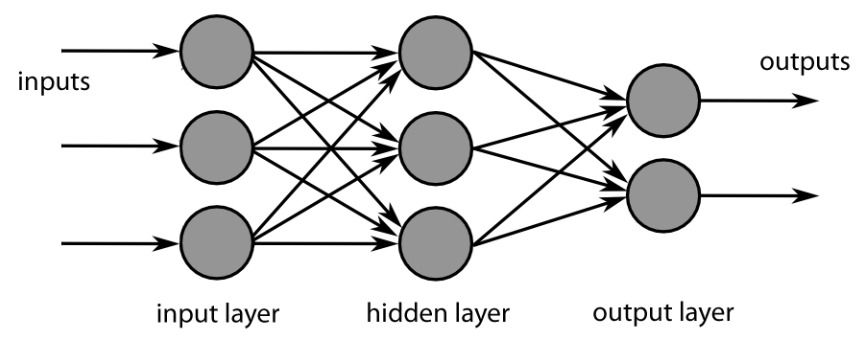
DataCamp’s tutorial on machine and deep learning is a valuable resource for anyone interested in diving into the world of data science. It covers foundational concepts in machine learning and discusses the complexities of deep learning, including neural networks, convolutional networks, and recurrent networks. It explains the clear differences between the concepts of Machine Learning versus Deep Learning.

What sets this tutorial apart is its hands-on approach, offering practical exercises and coding challenges to help learners reinforce their understanding and develop practical data science skills. It’s an accessible entry point for beginners and a useful tool for those looking to expand their knowledge. Additionally, the tutorial fosters a sense of community, providing opportunities for learners to connect with like-minded individuals and access expert guidance.

Credits: DataCamp

Hiring AI Talent: Role Definitions, Interview Gaps, and What Actually Predicts Success

Hiring AI Talent: Role Definitions, Interview Gaps, and What Actually Predicts Success

7/05/2026

Hiring AI talent requires distinguishing ML engineer, data scientist, AI researcher, and MLOps engineer roles. What interviews miss and what actually.

Drug Manufacturing: How Pharmaceutical Production Works and Where AI Adds Value

Drug Manufacturing: How Pharmaceutical Production Works and Where AI Adds Value

7/05/2026

Drug manufacturing transforms APIs into finished products through formulation, processing, and packaging. AI improves process control, inspection, and.

Diffusion Models Explained: The Forward and Reverse Process

Diffusion Models Explained: The Forward and Reverse Process

7/05/2026

Diffusion models learn to reverse a noise process. The forward (adding noise) and reverse (denoising) processes, score matching, and why this produces.

Enterprise AI Failure Rate: Why Most Projects Don't Reach Production

Enterprise AI Failure Rate: Why Most Projects Don't Reach Production

7/05/2026

Most enterprise AI projects fail before production. The causes are structural, not technical. Understanding failure patterns before starting a project.

Continuous Manufacturing in Pharma: How It Works and Why AI Is Essential

Continuous Manufacturing in Pharma: How It Works and Why AI Is Essential

7/05/2026

Continuous pharma manufacturing replaces batch processing with real-time flow. AI-based process control is essential for maintaining quality in continuous.

Diffusion Models Beat GANs on Image Synthesis: What Changed and What Remains

Diffusion Models Beat GANs on Image Synthesis: What Changed and What Remains

7/05/2026

Diffusion models surpassed GANs on FID scores for image synthesis. What metrics shifted, where GANs still win, and what it means for production image generation.

What Does CUDA Stand For? Compute Unified Device Architecture Explained

What Does CUDA Stand For? Compute Unified Device Architecture Explained

7/05/2026

CUDA stands for Compute Unified Device Architecture. What it means technically, why it is NVIDIA-only, and how it relates to GPU programming for AI.

Data Science Team Structure for AI Projects

Data Science Team Structure for AI Projects

7/05/2026

Data science team structure depends on project scale and maturity. Roles needed, common gaps, and when a team of 2 is enough vs when you need 8.

The Diffusion Forward Process: How Noise Schedules Shape Generation Quality

The Diffusion Forward Process: How Noise Schedules Shape Generation Quality

7/05/2026

The forward process in diffusion models adds noise according to a schedule. How linear, cosine, and custom schedules affect image quality and training stability.

AI POC Requirements: What to Define Before Building a Proof of Concept

AI POC Requirements: What to Define Before Building a Proof of Concept

6/05/2026

AI POC requirements must be defined before development starts. Data access, success metrics, scope boundaries, and stakeholder alignment determine POC outcomes.

Autonomous AI in Software Engineering: What Agents Actually Do

Autonomous AI in Software Engineering: What Agents Actually Do

6/05/2026

What autonomous AI software engineering agents can actually do today: code generation quality, context limits, test generation, and where human oversight.

How Companies Improve Workforce Engagement with AI: Training, Automation, and Change Management

How Companies Improve Workforce Engagement with AI: Training, Automation, and Change Management

6/05/2026

AI workforce engagement requires training, process redesign, and change management. How organisations build AI literacy and manage the automation transition.

AI Agent Design Patterns: ReAct, Plan-and-Execute, and Reflection Loops

6/05/2026

AI agent patterns—ReAct, Plan-and-Execute, Reflection—solve different failure modes. Choosing the right pattern determines reliability more than model.

AI Strategy Consulting: What a Useful Engagement Delivers and What to Watch For

6/05/2026

AI strategy consulting ranges from genuine capability assessment to repackaged hype. What a useful engagement delivers, and the signals that distinguish.

Agentic AI in 2025–2026: What Is Actually Shipping vs What Is Still Research

6/05/2026

Agentic AI is moving from demos to production. What's deployed today, what's still research, and how to evaluate claims about autonomous AI systems.

Cheapest GPU Cloud Options for AI Workloads: What You Actually Get

6/05/2026

Free and cheap cloud GPUs have real limits. Comparing tier costs, quota, and what to expect from spot instances for AI training and inference.

AI POC Design: What Success Criteria to Define Before You Start

6/05/2026

AI POC success requires pre-defined business criteria, not model accuracy. How to scope a 6-week AI proof of concept that produces a real go/no-go.

Agent-Based Modeling in AI: When to Use Simulation vs Reactive Agents

6/05/2026

Agent-based modeling simulates populations of interacting entities. When it's the right choice over LLM-based agents and how to combine both approaches.

Best Low-Profile GPUs for AI Inference: What Fits in Constrained Systems

6/05/2026

Low-profile GPUs for AI inference are constrained by power and cooling. Which models fit, what performance to expect, and when to choose a different form factor.

AI Orchestration: How to Coordinate Multiple Agents and Models Without Chaos

5/05/2026

AI orchestration coordinates multiple models through defined handoff protocols. Without it, multi-agent systems produce compounding inconsistencies.

Talent Intelligence: What AI Actually Does Beyond Resume Screening

5/05/2026

Talent intelligence uses ML to map skills, predict attrition, and identify internal mobility — but only with sufficient longitudinal employee data.

AI-Driven Pharma Compliance: From Manual Documentation to Continuous Validation

5/05/2026

AI shifts pharma compliance from periodic manual audits to continuous automated validation — catching deviations in hours instead of months.

Building AI Agents: A Practical Guide from Single-Tool to Multi-Step Orchestration

5/05/2026

Production agent development follows a narrow-first pattern: single tool, single goal, deterministic fallback — then widen incrementally with observability.

AI Consulting for Small Businesses: What's Realistic, What's Not, and Where to Start

5/05/2026

AI consulting for SMBs must start with data audit and process mapping — not model selection — because most failures stem from insufficient data infrastructure.

Choosing Efficient AI Inference Infrastructure: What to Measure Beyond Raw GPU Speed

5/05/2026

Inference efficiency is performance-per-watt and cost-per-inference, not raw FLOPS. Batch size, precision, and memory bandwidth determine throughput.

How to Improve GPU Performance: A Profiling-First Approach to Compute Optimization

5/05/2026

Profiling must precede GPU optimisation. Memory bandwidth fixes typically deliver 2–5× more impact than compute-bound fixes for AI workloads.

LLM Agents Explained: What Makes an AI Agent More Than Just a Language Model

5/05/2026

An LLM agent adds tool use, memory, and planning loops to a base model. Agent reliability depends on orchestration more than model benchmark scores.

GxP Regulations Explained: What They Mean for AI and Software in Pharma

5/05/2026

GxP is a family of regulations — GMP, GLP, GCP, GDP — each applying different validation requirements to AI systems depending on lifecycle role.

Engineering Task vs Research Question: Why the Distinction Determines AI Project Success

27/04/2026

Engineering tasks have known solutions and predictable timelines. Research questions have uncertain outcomes. Conflating the two causes project failure.

How to Assess Enterprise AI Readiness — and What to Do When You Are Not Ready

26/04/2026

AI readiness is about data infrastructure, organisational capability, and governance maturity — not technology. Assess all three before committing.

When to Build a Custom Computer Vision Model vs Use an Off-the-Shelf Solution

26/04/2026

Custom CV models are justified when the domain is specialised and off-the-shelf accuracy is insufficient. Otherwise, customisation adds waste.

How Multi-Agent Systems Coordinate — and Where They Break

25/04/2026

Multi-agent AI decomposes tasks across specialised agents. Conflicting plans, hallucinated handoffs, and unbounded loops are the production risks.

What an AI POC Should Actually Prove — and the Four Sections Every POC Report Needs

24/04/2026

An AI POC should prove feasibility, not capability. It needs four sections: structure, success criteria, ROI measurement, and packageable value.

How to Optimise AI Inference Latency on GPU Infrastructure

24/04/2026

Inference latency optimisation targets model compilation, batching, and memory management — not hardware speed. TensorRT and quantisation are key levers.

GAN vs Diffusion Model: Architecture Differences That Matter for Deployment

23/04/2026

GANs produce sharp output in one pass but train unstably. Diffusion models train stably but cost more at inference. Choose based on deployment constraints.

Data Quality Problems That Cause Computer Vision Systems to Degrade After Deployment

23/04/2026

CV system degradation after deployment is usually a data problem. Annotation inconsistency, domain shift, and data drift are the structural causes.

Why Most Enterprise AI Projects Fail — and How to Predict Which Ones Will

22/04/2026

Enterprise AI projects fail at 60–80% rates. Failures cluster around data readiness, unclear success criteria, and integration underestimation.

What Types of Generative AI Models Exist Beyond LLMs

22/04/2026

LLMs dominate GenAI, but diffusion models, GANs, VAEs, and neural codecs handle image, audio, video, and 3D generation with different architectures.

Proven AI Use Cases in Pharmaceutical Manufacturing Today

22/04/2026

Pharma manufacturing AI is deployable now — process control, visual inspection, deviation triage. The approach is assessment-first, not technology-first.

Why Off-the-Shelf Computer Vision Models Fail in Production

20/04/2026

Off-the-shelf CV models degrade in production due to variable conditions, class imbalance, and throughput demands that benchmarks never test.

Planning GPU Memory for Deep Learning Training

16/02/2026

GPU memory estimation for deep learning: calculating weight, activation, and gradient buffers so you can predict whether a training run fits before it crashes.

CUDA AI for the Era of AI Reasoning

11/02/2026

How CUDA underpins AI inference: kernel execution, memory hierarchy, and the software decisions that determine whether a model uses the GPU efficiently or wastes it.

Deep Learning Models for Accurate Object Size Classification

27/01/2026

A clear and practical guide to deep learning models for object size classification, covering feature extraction, model architectures, detection pipelines, and real‑world considerations.

GPU vs TPU vs CPU: Performance and Efficiency Explained

10/01/2026

CPU, GPU, and TPU compared for AI workloads: architecture differences, energy trade-offs, practical pros and cons, and a decision framework for choosing the right accelerator.

AI and Data Analytics in Pharma Innovation

15/12/2025

Machine learning in pharma: applying biomarker analysis, adverse event prediction, and data pipelines to regulated pharmaceutical research and development workflows.

Optimising LLMOps: Improvement Beyond Limits!

2/01/2025

LLMOps optimisation: profiling throughput and latency bottlenecks in LLM serving systems and the infrastructure decisions that determine sustainable performance under load.

MLOps for Hospitals - Staff Tracking (Part 2)

9/12/2024

Hospital staff tracking system, Part 2: training the computer vision model, containerising for deployment, setting inference latency targets, and configuring production monitoring.

MLOps for Hospitals - Building a Robust Staff Tracking System (Part 1)

2/12/2024

Building a hospital staff tracking system with computer vision, Part 1: sensor setup, data collection pipeline, and the MLOps environment for training and iteration.

Back See Blogs
arrow icon