Commercial facial recognition splits cleanly into two deployment modes — 1:1 verification and 1:N identification — and the operational, accuracy, and legal profile of each is different enough that conflating them is the first source of failed projects. A camera vendor’s demo accuracy figure tells you almost nothing about whether the same hardware and pipeline will hold up against a 5,000-identity gallery, in an uncontrolled atrium, with a DPIA that has to survive a regulator’s read. The point of this article is to break the deployment problem into the parts that actually determine outcome: which matching mode you are running, how the enrollment gallery is built and maintained, where the FAR threshold sits, what consent framework you operate under, and what the camera physically has to do.
For the underlying pipeline — face detection, alignment, embedding, identity match — see our explainer on how the facial recognition pipeline actually works. This article picks up where that one ends: at the point of committing to a specific commercial deployment.
1:1 verification vs 1:N identification
Conflating these use cases guarantees mismatched expectations. They are different problems that happen to share a feature extractor.
1:1 verification confirms that a person presenting themselves is who they claim to be. The captured face is compared against a single reference embedding — the enrolled identity associated with the badge, PIN, or claim. Access control, time-and-attendance, and identity verification workflows all live here. The match is a one-shot decision against one template, so the false-match probability is bounded and the threshold calibration is tractable.
1:N identification searches a captured face against a gallery of N enrolled identities and either returns a candidate match or declares no match. Watchlist applications, loss-prevention systems, and visitor management all run in 1:N. The failure mode is structural: false match probability scales with gallery size because every additional enrolled identity is another opportunity for a near-collision in embedding space. The system also has to handle the open-set case where the subject is not in the gallery at all, which means a confidence threshold rather than a nearest-neighbour winner.
This is an observed pattern from production deployments, not a vendor benchmark: 1:N systems that worked well at 200 identities frequently become operationally unmanageable at 5,000 because the false-alert volume crosses the threshold that human review staff can sustain.
How does enrollment quality determine system accuracy?
Enrollment image fidelity establishes an upper bound on system performance that later stages cannot exceed. Garbage in, garbage out applies rigorously here — a face recognition system cannot recover at match time from a poor enrollment image, because the embedding it stored is the wrong embedding.
Enrollment images need to meet conditions that are usually stricter than the operational capture conditions:
- Minimum face size at enrollment: 120 pixels inter-ocular distance or higher — higher resolution than the operational matching threshold.
- Illumination: even, diffuse, frontal. Strong shadows and backlighting at enrollment will be baked into the stored embedding.
- Expression: neutral. Smiling and squinting change feature geometry enough to degrade match scores in operation.
- Occlusion: clear. No tinted glasses, no face covering, no hair across landmarks.
- Multiple angles: enrolling 3–5 images per identity (slightly different poses and lighting) is an observed pattern that improves operational matching accuracy by roughly 10–20% relative to single-image enrollment. This is across-engagement observation, not a benchmarked rate against a published dataset.
Gallery maintenance is the part that quietly goes wrong over time. Face appearance changes — ageing, weight change, facial hair, glasses — and stale enrollment images are a common cause of declining match rates in access control systems that have been running for five-plus years. Equally important and equally neglected: deletion workflows for departed employees, former members, or resolved watchlist entries. A gallery that only grows is a gallery that increasingly fails closed-loop audits.
Gallery size vs operational false-alert rate
| Gallery size | Typical 1:N FAR at 95% TPR | Operational implication |
|---|---|---|
| <50 identities | <0.1% | Very low false alert rate; viable for most use cases |
| 50–500 identities | 0.1–0.5% | Manageable with human review workflow |
| 500–5,000 identities | 0.5–2% | Alert volume requires prioritisation; threshold calibration critical |
| 5,000–50,000 identities | 2–5% | High false-alert burden; consider tiered matching |
| >50,000 identities | >5% | Not operationally viable without cascaded filtering |
These ranges are observed-pattern figures from commercial deployments rather than a single benchmark. The point of the table is not the precise numbers — it is that operational viability is a function of gallery size, and that crossing the 5,000-identity line typically forces a redesign rather than a tuning pass.
What false acceptance rate is acceptable in production?
Set your false acceptance threshold based on the operational cost of mistaken matches, not default configuration values.
Access control to a general office building usually tolerates an FAR in the 0.1–1% range (a rule of thumb for typical deployment thresholds), with a secondary verification step (PIN, badge tap) for borderline confidence scores. The cost of a false match is contained because a second factor is already in play.
Access control to secure areas — server rooms, pharmaceutical storage, restricted labs — needs FAR below 0.01% as a design threshold (a rule of thumb for high-security deployments), which typically requires secondary authentication for all but the very highest-confidence matches. The cost of a false acceptance here is severe enough that the system has to operate well into the FRR-dominant region of the ROC curve.
Loss-prevention watchlist matching is a different calculus entirely. At 5,000 daily face captures and a 1% FAR, that is 50 false alerts per day — borderline manageable for a small review team. At 0.1% FAR, it is 5 — manageable. Across our engagements with retail and venue-security deployments, the operating threshold ends up being set by review-team capacity rather than by an abstract security target.
The FAR/FRR tradeoff is real and inescapable. Lowering FAR raises FRR; raising recognition strictness produces more missed legitimate matches. We treat the operating threshold as an explicit business decision documented in the deployment design, not a number left at vendor default.
Consent and legal framework
Regulatory frameworks governing biometric capture vary dramatically by jurisdiction and continue shifting. The EU AI Act has shifted real-time remote biometric identification into a high-risk tier with explicit restrictions, and that change interacts with the existing GDPR framework rather than replacing it.
Under GDPR Article 9, biometric data processed for identification purposes is special category data and requires an explicit legal basis. The three paths that come up in commercial settings:
- Explicit consent (Article 9(2)(a)) is the most common basis for employment-context use such as access control for enrolled employees. Consent must be freely given, specific, and revocable. In employment contexts the power imbalance can compromise the “freely given” requirement, and several EU DPAs have ruled against consent as a valid basis in specific employment scenarios.
- Legitimate interests (Article 6(1)(f) combined with Article 9(2)(f)) is contested and not generally accepted by EU DPAs as a standalone basis for biometric surveillance.
- Substantial public interest (Article 9(2)(g)) requires specific national-law authorisation and is not available to most private deployments.
In the US, biometric-specific state laws have outpaced federal regulation:
- Illinois BIPA requires written consent, prohibits sale of biometric data, and provides a private right of action — making it the most litigation-generating biometric law in the world.
- Texas CUBI mirrors much of BIPA’s substance but lacks the private right of action.
- Washington’s My Health My Data Act captures biometric data within a health-context framing that is drafted broadly enough to reach commercial recognition systems.
The practical compliance minimum for a commercial deployment, in our experience, looks like this:
- Complete a Data Protection Impact Assessment before deployment.
- Establish a specific legal basis tied to the specific use case — not a generic “security” basis.
- Produce enrollment consent documentation appropriate to that legal basis.
- Secure the enrollment database with encryption at rest, access controls, and audit logging.
- Define and enforce retention periods, including for raw capture frames as well as embeddings.
- Implement subject access and deletion rights as a working workflow, not a policy document.
- Post transparency notices at the points of data capture.
This list is the floor, not the design. Specific jurisdictions and specific sectors layer additional requirements on top.
Camera specification and capture environment
Capture conditions dictate the raw material available for comparison—superior models cannot compensate for substandard input imagery.
Camera spec checklist:
- Resolution: minimum 2MP at the capture distance; 4–8MP recommended for reliable recognition.
- Face size at operating distance: minimum 120 pixels inter-ocular distance.
- Frame rate: minimum 15 fps for moving subjects; 25–30 fps preferred.
- Global shutter: required for moving subjects. Rolling shutter distorts face geometry on motion.
- Illumination: integrated or co-located IR illuminator for consistent low-light performance.
- Lens: appropriate for operating distance; avoid wide-angle lenses that distort face geometry at the edges of frame.
- IP rating: at least IP66 for exterior deployments.
- Operating temperature: verified against the deployment environment range.
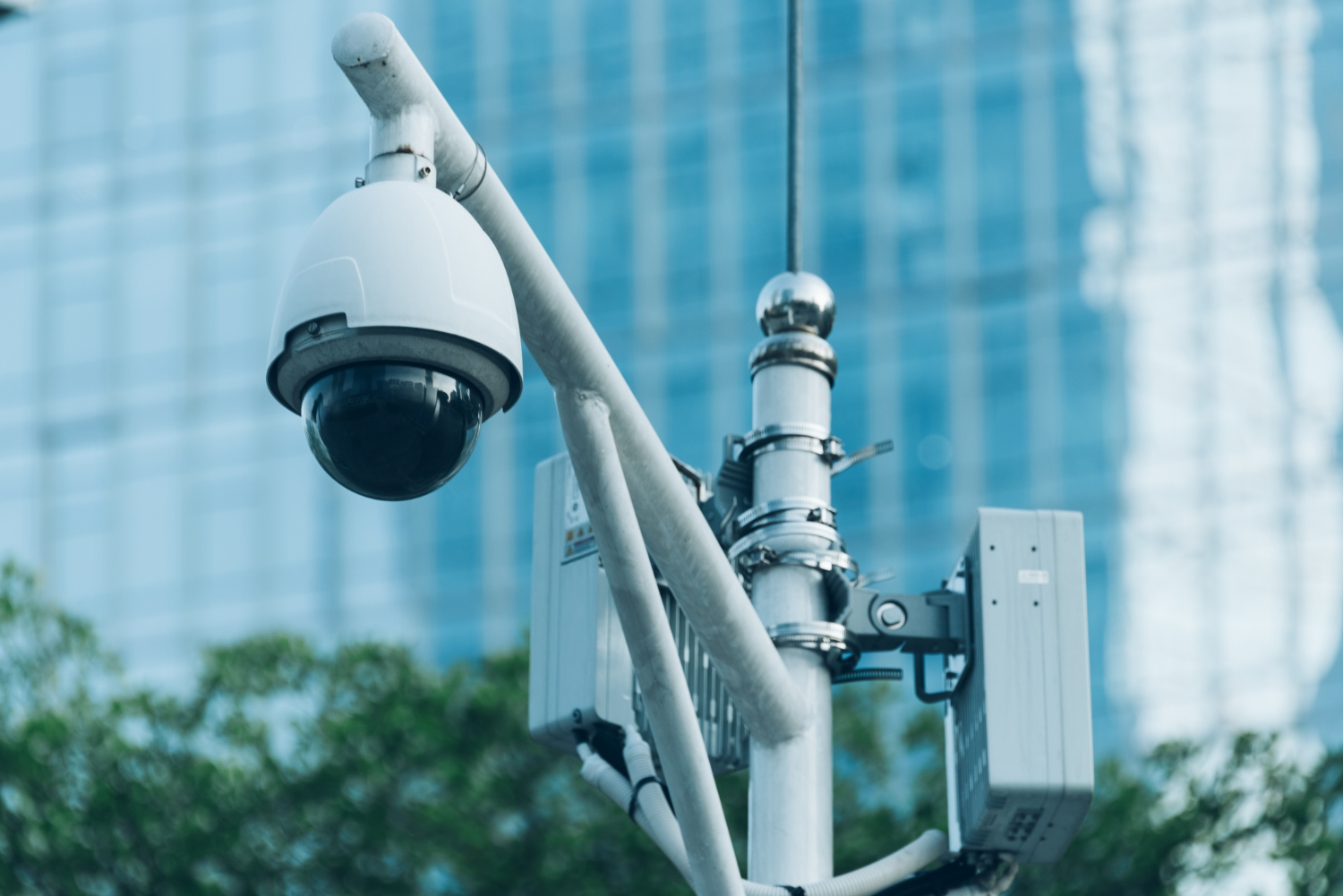
The biggest single predictor of commercial face-recognition accuracy is whether the capture environment was designed for recognition or whether recognition is being retrofitted onto a general surveillance installation. Designed environments control lighting, constrain approach angle, set a defined operating distance, and use camera hardware chosen for the task. Retrofitting recognition onto standard CCTV — the failure pattern explored further in our piece on CCTV face recognition production challenges — almost always delivers unsatisfactory results.
Edge vs server inference
The right place to run inference depends on which matching mode you are in.
For 1:1 verification — access control with a one-template comparison — edge inference on the camera or a co-located mini-PC is appropriate. Latency is low, there is no network dependency, and integration with access-control hardware is simple. The compute envelope of modern embedded accelerators (Jetson-class devices, ONNX-optimised models, TensorRT engines built for the deployment hardware) is more than sufficient.
For 1:N watchlist matching against a large gallery, server-side inference on GPU-accelerated hardware is typically required. The nearest-neighbour search across thousands of embeddings benefits from batched GPU compute and from approximate-nearest-neighbour indices (FAISS, HNSW) that need more memory than embedded targets can offer. Trying to push 1:N at scale onto an edge device is a recognisable failure pattern.
What commercial deployments actually look like
Working deployments occupy a tight design envelope: cameras mounted at eye level one to two meters away, consistent lighting conditions, server-based processing, access control integration, and galleries dimensioned to operator workload. The scenarios that do not work: recognition from standard overhead CCTV with no modifications, recognition at range in uncontrolled environments, and recognition under highly variable lighting with no IR supplementation.
Set expectations accordingly before committing to a deployment, and verify accuracy under your specific capture conditions — not under vendor benchmark conditions — before signing off on the system. Our Computer Vision R&D practice runs that on-site verification as a standard step before sign-off on any facial-recognition engagement.
FAQ
How does the facial recognition pipeline decompose — detection, alignment, embedding, matching?
Stripped down, Facial Recognition Cameras Commercial is the following. In Facial Recognition Cameras Commercial, the short answer is as follows. The pipeline runs as four stages: a detector locates faces in the frame, an alignment step warps each face to a canonical pose, an embedding model produces a fixed-length vector representation, and a matcher compares that vector to one (1:1) or many (1:N) gallery embeddings. The commercial deployment work in this article sits on top of that pipeline; the pipeline explainer covers the stages themselves.
Why is MTCNN typically preferred over Haar cascades in modern face detection, and where does that trade-off flip?
MTCNN handles pose variation, partial occlusion, and varied lighting better than Haar cascades because it learns hierarchical features rather than relying on hand-engineered edge templates. The trade-off flips on very constrained embedded targets where Haar’s lower compute cost matters more than its accuracy ceiling — but in commercial deployments with modern accelerators that case is rare.
Where does facial recognition sit in the broader CV pipeline (image recognition, pattern recognition, deep learning)?
Facial recognition is a specialised identification task within computer vision. It uses the same deep-learning machinery as general image recognition (convolutional backbones, transformer encoders) but adds the requirement that the embedding space cluster identities tightly enough for nearest-neighbour matching to work reliably. It is closer to a metric-learning problem than to a classification problem.
What are the realistic accuracy and bias limits of production facial recognition in 2026 deployments?
Top-of-line models on benchmark datasets report verification accuracies above 99% as reported in published benchmarks, but operational accuracy on commercial deployments is bounded by gallery size, capture conditions, and demographic coverage of the training set. Demographic bias persists in production systems — error rates vary measurably across skin tone, age, and gender groups — and is one of the issues a DPIA has to surface explicitly.
Which CV algorithms (eigenfaces, deep embeddings, transformers) are still relevant for face recognition, and which are obsolete?
Eigenfaces and other classical methods are obsolete for serious production use. Deep CNN-based embedding models (ArcFace, CosFace and their descendants) remain the workhorses of commercial deployments. Transformer-based face encoders are gaining ground in 2026 but have not displaced CNN embeddings as the default.
How does facial recognition deployment differ across cloud, on-device, and edge inference settings?
Cloud inference suits batch and analytics workloads but adds latency and a network dependency unsuited to real-time access control. On-device and edge inference (Jetson-class accelerators, ONNX/TensorRT engines) is the right answer for 1:1 verification and low-latency capture. Server-side inference dominates 1:N matching against large galleries, where ANN indices and batched GPU compute become necessary.
Across commercial work, the recurring failure pattern is treating facial recognition as a single deployment problem instead of a verification problem and an identification problem that happen to share a feature extractor. The technical artifact we maintain for this — a vendor-selection and pipeline-audit rubric covering matching mode, gallery sizing, threshold calibration, and consent posture — is what we reach for when a buyer asks “is this going to work for us.”
Why most commercial rollouts stumble at scale
Deployment durability depends on managing three critical elements: light source stability, repeatable camera positioning, and transparent consent collection.