
CASE STUDY
Action Recognition for Security (Under NDA)
TechnoLynx built an AI-powered action recognition proof-of-concept for a smart retail environment, detecting suspicious actions within a monitored area in real time — using cost-effective CCTV hardware and a pragmatic human-in-the-loop workflow. Part of a broader smart retail technology engagement.
The Challenge
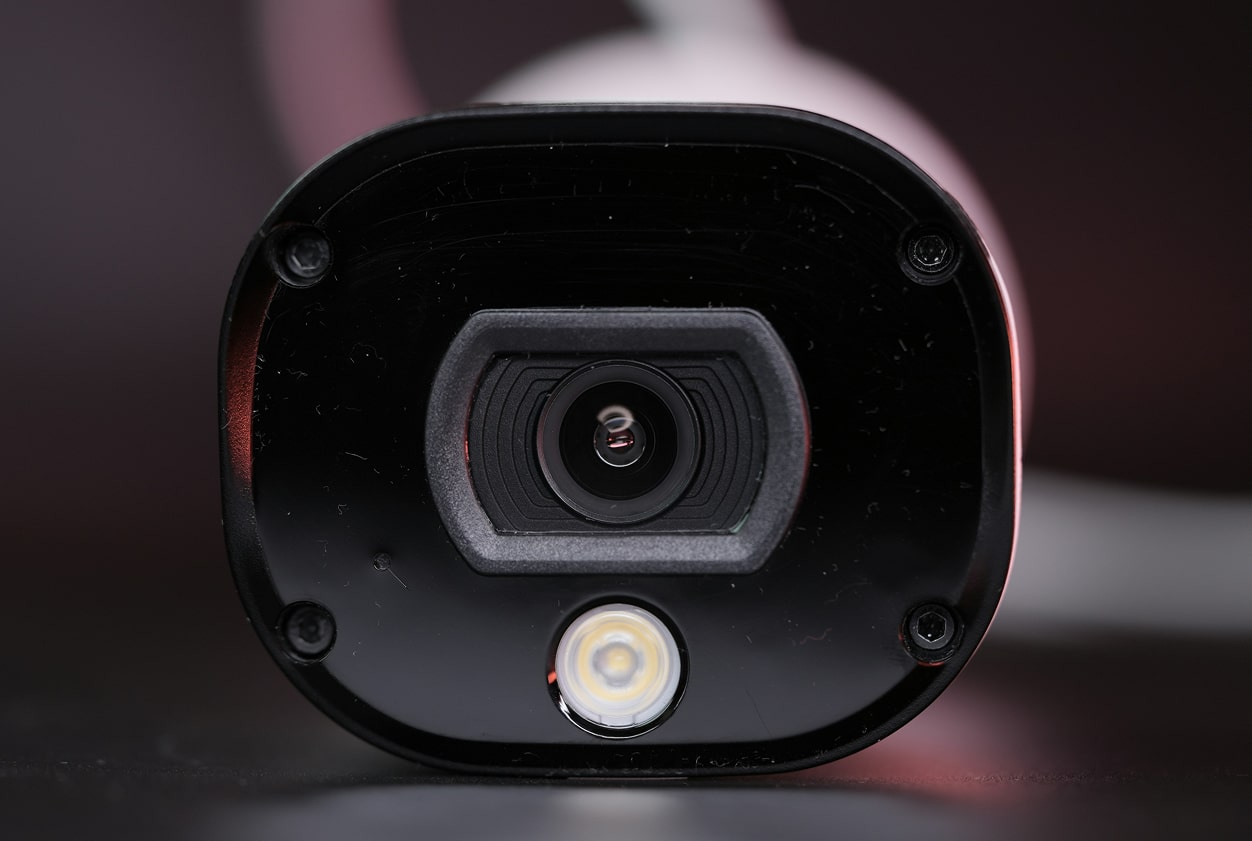
The client needed to monitor human actions in a specific area using existing, cost-effective CCTV installations. They wanted suspicious behaviour detected in real time and flagged for investigation, without upgrading to high-end cameras or building a heavy, expensive compute stack.
Work with basic CCTV setups.
The solution had to be robust and affordable, designed around existing infrastructure rather than high-end cameras.
Detect suspicious actions in real time.
The system needed to flag behaviour as it happens so operators can investigate quickly.
A structural data constraint, not an incidental one.
In a retail environment, it is not possible to ethically collect or label a large dataset of real shoplifting or theft events at scale. The training data limitation was a design constraint imposed by the deployment context, not a resourcing shortfall.
Run efficiently on standard hardware.
The solution had to operate with a standard GPU and off-the-shelf video cards, without requiring expensive, high-end upgrades.

Project Timeline
From problem framing to a proof-of-concept based on a hybrid model
Problem Definition
Defined the monitoring goal: recognise and flag suspicious human actions in a specific area using cost-effective CCTV.
Started with a deep learning approach for action recognition, aiming to classify behaviours from video feeds.
Initial Model Approach
Data Reality Check
Adjusted the plan after it became clear the required quantity and quality of training data could not be supplied.
Built a hybrid system: transfer learning for skeletal-feature activity modelling plus rule-based logic for suspicious behaviour detection.
Hybrid System Build
PoC Validation
Delivered a proof-of-concept that reliably flags violations for human review, and running on mid-range GPUs.
The Solution
As the project progressed, it became clear that the expected quantity and quality of training data could not be supplied. Recognising this limitation, TechnoLynx shifted to a hybrid model by integrating transfer learning techniques for modelling activities using skeletal features and a rule-based approach for identifying suspicious actions.
Transfer Learning
Integrated transfer learning techniques for modelling activities using skeletal features and adapted pre-trained deep learning models to recognise the basic structure and movement of individuals.
Rule-Based Detection
Incorporated a rule-based approach based on predefined sets of conditions that represent unusual or suspicious behaviour, including unexpected movements or lingering in restricted areas.
Practical Performance
Used PyTorch to handle the deep learning part of the activity detection and vectorised NumPy code for the rule-based logic.
Technical Specifications
ML + CV
PyTorch (deep learning), NumPy (vectorised rule logic)
Execution
Designed for standard GPUs and off-the-shelf video cards
Learning Strategy
Transfer learning for skeletal-feature activity modelling
Detection Layer
Rule-based behaviour constraints to flag unusual activity
As the client collects more data from real-world usage, the system can be further improved to provide more autonomous action recognition and classification.
By utilising modern techniques like optical flow, ray tracing, and GPU acceleration, the system is well-equipped to handle future challenges in security monitoring and action classification.
The Outcome
The proof-of-concept delivery was deemed a success given the structural constraints of the deployment context. The hybrid model — transfer learning for skeletal body modelling, rules-based logic for suspicious action classification — produced reliable flagging within the scope of available training data. Human supervision was retained as the final validation layer, which is the correct design for a retail environment where false positives carry real operational cost. This workstream was one component of a broader multi-year smart retail engagement; a full commercial deployment would generate the production-scale labelled dataset needed to move toward higher model autonomy over time.
Key Achievements
The proof-of-concept delivery was deemed a success, given the limitations of the available training data.
Shifted from a pure deep learning approach to a hybrid model integrating transfer learning (skeletal features) and a rule-based approach for suspicious behaviour.
Used PyTorch for the deep learning component and vectorised NumPy code for the rule-based logic.
Discrete GPUs handled human body recognition and action classification while maintaining high clock speeds and performance levels.
Our Technological Capabilities
Computer Vision Services
Our services feature expertise in classical computer vision, human-supervised system design for legal compliance, video pipeline optimisation with tools like FFmpeg, custom adaptable models, and explainable AI for ethical transparency.


Generative AI
We are leaders in generative AI, offering optimised inference for faster deployments, ethical AI systems with bias mitigation, intelligent automation for adaptive workflows, and advanced simulation and prototyping capabilities.

GPU Performance Engineering
We deliver immersive XR solutions with cross-platform development (Unity 6), GPU performance optimisation, and expertise in NVIDIA Omniverse and CloudXR. We also use reinforcement learning for intelligent XR environments.

Want to Improve Video Security Monitoring?
Let’s discuss how practical computer vision and AI can help you detect incidents faster, reduce manual review, and work within real-world hardware constraints.