
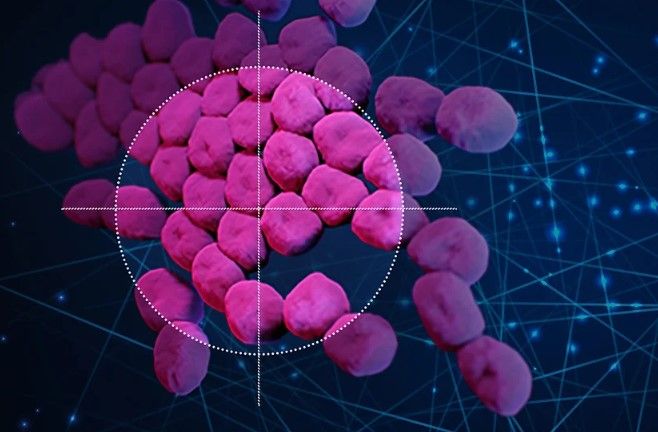
Researchers have developed an AI system that screens millions of chemical compounds and predicts their effectiveness against specific bacterial strains. This AI model identifies promising candidates for further testing and developing new antibiotics.
This breakthrough offers hope in addressing the global challenge of drug-resistant infections. As antibiotic resistance continues to rise, traditional drug discovery methods struggle to keep pace with the pathogens evolving in clinical settings. Conventional screening pipelines rely on wet-lab assays that test compounds one batch at a time, which limits throughput to thousands of candidates rather than the millions that modern chemical libraries actually contain.
The shift here is structural, not cosmetic. A neural network trained on labelled compound-activity data can rank a library by predicted antibacterial effect before any physical assay runs, so the wet lab only touches the top fraction of candidates. That reorders the cost curve of early-stage discovery: the expensive step (synthesis and testing) is reserved for molecules the model already flagged as likely actives. The MIT News report frames this as a way to surface novel scaffolds that human-led screens would have skipped, which matters because most clinically deployed antibiotics still derive from a narrow set of historical chemical families.
It is immensely mind-blowing to live in this era and witness how AI is transforming healthcare. The same pattern — generative or discriminative models acting as a coarse filter ahead of physical experiment — is showing up across structural biology, protein design, and now small-molecule antibacterial discovery. It is also the pattern our life-sciences AI work is built around.
Are you planning to build a tailor-made AI for your projects too? Contact us now.
Credits: MIT News
