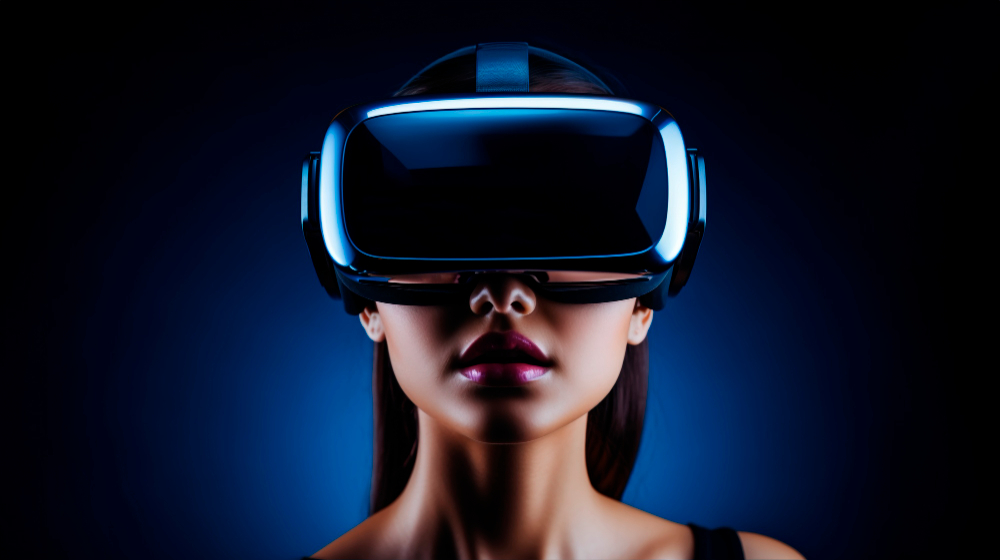
Beauty was the vertical that quietly proved augmented reality in production. While most XR pilots in industry were still struggling with hardware, latency, and content-pipeline costs — the failure modes that stall AR/VR pilots before they reach deployment — cosmetics brands shipped consumer-facing AR at scale on hardware nobody had to issue: the phone already in the customer’s pocket. That accident of distribution is the reason virtual try-on is the most mature AR consumer category today, and it is also why the engineering constraints in beauty are unusually instructive for teams thinking about XR more broadly.
How AR actually shows up in beauty retail
Almost every brand-side AR programme in 2026 reduces to some combination of three production patterns.
The first is virtual try-on for lipstick, foundation, eyeshadow, hair colour, nail varnish, and accessories. Most of this traffic now runs through phone web AR — no app install, the camera prompt appears on the product page — or through in-app SDKs embedded in a brand’s own mobile experience. ModiFace (L’Oréal-owned), Perfect Corp YouCam, and Banuba supply the rendering stack to a large share of the market. Snap’s Camera Kit and Lens Studio carry the social-led campaigns where the shareable look matters more than the conversion event.
The second is in-store AR mirrors at counters and concept stores. These are kiosks that let a shopper compare two or three looks side-by-side without applying physical product. The hygiene argument that drove their first wave in 2020 has settled into a steadier rationale: throughput. A counter assistant can take a customer through six SKUs in the time it would take to apply and remove one of them.
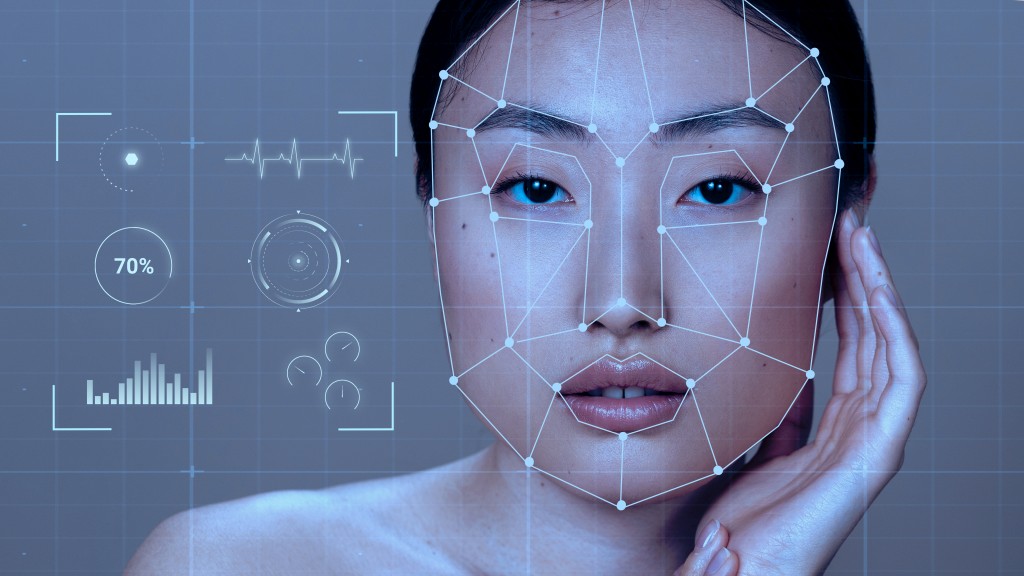
The third is skin-analysis tools that combine an AR overlay with computer-vision diagnostics — pore density, wrinkle scoring, pigmentation, hydration estimates — to drive product recommendations. These are increasingly tied to clinical-style routines rather than one-off purchases, which is the business case the recommendation engine has to clear.
Does AR try-on actually move the numbers?
Brands ask whether ROI justifies an SDK contract; the defensible answer includes significant caveats. Usually yes, though caveats are large enough to matter.
Published case studies from the major beauty groups (observed-pattern, drawn from vendor-curated reports) put add-to-cart lift in the 30–80% range on SKUs that support AR try-on, with return-rate reductions in the 10–40% range (vendor figures). The lift is real, but those numbers are heavily dependent on three things: the traffic mix landing on the AR-enabled product page, the category (lipstick converts far better than foundation, where shade-match expectations are stricter), and how prominently the AR experience is surfaced in the page layout. Vendors selectively report best-case studies. Sizing the lift on your own catalogue, with your own traffic, is the only credible measurement.
| Category | Typical conversion behaviour | Engineering difficulty |
|---|---|---|
| Lipstick | Highest AR lift; colour fidelity tolerant | Low — lip-line tracking is well-solved |
| Eye makeup | Strong lift; high engagement | Medium — eye occlusion, glasses, lash interference |
| Hair colour | Strong lift; high return-rate reduction | Medium-high — hair segmentation is hard |
| Foundation | Modest lift; high abandonment | High — skin-tone fidelity across lighting is the hardest problem |
| Nail varnish | Strong lift; novelty-driven | Medium — hand tracking is fast but lighting-sensitive |
The table is a rough planning heuristic, not a benchmark. Read it as “where to expect the easy wins” rather than as a forecast.
Which platforms do brands actually use?
Consolidation reshaped the vendor landscape. ModiFace is the L’Oréal-internal stack that also licenses out; Perfect Corp YouCam carries a large share of independent brands; Banuba competes on quality of skin and face rendering and on willingness to take custom integration work. Snap Camera Kit and Lens Studio dominate the social-led campaign side, where the deliverable is a shareable filter, not a product page.
Larger brands run their own measurement pipelines on top of these SDKs and increasingly build proprietary rendering layers — typically on MediaPipe for landmark tracking, ARKit and ARCore for the device-level scene, and custom shaders or diffusion-based rendering for the makeup pass itself. Smaller brands almost always integrate a vendor SDK rather than building from scratch. The break-even point is usually around the moment a brand wants per-SKU shade-accuracy control that the SDK does not expose.
Why does the SDK choice matter for engineering?
Because the SDK decides what you can measure. A black-box SDK gives you the rendered output and a conversion event; it does not give you the per-frame quality signal, the lighting estimate, or the failure log when a session degrades. If you intend to invest in measurement, choose an SDK whose telemetry exposes those signals — or build the proprietary stack and accept the cost.
What actually breaks in production
Four persistent issues recur across deployments, and any honest pre-deployment review names them up front:
- Skin-tone fidelity. Rendering foundation, blush, or concealer across the full range of skin tones is genuinely hard. Brands are now scrutinised on this — both by customers and by regulators in some markets — and “looks great on the demo model” is no longer an acceptable internal QA bar.
- Lighting variability. Phone cameras under bad indoor light degrade the experience badly. The AR pipeline has to estimate ambient lighting and re-shade accordingly. Vendor SDKs do this with varying quality, and the gap shows in customer reviews well before it shows in conversion data.
- Occlusion handling. Hair, glasses, and earrings sit between the camera and the surface the product is rendered on. Eye products are the hardest case because lashes and brows occupy the same pixels you want to paint.
- Latency on mid-range phones. Heavier shaders drop framerate below the comfort threshold on devices that account for a meaningful share of beauty e-commerce traffic in many markets. Diagnosing which shader stage is actually over budget, rather than guessing, is the job a GPU Performance Audit is built to do. The motion-to-photon budget that keeps the rendered makeup glued to the lip line is roughly the same one that governs every other AR application; when it slips, the experience becomes uncanny rather than unusable, which is worse for trust.
Each of these is solvable. None of them is solved for free by adopting a vendor SDK. The engineering time absorbed by skin-tone QA across a foundation range alone is often the dominant cost item in a serious deployment, and it sits outside the SDK licence fee.
Where this connects to the broader AR/VR engineering problem
Phones dominate beauty AR because the hardware question resolved itself early. That removes the most common AR/VR deployment risk and isolates the remaining ones: content authoring at scale (every new SKU is a new asset), shade-fidelity QA, and the latency budget on the long tail of devices. We see the same constraints recur in adjacent retail and consumer XR programmes, which is why the failure-pattern view of AR/VR pilots generalises across them.
The lesson for engineering leaders thinking about AR more broadly: the verticals where AR has shipped at production scale are the ones that found a way to remove the hardware-distribution problem from the critical path. Beauty did it with the phone. Automotive is trying to do it with the windshield. Industrial XR is still negotiating it with each new headset generation.
Frequently asked questions
What are the leading hardware reasons AR/VR pilots fail to reach production deployment?
In beauty specifically the dominant constraint is not headset hardware — the phone solves that — but the long tail of mid-range Android devices where heavier shaders drop framerate below the comfort threshold. Across other XR verticals the recurring hardware failure modes are thermal throttling under sustained load and tracker/controller drift on industrial headsets.
How do latency, comfort, and content-authoring constraints compound during scale-up?
Each new SKU is a new asset, each new asset has to be QA’d across the lighting and skin-tone range, and each device class has its own latency envelope. The three constraints multiply rather than add: a foundation range that ships well on flagship phones may be unusable on the device share where most conversion traffic actually sits.
Where is augmented reality actually applied at production scale today versus still in pilot?
Beauty try-on, navigation overlays in mapping apps, and social-media filters are the three categories operating at production scale on consumer phones. Industrial and enterprise XR — training, remote assistance, field service — is largely in pilot or limited deployment. Automotive AR HUDs are shipping on premium vehicles but the content layer is intentionally minimal.
Which pilot-to-production patterns work in beauty and cosmetics, and what carries over to other verticals?
The pattern that ships is: pick a category with high return rates (lipstick, hair colour) where the rendering problem is bounded; integrate a vendor SDK rather than building from scratch; instrument conversion and return-rate on your own catalogue; expand to harder categories only after the measurement pipeline is solid. The carryover lesson is that engineering teams should pick the bounded rendering problem first, not the demo-friendly one.
Which AR/VR risks — motion sickness, content pipeline cost, hardware churn — most often kill a pilot?
For phone-based beauty AR, content pipeline cost dominates. For headset-based XR pilots, hardware churn (new device generation every 18–24 months invalidating part of the integration work) is usually the silent killer, with motion-sickness-driven session-length limits a close second on locomotion-heavy experiences.
How should an XR pilot be scoped to deliver an honest go/no-go decision within 12 weeks?
Lock the SKU set, lock the device target list, and lock the measurement plan before any rendering work starts. The 12-week window then covers integration, in-house measurement on real traffic, and a decision review that names the failure modes encountered, not the demo wins. Pilots that try to expand scope mid-flight are the ones that overrun and produce no decision-grade evidence.
Augmented Reality Beauty Cosmetics: the decision
Measure Augmented Reality Beauty Cosmetics deployments as engineering problems with quantifiable outcomes, not brand exercises. The teams that do tend to ship the boring, correct version first.
Image by Freepik