A museum technology lead asks for a fixed-scope AI tool that will identify undocumented sites from satellite imagery, with a delivery date and an acceptance test. The request is reasonable. It is also the most reliable way to waste the budget.
The failure here is not technical. It is structural. Heritage and archaeology AI work is research, and scoping it as a product launch — fixed deliverable, predetermined success criterion, sign-off on a date — collapses the exact exploration that makes the work worth funding. You end up with something that passes the acceptance test and tells you nothing you did not already know. The spec is met; the research question is untouched.
This is worth naming precisely because the request that produces it is so sensible-sounding. Procurement processes, grant structures, and internal governance all push toward a deliverable with a defined shape. When the underlying work is genuinely exploratory, that push is the failure mode.
Why the Product-Launch Frame Quietly Fails
Success criteria arrive predefined when you buy a product. A defect-detection model on a known production line, a transcription pipeline for a known document format — these have a target you can write down in advance and measure against. The unknowns are engineering unknowns: latency, throughput, edge cases.
Archaeology and cultural-heritage AI rarely sits in that category. The point of applying computer vision to LiDAR-derived terrain models, or to multispectral imaging of palimpsests, or to orbital imagery of a survey region, is usually to find out whether a signal even exists in the data. That is a research question, not an engineering requirement. You do not know in advance whether the feature you are hunting is detectable, whether the labelled examples you have are representative, or whether the apparent pattern survives contact with ground truth.
Fixing the scope of that work in advance forces a quiet substitution. The team cannot promise to answer the research question — nobody honestly can — so they promise the thing they can deliver: a model that runs, a dashboard that displays outputs, a pipeline that processes the imagery. All of that can be built and shipped on schedule. None of it guarantees that the underlying question has moved an inch. In our experience this gap is where heritage AI projects disappoint without anyone obviously failing.
The deeper issue is that exploratory work derives value from the ability to change direction when the data tells you something unexpected. A fixed-scope contract penalises that pivot. The moment your first hypothesis fails to hold — which, in research, is the expected outcome more often than not — the contract structure treats the pivot as scope creep rather than as the actual work.
Early Warning Signs You Are Scoping Research as Product
Projects telegraph their troubles through recurring early indicators. We see this pattern regularly enough that it is worth listing the tells explicitly.
- The acceptance test is written before the data has been inspected. If the success criterion exists before anyone has looked at whether the signal is present, the criterion is measuring delivery, not discovery.
- “Accuracy” is specified as a single target number against a dataset whose label quality nobody has audited. In heritage data, label noise and survivorship bias in the training set often dominate model behaviour.
- The timeline has no decision gate. A research engagement should have explicit points where the team and the buyer look at what has been learned and decide whether to continue, pivot, or stop. A straight line from kickoff to delivery has no place to absorb what you learn.
- The conversation is about the tool, not the question. When stakeholders describe the deliverable as “the AI” rather than “what we want to find out,” the framing has already drifted toward product.
- A null result is treated as a failure to deliver rather than as a finding. In research, learning that a method does not work on your data is a legitimate and often valuable outcome. A product frame cannot account for it.
If two or more of these are present, the engagement is mis-scoped, and the most useful intervention is to renegotiate the frame before the modelling starts — not after.
What AI Actually Does in Archaeology and Cultural Heritage
Realistic applications occupy a tighter, more substantive space than promotional content implies—specificity reveals their true value. Computer vision and machine learning support cultural-heritage discovery and preservation across a handful of well-understood patterns.
Remote sensing is the most mature. Convolutional models and increasingly transformer-based segmentation networks are applied to LiDAR digital elevation models and satellite imagery to flag candidate features — earthworks, field systems, structures under canopy — that a human surveyor then evaluates. The model is a triage layer over an unmanageable volume of imagery, not an oracle. As an observed pattern across this kind of work, the value is in narrowing where experts look, not in replacing their judgement.
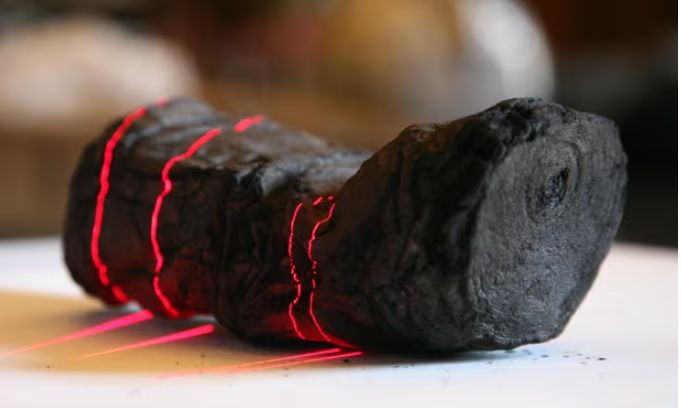
Document and artefact analysis is a second cluster. Multispectral and hyperspectral imaging combined with image-enhancement models recover text from damaged manuscripts and palimpsests; classification models assist in typology and provenance work on large artefact collections. Frameworks like PyTorch and toolkits built on OpenCV are the practical substrate here, and the same precision-versus-recall trade-offs that show up in any vision pipeline apply directly — except that in heritage work, a false positive can send a conservation team down an expensive blind alley.
Generative methods have a genuine but bounded role. Generative AI in archaeology is useful for reconstruction hypotheses — proposing how a fragmentary structure or artefact might have appeared — and for augmenting sparse training data. The boundary that matters: a generative reconstruction is a hypothesis to be tested against evidence, not a finding. Presenting a plausible synthetic reconstruction as established fact is a discipline error, not a model error, and it is one of the sharper ethical risks in the field.
Our overview of AI applications in archaeology and the companion piece on archaeological advancements and applications walk through these patterns in more detail than this article does. The point here is the engagement structure, not the technique catalogue.
How Image Analysis Crosses Into Planetary Science
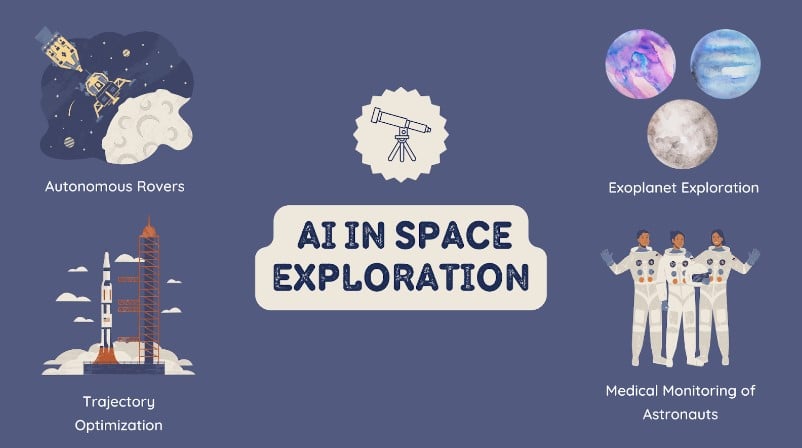
Methodological overlap with outer-space exploration runs deep enough that both disciplines exchange techniques routinely. Orbital and rover imagery from planetary missions presents the identical problem shape: an enormous, growing image archive and far too few expert eyes to inspect it. Models trained to flag geological features, candidate landing hazards, or anomalies in terrain imagery serve as the same kind of triage layer that earthwork-detection models provide in terrestrial archaeology.
We explore this overlap in how AI innovations support outer-space exploration. The methodological lesson travels in both directions: planetary-science image analysis is also unambiguously research, scoped around questions like “is this feature real and what is it” rather than around a delivery date. The shared discipline is treating the model as an instrument that extends expert reach, not as a replacement for the expert.
Structuring the Work So It Survives a Failed Hypothesis
Research framing with upfront feasibility constraints provides a viable alternative structure. This is not bureaucratic overhead — it is the structure that keeps the work valuable when, as is normal in research, the first hypothesis does not hold.
| Dimension | Product-launch frame | Research-engagement frame |
|---|---|---|
| Success criterion | Fixed deliverable, set in advance | Question answered, including “no, the signal isn’t there” |
| Scope | Locked at contract signing | Bounded per phase, with decision gates |
| A null result | Counts as failure to deliver | Counts as a finding |
| Buyer protection | Acceptance test on the artefact | Honest feasibility assessment up front |
| Pivot when data surprises | Treated as scope creep | Treated as the expected work |
| Artefact of value | The tool | The knowledge, plus reusable tooling |
The feasibility-first move is to commit, before modelling, to an honest assessment of whether the question is answerable with the available data — and to say so plainly if it is not. That protects both sides. The buyer gets realistic expectation-setting instead of a confident pitch, and the work remains useful even when initial hypotheses collapse, because a well-structured engagement has already extracted the methodological learning along the way. This is the same posture we apply across research-grade AI engagements with outcome ownership in other domains where the question, not the deliverable, structures the work — the discipline is identical whether the imagery comes from an aircraft inspection or an excavation site.
FAQ
What is AI in archaeology?
AI in archaeology is the application of machine learning and computer vision to archaeological data — most maturely, to remote-sensing imagery like LiDAR elevation models and satellite imagery — to flag candidate features for expert evaluation. It functions as a triage layer over data volumes too large to inspect manually, not as a system that makes archaeological determinations on its own.
How does AI help with archaeology technology?
AI provides the analysis layer that turns large, growing image and survey archives into a manageable set of candidates worth human attention. In practice that means segmentation and detection models over remote-sensing data, image-enhancement and classification models for documents and artefacts, and generative models for reconstruction hypotheses — each extending expert reach rather than replacing expert judgement.
How does AI help with archaeology?
It narrows where specialists look. The realistic value is in reducing an unmanageable volume of imagery to a prioritised set of candidate sites or features, and in recovering signal from damaged sources through multispectral imaging and enhancement models. A false positive is costly because it can send a field team down an expensive blind alley, so these systems support decisions rather than make them.
What is AI in cultural heritage?
AI in cultural heritage covers the same family of computer-vision and ML methods applied to discovery and preservation: recovering text from damaged manuscripts, assisting typology and provenance work on artefact collections, and proposing reconstruction hypotheses. The work is research-grade, scoped around questions about what exists in the data rather than around a fixed product deliverable.
How do AI and computer vision support cultural-heritage discovery and preservation?
They act as instruments that extend the reach of conservators and researchers — triaging imagery, recovering degraded text and detail, and supporting classification. The key constraint is that outputs are candidates and hypotheses to be tested against evidence, not findings; treating a model’s output as established fact is where the discipline tends to break down.
What ethical considerations arise when applying AI to archaeology and cultural heritage?
The sharpest risk is presenting model outputs — especially generative reconstructions — as established fact when they are hypotheses requiring evidentiary support. Label noise and survivorship bias in heritage datasets can quietly distort results, and a confidently wrong output can misdirect scarce conservation resources. Honest feasibility framing and treating null results as legitimate findings are part of handling the work ethically.
How is AI image analysis used in planetary science and outer-space exploration?
Orbital and rover imagery from planetary missions presents the same problem shape as terrestrial archaeology — vast image archives and too few expert eyes — so the same detection and triage models apply, flagging geological features, landing hazards, or anomalies for expert review. Like archaeology, planetary-science image analysis is unambiguously research, scoped around whether a feature is real and what it is rather than around a delivery date.
The honest version of every one of these engagements ends with a question, not a guarantee: is the signal in the data, and if it is not, what did we learn by finding that out? An engagement structured to absorb that answer — with explicit risk and milestone framing of the kind an AI project risk assessment provides — keeps the budget productive whether the hypothesis holds or fails. One that cannot is the failure this article is about.
The AI Archaeology Cultural Heritage takeaway
Technical capability poses fewer obstacles than clarity about which failures the project can absorb. That answer is workload-specific, and it is worth writing down before you build.