
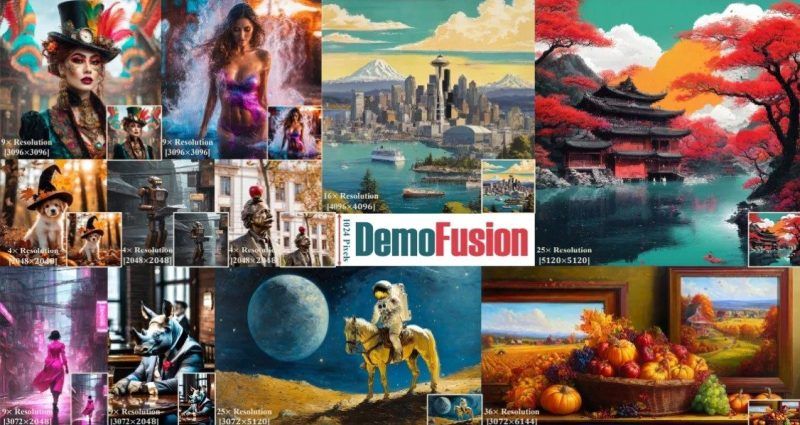
TomsGuide introduces a game-changing AI image generator capable of producing pictures with resolutions up to 16 times higher than Stable Diffusion. The article below details the innovative technology, spotlighting its potential to redefine image generation standards. While emphasising real-world applications and showcasing the significant leap in resolution, it also provides a compelling glimpse into the transformative capabilities of this advanced AI system.
The headline number is worth unpacking. A 16x resolution jump is not simply a sharper picture — it changes which downstream uses are realistic. At Stable Diffusion’s typical 512×512 or 1024×1024 native output (by model specification), generated images sit comfortably on the web but struggle on print, large-format display, or any workflow that needs to crop and reframe without losing fidelity. Pushing the same generative pipeline toward output that is sixteen times larger in pixel count brings it into territory where the image can be treated as a working asset rather than a thumbnail — a directional industry-scale figure that matters beyond the demo reel. That shift — from preview-grade to production-grade output — is what makes this kind of announcement interesting.
It is also worth being careful about what “16x higher resolution” means as a comparison. Resolution gains in generative models usually come from a combination of architecture changes, multi-stage refinement, and learned super-resolution layers stacked on top of a base diffusion model. The user-visible result is a bigger, more detailed image; the engineering reality is a longer, more compute-intensive pipeline. The interesting question for practitioners is not whether the headline holds, but where the additional detail actually comes from and how stable it is across prompts, styles, and edge cases like text rendering or fine repeated patterns.
How satisfied are you with the most recent image generators available on the market? Let us know your thoughts!
Credits: TomsGuide.com
