Ask ten people on a construction site what “AI in construction” means and you will get ten answers — a generative design tool, a drone surveying earthworks, a chatbot answering RFIs, a camera flagging a missing hard hat. None of them is wrong, and that is exactly the problem. The phrase covers so much ground that it has stopped describing anything specific, and when a term stops being specific it becomes very easy to oversell and very hard to deploy.
Architecture, engineering, and construction (AEC) is not one workflow. It is a chain of loosely coupled disciplines — early-stage design, structural analysis, cost estimating, procurement, scheduling, on-site execution, handover — each with its own data formats, its own tolerance for error, and its own regulatory exposure. AI does not arrive at this chain as a single capability. It arrives as a set of narrow tools, each useful in one link and largely irrelevant in the next. The useful question is never “should we use AI in construction” but “which link, which data, and what happens when the model is wrong.”
Why “AI in Construction” Is the Wrong Unit of Analysis
Industry-level assessments of AI miss the variation that determines actual adoption. That framing fails because the constraints that decide whether a model is deployable live at the level of the individual task, not the sector.
A model that drafts massing options for an architect operates in a world where being “wrong” means producing an unappealing option a human discards in two seconds. A model that classifies a weld as acceptable or defective operates in a world where being wrong means a structural failure and a liability chain that runs through the firm that signed off on it. These are not the same technology problem even when they share a transformer backbone or run on the same GPU. Treating them as one category — “construction AI” — collapses a spectrum of risk into a single marketing word.
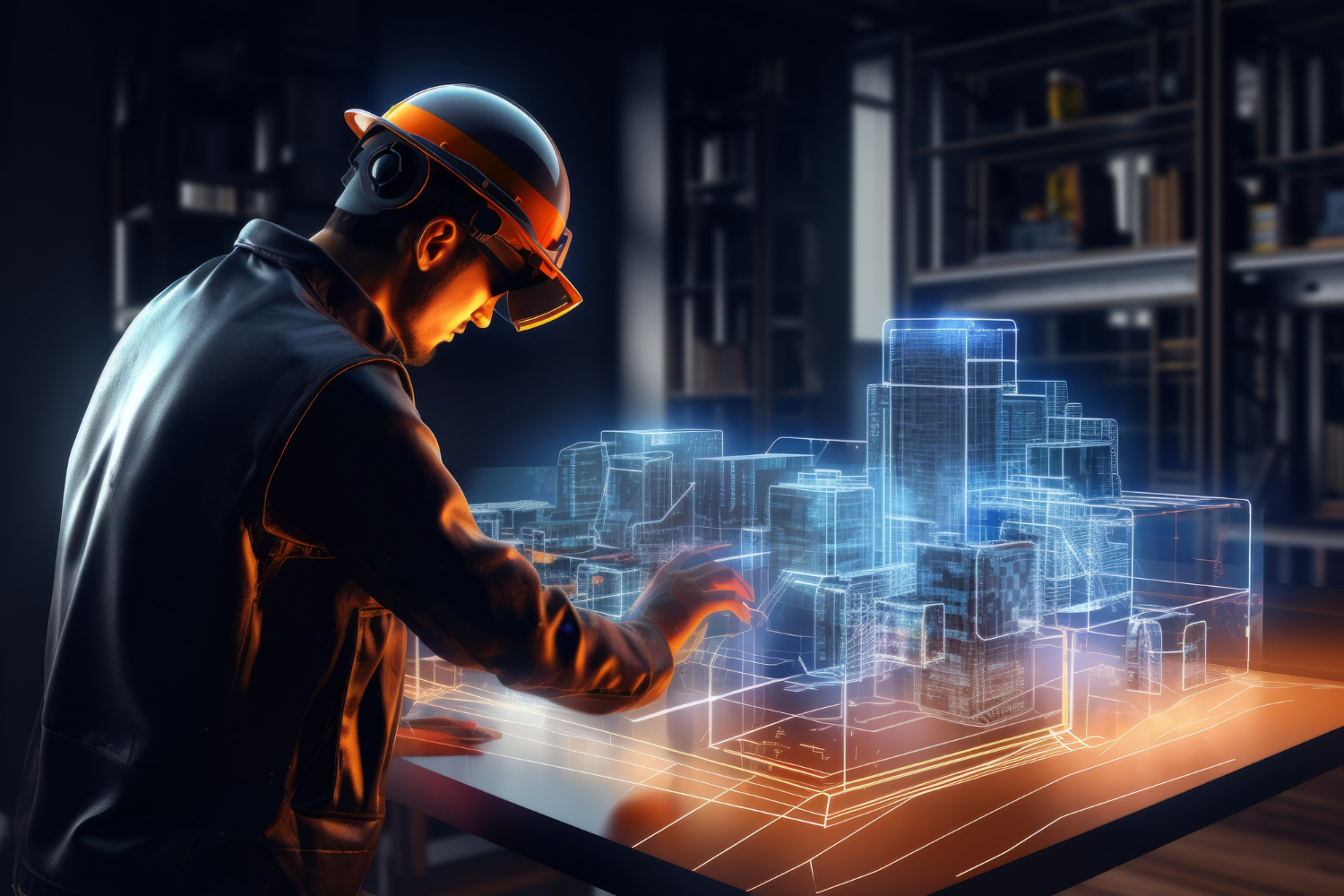
This matters because AEC data is famously fragmented. A single project might carry Revit and IFC building models, PDF drawings that were scanned from paper, spreadsheet cost breakdowns, email threads standing in for change orders, and a procurement system that nobody fully trusts. In our experience across data-heavy engineering work, the integration cost of stitching these sources together usually dwarfs the cost of the model itself — and that integration is where most “AI in construction” initiatives quietly stall. This is an observed pattern from practice, not a benchmarked figure, but it is consistent enough to plan around.
Where AI Actually Earns Its Place in AEC
Construction’s value chain is uneven: some stages hold dense, structured data and tolerate mistakes; others hold sparse information and punish errors instantly. The picture sorts cleanly once you stop treating the sector as monolithic.
A Decision Table: Which AEC Tasks Are Ready for AI
| AEC task | Data availability | Cost of a wrong answer | Practical AI maturity | What carries the risk |
|---|---|---|---|---|
| Early design / massing iteration | High (parametric) | Low — human discards | Production-ready | Designer judgment |
| Quantity takeoff / estimating | Medium (model-dependent) | Medium — rework, margin | Emerging, assistive | Estimator review |
| Schedule risk forecasting | Low–medium (historical) | Medium — float erosion | Emerging | Planner override |
| Structural defect detection (visual) | Medium (imagery) | High — safety | Pilot-stage, supervised | Engineer sign-off |
| Worker-safety monitoring | High (camera feeds) | High — privacy + safety | Deployable with governance | Human-in-the-loop + policy |
| Autonomous on-site decisions | Low | Very high | Not credible today | Nobody — that is the issue |
The pattern is that AI maturity in AEC tracks two variables: how much structured data the task generates, and how survivable a wrong answer is. Tasks high on both — design iteration, takeoff support — are where tools work now. Tasks low on data and high on consequence — autonomous execution — are where the honest answer is “not yet, and not for a while.”
How Is AI Being Used in Architecture?
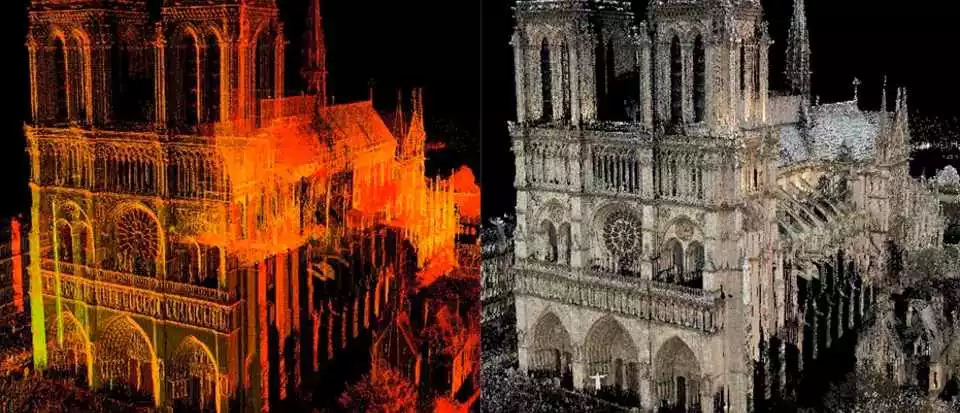
Early adoption clustered in architecture because conceptual work permits iteration and revision. Generative and parametric design lets an architect explore hundreds of massing or layout options against constraints — site boundary, sun exposure, floor-area ratio, circulation — far faster than manual iteration allows. The model is not designing the building; it is widening the search space the designer chooses from.
The deeper engineering question is what happens when those generated forms have to stand up. A shape that looks elegant in a rendering may be expensive or impossible to build, and reconciling generative output with structural and constructability constraints is its own discipline. We explore that tension in more detail in how AI is reshaping structural possibility in architecture — the short version is that the value sits in the loop between generation and validation, not in either step alone. Tooling here builds on the same computer-vision and geometry stacks used elsewhere; the techniques are not exotic, but the workflow integration is.
How Is AI Being Used in Construction Estimating?
Margin protection drives AI adoption in estimating, where quantity takeoffs translate directly into bid accuracy and profit preservation. Models that extract quantities from a building information model, or that read patterns from a firm’s historical bids to flag where a new estimate looks anomalous, can compress that work.
The caveat is sharp: an estimating model is only as good as the data it learned from, and most firms’ historical cost data is messier than they admit. A model trained on a decade of inconsistent project records will reproduce the inconsistency confidently. The right posture is assistive — the model proposes, the estimator reviews, and the estimator stays accountable for the number that goes in the bid. Where this works, it works because someone treated the cost history as a data-engineering problem first and a modeling problem second.
How Can AI Improve Worker Safety on Construction Sites?
Governance complexity now matches technical capability at this stage of the workflow. Computer-vision systems can monitor camera feeds for missing personal protective equipment, people entering exclusion zones, or proximity between workers and heavy plant — and surface a warning before an incident rather than after. The capability is real and the safety upside is large.
But worker-safety monitoring is, by construction, the surveillance of people at work, and that carries privacy and labor obligations that a vision model does not absolve you of. A system that identifies individuals, infers behavior, or builds a persistent record of who was where raises questions that belong to legal and HR before they belong to engineering. The defensible designs we have seen treat detection as triggering a human review rather than an automated penalty, minimize what is stored, and are deployed with explicit worker-side governance. The model is the easy part; the policy around it is what makes it deployable. The same principle holds across the safety and innovation themes covered in AI’s role in building smarter and safer construction.
What Are Practical Examples of AI in Construction Project Management?
Demonstrations of AI in project management overstate impact compared to field results. The credible applications are forecasting and document handling: scanning schedule and historical data to flag tasks at risk of slipping, parsing the flood of RFIs and submittals into something searchable, or surfacing the contractual document a manager needs without a half-hour hunt through an email chain.
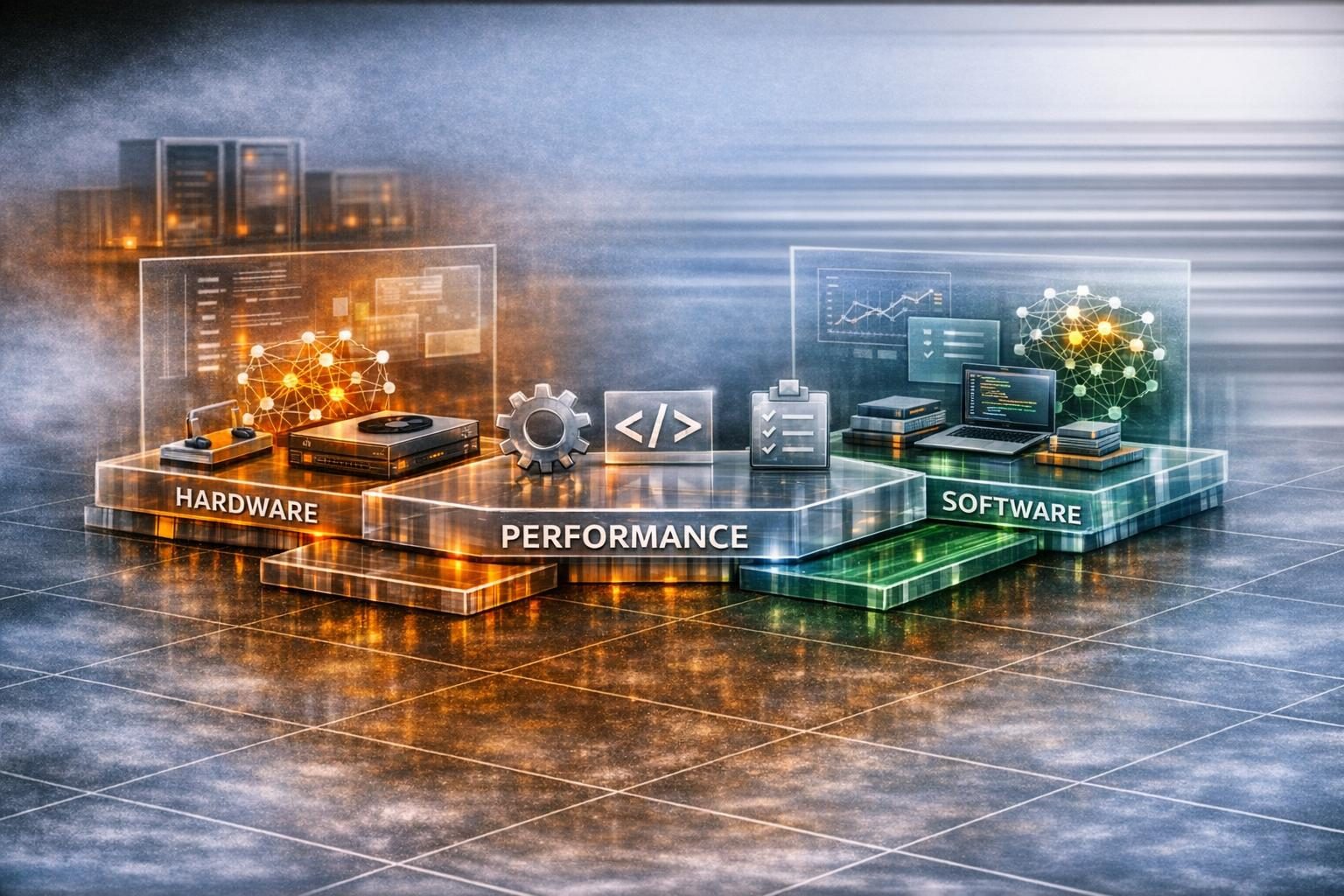
What these have in common is that they augment a human decision rather than replace it. A model that says “these three activities have a high probability of delay given your historical patterns” is useful precisely because the planner can then look, judge, and act. A model that silently rescheduled the project would be a liability nobody would accept. As with estimating, the data foundation decides everything — and that foundation is a systems problem, not a model problem. Performance and reliability in any deployed system depend on treating accelerated compute as part of a larger system rather than a drop-in component, a discipline that applies as much to a construction-management platform as to anything else.
Will AI Take Over Construction Work?
Structural constraints prevent this outcome regardless of model improvements. Construction is a physical, unstructured, liability-bound activity where the cost of an autonomous wrong decision is measured in collapsed structures and injured people. The tasks AI handles well are the ones that are data-dense and error-tolerant; the core of construction work is neither. What changes is the distribution of effort: estimators spend less time counting and more time judging, planners spend less time hunting documents and more time managing risk, safety officers get earlier warning of hazards they still have to act on.
That is the honest shape of AI in AEC. It is not a wave that washes over the industry uniformly; it is a set of narrow tools that land hard in a few links of the chain and barely touch others. The firms that get value are the ones that resist the temptation to “do AI in construction” and instead pick one task, audit whether its data and risk profile actually support a model, and keep a human accountable for every decision that matters.
FAQ
Will AI take over construction work?
No. Construction is physical, unstructured, and liability-bound, and the cost of an autonomous wrong decision is far too high for the tasks at its core. AI handles data-dense, error-tolerant tasks well — estimating support, forecasting, document handling — but the central work of building stays human, with effort shifting from manual counting and searching toward judgment and risk management.
How is AI being used in architecture?
Primarily through generative and parametric design, which lets architects explore hundreds of layout or massing options against site and code constraints far faster than manual iteration. The model widens the design search space; the architect still chooses, and the real value sits in the loop between generating forms and validating that they can actually be built.
How is AI being used in construction estimating?
Models can extract quantities from a building information model or flag anomalies against a firm’s historical bids, compressing laborious takeoff work that directly affects margin. The posture should be assistive — the model proposes, the estimator reviews and stays accountable — because an estimating model is only as reliable as the often-messy cost data it was trained on.
How can AI improve worker safety on construction sites?
Computer-vision systems can monitor camera feeds for missing PPE, exclusion-zone breaches, or dangerous proximity to heavy plant, warning before an incident rather than after. The capability is real, but it is surveillance of people at work, so defensible designs trigger human review rather than automated penalties, minimize stored data, and ship with explicit worker-side governance.
What are practical examples of AI in construction project management?
The credible uses are schedule risk forecasting and document handling — flagging tasks likely to slip based on historical patterns, or parsing RFIs and submittals into something searchable. These augment a human decision rather than replace it, and their value depends entirely on the quality of the underlying project data.