Security is one of those concerns most of us only notice when it fails. A locked front door feels like enough until a neighbour gets broken into. A national defence budget feels abstract until something forces it into the news cycle. Between those two extremes — the household and the state — sits a layer of personal preparedness most people never think about at all. AI does not change the nature of these problems. What it does change is how much signal you can extract from the sensors, cameras, and connected devices that already exist around them.
This article walks through three layers — home, individual, national — and looks at where computer vision, IoT, and generative models actually pull their weight, and where the marketing has run ahead of the engineering.
What does AI add to home security that older systems missed?
Contact sensors on doors and windows, a central panel, a siren, and — with a subscription — a monitoring centre that calls the police: that is a traditional home security system. It tells you something happened. It rarely tells you anything useful about who or what.
That gap is where computer vision earns its place. CCTV alone does not solve identification. A masked intruder defeats a face-recognition pipeline trivially. But identification is not a single-feature problem. Gait, posture, the way someone handles a tool, the rhythm of a movement across a room — these are features a properly trained CV model can pick up, and they are far harder to disguise than a face. In our experience working with GPU-accelerated inference pipelines, the operationally relevant constraint is not peak model accuracy on a benchmark dataset — it is sustained latency under realistic load, with the camera feed running 24/7 and the model triggering only on motion-gated frames.
A few structural points are worth pinning down:
| Layer | What it does | What it does not do |
|---|---|---|
| Contact sensors | Detect a breach event | Identify who or what triggered it |
| Standard CCTV | Record visual evidence | Recognise masked or partially occluded subjects |
| CV-augmented CCTV | Extract gait, posture, tool-use features | Replace human review for legal evidence |
| Networked IoT layer | Share threat patterns across homes | Function without disciplined data governance |
The interesting design pattern is the network effect. A single household with a CV-enhanced camera is a curiosity. A neighbourhood of IoT-connected systems comparing motion signatures, time-of-day patterns, and tool profiles is closer to a threat-intelligence layer for residential streets. Edge computing matters here because the alternative — streaming every frame to a central cloud — is expensive, slow, and a privacy disaster. Pushing inference to the camera or to a small on-premise gateway keeps the data local and the latency tight.
The boundary, which vendors rarely state plainly: CV-based identification is a probabilistic signal, not a courtroom artefact. It narrows the search space for police and insurers; it does not replace human review.
Read more: Understanding Computer Vision and Pattern Recognition
Personal preparedness: where XR and generative AI actually help
Physical hardening of the house is one half. The other half is what happens when you are not in it. Self-defence is the historical answer — and unlike pepper spray or stun guns, training is legal more or less everywhere.
There are roughly 180 distinct martial arts styles, with substyles branching off most of them. Most originated in East Asia; some, like Brazilian Jiu-Jitsu and modern boxing, evolved into distinct disciplines elsewhere. Different schools emphasise different endgames — attack, defence, conditioning, meditation. What they share is that they were designed to be practised with another person in the room.
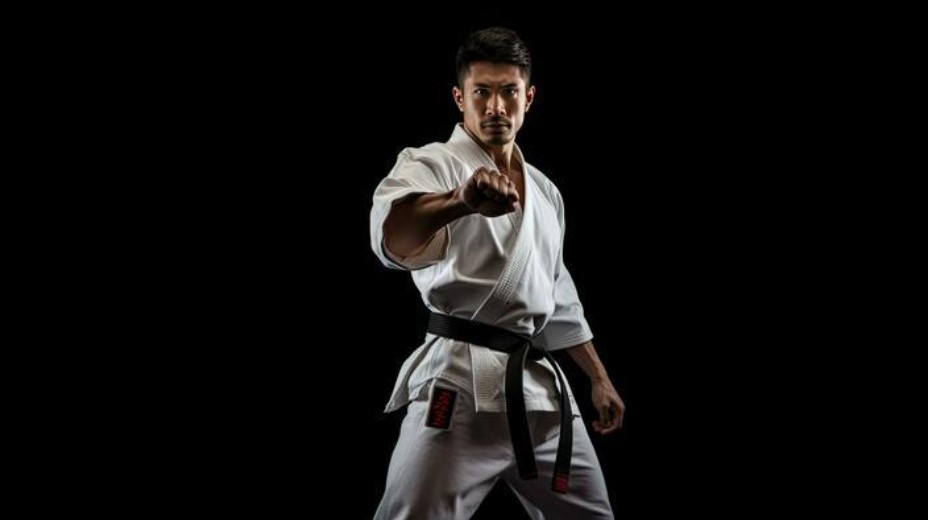
Solo practice has always been the awkward case. Katas you can drill alone. Sparring you cannot. This is where Extended Reality (XR) — specifically AR and VR — starts to look less like a gimmick and more like a training aid. The pieces that have to line up:
- A headset that can place the practitioner in a controlled visual environment without distracting them.
- A pose-estimation pipeline running at low enough latency to give meaningful feedback on stance.
- A generative model trained on enough professional footage to synthesise plausible opponent behaviour at adjustable skill levels.
- A natural-language layer — see our work on Generative AI and NLP — that turns model output into spoken cues instead of dashboards no one reads mid-kick.
None of these components are speculative. All of them are being shipped, in some form, today. The honest caveat is that they do not replace a coach who can adjust your hip rotation by hand. They close the gap for the days when the dojo is not available, which for most people is most days.
The same architecture — pose estimation, generative critique, low-latency feedback — generalises beyond martial arts. Rehabilitation exercises, swimming technique, golf swings: any motion that can be filmed and scored is a candidate.
How is AI showing up in national defence?
Households and individuals represent the legible parts of this story. National defence is the loud one, and also the one most prone to overclaim.
Every tactical military force is roughly partitioned into army, navy, and air force, with the obvious cross-domain exceptions. Within each branch, almost every piece of equipment — rifle scopes, vehicle telemetry, comms gear, body armour — has been at some point a candidate for AI augmentation. A few of the more concrete patterns:
- CV-enhanced optics. Rangefinding scopes that estimate distance to target from visual features rather than active laser pulses, reducing the heat and EM signature of the soldier.
- Networked situational awareness. Vehicles and soldiers sharing position and threat data through tactical IoT links, with Head-Up Displays surfacing vitals, ammunition counts, and squad positions inside the helmet visor.
- Predictive logistics. Smart magazines reporting round counts upstream so resupply happens before someone is forced to call for it under fire.
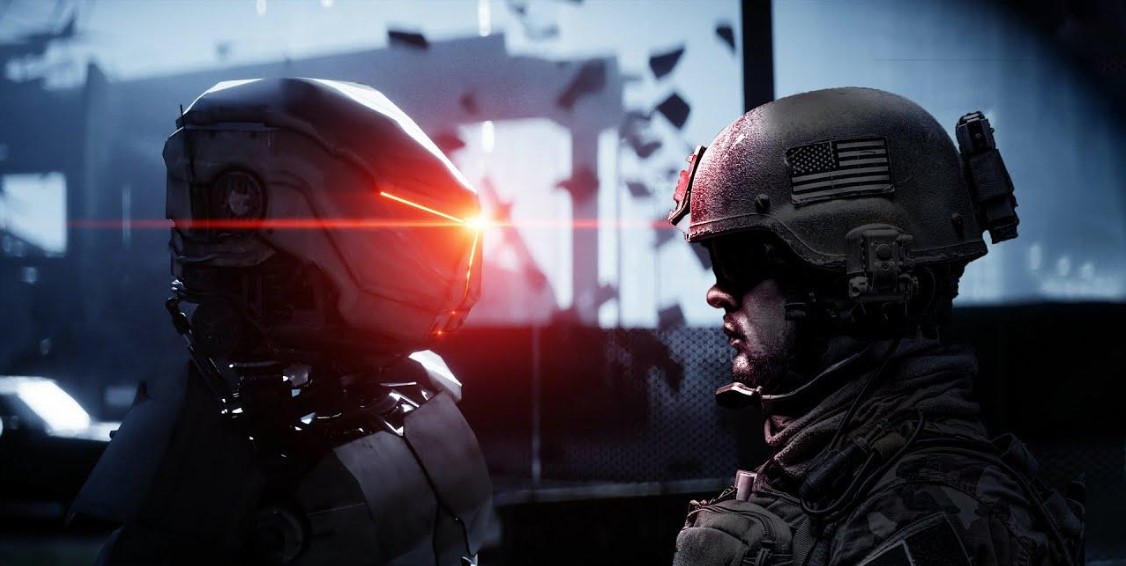
Two programmes are worth naming because they bound the realistic envelope. The US Tactical Assault Light Operator Suit (TALOS) — an attempt at a powered-exoskeleton ACU with integrated armour and (per Hollywood-fuelled rumour) adaptive CV camouflage — was declared non-feasible and shut down in February 2019. The Russian Ratnik programme, running since 2015, took the opposite approach: instead of building an Iron Man suit, it iterated on body armour, optics, and squad-level communications. Ratnik is the more instructive of the two because it shows what works — incremental sensor and connectivity upgrades — rather than what reads well in a press release.
The pattern across both is the same: AI in defence is most useful where it shaves seconds off a decision a human is already making, not where it tries to replace the human entirely.
Where AI Earns Its Place Across Security Layers
| Layer | High-leverage AI use | Low-leverage / overclaimed use |
|---|---|---|
| Home | Gait + posture detection on edge CV; cross-home IoT pattern sharing | Generic “smart home” branding without local inference |
| Individual | XR-based solo training with pose feedback; generative sparring partners | Replacing in-person coaching |
| National | Networked situational awareness; predictive resupply; CV optics | Fully autonomous combat systems; “adaptive camouflage” without published evidence |
AI does not introduce security — that is the honest reading. It compresses the time between a signal and a useful action. That is valuable at every layer, but only when the underlying sensors, networks, and human review processes are already disciplined enough to act on what the model produces.
If your project sits anywhere on this spectrum — residential CV, training-aid XR, or industrial-grade surveillance with Computer Vision at the core — the engineering questions are usually the same: latency budget, edge-vs-cloud split, model drift over time, and how the output reaches a human who can do something about it.
Frequently Asked Questions
Can AI replace traditional home alarm systems?
No. AI augments the layer above the alarm — recognition, pattern detection, cross-home correlation — but the contact sensors and the link to a monitoring service still do the basic job of detecting and reporting a breach. The AI layer narrows the question from “something happened” to “here is what likely happened and who was involved.”
Is computer vision reliable enough to identify masked intruders?
It is reliable enough to narrow a search, not to convict. Gait, posture, and tool-handling features are harder to disguise than faces, and a well-trained CV model can flag candidates from a regional database. Final identification still goes through human review and legal process.
Does XR-based martial arts training actually work?
For solo drills, conditioning, and reaction-time practice — yes, the components are mature enough today. For full sparring and physical correction of stance, in-person coaching remains structurally better because a model cannot reach over and adjust your hip. XR closes the gap on the days the dojo is not available.
Are AI-powered exoskeletons being used in real combat?
Not in any deployed form. The US TALOS programme was declared non-feasible in 2019, and the more successful national programmes (such as Russia’s Ratnik) have focused on incremental upgrades to body armour, optics, and squad communications rather than full powered suits.
What is the most realistic near-term AI use in national defence?
Networked situational awareness — sharing position, threat, and resupply data across vehicles, soldiers, and command — combined with CV-enhanced optics that reduce the EM and heat signature of the operator. Both compress decision time without removing the human from the loop.
What We Offer
At TechnoLynx, we build custom CV, generative AI, and edge-inference systems for clients whose security and surveillance problems do not fit off-the-shelf products. The engineering work is the same whether the deployment is a residential block, an industrial site, or a training facility: define the latency budget, pick the right edge-vs-cloud split, and make sure the output reaches a human in a form they can act on. Get in touch if you want to talk through a specific use case.
Continue reading: Ensuring Security in Video Conferencing Solutions
List of references
- Ellmer, M. (2022) ‘Ratnik: Russia’s Modern Warrior Program’, Grey Dynamics, 19 February. (Accessed: 17 April 2024).
- Here, A. (2021) Artificial Intelligence Soldiers - How AI Changes Everything, Supply Chain Today (Accessed: 17 April 2024).
- SuperAnnotate (no date). Improving security and surveillance with computer vision (Accessed: 17 April 2024).
- The Telegraph (2014). Iron Man suit for US military - thanks to Hollywood costumers (Accessed: 17 April 2024).
- Statista (no date). Statista - The Statistics Portal (Accessed: 17 April 2024).
- Vecteezy (no date) Asian karate man standing with black belt isolated on black background. Taekwondo. Generative AI (Accessed: 17 April 2024).