Open any “top AI trends” list and you’ll find predictive AI and generative AI sitting side by side as if they were the same kind of thing. They are not. One estimates what will happen; the other produces something that did not exist before. Treating them as interchangeable — which most trend coverage quietly does — is how teams end up trusting a forecast the way they’d trust a generated draft, or expecting a language model to behave like a calibrated probability engine.
The confusion is understandable. Both run on similar hardware, both get described as “AI,” and both arrived in the public conversation at roughly the same time. But the moment you ask what a system is actually doing with its output — estimating a number under uncertainty, or composing a plausible artifact — the two split apart. Getting that split right is the difference between an AI initiative that survives contact with reality and one that produces confident nonsense.
What Is the Difference Between Predictive AI and Generative AI?
Predictive AI maps inputs to an estimate of an outcome. A demand-forecasting model takes last quarter’s sales, seasonality, and price signals and returns a number — units expected next week — along with, ideally, a confidence interval. The output is a claim about the world that can later be checked against what happened. That checkability is the whole point. A prediction is only useful if you can measure how wrong it was.
Generative AI produces new content that fits a learned distribution: text, images, code, audio. A large language model running on a transformer architecture doesn’t estimate a single correct answer; it samples a plausible continuation from a vast space of possibilities. There is no “ground truth” to score it against in the way there is for a forecast. A generated paragraph isn’t right or wrong — it’s coherent or incoherent, useful or not, faithful to the prompt or hallucinated.
These two postures lead to different failure modes, and that is the part trend reports almost never name. A predictive model fails by being miscalibrated — its 90% confidence interval (illustratively) contains the real value far less than 90% of the time. A generative model fails by being confidently fluent — it produces output that reads as authoritative while being factually untethered. You cannot diagnose one with the tooling built for the other.
A Quick Decision Table
| Question | If yes, you want… |
|---|---|
| Do you need a number you can later check against reality? | Predictive AI |
| Do you need to produce a draft, summary, or design that didn’t exist? | Generative AI |
| Does the output carry a calibrated uncertainty estimate? | Predictive AI |
| Is “plausible and coherent” the success criterion, not “correct”? | Generative AI |
| Will the output be scored against measured outcomes over time? | Predictive AI |
| Is a human reviewing and editing every output before use? | Generative AI (typically) |
The table is deliberately blunt. Many real systems combine both — a generative interface that surfaces a predictive model’s forecast in plain language, for instance. But the underlying components still belong to different evaluation regimes, and conflating them is where projects drift.
Can AI Actually Help With Predictions?
Yes — within bounds that the marketing rarely states. Predictive AI is genuinely good at problems where the future resembles the past in structure: demand patterns, equipment failure signatures, traffic flow, energy load. These are domains with abundant historical data and relationships that hold across time. Frameworks like PyTorch and gradient-boosting libraries such as XGBoost have made building competent forecasters routine for teams that have the data.
Where it breaks is regime change. A model trained on pre-shock demand patterns has no representation of a shock it never saw. This is why a forecasting system can post excellent backtested accuracy and then fail badly the first time conditions move outside its training distribution. The model isn’t broken; it’s being asked a question its data never contained. We see this pattern regularly: the most dangerous forecast is the one delivered with a tight, confident interval that the world then steps cleanly outside of.
The reliability question, then, isn’t “is the model accurate?” — it’s “accurate under what conditions, and how does it behave when those conditions break?” A forecast without an honest uncertainty estimate is a guess wearing a lab coat. In our experience, the teams that get value from predictive AI are the ones who treat the confidence interval as the primary output and the point estimate as secondary.
How Is AI Being Used in Urban Planning and Smart City Design?
Cities are one of the clearest places to watch predictive and generative AI play different roles. On the predictive side, models forecast traffic congestion, project energy demand across a grid, and estimate how a zoning change might shift commute patterns. These feed planning decisions that play out over years, which raises the stakes on calibration considerably — a poorly bounded forecast steers concrete and rail.
On the generative side, design tools propose layouts, simulate streetscapes, and produce visualizations of proposed developments. The output here is a candidate, not a prediction — something a human planner evaluates, not a claim about what will happen. The risk is the same conflation as everywhere else: presenting a generated scenario as if it were a forecast lends it an authority it hasn’t earned.
We’ve explored this terrain in our look at how the future of cities depends on AI and smart urban design, which sits closer to the application and design questions than to the predictive-vs-generative distinction this piece draws. The governance dimension — who can interrogate an automated decision, and how — is its own concern; our piece on explainable AI for public trust and transparency takes that up directly, because a planning model that can’t explain its reasoning is a hard sell to any public body.
What Are the Real Trends Worth Tracking?
If you strip the hype out of the annual trend lists, a few directions hold up as genuine shifts in how AI gets built and deployed — these are market-direction observations, not benchmarked claims:
- Smaller, specialized models displacing the assumption that bigger is always better, especially where latency and cost matter.
- Retrieval-grounded generation, where a generative model is anchored to a verified source to suppress hallucination — a direct response to the confidently-fluent failure mode.
- Uncertainty quantification moving from research nicety to deployment requirement, as teams learn the hard way that an unbounded forecast is a liability.
- On-device and edge inference, pushing models onto hardware closer to the data, reducing the round-trip to centralized infrastructure.
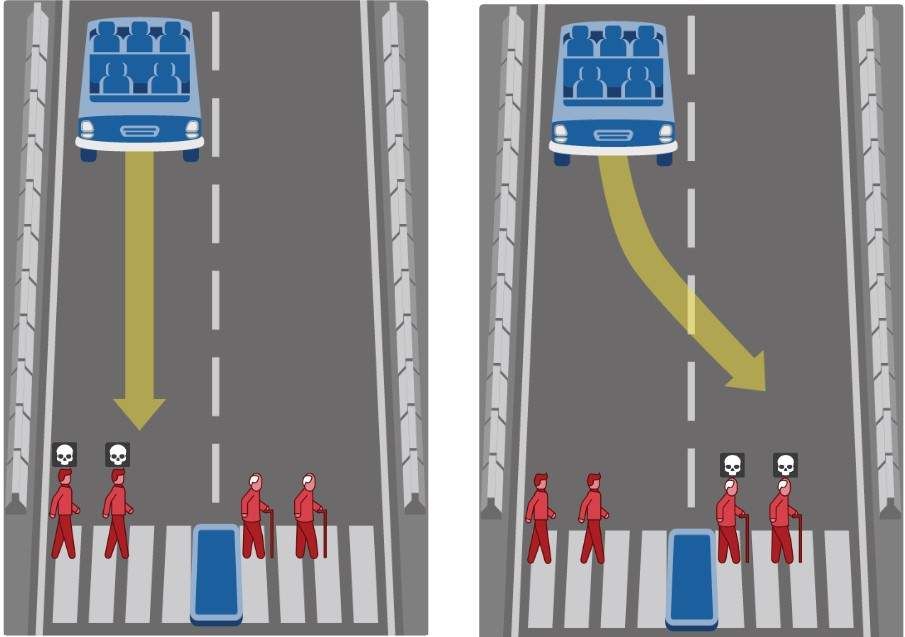
- The ethics-and-accountability layer maturing from afterthought to design constraint — a shift our work on the Moral Machine and machine decision-making examines through the lens of how automated systems handle genuine dilemmas.
None of these is a product you buy off a shelf. They’re directional pressures shaping what competent AI engineering looks like, and they cut across every industry rather than belonging to one.
FAQ
What are the 5 current trends in AI?
Five directions worth tracking are: smaller specialized models replacing the bigger-is-better assumption, retrieval-grounded generation to suppress hallucination, uncertainty quantification becoming a deployment requirement, on-device and edge inference, and accountability moving from afterthought to design constraint. These are directional industry-scale observations rather than benchmarked claims, and none is a single product you can buy.
Can AI help with predictions?
Yes, in domains where the future resembles the past in structure — demand, equipment failure, traffic, energy load — predictive AI built on frameworks like PyTorch or gradient-boosting libraries performs well. Its limit is regime change: a model has no representation of a shock its training data never contained. The reliability question is not whether a model is accurate, but under what conditions and how it behaves when those conditions break.
What does “AI in trends” mean?
“AI in trends” usually refers to forward-looking coverage of where AI is heading across industries. The useful version separates predictive AI (which estimates checkable outcomes) from generative AI (which produces new content), because most trend coverage conflates them and that conflation drives bad expectations.
What is AI in predictions?
AI in predictions means using models to estimate future outcomes — a forecast that can later be checked against what actually happened. The defining feature is checkability: a prediction is only useful if you can measure how wrong it was, ideally via a calibrated confidence interval rather than a bare point estimate.
How does predictive AI differ from generative AI?
Predictive AI maps inputs to an estimate of an outcome that can be scored against reality; it fails by being miscalibrated. Generative AI produces new content sampled from a learned distribution, where success means coherent and useful rather than correct; it fails by being confidently fluent and factually untethered. They occupy different evaluation regimes and cannot be diagnosed with the same tooling.
How is AI being used in urban planning and smart city design?
Predictive models forecast traffic, energy demand, and the downstream effects of zoning changes, feeding decisions that play out over years. Generative tools propose layouts and visualize developments — producing candidates a human evaluates rather than forecasts. The risk in both is presenting a generated scenario as if it were a prediction, which lends it unearned authority.
Can AI be used to forecast or model future outcomes, and how reliable is it?
Yes, and reliability depends entirely on whether the future stays within the structure the model learned. Within a stable regime with good historical data, forecasts can be strong; outside it, the model fails because it’s answering a question its data never contained. Treat the uncertainty estimate as the primary output and the point estimate as secondary — a forecast with a tight confident interval that the world then steps outside of is the most dangerous kind.
The cleanest test when a vendor pitches “AI predictions” is to ask which kind of system you’re actually buying: one that returns a number you can score against reality, or one that returns a plausible artifact you have to review. Knowing which question you’re asking is the whole game.
Choosing the right architecture for your use case
Predictive models win when you need structured forecasts with confidence intervals; generative systems excel at open-ended synthesis tasks.