The API decision shapes everything downstream
GPU compute API selection sets hardware lock-in, peak throughput, team skill requirements, and long-term maintenance burden—not just which header files you include. CUDA locks you to NVIDIA hardware and gives you the deepest performance optimisation path available on GPUs today. OpenCL offers multi-vendor portability at the cost of peak performance and ecosystem maturity. SYCL promises modern C++ integration with cross-platform execution, but its ecosystem is still consolidating.
Each choice has real consequences. Teams that have chosen one API and later needed to migrate — because the hardware strategy changed, the cloud provider switched GPU vendors, or a customer requirement demanded portability — have spent months on porting work that a different initial decision would have avoided. Teams that chose portability when they needed performance have spent months chasing optimisations that the portable API could not express.
Per Jon Peddie Research’s 2024 add-in-board market reporting (published-survey), NVIDIA holds the majority of the discrete GPU market, with an even higher concentration in data-centre AI and HPC compute. NVIDIA’s published developer documentation lists hundreds of GPU-accelerated libraries built on CUDA — a depth that no competing API ecosystem currently matches (market-direction, not an operational benchmark).
The decision is recoverable, but the recovery is expensive. In our experience across GPU engagements, getting it right initially is worth the analysis.
What does CUDA offer — and what does it cost?
NVIDIA built CUDA as a closed ecosystem tightly coupled to its GPU microarchitecture. It runs on NVIDIA GPUs exclusively. Within that constraint, it provides the most complete GPU programming ecosystem available: a mature compiler (nvcc), extensive profiling tools (Nsight Compute, Nsight Systems), a deep library stack (cuBLAS, cuDNN, cuFFT, Thrust, NCCL, TensorRT), and the largest community of GPU programmers in the industry.
The performance advantage of CUDA on NVIDIA hardware is not marketing — it is structural. CUDA exposes hardware features (tensor cores, shared memory, warp-level primitives, asynchronous memory operations) that NVIDIA designs specifically for CUDA access. Competing APIs reach these features through abstraction layers that may not expose the full capability, or through vendor extensions that are not standardised across implementations.
For deep learning inference and training, CUDA remains the dominant default: PyTorch and TensorFlow were built on CUDA first, cuDNN provides the most mature optimised convolution and attention kernels, and TensorRT compiles models to CUDA kernels tuned for the specific GPU architecture. ROCm and oneAPI are closing the gap — AMD’s MI300X runs major frameworks natively — but the ecosystem depth and tooling maturity still favour CUDA for most production deployments. Our practical comparison between CUDA and OpenCL for GPU programming covers the technical details behind this performance gap.
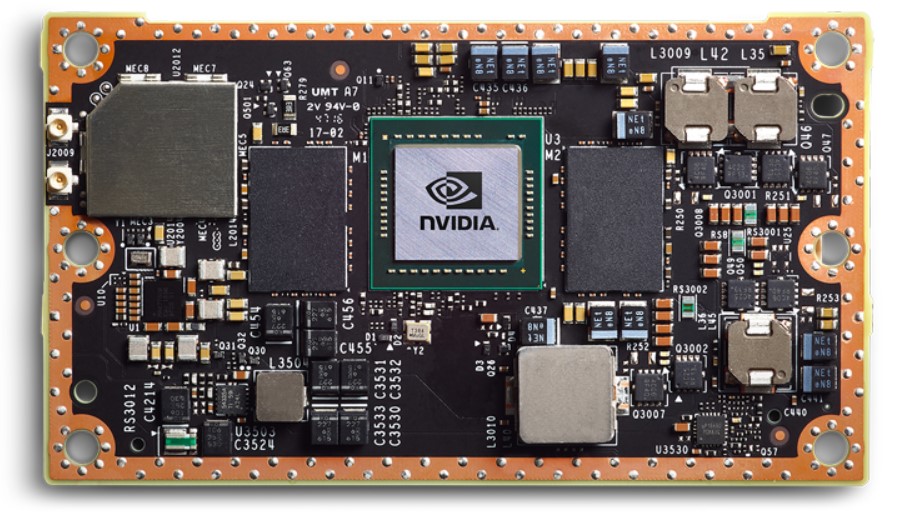
When CUDA is the right choice. Your workload runs exclusively on NVIDIA GPUs (data-centre, cloud instances you control, embedded NVIDIA hardware like Jetson), you need maximum single-platform performance, and vendor lock-in to NVIDIA is an acceptable business constraint. This describes most deep-learning workloads, most HPC workloads targeting NVIDIA hardware, and most real-time inference deployments where latency is the primary metric.
When CUDA is the wrong choice. You need to support multiple GPU vendors (AMD, Intel, Apple, Qualcomm), you are building a product that customers will deploy on their own hardware (which you do not control), or your organisation’s hardware strategy is shifting away from NVIDIA exclusivity. The point at which the lock-in cost outweighs CUDA’s tooling advantage is usually the point at which a credible second hardware target appears on the three-year roadmap and stops being hypothetical.
OpenCL: portability at the cost of depth
Khronos Group’s OpenCL standard targets CPUs, GPUs, FPGAs, and DSPs from AMD, Intel, ARM, Qualcomm, and others. The portability is real — a standard-conformant OpenCL kernel can be compiled and executed on different hardware without source-level changes, provided it avoids vendor-specific extensions. In practice, toolchain differences, driver quirks, and extension usage mean cross-platform deployment still requires per-target testing.
The performance cost of portability is also real. OpenCL’s abstraction layer prevents direct access to hardware-specific features that CUDA exposes natively. Shared-memory management, warp-level operations, and hardware-specific optimisations require vendor extensions that fragment the portability promise. An OpenCL kernel optimised for AMD hardware may need significant modification to perform well on NVIDIA hardware, and vice versa — source-level portability does not guarantee performance portability (observed pattern across our engagements; not a benchmarked rate).
OpenCL’s ecosystem is thinner than CUDA’s. Library support, profiling tools, and community resources are less extensive. The language model (OpenCL C, a subset of C99) is less expressive than CUDA C++ or SYCL’s modern C++. Driver quality and standard compliance vary across vendors, and debugging cross-platform issues can consume significant engineering time.
We have worked with teams that chose OpenCL for portability and found that the maintenance cost of cross-platform support exceeded the benefit — each hardware target required its own optimisation pass, its own testing infrastructure, and its own debugging workflow. Reviewing the broader cross-platform performance portability picture across Vulkan, OpenCL, SYCL, and CUDA makes the trade-off concrete.
When OpenCL is the right choice. You must support multiple GPU vendors with a single codebase, your workload is compute-bound in ways that do not require hardware-specific optimisation (embarrassingly parallel tasks, large-batch operations where occupancy matters more than kernel-level tuning), or your hardware targets include non-GPU accelerators (FPGAs, DSPs) that OpenCL supports.
When OpenCL is the wrong choice. You need peak performance on a specific hardware target, your workload requires features that OpenCL’s abstraction does not expose, or your team’s GPU expertise is concentrated in CUDA — the migration cost is non-trivial and the resulting code is rarely a clean win on the new target without a second optimisation pass.
SYCL: modern C++ meets cross-platform compute
SYCL layers modern C++17 semantics over heterogeneous compute without forcing developers into a separate kernel language. Unlike OpenCL’s C99-based kernel language, SYCL kernels are written in the same C++ as the host code — enabling template metaprogramming, lambda expressions, and standard-library usage within GPU kernels.
The major SYCL implementations are Intel’s oneAPI DPC++ (targeting Intel GPUs, CPUs, and FPGAs, with NVIDIA and AMD support via plugins), AdaptiveCpp (formerly hipSYCL, targeting NVIDIA, AMD, and Intel GPUs via the native backends), and Codeplay’s ComputeCpp. The cross-platform promise is real but implementation-dependent: DPC++ achieves performance parity with native APIs on Intel hardware but relies on translation layers for NVIDIA and AMD; AdaptiveCpp leans on the native backends (CUDA, HIP) to achieve near-native performance but requires backend-specific toolchain configuration.
SYCL’s advantage is developer productivity. Writing GPU kernels in modern C++ with type safety, templates, and standard abstractions reduces development time and bug density compared to OpenCL C or raw CUDA. For organisations with strong C++ teams that need GPU compute capability without a long ramp into proprietary tooling, SYCL offers a lower learning curve than CUDA or OpenCL.
When SYCL is the right choice. Your team has strong C++ expertise, you need cross-platform GPU support (particularly if Intel GPUs are in your hardware mix), or you are starting a new project and want to avoid CUDA lock-in without sacrificing modern language features.
When SYCL is the wrong choice. You need access to CUDA-specific features (tensor cores via cuDNN’s tuned kernels, NCCL’s collective primitives, TensorRT’s graph compilation) that SYCL’s translation layer does not fully expose, your production hardware is exclusively NVIDIA (CUDA is simpler and better supported in that case), or your deployment timeline requires a mature ecosystem with established best practices (SYCL’s ecosystem is growing but not yet at CUDA’s depth).
GPU compute API comparison by workload archetype
| Dimension | CUDA | OpenCL | SYCL |
|---|---|---|---|
| Performance ceiling | Highest on NVIDIA — direct access to tensor cores, warp primitives, async memory ops | Lower — abstraction layer prevents hardware-specific optimisation | Near-native via backend translation; parity on Intel hardware (observed-pattern) |
| Portability | NVIDIA GPUs only | Multi-vendor GPUs, CPUs, FPGAs, DSPs | Multi-vendor (Intel, NVIDIA, AMD) — implementation-dependent |
| Ecosystem maturity | Deepest: cuDNN, TensorRT, NCCL, Thrust, cuBLAS, Nsight | Thinner library support; variable driver quality across vendors | Growing but split across DPC++, AdaptiveCpp, ComputeCpp |
| Learning curve | Moderate — CUDA C++ with proprietary extensions | Higher — C99 kernel language, cross-platform debugging overhead | Lower for C++ teams — standard C++ with templates and lambdas |
| Best-fit workload | Deep-learning training/inference, HPC, latency-critical deployment on NVIDIA hardware | Embarrassingly parallel tasks, multi-accelerator pipelines, FPGA offload | New cross-platform C++ projects needing portability without sacrificing modern language features |
A three-variable decision framework
Three interdependent factors—vendor coverage, performance ceiling, and tooling maturity—jointly govern which API fits a given project.ect.
- Hardware scope. Single vendor (CUDA if NVIDIA, ROCm or vendor-native if AMD or Intel) or multi-vendor (OpenCL or SYCL). The scope question is not “what do we use today” but “what is on the three-year roadmap that we have to keep the door open for”.
- Performance ceiling. Maximum performance on a specific target (CUDA or vendor-native) or acceptable performance across targets (OpenCL or SYCL). The workload class matters: kernel-bound inference and HPC sit at the top of the ceiling question; throughput-bound batch jobs sit near the bottom.
- Team capability and migration friction. Existing CUDA expertise favours CUDA, existing C++ expertise with no GPU background favours SYCL, existing cross-platform experience favours OpenCL. Migration between APIs is not just a language port — the memory model differs, the synchronisation primitives differ, and the optimisation patterns differ enough that a CUDA codebase translated to OpenCL or SYCL rarely performs well without a second optimisation pass.
Committing to the wrong API before profiling the workload across options locks in a portability cost or a performance ceiling that is expensive to reverse — a GPU Performance Audit provides the benchmarking data for that decision.
FAQ
CUDA vs OpenCL vs SYCL: which GPU compute API should I pick for my workload class and hardware roadmap?
Pick by intersecting three variables: hardware scope, performance ceiling, and team capability. NVIDIA-only with peak performance needs points to CUDA. Multi-vendor GPU plus non-GPU accelerators (FPGAs, DSPs) points to OpenCL. New cross-platform C++ projects with strong C++ teams point to SYCL. The roadmap matters more than today’s hardware — the lock-in cost compounds.
When does the vendor lock-in cost of CUDA outweigh its performance and tooling advantages?
When a credible second hardware target appears on the three-year roadmap and stops being hypothetical: a customer requirement for AMD or Intel deployment, a cloud provider shift, or a procurement strategy that explicitly diversifies. Until that point, CUDA’s ecosystem depth — cuDNN, TensorRT, NCCL, Nsight tooling — usually outweighs the lock-in cost for NVIDIA-only deployments.
Does writing in OpenCL or SYCL deliver competitive performance across AMD, Intel, and NVIDIA GPUs?
Source-level portability does not guarantee performance portability. An OpenCL kernel tuned for one vendor typically needs significant rework to perform well on another. SYCL via AdaptiveCpp comes closer because it lowers to the native backends (CUDA, HIP), but features like tensor cores, NCCL, and cuDNN are not fully reachable through SYCL’s abstraction.
Which compute API gives the best performance for machine-learning inference on today’s accelerators?
CUDA on NVIDIA hardware remains the default for production ML inference: PyTorch and TensorFlow lead with CUDA support, cuDNN provides the most mature attention and convolution kernels, and TensorRT compiles models to architecture-specific kernels. ROCm on AMD and oneAPI on Intel are credible alternatives but trail in tooling depth and framework-level optimisation maturity.
Can I migrate existing CUDA code to OpenCL or SYCL without rewriting the memory model?
Not cleanly. The memory model, synchronisation primitives, and optimisation patterns differ enough that a CUDA codebase translated through HIP, OpenCL, or SYCL rarely performs well without a second optimisation pass on the new target. API translation layers handle the syntactic port; the performance work has to be redone per target.
How do I evaluate the API decision against my team’s existing skills and a 3-year hardware plan?
Start with the hardware plan: list the GPU vendors and accelerator types you must support over three years, then eliminate APIs that cannot cover the set. From the remaining options, weight by team skills (CUDA expertise, C++ depth, cross-platform experience) and by workload sensitivity to peak-performance access. Then benchmark the top one or two candidates on a representative kernel — committing without that benchmarking step is the most common source of expensive reversals.
Committing to an API before profiling the workload across the realistic alternatives is the failure class we see most often in GPU procurement reviews — the GPU Performance Audit is the artifact that produces the benchmarking data for the decision.