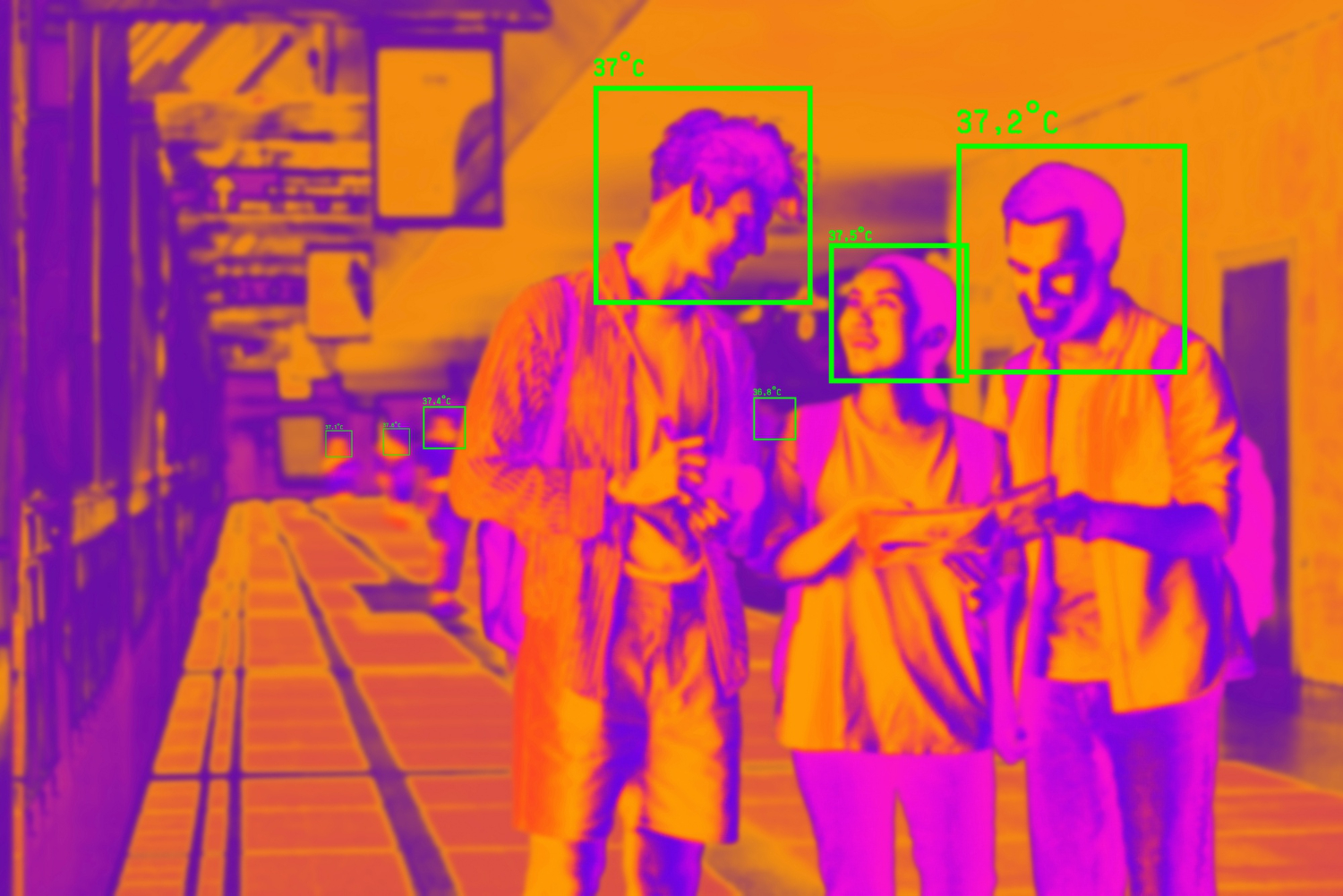
A store camera pointed at a shelf to read SKUs also captures the shopper reaching for the product and the staff member restocking beside them. That incidental capture is the whole problem, and blurring faces in stored footage after the fact does not solve it. In a retail computer vision pipeline built to recognise products, personal data enters the system whether or not anyone intended it to — and the moment those frames are retained to feed a retraining loop, the retention becomes a standing compliance liability rather than a checkbox you tick at the end.
The Spanish-language term anonimización de datos points at the same engineering reality that “data anonymization” does in English: the process of transforming data so that individuals can no longer be identified from it. In a SKU-recognition system the confusion is that people assume anonymization is a legal formality bolted onto storage. It is not. It is a pipeline stage, and where you place that stage determines whether your retraining corpus is clean or quietly toxic.
What does anonimización de datos mean in a vision pipeline?
Data anonymization in retail transforms raw video so that person-specific details remain irrecoverable even under adversarial correlation. In text records that usually means removing or hashing names, IDs, and quasi-identifiers. In a camera-fed pipeline it means something more physical: the pixels that depict a face, a body, or any other identifying feature must be irreversibly altered — masked, blurred beyond reconstruction, or redacted at the region level — before that frame is trusted to any downstream stage that retains it.
The word irreversibly carries weight here. Pixelation that a super-resolution model can invert is not anonymization; it is obfuscation. True anonymization has to withstand the reconstruction attacks that are cheap today, which is why region-level redaction (replacing the pixels entirely) is safer than a reversible blur when the region genuinely contains a person and nothing the model needs.
That last clause is the tension the rest of this article is about. A shelf frame is not all face and not all product. The SKU signal lives in one set of pixels; the personal data lives in another. Anonymization done well removes the second without touching the first.
Why does a product-recognition system need this at all?
Object-recognition pipelines rarely frame human subjects, yet every feed captures checkout staff, aisle traffic, and license plates in parking overviews. Because the camera does not share the model’s intentions. A frame that the model uses only for its shelf region still contains everything else in the frame’s field of view: shoppers, employees, sometimes a reflection in a chiller door. Under GDPR and comparable regimes, an identifiable person in an image is personal data regardless of why the image was captured. The lawful basis for processing product data does not extend to the people who happen to be standing in front of the product.
The risk compounds because these systems are not one-shot. A retail vision pipeline that recognises a growing catalogue has to retrain — as SKUs change packaging, as new products arrive, as the catalogue grows from a thousand classes toward several thousand. To retrain, teams keep footage. And the naive pattern is to keep raw footage indefinitely, because raw frames are what the retraining trigger consumes. That single decision — retain raw to enable retraining — is where personal-data risk accumulates silently. Every stored frame is a person’s image held without a defensible basis, multiplied across every camera and every store.
The disciplined alternative is to anonymize at ingestion so that the retraining loop never sees an identifiable person in the first place. The same reasoning that governs what it takes to build an SKU dataset for retail product recognition applies to the retraining corpus that dataset eventually becomes: the corpus is only as clean as its dirtiest retained frame.
Where should anonymization happen, and why does the stage matter?
Anonymization timing—edge versus cloud, pre-storage versus pre-inference—governs both privacy guarantees and computational overhead. There are three plausible points to anonymize, and they are not equivalent.
Anonymization placement decision table
| Placement | What it protects | What it leaves exposed | Retraining-loop effect |
|---|---|---|---|
| At ingestion (before any storage) | The entire pipeline — nothing identifiable is ever written to disk | Nothing, if the transform is irreversible | Retraining corpus is clean by construction; no downstream cleanup |
| Before storage but after buffering | Long-term stores | The in-memory/buffer window and any crash dumps of it | Corpus clean if the buffer is never persisted; fragile guarantee |
| Before retraining only | The training job’s input | Every stored raw frame between capture and training | Corpus is dirty at rest; a breach or audit exposes retained persons |
The table makes the argument that prose alone tends to soften: anonymizing only before retraining leaves raw personal data sitting at rest for the entire retention window. That is the window an auditor asks about and a breach exposes. Anonymizing at ingestion collapses the exposed surface to zero, because no identifiable frame is ever persisted. This is the same principle that shows up in third-party risk management for retail computer vision vendors — the safest data to hold is the data you never held in identifiable form.
The engineering cost of moving the stage forward is real but bounded. Ingestion-time anonymization means running the redaction model on the live stream, which adds latency and compute at the edge. In configurations we have worked with, a lightweight person/face detector feeding a redaction step fits alongside the SKU pipeline on the same edge device when both are quantized and scheduled carefully — the kind of trade-off that shows up whenever you weigh what hardware acceleration actually buys a facial-detection stage. The point of that detector is not to recognise anyone; it is to find and destroy the pixels that could.
Which techniques preserve the SKU signal?
Certain blur kernels degrade the high-frequency texture cues that convolutional backbones extract from product labels, silently degrading SKU recall. The choice is between techniques that are region-aware and techniques that are blanket.
- Region-level redaction detects the person region and replaces those pixels — with a solid fill or synthetic content — leaving shelf pixels untouched. This is the strongest option for both privacy and signal preservation, provided the detector’s recall on persons is high.
- Targeted blurring applies a Gaussian or box blur only inside the detected person region. Cheaper than full redaction, acceptable when the blur kernel is large enough to defeat reconstruction, but weaker against a determined attacker.
- Masking overlays a shape on identifying regions; simple and auditable, but only as good as the region detection feeding it.
- Blanket downsampling or full-frame blur anonymizes by degrading the whole image. It is the one technique to avoid here, because it degrades the SKU signal along with the faces — you protect privacy by breaking the model.
The ROI framing follows directly. Anonymizing at ingestion with a region-aware technique removes personal-data exposure from the retraining corpus while preserving the SKU-region pixels the model actually uses. Measured properly, that is zero identifiable-person retention alongside no measurable drop in per-class recognition accuracy — because the pixels you destroyed were never the pixels the classifier scored on. The failure mode of blanket methods is the opposite: compliance bought at the cost of the very signal the system exists to read. This is an observed pattern from how these pipelines behave, not a benchmarked figure — the exact accuracy delta depends on how often persons and products overlap in frame.
How do you keep the corpus clean as the catalogue grows?
Continual catalog expansion means yesterday’s anonymized training set becomes tomorrow’s compliance gap unless retention policies and re-anonymization cycles stay synchronized. Every retraining cycle pulls in fresh footage. If anonymization is an ingestion stage, the corpus stays clean by construction across every cycle — new frames are anonymized before they can join the pool. If anonymization is a periodic cleanup job, it races the retention window, and the race is one you eventually lose on some camera, in some store, on some day the cleanup job failed silently.
The durable design treats the anonymization detector as a first-class, versioned pipeline component with its own monitoring — the same discipline you would apply to the recognition model itself. When the catalogue grows and you retrain, you are also implicitly relying on the anonymization stage to have held across every frame that entered the corpus since the last cycle. That reliance has to be verified, not assumed.
How do you verify anonymization is actually working at scale?
Operational transparency requires per-stream telemetry: which frames were processed, which techniques were applied, and how aggregate queries stay within safe combinatorial bounds. Verification needs a sampled audit surface: periodically pull anonymized frames from the retained corpus, run a re-identification check (a person/face detector with high recall) against them, and alert on any hit. A non-zero hit rate means the ingestion stage is leaking somewhere — a camera whose feed bypassed the stage, a firmware rollback that reverted the config, a detector whose recall dropped on a new store’s lighting.
- Sample anonymized frames per camera on a rolling schedule, not just at rollout.
- Run a high-recall person/face detector as an independent verifier — different model from the redaction detector, so a shared blind spot does not hide a leak.
- Track the verifier’s hit rate per store and per camera; treat any sustained non-zero rate as an incident, not a metric.
- Confirm the transform is irreversible by attempting reconstruction on a sample, not just visual inspection.
This verification loop is what converts anonymization from a claim into evidence — the same shift from assertion to auditable proof that a data anonymization assessment looks for before a retraining loop is allowed near production. For retail teams building these systems, the retail computer vision practice is where that assessment connects to the rest of the pipeline.
FAQ
How does anonimización de datos actually work?
Anonimización de datos is the irreversible transformation of data so no individual can be re-identified from it. In a vision pipeline that means detecting the pixels that depict a person and masking, blurring beyond reconstruction, or redacting them at the region level before any downstream stage retains the frame. Reversible obfuscation like light pixelation does not qualify, because cheap reconstruction attacks can undo it.
Why does a retail SKU-recognition pipeline need data anonymization at all, when it is looking at products rather than people?
Because the camera captures whatever is in frame, not only what the model cares about. Shoppers and staff standing near a shelf are personal data under GDPR and similar regimes regardless of why the footage was captured, and the lawful basis for processing product data does not cover the people incidentally recorded alongside it.
At which stage should anonymization happen — at ingestion, before storage, or before retraining — and why does it matter for the retraining loop?
At ingestion, before anything is written to disk. Anonymizing only before retraining leaves raw personal data at rest for the entire retention window — the surface a breach or audit exposes. Ingestion-time anonymization collapses that exposed surface to zero because no identifiable frame is ever persisted, so the retraining corpus is clean by construction across every cycle.
Which anonymization techniques preserve SKU-region pixels without degrading recognition accuracy?
Region-aware methods — region-level redaction, targeted blurring inside detected person regions, and region masking — remove personal pixels while leaving shelf pixels untouched. Blanket methods like full-frame blur or downsampling degrade the SKU signal along with the faces and should be avoided. Because the destroyed pixels were never the ones the classifier scored on, region-aware anonymization typically yields no measurable drop in per-class accuracy.
How do I keep the retraining corpus free of identifiable personal data as the catalogue grows from 1,000 to 2,000+ classes?
Make anonymization an ingestion stage rather than a periodic cleanup job. Every retraining cycle pulls in new footage; if frames are anonymized before they can join the pool, the corpus stays clean automatically as the catalogue grows. A cleanup job instead races the retention window and eventually loses on some camera or store.
How do I verify that anonymization is actually working across thousands of stores and camera feeds?
Run a sampled audit: periodically pull anonymized frames from the corpus and check them with an independent high-recall person/face detector, alerting on any hit. Track the hit rate per store and per camera, treat any sustained non-zero rate as an incident rather than a metric, and confirm irreversibility by attempting reconstruction on a sample rather than relying on visual inspection alone.
Why redaction models are the easy half
Face and plate scrubbing is a commodity; the unresolved challenges lie in audit infrastructure, proving that joined datasets preserve k-anonymity, and demonstrating consent chains survive jurisdiction-specific scrutiny. The hard part is admitting that placement is the decision, and that “before retraining” — the placement that feels sufficient — is the one that leaves personal data at rest for the whole retention window. Move the stage to ingestion and the compliance surface that would otherwise block reuse of store footage for the next retraining cycle mostly disappears, which is what protects the automation rate the whole system was built to sustain.
The open question for most teams is not whether to anonymize but whether their verification loop is honest — whether anyone is actually checking, across every store, that the frames they retained contain no one who could be re-identified. That check, run continuously, is the difference between a system that is compliant and one that merely believes it is.