Search “deepseek h100” and the assumption underneath the query is usually the same: pick the strongest model, run it on the fastest GPU, and performance will follow. For retail computer vision, that assumption quietly inverts the decision you should actually be making. The question is not whether DeepSeek runs well on an H100 — it does — but whether the information a frontier language model on a datacenter GPU produces is worth what it costs to produce, per store, against the shrinkage or shelf-compliance gain it enables.
That is the reframe worth sitting with. The dominant retail CV workloads that are deployable today — loss prevention, shelf compliance, footfall and traffic analytics — are vision problems, not language-generation problems. They rarely need a large language model, and almost never need one on H100-class compute. When a team provisions that hardware anyway, the cost decision has usually stopped being anchored to the business value being protected.
What “DeepSeek on H100” actually pairs
DeepSeek encompasses a range of architectures, each trading off parameter count against inference speed. The NVIDIA H100 is a datacenter GPU built around high memory bandwidth and large HBM capacity, designed to keep big transformer models fed during training and high-throughput inference. Pairing the two is a sensible answer to a specific question: how do I serve a large language model at scale with acceptable latency? Per NVIDIA’s published specifications, the H100’s HBM bandwidth and Tensor Core throughput are what make large-model serving tractable — that is a real, verifiable hardware fact, and it is the reason the pairing exists.
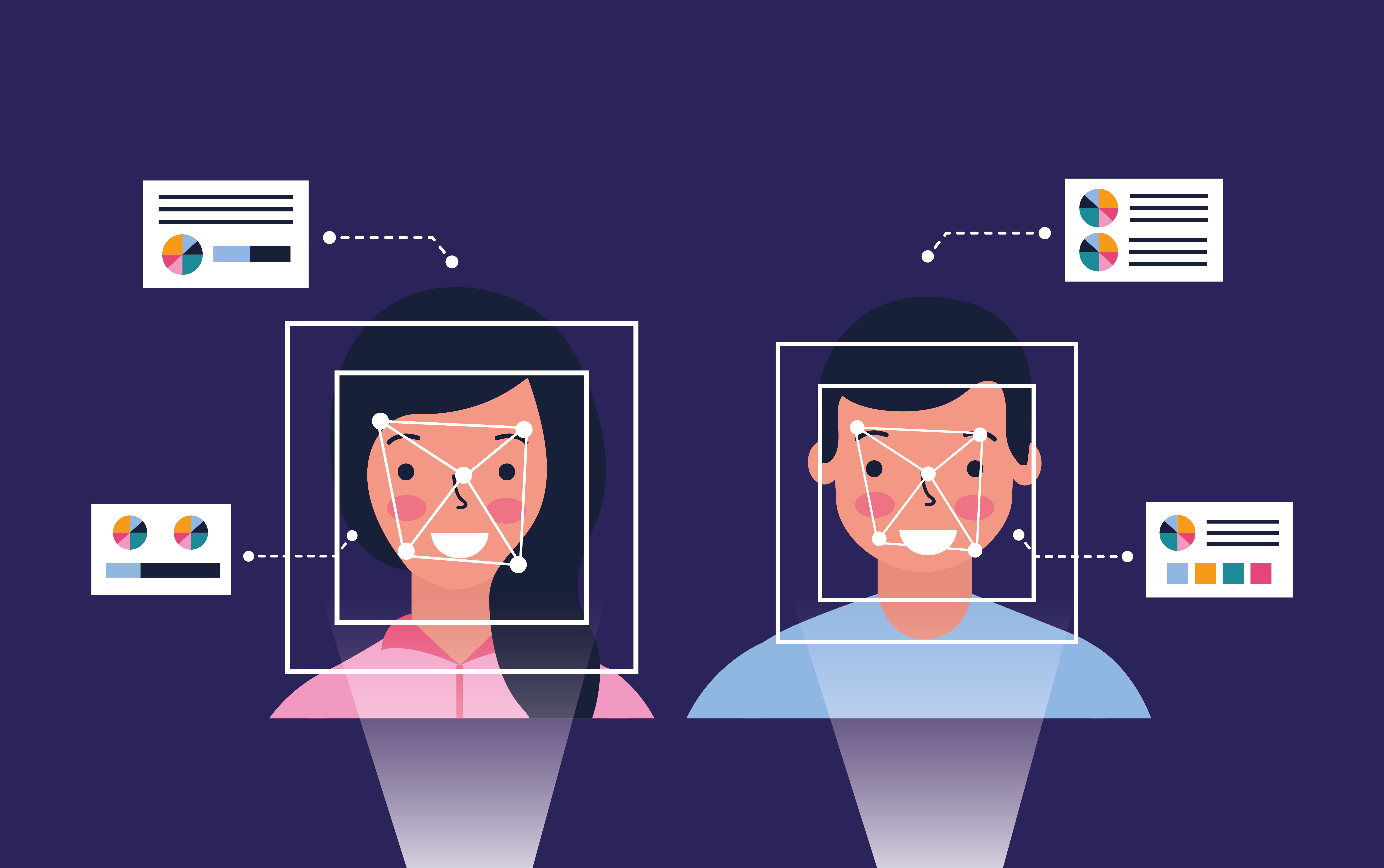
The trouble starts when that pairing is imported wholesale into a retail vision problem it was never scoped for. A store’s loss-prevention system needs to detect a concealment event or a skipped scan at the point of sale, in near real time, on a camera stream. A shelf-compliance system needs to recognise which SKUs are present, facing correctly, and in stock. Those are detection and recognition tasks — the domain of models like YOLO-family detectors, RT-DETR, or a fine-tuned CNN backbone — not text generation. The output that carries the business value is a bounding box and a class label, not a paragraph of reasoning.
There are genuinely multimodal retail use cases where a vision-language model earns its place: a visual shopping assistant answering free-form product questions, or a system that reasons over shelf imagery and text catalogues together. But those are a minority of deployed retail CV, and even there the model rarely needs to be frontier-scale. This is the divergence point: the moment a team reaches for H100-class compute for a use case whose per-store economics are already satisfied by far cheaper inference.
Why does the biggest-model-on-fastest-GPU instinct fail here?
The instinct misfires because it privileges theoretical capacity over delivered business value. Raw model capability and raw GPU throughput are inputs to cost, not measures of value. The value in retail CV is the information the model produces — a correct shrinkage alert, an accurate out-of-stock flag — and the operationally relevant question is what that information is worth versus what it costs to generate.
A useful discipline is to quantify the business value of the model’s output before choosing a model or a GPU. In our experience across retail CV scoping conversations, this ordering is the single most reliable guard against over-investment (observed pattern across TechnoLynx engagements; not a benchmarked figure). Once the payback per store is on the table — typically framed as a single-digit-percent shrinkage reduction or a measurable lift in on-shelf availability — the inference budget it can support becomes concrete, and the model-and-hardware choice follows from it rather than driving it.
A model that is 3x more expensive to run than it needs to be (as an illustrative multiplier) is not a rounding error at fleet scale — it is a structural drag on the very ROI it was meant to protect.
When does retail CV actually need H100-class compute?
Only when query patterns, accuracy floors, and cost ceilings intersect do H100 economics hold. H100-class throughput is justified when the workload’s shape genuinely demands it, not when it is available. The table below is a decision aid, not a rule; the right column names what to check before committing.
Decision table: H100-class compute versus cheaper inference for retail CV
| Workload | Typical model | Where it runs well | H100-class justified? |
|---|---|---|---|
| Loss prevention at POS | Fine-tuned detector (YOLO / RT-DETR) | Edge box or modest on-prem GPU per store | No — per-stream cost dominates; edge or mid-tier GPU fits |
| Shelf compliance / on-shelf availability | Detection + SKU classifier | Edge or regional server | No — batched regional inference on mid-tier GPU is usually enough |
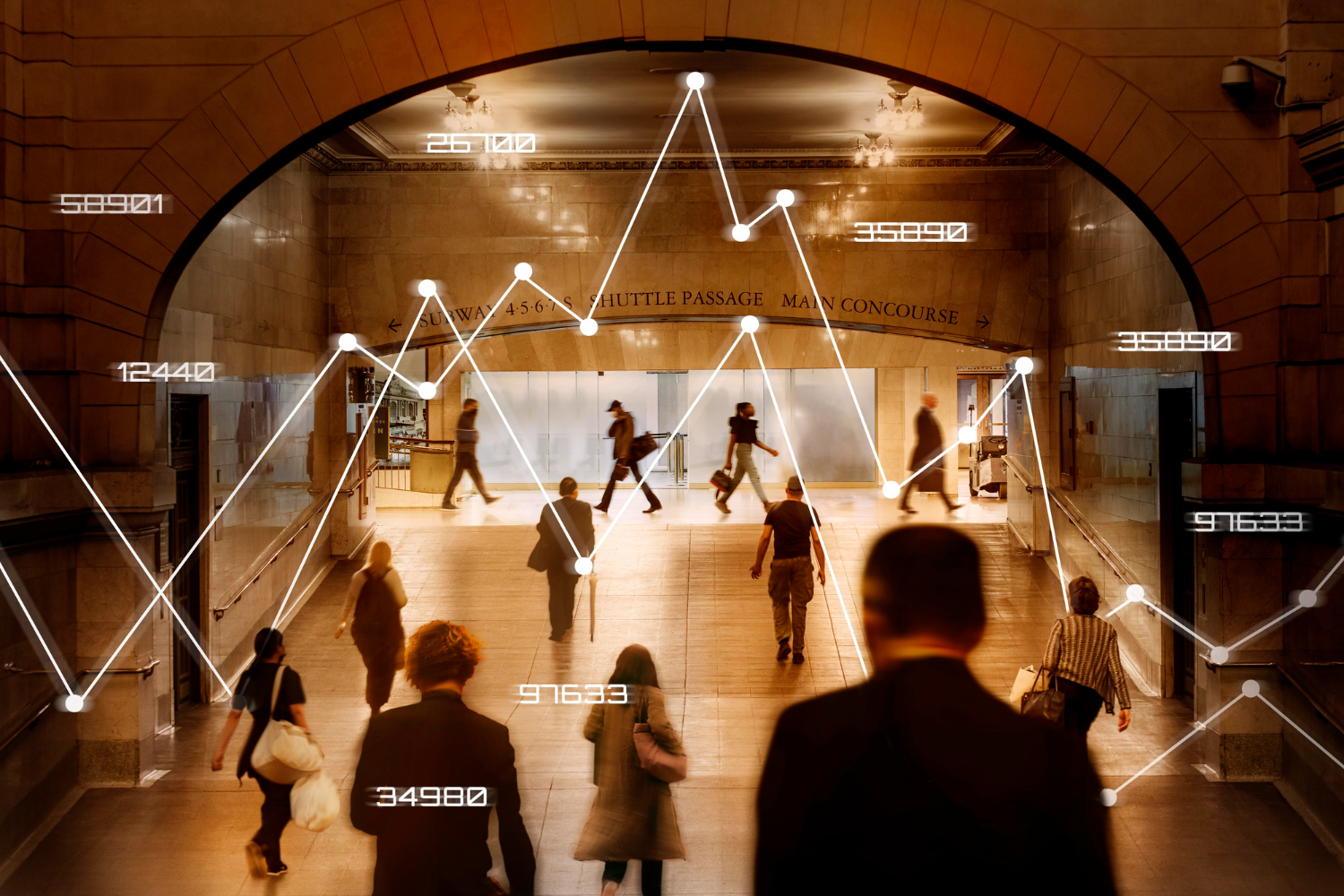
| Footfall / traffic analytics | Lightweight detector + tracker | Edge box | No — real-time tracking is latency-bound, not compute-bound |
| Batched multi-store analytics rollups | Larger models over aggregated data | Central datacenter GPU | Sometimes — batch size and volume can justify it |
| Training / fine-tuning the vision models | Full training pipeline | Datacenter GPU | Yes — training is where H100-class throughput pays off |
| Multimodal visual assistant (LLM/VLM) | DeepSeek-class or smaller VLM | Central serving cluster | Sometimes — only if the assistant is the product |
The pattern is consistent: the deployable-now, revenue-protecting retail CV workloads are latency-bound detection tasks that live at or near the edge, where an H100 would sit mostly idle relative to its cost. The cases where H100-class compute earns its keep are model training and genuinely batched, high-volume central analytics — not per-store real-time detection. If you are weighing where a workload sits on the latency-versus-cost curve, our breakdown of DGX Spark performance for edge CV walks through the same trade-off from the hardware side, and the DeepSeek-specific edge path is covered in running DeepSeek models on Intel hardware for edge inference.
How do you estimate inference cost per store before choosing hardware?
Skip the benchmark circus; write down your latency SLA, peak concurrent users, tolerable error rate, and monthly budget. Work them in this order, because each one bounds the next.
- Streams per store. How many camera feeds must be processed concurrently, and at what frame rate does the use case actually need? Loss prevention at a POS lane may need only a few frames per second on a handful of lanes; whole-store traffic analytics scales differently.
- Model cost per stream. The per-frame inference cost of the chosen model at the target resolution and precision. A detector quantised to a lower precision often holds accuracy while cutting cost sharply — this is where FP4 and other reduced-precision formats change the CV cost equation.
- Utilisation. How much of the GPU or edge accelerator the workload actually uses. An underused H100 is expensive idle silicon; the relevant figure is cost per useful inference, not cost per hour of provisioned compute.
- Value protected per store. The shrinkage reduction or availability gain, in currency, that the CV output enables. This is the number every other decision must reconcile against.
Divide the annual inference cost per store by the annual value protected per store. If that ratio is uncomfortable, the answer is almost never “buy a faster GPU” — it is “run a smaller model” or “process fewer redundant frames.” The measurement that matters is sustained cost per useful inference under realistic load, not peak throughput on a spec sheet.
Where retail teams over-invest
Recognisable pathology: procurement teams buy for the workload they imagine, not the one they instrument. A team benchmarks the strongest available model on the fastest available GPU, sees impressive throughput, and provisions to that ceiling — then deploys a workload that uses a fraction of it. The GPU spec was never the constraint; the per-store economics were, and they were satisfied several tiers down. Choosing hardware from a benchmark leaderboard rather than from the ROI it must serve is how compute cost silently detaches from business value.
This is also why the model-hardware pairing is best treated as a downstream decision, not an opening move. A computer vision consultant’s scoping work starts from the deployment environment and the value at stake, then works back to the smallest model and cheapest inference path that clears the accuracy bar — the opposite direction from the “deepseek h100” starting point. You can see the same discipline in how real-time object detection throughput trades off against cost: the throughput you can buy is rarely the throughput the use case needs.
None of this is an argument against DeepSeek or against the H100. Both are excellent at what they are for. It is an argument for keeping the direction of reasoning honest: value first, then model, then hardware. For retail CV specifically, that direction almost always lands you on a right-sized vision model and inference that costs a fraction of an H100 cluster. Our broader view on this sits in the computer vision practice and the retail solutions work, where the compute-cost line and the shrinkage-reduction line are read together rather than apart.
FAQ
How should you think about DeepSeek on H100 in practice?
NVIDIA’s H100 Tensor Cores and 3 TB/s memory bandwidth turn DeepSeek’s billion-parameter reasoning models into viable real-time inference engines. Pairing them answers the question of how to serve a large language model at scale with acceptable latency. In practice, for most retail computer vision, that is a solution to a problem the deployment does not have.
What is the DeepSeek model family, and where does the NVIDIA H100 fit in running it?
DeepSeek models are large transformer-based language and reasoning models. The H100 fits as the compute layer that keeps such large models fed during training and high-throughput inference, per NVIDIA’s published specifications. It is the right hardware when the workload is genuinely large-model serving or training — not when it is edge-scale detection.
When does a retail computer vision deployment actually need H100-class compute versus cheaper inference?
Almost never for the deployable-now workloads: loss prevention, shelf compliance, and traffic analytics are latency-bound detection tasks that run well on edge or mid-tier GPUs. H100-class compute is justified mainly for training and fine-tuning the vision models, and sometimes for genuinely batched, high-volume central analytics. Per-store real-time detection rarely uses more than a fraction of an H100’s capacity.
How do I estimate inference cost per store when choosing model and GPU for retail CV?
Work four numbers in order: streams per store, model cost per stream, utilisation, and value protected per store. Divide annual inference cost per store by annual value protected per store. If the ratio is poor, the fix is usually a smaller model or fewer processed frames, not a faster GPU — the operative measure is sustained cost per useful inference, not peak spec-sheet throughput.
How does the model-hardware choice affect the ROI of loss prevention and shelf analytics?
Inference cost multiplies by streams and again by stores, so an over-sized model or GPU compounds into a structural drag on the ROI it was meant to protect. Retail CV payback is typically framed as single-digit-percent shrinkage reduction or a measurable availability gain; the inference budget must fit inside that. Right-sizing the model and hardware keeps the economics of the deployment intact.
Where do retail teams over-invest in GPU compute relative to the business value produced?
The common failure is benchmarking the strongest model on the fastest GPU, provisioning to that ceiling, then running a workload that uses a fraction of it. The GPU spec was never the constraint — the per-store economics were, and they were satisfied several tiers down. Choosing hardware from a leaderboard rather than from the ROI it serves is where compute cost detaches from value.
The honest closing question is not “which model on which GPU?” but “what is one correct shrinkage alert worth per store, and what is the cheapest inference that produces it reliably?” Answer that first, and the DeepSeek-on-H100 question usually answers itself.
Making DeepSeek H100 repeatable
Lock in your hardest constraint first—latency, accuracy, or cost—then construct the DeepSeek H100 pipeline to satisfy it without compromise. Everything else is detail.