“We saw the ICPE 2025 results — do they change how we plan capacity for our LLM service?” It is the right instinct and the wrong question at the same time. ICPE, the ACM/SPEC International Conference on Performance Engineering, has spent years refining latency modelling, capacity planning, and cost-efficiency benchmarking for software systems. Those methods are directly relevant to a production large language model stack. But the methods were built for systems whose cost per request is deterministic, and an LLM’s cost per request is not. Cite a conference result without re-instrumenting for token economics and you inherit a capacity plan that looks rigorous and is quietly wrong.
That is the whole story in one sentence: ICPE’s rigour transfers, its assumptions do not. The useful work is translating the discipline — how it thinks about tail latency, saturation, and headroom — into the specific instrumentation that LLM serving needs and that classical MLOps monitoring was never designed to produce.
What does ICPE 2025 mean in practice for teams operationalising LLMs?
Performance-engineering research from ICPE 2025 translates into LLMOps telemetry faster than most teams expect. The conference is where performance-engineering research gets presented and stress-tested: queueing models for service tiers, workload characterisation, benchmark design, capacity forecasting under load. If you run a production inference service, that body of work describes the exact discipline you need — you just have to notice that the papers assume a request has a fixed, measurable resource footprint.
For a classical web service, that assumption holds well enough. A request hits an endpoint, does bounded work, returns. You can measure it once and model it. For an LLM, the resource footprint of a single request is a function of input tokens plus generated tokens, and generation length is non-deterministic — it depends on the prompt, the sampling parameters, and the model’s own decision about when to stop. Two requests to the same endpoint with the same nominal intent can differ in cost by an order of magnitude. That is the divergence point. Everything downstream of it — capacity planning, cost forecasting, SLA design — has to be re-derived with the token as the unit of work, not the request.
This is why we treat “does this conference result change our plan?” as a question that can’t be answered until you know what your plan actually measures. If your capacity model counts requests per second, an ICPE-grade latency study won’t rescue it, because the model is blind to the variable that dominates LLM cost.
Which ICPE methods transfer, and which break down?
Isolate the core measurement protocol from the specific system it was originally validated against. Most performance-engineering methods carry an implicit “cost per unit of work is stable” assumption. Where that assumption survives the move to LLM serving, the method transfers cleanly. Where it doesn’t, the method needs a token-aware replacement.
Method transfer matrix
| Performance-engineering method | Transfers to LLM serving? | What changes |
|---|---|---|
| Tail-latency measurement (p95/p99) | Yes, directly | Measure per-token and end-to-end; a long generation inflates end-to-end p99 without any per-token regression |
| Queueing / saturation modelling | Partially | Service time is a distribution driven by output length, not a constant; model the distribution, not the mean |
| Capacity forecasting | Needs rework | Forecast on token throughput and concurrent-sequence limits, not requests/sec |
| Workload characterisation | Yes, with new axes | Add input-length and output-length distributions; these dominate cost |
| Cost-efficiency benchmarking | Needs rework | Cost per request is meaningless; cost per 1K tokens (in/out separately) is the unit |
| Regression testing on latency | Yes | But pair it with output-quality eval — latency can hold while answer quality drifts silently |
The pattern worth internalising: the methods that measure time mostly survive, and the methods that assume stable cost mostly break. Mean-based queueing models are the sharpest trap, because they produce confident numbers from an input (average service time) that hides the variance that will actually blow your capacity budget under a heavy-generation traffic mix.
How do you translate latency research into cost-per-token and tail-latency monitoring?
Begin with tokens-per-second as the anchor metric, then add request-level latency and cost breakdowns. Sustained tail latency under realistic load — not the median under a synthetic even-length prompt set — is the operationally relevant reliability measure for an LLM serving tier. That is the single most important thing ICPE’s methodology teaches and the single thing most LLM dashboards get wrong.
Three signals carry most of the weight in production, and none of them appear on a standard MLOps monitoring board by default:
- Cost-per-token drift over a rolling window. Track input and output token cost separately, windowed (a rolling 7-day view is a reasonable default in the deployments we have instrumented; not a benchmarked constant). Drift here is your early-warning system for prompt bloat, retrieval-context growth, or a model swap changing verbosity. It moves before your monthly bill does.
- Tail latency on the serving tier, segmented by output length. A p99 that looks stable in aggregate can hide a serving tier that falls apart on long generations. Segment by output-token bucket or the number is an average of two different systems.
- Capacity headroom before autoscaling. Expressed in concurrent sequences and token throughput, not requests/sec. This is what decides whether the service holds its SLA when a burst of long-generation traffic arrives.
Mapping these onto the actual serving path is the part teams underestimate. It helps to have a clear picture of where the time goes; our note on mapping the serving path for performance walks through the stages where latency accumulates. And because context length is the biggest lever on both cost and tail latency, it is worth understanding what context windows actually cost at inference before you set the token budgets that your monitoring will then hold you to.
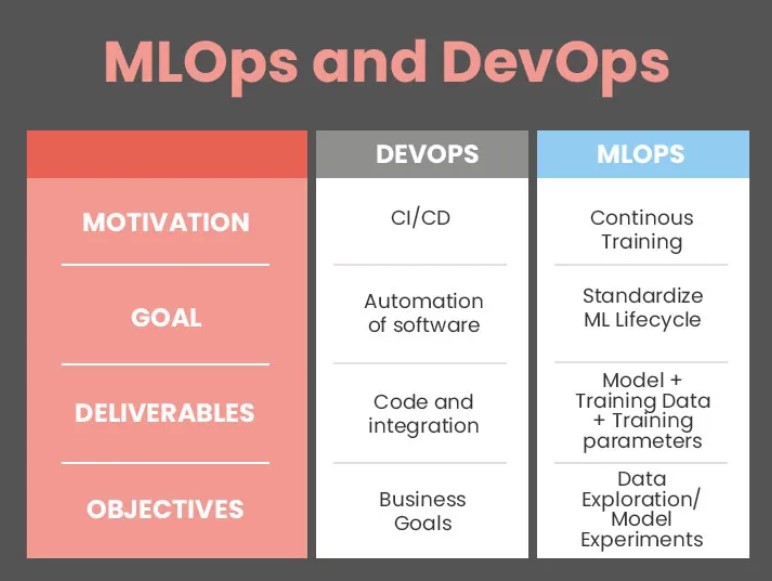
What performance signals does LLMOps need that MLOps benchmarks miss?
Discriminative models batch cleanly; generative models serialize decode steps, which changes how you instrument throughput. The performance surface is stable per request. LLM serving breaks three of those assumptions at once, and each break introduces a signal that generic monitoring does not carry:
Non-deterministic token cost means the request is no longer the unit of accounting. Eval-drift means the model’s output quality can degrade while every latency and throughput metric stays green — a failure mode that has no analogue in a fixed-output classifier. And retrieval, when present, adds a second latency-and-freshness surface that the LLM benchmark literature does not model at all.
That last point deserves its own treatment, because retrieval is where a lot of production LLM systems quietly lose their SLA. Retrieval latency stacks in front of generation latency: a slow or saturated vector index adds to end-to-end p99 on every retrieval-augmented call, and index freshness introduces a correctness dimension — stale results that pass every performance check while returning outdated answers. If your capacity model treats the retrieval tier as free or constant, a heavier query mix will saturate the index and your tail latency will climb from a component your LLM benchmarks never measured. This is a generative-AI lifecycle concern, and it sits squarely in the territory our generative AI services work covers — the serving and cost behaviour of production LLM systems, not the model training that MLOps tooling was built around.
When is a dedicated performance engagement justified over reusing MLOps monitoring?
Extending your current MLOps observability delivers more value than building a parallel LLM-specific stack. The question is whether the LLM-specific signals above are covered, and whether the cost of missing them exceeds the cost of instrumenting for them. A rough rubric:
Decision rubric: reuse vs dedicated engagement
- Reuse existing monitoring when your LLM traffic is low-volume, output lengths are tightly bounded (short structured responses), there is no retrieval tier, and cost-per-query is comfortably inside budget with headroom. The token-economics blind spot exists but isn’t yet expensive.
- Instrument incrementally when cost-per-query is trending up, output lengths vary widely, or you have added retrieval — but you have the internal performance-engineering skill to add token-aware signals yourself. You need the methods, and ICPE-grounded practice gives you the vocabulary.
- Scope a dedicated engagement when the service is SLA-bound, cost-per-token drift is material to the P&L, capacity planning decisions are being made on requests/sec (the wrong unit), or a serving-tier change is planned and you need a defensible before/after. This is where translating ICPE performance rigour into LLM instrumentation pays for itself, because the wrong capacity plan fails silently until a traffic burst exposes it.
The output of that translation feeds directly into how an engagement is scoped: which serving and monitoring lifecycle stages your team owns versus what a vendor manages. Getting that boundary right is most of the value — and it is the kind of scoping decision our note on what an LLM consultant actually does unpacks in more detail.
FAQ
How does ICPE conference 2025 work, and what does it mean in practice for teams operationalising LLMs?
Performance engineering as a discipline predates large language models by decades, but its toolkit—queueing theory, workload characterization, and tail-latency budgeting—maps directly onto inference-serving challenges. In practice, its methods describe the exact discipline a production LLM stack needs — but the research assumes a request has a stable, measurable resource footprint, which is false for LLM serving. The practical meaning is that the rigour transfers only after you re-instrument with the token as the unit of work.
Which ICPE performance-engineering methods transfer to LLM serving, and which break down against non-deterministic token cost?
Methods that measure time — tail-latency measurement, latency regression testing, workload characterisation — transfer with new axes added for input and output length. Methods that assume stable cost per request — mean-based queueing models, request-level capacity forecasting, cost-per-request benchmarking — break down and need token-aware replacements. Mean-based queueing is the sharpest trap because it produces confident numbers from an average that hides the variance driving real cost.
How do you translate latency and capacity-planning research into cost-per-token and tail-latency monitoring for production LLMs?
Start by changing units: track cost per 1K tokens (input and output separately) over a rolling window, measure p95/p99 tail latency segmented by output length, and express capacity headroom in concurrent sequences and token throughput rather than requests per second. Sustained tail latency under realistic, mixed-length load is the operationally relevant reliability measure. These three signals are the practical form of ICPE’s methodology applied to non-deterministic serving.
What performance signals belong in an LLMOps stack that classical MLOps performance benchmarks do not cover?
Three signals have no analogue in fixed-output MLOps benchmarks: cost-per-token drift, because the request is no longer a stable accounting unit; eval-drift detection, because output quality can degrade while all latency and throughput metrics stay green; and retrieval latency plus index freshness, a second performance-and-correctness surface the LLM benchmark literature does not model.
How does retrieval latency and index freshness factor into LLM performance engineering under load?
Retrieval latency stacks in front of generation latency, so a slow or saturated vector index adds to end-to-end p99 on every retrieval-augmented call. Index freshness adds a correctness dimension — stale results pass every performance check while returning outdated answers. If a capacity model treats the retrieval tier as free or constant, a heavier query mix saturates the index and tail latency climbs from a component the LLM benchmarks never measured.
When is a dedicated performance engagement justified over reusing existing MLOps monitoring for LLM serving?
Reuse is fine when traffic is low-volume, output lengths are bounded, there is no retrieval tier, and cost-per-query has comfortable headroom. Instrument incrementally when cost is trending up or retrieval is added but you have the internal skill. Scope a dedicated engagement when the service is SLA-bound, cost-per-token drift is material to the P&L, or capacity decisions are being made on the wrong unit (requests/sec) — because the wrong capacity plan fails silently until a burst exposes it.
The honest closing question is not “what did ICPE 2025 report?” but “what is my LLM service measuring, and does it hold under a heavy-generation, retrieval-augmented traffic mix?” Answer that and the conference results become useful inputs rather than misleading headlines. Where a performance engagement is warranted, the deliverable is not a dashboard — it is a clear declaration of which serving and monitoring lifecycle stages your team owns, so the token-economics blind spot never becomes the failure nobody was watching.
Building ICPE 2025 principles into your stack
Capture tail latencies first—P95 and P99 distributions reveal inference bottlenecks masked by mean response time.