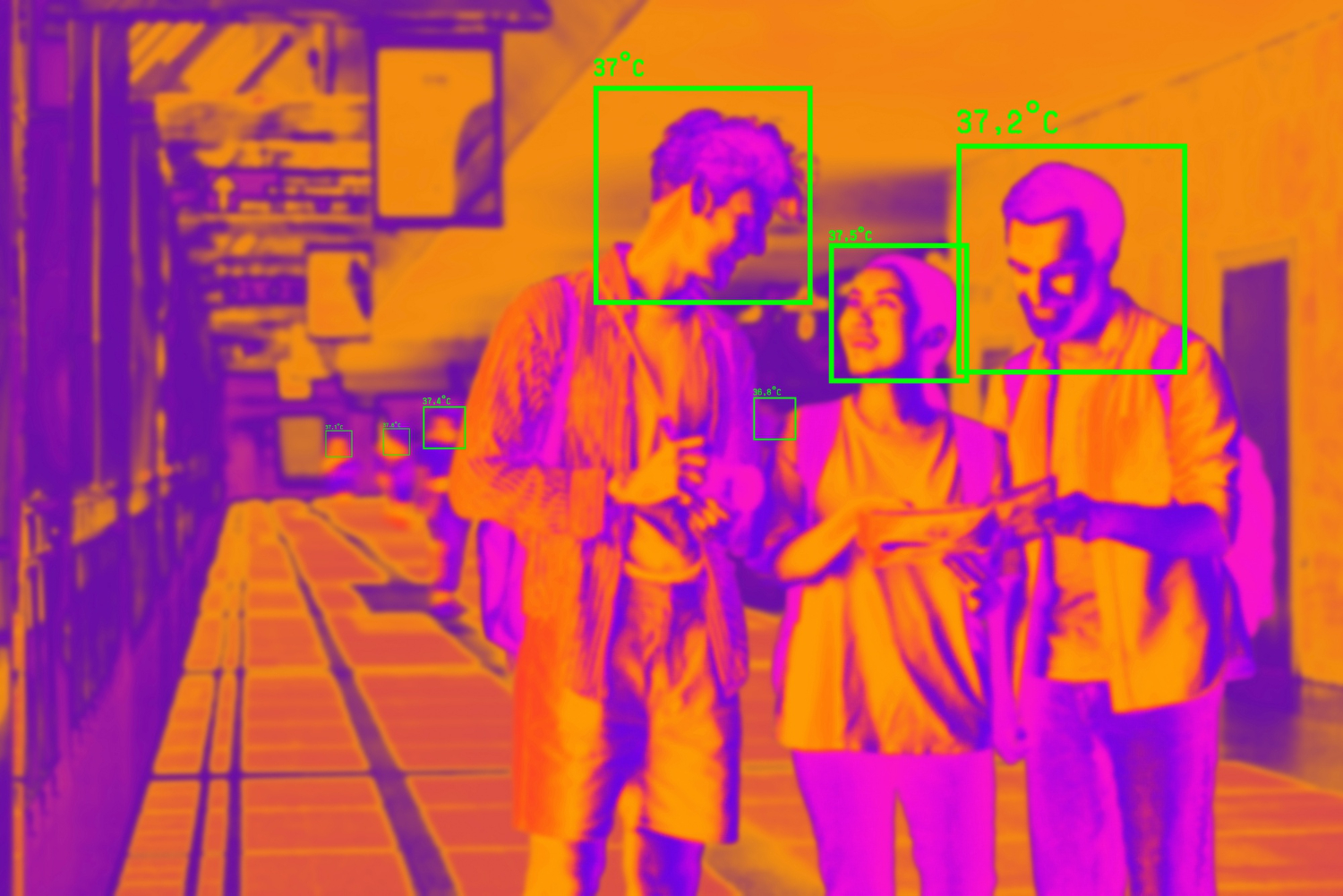
A detector that scores flawlessly on a photo dataset can still count wrong on a production line. The reason isn’t the model — it’s that the team treated video as a stack of independent images and ran the detector on every frame with nothing in between. Boxes flicker. The same part gets counted three times as it drifts across the frame, then vanishes for four frames when a robot arm occludes it, then reappears as a brand-new object. On a clip in a demo, none of this shows. On a shift’s worth of footage feeding a throughput metric, it makes the number meaningless.
Object detection in video is not object detection run faster. It is a distinct pipeline in which per-frame detection is only the first of several stages, and the stages that come after it — association, temporal smoothing, and frame sampling — are what turn candidate boxes into a stable, countable understanding of what moved through the scene. The moment you accept that video detection is a modular chain rather than a single model call is the moment the system becomes debuggable, cheaper to run, and reliable enough to trust with a business metric.
Why running a detector on every frame isn’t “video detection”
Naive implementations apply image detection models to every decoded frame, treating 30 fps video as 30 independent inference tasks per second—illustrative of the one-to-one mapping approach. It’s a reasonable first guess. It’s also the source of nearly every production failure we see in this space.
A per-frame detector has no memory. Frame N and frame N+1 are, as far as the model is concerned, unrelated. So a part visible in both frames is detected twice with no notion that it is the same part. Confidence wobbles frame to frame — a box at 0.71 confidence one frame can dip below your threshold the next and disappear, then return. Motion blur during fast conveyor movement degrades a single frame’s detection while the frames on either side are clean. An occlusion — an operator’s hand, a passing forklift, another part — removes the object entirely for a stretch, and a memoryless detector treats the reappearance as a new arrival.
None of these are model-quality problems. You can swap in a bigger backbone, retrain on more data, push mean average precision higher, and every one of these failure modes will still be there, because they are properties of treating frames as independent rather than properties of the detector. The fix isn’t a better detector. It’s a stage that the per-frame approach doesn’t have at all.
What the stages actually are
Decoupled pipeline stages—decode, detect, track, aggregate—enable independent optimization and failure isolation. The clean decomposition looks like this.
| Stage | Job | Operates over | What breaks if it’s missing |
|---|---|---|---|
| Frame sampling | Decide which frames get inference | The stream | Redundant inference cost; wasted compute on near-identical frames |
| Detection | Produce per-frame candidate boxes + confidence | One frame | Nothing to associate; no candidates at all |
| Association (tracking) | Link detections of the same object across frames into a track with a stable ID | Consecutive frames | Double-counting, identity swaps, phantom re-arrivals |
| Temporal smoothing | Stabilise boxes and confidence over a track’s lifetime | A track over time | Flickering boxes; threshold-crossing dropouts |
| Post-processing / counting | Turn tracks into the business metric | Completed tracks | Raw candidate noise reaches the KPI |
The property that matters here isn’t the specific choice of algorithm in any one row. It’s that the rows are separate. Detection knows nothing about tracking. Tracking consumes detection output and knows nothing about how counting will interpret its tracks. Each boundary is an observable interface: you can log what crosses it, replay it, and test the stage on either side in isolation. That isolation is the whole point, and it’s the thing the single-model-call framing throws away.
If you want the association stage in depth — how detections become persistent identities across frames — we cover the mechanics in how an object tracker works and detection-to-track association in practice. This article stays at the level of why the boundary exists rather than which tracker to pick.
How does frame sampling cut inference cost without losing accuracy?
Consecutive frames at 30 fps (a typical video rate, used here as an illustrative example) are highly redundant.
Intelligent frame sampling exploits that redundancy. Rather than detecting on all frames, you detect on a subset — every k-th frame, or adaptively when scene motion exceeds a threshold — and let the association and smoothing stages carry object state across the skipped frames. In configurations we’ve worked with, this typically drops the number of model calls by roughly 3–10x depending on scene dynamics and object speed (observed pattern across CV engagements; not a benchmarked constant — the right k is scene-specific).
The counterintuitive part is that this can raise accuracy rather than lower it, because the temporal association layer smooths over the individual per-frame errors that a memoryless every-frame approach would surface directly into the count. A single blurred frame that would have produced a missed detection is simply a frame you skipped, and the track continues uninterrupted.
The dependency to name explicitly: sampling only works when the tracker can bridge the gap between sampled frames. If objects move faster than the tracker’s motion model can predict, wider sampling breaks association and you lose IDs. So frame sampling and tracking are coupled in behaviour even though they’re separate in code — you tune them together, but you test and observe them apart. For the throughput-vs-cost side of this trade-off in more detail, see real-time object detection and what throughput really costs.
How tracking prevents double-counting and identity loss
Business KPIs like queue length, occupancy rate, and conversion funnel depend on object tracks, not individual bounding boxes. A per-frame detector, asked “how many parts passed?”, can only answer “how many boxes did I draw?” — which over a video is wildly inflated, because every object contributes one box per frame it’s visible.
The tracking stage fixes this by assigning each real-world object a persistent track ID. The count becomes “how many distinct tracks crossed the counting line”, not “how many boxes were drawn”. One object, visible for 60 frames, is one track, counted once. That is the mechanism that eliminates the double-counting that otherwise inflates or deflates line-throughput metrics.
Identity loss is the mirror-image failure. When an object is occluded for several frames, a naive tracker ends its track at the occlusion and starts a fresh one on reappearance — so one physical part becomes two counted parts. A tracker with a motion model and a re-identification window can hold the track open through the gap and reattach the reappearing detection to the existing ID. Getting this right is what separates a demo that counts a clean clip from a system that counts reliably when the scene is messy. The object counting in computer vision breakdown goes deeper into where counts drift and how line-crossing logic is defined.
The reason this belongs in its own stage — rather than baked into the detector — is testability. When the count is wrong, you need to know whether detection missed objects, association swapped IDs, or the counting line was drawn wrong. If those three are one fused block, you’re guessing. If they’re separate observable stages, you look at the logs at each boundary and localise the fault.
What breaks first, and how you isolate it
Debugging proceeds hierarchally: verify frame integrity, then detection recall, then association consistency. This is the practical payoff of the modular framing: an accuracy drop can usually be traced to a specific component in hours rather than days, because you can inspect what each stage emitted.
Use this as a triage checklist when a video pipeline’s numbers go wrong:
- Boxes flicker on and off frame-to-frame → detection confidence is bouncing across your threshold. Check the detection stage’s raw confidence logs before blaming the tracker. Often a smoothing or hysteresis fix at the track level, not a retrain.
- The same object counted multiple times → association is failing to link detections into one track, or the counting line is being crossed more than once by a wandering box. Inspect track IDs across frames.
- Objects vanish and reappear as new IDs → occlusion handling / re-ID window too short, or frame sampling too aggressive for the object speed. Look at the gaps in the track timeline.
- Count is stable but wrong by a constant factor → counting-line geometry or double-line-crossing logic, not detection or tracking at all.
- Cost is high but accuracy is fine → you’re detecting on every frame when sampling would do. A tuning opportunity, not a bug.
Each of these points at exactly one stage. That’s only possible because the stages emit observable, replayable output at their boundaries. A single fused “video detection model” gives you a wrong number and no way to attribute it. This is the same discipline we apply across ML model deployment for classical and deep CV stages — stage boundaries are where you instrument, and instrumentation is what makes a system debuggable in production rather than in a rewrite.
Keeping the pipeline observable and replaceable
Interchangeable components form the core design tenet: upgrade your tracker algorithm without modifying detection or decode logic. You should be able to replace the detector with a faster one, or the tracker with a more robust one, and have the rest of the pipeline keep working — because the interfaces between stages are stable data contracts, not implicit coupling.
Concretely, that means detection emits a well-defined per-frame candidate structure (boxes, classes, confidences) that any tracker can consume; the tracker emits tracks with IDs that any counting logic can consume; and each handoff is logged so you can replay a production incident offline. When you build a video pipeline this way — separating per-frame inference from temporal tracking from post-processing — you get the modular, observable structure that a proper pipeline assessment looks for, and that our broader computer vision practice treats as the baseline for anything that has to run past a demo.
FAQ
What does working with object detection in videos involve in practice?
Video object detection pipelines chain frame sampling, per-frame detection, cross-frame tracking, temporal smoothing, and event post-processing into a multi-stage architecture. Treating it as a pipeline — rather than “a detector run on every frame” — is what makes it reliable, cheaper, and debuggable.
How is video object detection different from running a detector on single images?
A single-image detector has no memory, so it treats every frame as unrelated: the same object is detected repeatedly with no notion of identity, confidence wobbles across the threshold causing flicker, and occlusion or motion blur breaks detection with nothing to recover it. Video detection adds a temporal layer — tracking and smoothing — that links detections over time, which is precisely what per-frame detection lacks.
Where do detection, tracking, and temporal smoothing belong as separate pipeline stages?
They belong as distinct, independently testable components with stable interfaces between them: detection produces per-frame candidates, tracking associates those candidates into identified tracks, and smoothing stabilises boxes and confidence over a track’s lifetime. Keeping them separate means each handoff is observable and each stage can be swapped or debugged without rewriting its neighbours.
How does frame sampling reduce inference cost without losing detection accuracy?
Consecutive frames are highly redundant, so detecting on a subset of frames and letting the tracker interpolate object state in between typically cuts model calls by roughly 3–10x depending on scene dynamics (an observed pattern, not a fixed constant). Accuracy holds — and can improve — because the temporal association layer smooths over per-frame errors that an every-frame approach would surface directly into the result, provided the tracker can bridge the gap between sampled frames.
How does object tracking prevent double-counting and identity loss across frames?
Tracking assigns each real-world object a persistent track ID, so the count becomes the number of distinct tracks that cross a line rather than the number of boxes drawn — one object visible for many frames is counted once. A tracker with a motion model and a re-identification window also holds a track open through occlusions, reattaching the reappearing object to its existing ID instead of counting it as a new arrival.
What breaks first when object detection is applied to video, and how is it isolated?
The first visible failures are flickering boxes, duplicate counts, and identity loss on occlusion — all consequences of missing temporal handling, not detector quality. Because a well-structured pipeline emits observable output at each stage boundary, you isolate the fault by inspecting logs stage by stage: flicker points at detection confidence, duplicate counts at association or counting-line logic, and vanishing IDs at occlusion handling or overly aggressive sampling.
How do you keep a video detection pipeline observable and replaceable stage by stage?
Define stable data contracts between stages — detection emits candidate boxes any tracker can consume, tracking emits IDs any counting logic can consume — and log every handoff so incidents can be replayed offline. That structure lets you swap a detector or tracker for a better one without rewriting neighbours, and it lets you attribute any accuracy drop to a specific stage in hours rather than days.
The question worth carrying into your next video project isn’t “which detector is most accurate?” It’s “if the count is wrong tomorrow, can I tell which stage caused it?” If the answer is no, the pipeline is a single fused model call wearing a pipeline’s clothes — and no amount of detector accuracy will make it observable.
Three architectural decisions that dominate latency
Queue depth at the batcher, keyframe selection heuristics, and tracker reset thresholds contribute more to total latency than raw model speed. Object Detection Videos rewards teams that measure first and argue later — start with the smallest instrumented slice and let the numbers settle the design.