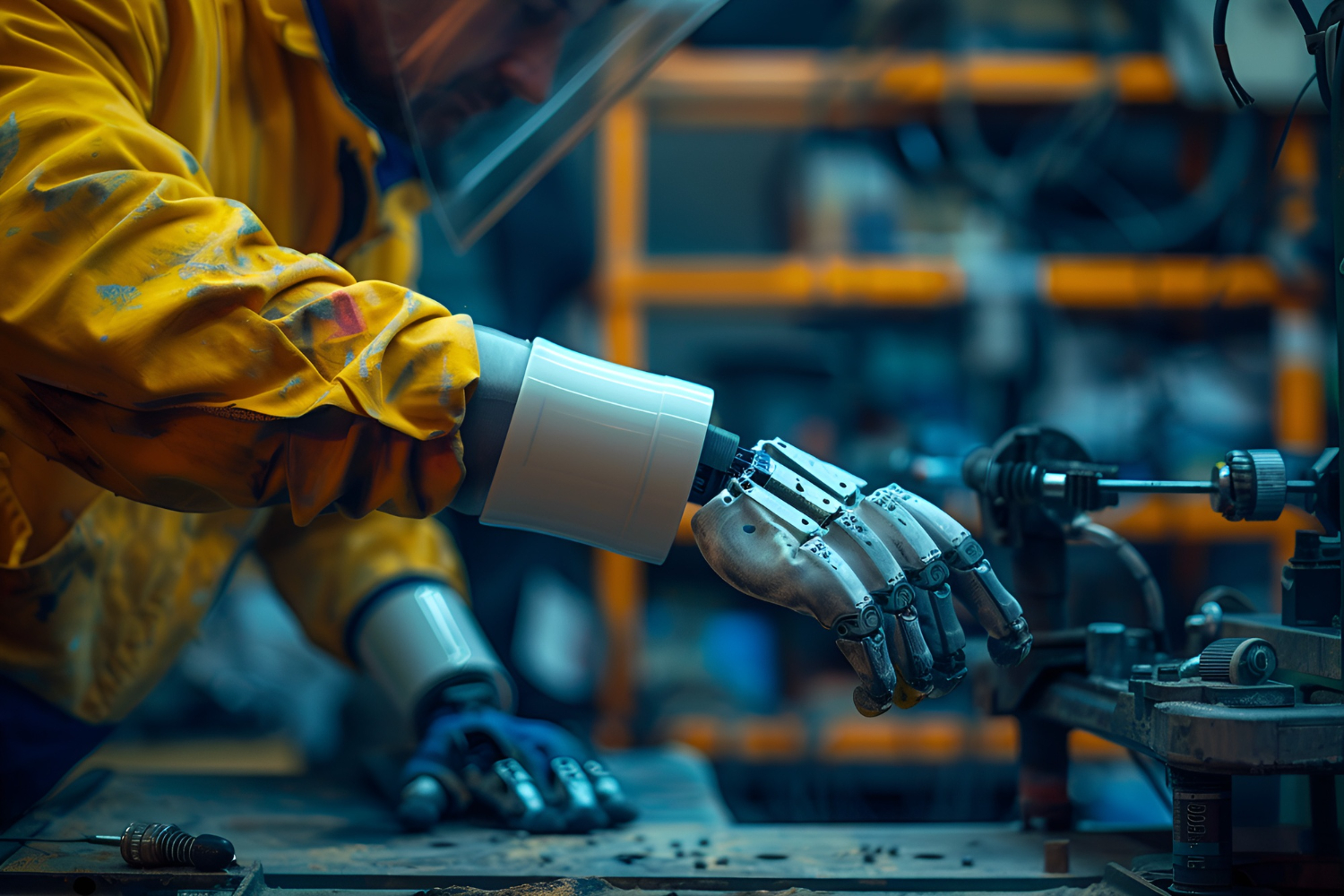
Predictive maintenance AI schedules work on the measured condition of each machine, not on a calendar and not after a breakdown. Corrective maintenance waits for failure, preventive maintenance acts on elapsed time or run-hours, and predictive maintenance acts when measurements show that degradation has started. Whether it pays back depends on how the site maintains equipment today. Guidance from the US Department of Energy’s Federal Energy Management Program (FEMP) cites past studies estimating savings of 8% to 12% over a preventive-only programme, and savings opportunities exceeding 30% to 40% depending on a facility’s reliance on reactive maintenance and material condition.
How does AI-driven maintenance differ from preventive and corrective maintenance?
The three approaches differ in what triggers the work. Reactive (corrective) maintenance is “run it until it breaks”. Preventive maintenance follows a time-based or run-based schedule. Predictive maintenance bases the need for work on the actual condition of the machine. The arXiv survey of predictive maintenance by Ran and colleagues (2019) describes predictive maintenance as a trade-off between the other two. Reactive work has the lowest prevention cost but lags behind failures, while preventive work keeps repair costs low but pays for maintenance that was never needed.
| Approach | What triggers work | Typical weakness | FEMP cost estimate |
|---|---|---|---|
| Reactive / corrective | The equipment has failed | High repair cost and unplanned downtime; acceptable only where shutdowns do not affect production | About $18 per hp per year |
| Preventive | Predetermined time or run intervals | Unneeded maintenance, and catastrophic failures still likely | About $13 per hp per year |
| Predictive (condition-based) | Vibration, temperature, lubrication or other condition indicators reach an unacceptable level | Investment in diagnostic equipment and staff training | About $9 per hp per year |
| Reliability-centred | Predictive and preventive techniques combined with root cause analysis | Needs failure analysis and sometimes redesign | About $6 per hp per year |
Read the cost column as framing rather than a forecast for your plant. FEMP gives the figures per horsepower per year from studies.
In practice, top-performing programmes combine the approaches. FEMP describes continually top-performing facilities as running under 10% reactive, 25% to 35% preventive and 45% to 55% predictive maintenance. PNNL makes the same point: the balance between the three is tuned to each site’s buildings, systems and equipment.
How does AI improve predictive maintenance compared to traditional schedules?
Prediction did not start with machine learning. Aviation Week notes that engine health monitoring has long kept powerplants on wing. For other components, reliability analyses estimate failure rates after a given number of hours or cycles, and planners set inspection intervals from those probabilities. The difference now is that one prediction can draw on many sensors and data streams per part or system, so the estimate applies to that particular asset rather than the fleet average. A schedule based on a theoretical failure rate leads to maintenance too early or too late. Maintaining on each asset’s actual condition is the alternative.
Machine learning adds the ability to read multivariate and early signals. A 2025 comparative study of rule-based and data-driven industrial monitoring describes the classic rule: if the temperature exceeds 80°C for more than 10 minutes, raise an alarm. Rules like that are transparent and deterministic, and every alarm can be traced to the rule that fired it. They fall short when a fault shows up as a slight correlated change in temperature, vibration and pressure together. A rule on each signal can miss that pattern, and thresholds set too conservatively generate false positives. Data-driven models can combine tens or hundreds of variables. With unsupervised designs, they can also flag faults nobody has seen before. They can also anticipate an incipient failure, for example by estimating remaining useful life, while a threshold usually reports only the full-blown failure.
Threshold rules remain the better fit in specific situations. According to the same study, rules fit when:
- the event is binary and clearly defined, such as a robot exceeding a torque limit or a reactor temperature leaving its range;
- the process has been stable for years and the engineering knowledge behind it is mature;
- the line is high-volume and low-variety, so the failure modes are finite and known;
- regulators or safety cases need logic that can be verified, as is common in oil and gas, aviation and pharmaceuticals.
Machine learning earns its place in fleets of compressors, turbines or vehicles running under varied conditions, where nobody could hand-write every combination of signals that precedes a failure. The price is data and vigilance. Supervised models need enough failure examples, and those are rare. Data-driven models can also degrade silently when the data distribution drifts, while an outdated rule rarely breaks without someone noticing. The study recommends a hybrid: rules as the simple first line of defence for safe limits, with models alongside for the subtle cases. Following that recommendation, the sensible start is to keep the existing alarm logic and add a model only where a known failure mode gives no clean single-signal warning.
Generative models sometimes come up in this discussion. Where they fit, and where they only support the core predictive model, is covered in our piece on predictive maintenance and generative AI.
How does machine learning predict equipment failures from sensor and operational data?
Machine learning predicts failures by learning what normal operation and known faults look like in historical sensor data, then flagging new data that drifts towards a fault pattern or away from normal. Predictive maintenance covers condition monitoring, fault diagnosis, fault prognosis and maintenance planning. The predictive model finds trends and estimates when equipment will need repair or retirement. With prognosis, the maintenance action follows from that failure prediction, so the cost model is usually tied to remaining useful life and to the specific equipment.
The model families, the line between diagnostics and prognostics, and the limits on explainability are covered in our explainer on what AI does in predictive maintenance: models, diagnostics and prognostics. For a broader view of the same technique across industrial and energy sites, see how predictive maintenance machine learning works in industrial and energy operations.
What kinds of data do AI maintenance systems typically need?
AI maintenance systems need condition signals, operating context and maintenance history. The Ran survey lists the condition signals as vibration data, thermal images, ultrasonic data and operational availability from sensors on machines and tools. Health assessment in the condition-monitoring architecture draws on the trend in health history, the operational status and the maintenance history. Deutsche Bahn’s switch monitoring is a concrete set: vibration, motor current and switch heater temperature, plus train data to judge wear.
Failure history is the scarce input. IBM’s Maximo Predict documentation says failure-mode models are built from failure history data. Failures in production systems are rare, though, because nobody lets machines run in fault conditions for long, so the data is heavily imbalanced towards normal behaviour. Boeing says a 737 already produces a lot of usable operating data, and that adding sensors is not always the first answer. Before a team buys hardware, it is worth checking which failure modes the existing control-system data already observes.
What does predictive maintenance AI look like in rail, aviation, oil and gas and manufacturing?
Published examples exist in all four sectors. Most of them are reported by the operator or the vendor, so treat the figures as their claims.
Railway
Deutsche Bahn’s DIANA platform watches the power-consumption curve of each switch. When the curve differs from normal, technicians see the deviation early on their terminals, and Deutsche Bahn says this can cut switch faults by up to 50%. The company estimates that DIANA together with KONUX ballast sensors could prevent up to 10% of disruptions on its network. In the UK, Rail Engineer describes Network Rail assets reporting to a central system called RADAR. Intelligent Infrastructure technicians monitor it around the clock and guide front-line teams on the likely failure mode. The monitoring plans are informed by reliability-centred maintenance (RCM2) and failure modes, effects and criticality analysis (FMECA).
Aviation
Airbus told Aviation Week that its predictive maintenance reduces unscheduled events by 10% to 50% depending on the component, with the largest gains in air conditioning and pressurisation, electrical power, landing gear and brakes, and pneumatics. In an October 2025 Airbus press release, Korean Air’s head of predictive maintenance said the airline prevented over 100 operational interruptions in 2024 using a combination of predictive tools.
Oil and gas
The Journal of Petroleum Technology’s report on Shell scaling predictive maintenance describes the capability as identifying equipment degradation and failures before they happen. Oil and gas is also one of the sectors where the 2025 monitoring study notes a preference for interpretable, certifiable logic.
Manufacturing
Siemens reports that one automotive manufacturer monitoring more than 10,000 machines with its Senseye product found issues months in advance, cut unnecessary maintenance, and saw a return on investment in under three months.
Where the tooling sits next to a CMMS, and where inference runs
AI maintenance software provides decision support for developing maintenance schedules. ISO 13374 defines six functional blocks of a condition monitoring system and their inputs and outputs. MIMOSA’s OSA-CBM specification implements that standard and adds data structures and interface methods to integrate disparate components. The later blocks run from state detection through health assessment and prognostics to advisory generation, and the last of those produces maintenance recommendations. Advisory generation is the natural point of contact with the work-order system.
IBM’s Maximo Application Suite shows the pattern inside one product family. Its Predict templates estimate days to failure, calculate probability of failure, detect anomalies and build asset life curves, and the results show up in the reliability engineer’s asset view. In IBM’s lab example, one asset has a 20% probability of failure from overheating in the next two months. Turnkey vendor offerings that apply pre-trained models to customer data have made adoption easier for companies without in-house data scientists.
In our engineering judgement, the choice between cloud and edge inference turns on three things: how fast a decision has to follow the signal, how much raw data the sensors produce, and how reliable site connectivity is. When a deployed maintenance model gets expensive or slow to serve, TechnoLynx audits the serving path (batching, runtime choice, quantisation, configuration) for cost and latency before recommending a model replacement.
How do maintenance teams act on AI alerts without being overwhelmed by false alarms?
Teams avoid alert overload by linking every alert to a specific maintenance action and by holding false positives low enough that planners trust the predictions. Aviation Week puts it bluntly: predictive maintenance has to do more than predict, it has to connect to specific MRO actions. Airlines have to trust predictions enough to change practice, and that trust depends on keeping no-fault-found (false positive) rates to a minimum. Honeywell, for example, reports false positives below 5% for its Forge predictive solution on aircraft systems.
The following is partly our judgement. Alert volume differs between aircraft types. Boeing says a 777 can generate four times as many alerts as a 737NG. In Rail Engineer’s account, most interventions after driver-reported rough rides end in “No Fault Found”, after many trains have already been delayed. The sources describe three measures:
- Actions are prioritised by impact. Airbus describes its platform as prioritising actions by operational and economic impact.
- Deterministic rules guard hard limits, and models handle the subtler cases that need fine sensitivity.
- The models themselves are monitored. Because data-driven models can degrade without warning, the 2025 study says they require meta-systems that flag out-of-distribution outputs.
Network Rail’s track tool shows one order of work. It starts with a visualisation that helps maintenance teams understand a fault, and only later adds predicted degradation rates. Teams who learn to read the evidence first are better placed to judge an alert when it arrives.
What does an AI maintenance solution cost, and how can a team estimate whether it pays off?
An AI maintenance solution costs sensors, gateways and a recurring per-sensor service fee. Payback depends on how much the site relies on reactive maintenance today.
Worked example: pricing 1,000 monitored points
Amazon’s published pricing for Monitron gives a concrete cost structure. Note that Amazon closed Monitron to new customers on 31 October 2024, so it serves only as a reference. In Amazon’s example, 1,000 sensors on gearboxes and compressors cost $115,000, 50 Wi-Fi gateways cost $7,000, and the service runs $50 per sensor per year.
- Year 1: $115,000 + $7,000 + $50,000 = $172,000.
- Years 2 to 5: $50,000 each, so $200,000.
- Five-year total: $372,000, or $372 per monitored point over five years ($372,000 ÷ 1,000).
That figure covers only sensors, gateways and the service fee. Rule-based systems have a different cost profile. They often cost little up front where alarm schemes already exist, but they carry the hidden cost of experts writing and updating them.
Estimating the payback
Build the estimate from your own cost lines. One study in the Ran survey counts five cost items: corrective maintenance cost, predictive maintenance cost, capacity lost while maintenance occupies production time, indirect losses from late orders, and quality losses. Price each one at today’s level, then estimate how much predictive work moves it for the specific failure modes in scope.
Use the published ranges as sanity checks rather than as inputs. FEMP cites independent surveys reporting a tenfold return on investment, 25% to 30% lower maintenance costs and 35% to 45% less downtime. FEMP presents these as industrial average savings. A survey analysis found that companies in the top half for predictive maintenance use had 18.5% less unplanned downtime than the bottom half, excluding reactive-reliant firms. The authors present it as suggesting benefits, not proving them. The authors themselves say each business still has to evaluate the investment against its own circumstances.
Scale matters too. In a small plant, one set of rules may be enough and cheap, while thousands of sensors justify the investment in machine learning. Results also vary a lot by component. One aviation provider told Aviation Week that reductions in unscheduled removals reach 80% for some components and only 10% for others. If a pilot is chosen around the components where failure is expensive and detectable, the payback question can be settled with data rather than vendor averages.
Does AI replace human technicians in maintenance work?
No. Predictive maintenance AI changes what technicians do: it automates much of the screening of sensor data, while people still diagnose and decide. The 2025 monitoring study says a good data-driven model automates the analysis an expert would otherwise do by reading graphs and sensor logs, which reduces workload and interpretation errors. Network Rail’s set-up still has technicians watching the system around the clock and guiding front-line teams.
Aviation Week quotes an industry view that the biggest hurdle is a lack of engineering expertise, along with immature data sharing and a reluctance to remove serviceable units. A prediction only pays for itself when someone with authority acts on it and pulls a part that still works. Before buying a model, the team needs to be clear about which failure modes justify that decision, who owns it, and which existing threshold already covers the case.