Ask most teams how they do sentiment analysis and the answer is some version of: we send the text to a pre-trained model and read back a positive/negative score. That works right up until it meets your actual data. The support ticket that says “great, another outage, exactly what I needed today” gets scored positive. The clinical note that reads “no evidence of deterioration” gets scored negative because “deterioration” is a negative word. The product review that praises the packaging and trashes the product comes back as a single confused label.
Sentiment analysis using machine learning is not a solved commodity you plug in and forget. It is a capability that stays accurate only if someone owns it as your language, your product, and your customers change. That ownership question — what belongs in-house versus what a consultant can deliver and hand over — is the decision this article is really about, and it is the same build-versus-buy tension that shapes any scoping decision an LLM consultant walks a team through.
How does sentiment analysis using machine learning work in practice?
Sentiment classifiers transform text spans into polarity labels or continuous scores that approximate authorial tone. The interesting part is not the mapping — it is everything around it.
A working pipeline has four stages, and each one is where projects quietly fail:
- Ingestion and cleaning. Raw text arrives messy: HTML fragments, emoji, mixed languages, boilerplate signatures. What you strip and what you keep changes the answer. Removing emoji from social data, for example, throws away some of the strongest polarity signal you had.
- Representation. The model needs a numerical view of the text. Older systems used bag-of-words or TF-IDF vectors; modern ones use contextual embeddings from a transformer such as BERT or RoBERTa, where the same word carries different meaning depending on its neighbours.
- Classification. A model — from logistic regression to a fine-tuned transformer — assigns the label. This is the stage people think of as “the model,” and it is usually the least of your problems.
- Evaluation and monitoring. You measure accuracy on held-out data, then keep measuring it in production as the language drifts. Skip this and you will not know the model degraded until a business metric moves.
The label at the end is easy to buy. The pipeline that keeps that label trustworthy as your data evolves is a capability, and capabilities have owners. Where those stages live — and where the drift enters a running pipeline — is exactly what a serious scoping conversation surfaces.
Which approach fits: lexicon, classical ML, or transformer?
Method selection depends on domain, data volume, and tolerance for maintenance overhead. There is a best method for a given data volume, domain difficulty, and tolerance for maintenance. The three families trade off differently.
| Approach | How it decides | Fits when | Breaks on |
|---|---|---|---|
| Lexicon-based (VADER, SentiWordNet) | Sums polarity weights of known words | Small budget, general English, quick baseline | Domain jargon, sarcasm, negation (“not bad”) |
| Classical ML (logistic regression, SVM on TF-IDF) | Learns weights from labelled examples | You have a few thousand labelled rows and a stable vocabulary | Long-range context; unseen phrasing |
| Transformer-based (fine-tuned BERT/RoBERTa) | Contextual embeddings, learned end to end | Domain-specific text, mixed polarity, enough labelled data | Small labelled sets; cost and MLOps overhead |
A pragmatic pattern we see regularly: start with a lexicon or classical baseline to establish what “good enough” even means, then justify the transformer only if the baseline leaves measurable value on the table (observed across engagements; not a published benchmark). Jumping straight to a fine-tuned transformer because it is the sophisticated choice is a common way to spend six months solving a problem a logistic regression would have closed in two weeks. The representation choices behind self-supervised pretraining are what make the transformer route viable — but viable is not the same as necessary.
Why do off-the-shelf sentiment models underperform on your text?
Models fit to movie-review corpora encode the lexical markers of those genres, not your enterprise tickets or support threads. Three failure modes recur.
Domain vocabulary inverts. In finance, “aggressive” can be neutral or positive. In manufacturing QA, “tolerance” is a specification, not an emotion. A generic model has no way to know your words carry different weight.
Compositional structure defeats word-counting. Sarcasm, negation, and mixed polarity all depend on how words combine, not which words appear. “This is exactly the kind of feature I’d expect from a company that doesn’t care” contains no obviously negative token, yet its meaning is unambiguous to a human. Lexicon methods have no mechanism for this; even strong transformers need domain examples to calibrate.
Neutrality gets collapsed. Many off-the-shelf APIs force a positive/negative split, but a large share of real business text — factual status updates, procedural notes, neutral acknowledgements — is neither. Forcing those into a binary produces confident nonsense at volume.
Fixing this requires the one thing you cannot buy off a shelf: labelled data from your own domain. Domain fine-tuning on even a few thousand carefully annotated examples typically closes most of the gap between a generic model and a usable one (observed pattern from delivery work; not a benchmarked figure). That labelled corpus is an asset your organisation creates and keeps — which is precisely why it belongs on the in-house side of the ledger.
What should you own in-house versus outsource?
The fork in the road is whether to build internal capacity or lease external expertise. Not every part of a sentiment pipeline carries the same ownership logic. Some parts are transferable engineering a consultant delivers once; others are living assets that must live with you.
| Pipeline component | Ownership recommendation | Reason |
|---|---|---|
| Labelled/annotated data | In-house | It encodes your domain judgement and compounds in value over time |
| Model selection & baseline delivery | Outsource-friendly | One-time engineering skill a consultant transfers in weeks |
| Domain fine-tuning process | Shared → in-house | Consultant builds the first loop; you own re-training as data grows |
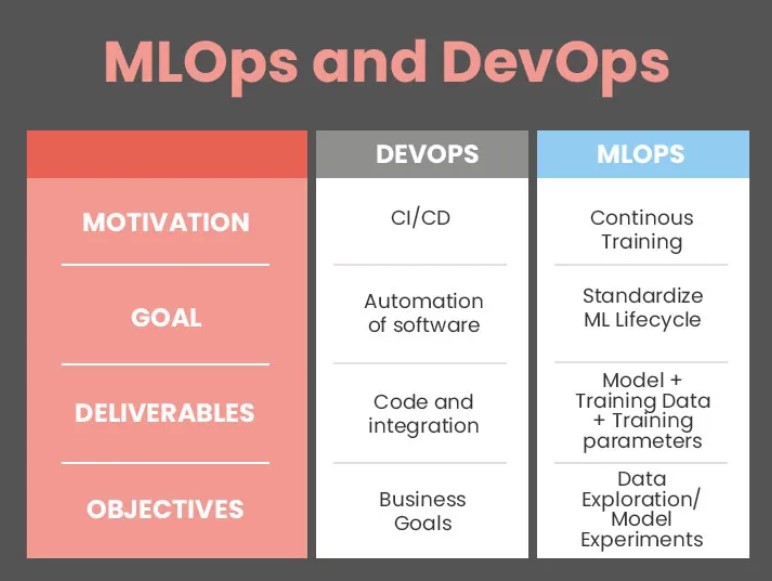
| MLOps: monitoring, drift detection, retraining triggers | In-house | It runs forever; outsourcing it permanently is how dependency starts |
| Initial evaluation harness | Outsource-friendly | A consultant can stand it up; your team runs it thereafter |
The pattern that works transfers skill deliberately: a consultant delivers a baseline model and the evaluation scaffolding, walks your team through the fine-tuning loop, and leaves you owning the data and the retraining cadence. The pattern to avoid is the one where a consultant quietly runs your sentiment stack month after month — you get scores, but you never acquire the capability, and you own the risk without owning the means to manage it. That distinction between transfer and dependency is the core of any honest engagement scoped around your problem rather than staff augmentation.
What does a realistic project cost and timeline look like?
Capability-transfer cost versus internal ramp cost defines the real tradeoff, not “consultant fee versus API subscription.”
Building a domain-competent NLP capability from scratch — hiring, tooling, the false starts — commonly runs 6–18 months of internal ramp before a team is productive (directional industry-scale estimate, not an operational benchmark). A well-scoped consultant engagement compresses the first working baseline into weeks by supplying the model-selection and pipeline experience your team is still acquiring. The trade is real: you pay a premium for speed and skill transfer, and in return you skip the most expensive part of the learning curve.
Where the outsourced route pays back:
- Reduced manual triage. Well-targeted sentiment classification often removes 40–70% of the routine sorting effort on support tickets and reviews (observed range across delivery engagements; not a benchmarked rate), freeing analysts for the ambiguous cases only humans handle well.
- Faster signal. Emerging churn drivers and product issues surface from aggregated sentiment days before they show up in escalation counts.
- Consistency at volume. A model labels a million reviews the same way every time; a rotating pool of human annotators does not.
Set against those gains is the standing cost you keep: annotation as your product changes, and the MLOps to catch drift. Costing sentiment analysis without pricing the maintenance tail is the mistake that makes the first quarter look cheap and the second one hurt.
How do you evaluate accuracy beyond a positive/negative label?
Capability-transfer cost—documentation, integration, handoff lag—competes with internal ramp cost: hiring, tooling, and iteration cycles. Robust evaluation reports several things.
Per-class performance, including neutral. If your data is 60% neutral and you only measure positive/negative accuracy, you are grading on the easy third of the exam. Report precision and recall per class, and watch the neutral class specifically — it is where forced-binary models leak.
Mixed-polarity handling. Test explicitly on reviews that praise one aspect and criticise another. Aspect-based sentiment analysis, which scores sentiment per topic rather than per document, is often the honest answer here, and it changes the labelling effort you need to budget.
Sarcasm and negation as named test slices. Carve out a held-out set of known-hard examples and track accuracy on it separately. A model that scores 92% overall but 55% on your sarcasm slice (illustrative figures) is not a 92% model for text where sarcasm is common.
Calibration under drift. Re-run the evaluation on recent production data on a schedule. A model that was accurate at launch will degrade as slang, product names, and customer concerns evolve — and you only see it if you keep measuring. This is the same discipline that governs how a serving path is mapped and profiled for change over time.
FAQ
How does sentiment analysis using machine learning work?
A pipeline ingests and cleans text, converts it to a numerical representation (bag-of-words, TF-IDF, or transformer embeddings), classifies it into sentiment labels, then evaluates and monitors that output over time. In practice the label is the easy part; keeping it accurate as your language and product evolve is the work, which is why sentiment analysis is a maintained capability rather than a one-off plug-in.
What are the main approaches to sentiment analysis, and when does each fit?
Lexicon-based methods sum word-polarity weights and fit quick baselines on general English but break on jargon and sarcasm. Classical ML on TF-IDF fits when you have a few thousand labelled rows and a stable vocabulary. Fine-tuned transformers handle domain-specific and mixed-polarity text best but demand more labelled data and MLOps overhead — so start with a cheaper baseline and justify the transformer only when it leaves measurable value uncaptured.
Why do off-the-shelf sentiment models underperform on domain-specific text, and what does fixing that require?
Generic models learned the polarity of their training language, not yours, so domain vocabulary inverts, compositional structure like sarcasm and negation defeats word-counting, and neutrality gets collapsed into a false binary. Fixing it requires labelled data from your own domain and fine-tuning on it — the one input you cannot buy off a shelf, which is why that corpus belongs in-house.
Which parts of a sentiment pipeline should a company own versus outsource?
Own your labelled data and your MLOps (monitoring, drift detection, retraining) — these are living assets that run forever. Model selection, baseline delivery, and the initial evaluation harness are transferable engineering a consultant can deliver in weeks and hand over. Domain fine-tuning starts shared and moves in-house as your data grows.
What does a realistic sentiment project cost and timeline look like compared to building internally?
Building a domain-competent NLP capability from scratch commonly means 6–18 months of internal ramp (directional estimate, not a benchmark), whereas a well-scoped consultant engagement compresses the first working baseline into weeks by transferring model-selection and pipeline skill. The honest comparison is capability-transfer cost versus internal ramp cost, and it must include the standing maintenance tail — annotation and MLOps — not just the initial build.
How do you evaluate sentiment model accuracy beyond a single positive/negative label?
Report per-class performance including neutral, test explicitly on mixed-polarity and sarcasm slices, consider aspect-based sentiment where documents carry multiple opinions, and re-run evaluation on recent production data on a schedule. A model that scores well overall but poorly on your hard slices is not accurate for text where those cases are common.
What warning signs indicate an outsourced engagement is creating dependency instead of transferring skill?
The clearest signal is that you keep receiving scores but never acquire the labelled data, the retraining process, or the ability to run the evaluation harness yourselves. If the consultant is quietly operating your sentiment stack month after month with no handover of the fine-tuning loop or MLOps, you own the business risk without owning the means to manage it — which is drift into staff augmentation, not capability transfer.
Build versus buy revisited for NLP pipelines
Binary accuracy on held-out test sets obscures class imbalance, cost asymmetry, and edge-case failure modes. The answer is rarely “all one or all the other” — it is a split, with labelled data and MLOps staying home and initial delivery scoped out. Getting that split wrong in either direction is expensive: keep everything in-house and you eat the 6–18 month ramp; outsource everything and you rent scores forever. Decide it deliberately, and structure the engagement so the handover is a stated deliverable — that is the shape of a collaboration built to transfer capability rather than create dependency. The failure mode to name early is dependency masquerading as delivery, and the A5 risk assessment exists to catch it before the pipeline is running and the leverage is gone.