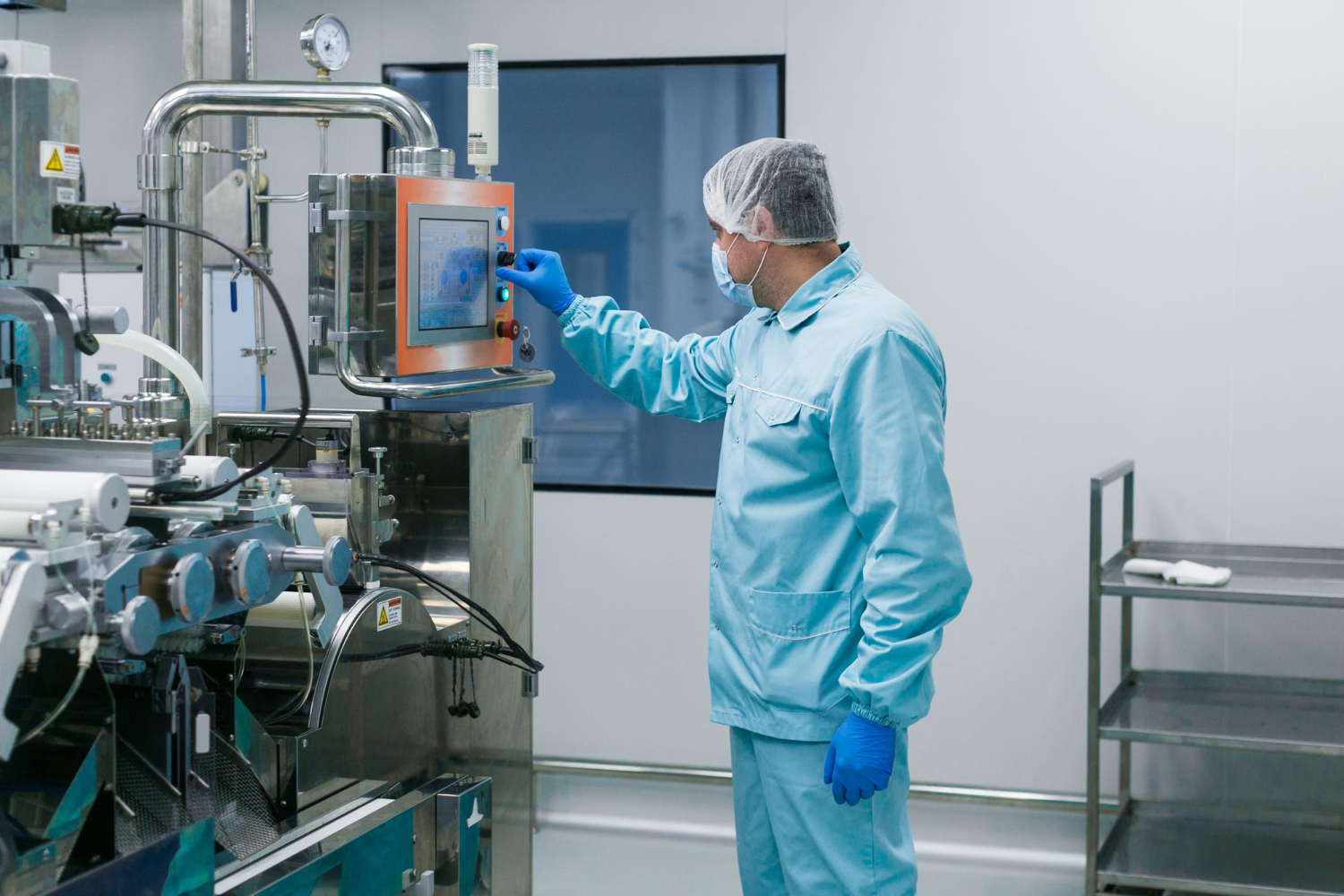
That gap — between what SPEC measures and what your inference actually needs — is where beginners over-spend by 2–3x (a typical sizing estimate) or, worse, under-provision and blow their latency budget.
The Standard Performance Evaluation Corporation (SPEC) is a non-profit consortium that publishes standardised compute benchmarks. Its best-known suites — SPEC CPU, and the rate variants that measure aggregate throughput across many concurrent copies — are excellent at what they were built for: comparing general-purpose processor performance in a portable, reproducible way. The problem is not the benchmark. The problem is reading a benchmark designed for one question as if it answered a different one.
What does a SPEC benchmark actually measure?
Compression, compiler loops, physics solvers, and graph traversals form the fixed workload set that SPEC CPU executes, reporting system speed against a baseline reference. The rate suites run many copies at once and report aggregate throughput, which is a reasonable proxy for how a box handles a mix of independent CPU-bound jobs. These are integer and floating-point workloads that live mostly in cache and registers, exercising the arithmetic units and the memory hierarchy in a balanced, general way.
That is a real and useful measurement. It answers: for portable, CPU-bound general compute, how does machine A compare to machine B? Sustained throughput under a representative mix, not a single transient peak, is the operationally relevant framing here — and SPEC is honest about reporting exactly that.
What SPEC does not do is exercise the parts of a system that dominate a modern CV inference pipeline. A convolutional or transformer-based vision model spends most of its time streaming feature maps and weights through the memory hierarchy and hammering the tensor cores or matrix engines on an accelerator. The binding constraint is frequently HBM bandwidth and the efficiency of kernel scheduling, not the scalar FLOP rate that SPEC CPU characterises. SPEC has no visibility into your CUDA kernels, your TensorRT engine, your PCIe topology, or the batch-latency curve of a YOLO or RT-DETR forward pass.
Why can a high SPEC score still leave a CV model bottlenecked?
Hardware components under stress diverge between the two. Consider what happens when a batch of frames hits an object detector. The image data has to move from the capture buffer across PCIe (or a fused SoC fabric) into device memory. Weights stream from HBM into the compute units. Intermediate activations bounce back and forth. The arithmetic is real, but on many production detectors the compute units spend meaningful cycles waiting — for memory, for the next batch, for a kernel launch. This is the memory-bound regime, and it is invisible to a CPU integer benchmark.
We see this pattern regularly when a team sizes hardware off a single headline number. A CPU with a strong SPEC rate score can look like the obvious choice, yet deliver disappointing frames-per-second on a detection model because the workload is bottlenecked on data movement and matrix-engine throughput the SPEC suite never touched. The FLOPs were never the constraint (observed across TechnoLynx engagements; not a published benchmark). If you want to understand where that throughput actually goes, our walkthrough of what real-time object detection throughput really costs traces the same bottlenecks end to end.
There is also a family confusion worth naming. SPEC publishes more than the CPU suite. SPECviewperf measures professional graphics and viewport rendering — again a real thing, but not model inference; we cover what SPECviewperf actually tells you about CV deployment hardware. SPECweb-style benchmarks measure web-serving behaviour, which matters if your CV service is I/O-and-request-bound rather than compute-bound — see how to read SPECweb benchmarks for edge CV. Each SPEC suite answers a different question. Picking the wrong one is not a small error; it is measuring the wrong axis entirely.
Which benchmark answers which question?
Map each sizing question to its corresponding standardised benchmark—that’s the learnable skill for CV practitioners migrating from adjacent domains. Here is the mapping we hand new practitioners before they touch a build/buy decision.
| Question you are actually asking | Right yardstick | Why |
|---|---|---|
| How fast is this CPU at general-purpose compute? | SPEC CPU / SPECrate | Portable, reproducible integer + FP throughput baseline |
| What inference latency and throughput will this model hit on this accelerator? | MLPerf Inference | Model-level, measures the real forward pass under load |
| How good is the workstation GPU at professional viewport rendering? | SPECviewperf | Graphics/rendering, not tensor inference |
| Is my CV service web-serving-bound? | SPECweb-style | Request/IO behaviour, not model compute |
| What is my cost-per-inference and throughput/watt on candidate hardware? | MLPerf + your own measured run | Only a run of your model closes the last gap |
The single most important row for CV inference sizing is MLPerf. Where SPEC CPU characterises general compute, MLPerf Inference runs actual models — image classification, object detection, segmentation — and reports latency and throughput under defined load scenarios, on the accelerator, through a real software stack. It answers the question a CV team actually has: what will my model do on this box?
One caveat on MLPerf, stated plainly: it measures reference models on reference hardware through a submitted software stack. Your model, your framework version, your quantisation, and your batch policy will move the numbers. Treat MLPerf as the right class of measurement and the correct starting yardstick — then close the last 10–20% (illustrative range, not a benchmarked figure) with a run of your own model. The benchmark that matches your inference budget gets you a defensible first-pass estimate; only your workload on the candidate hardware confirms it.
How memory bandwidth and I/O shape CV inference
A single balanced score collapses the memory hierarchy in general-purpose benchmarks. CV inference does not experience memory that way. Three behaviours dominate and none of them appear in a SPEC CPU number:
The first is HBM bandwidth. Large feature maps and weight tensors have to stream through device memory faster than the compute units can consume them, or the tensor cores stall. Two accelerators with similar advertised FLOPs but different memory bandwidth can differ substantially in real detector throughput — the higher-bandwidth part wins on memory-bound layers even when peak FLOPs are equal. Per NVIDIA’s published specifications, data-centre parts advertise HBM bandwidth in the terabytes-per-second range precisely because inference is so often bandwidth-limited.
The second is I/O and data movement across the fabric. Frames arriving over PCIe, or the copy from host to device, can dominate the per-frame budget for small models where the compute itself is cheap. NUMA locality, PCIe generation, and whether the accelerator sits behind a shared switch all matter. On a fused edge SoC the fabric changes the arithmetic entirely, which is why edge sizing and data-centre sizing use different reasoning even for the same model.
The third is the software stack. The same model on the same GPU can differ by a large margin between an unoptimised PyTorch eager run and a TensorRT engine with kernel fusion and calibrated quantisation. torch.compile, cuDNN algorithm selection, and the batch schedule all move the number. A benchmark that fixes one stack tells you about that stack, not the ceiling. This is precisely why a model-level benchmark run through your runtime beats a general compute score for sizing.
The minimal benchmark literacy before a build/buy decision
Sizing CV hardware well does not require deep benchmarking expertise. You need enough literacy to avoid the expensive misread. In our experience enabling new CV teams, the minimal foundation is a short checklist rather than a deep methodology.
- Know which benchmark answers which question. SPEC CPU for portable general-compute baselines; MLPerf for model-level inference latency and throughput; SPECviewperf and SPECweb for graphics and web-serving, not inference.
- Identify your binding constraint before you shop. Is your workload compute-bound, memory-bandwidth-bound, or I/O-bound? A quick profile of the target model answers this and reframes the whole search.
- State your budget in the units that matter — batch latency, sustained throughput, throughput/watt, cost-per-inference — not in a single headline score.
- Treat any public benchmark as a starting yardstick, not a verdict. Close the gap with a run of your own model on the candidate hardware before you commit.
- Separate transient peak from sustained performance. The number that matters is what the box holds under realistic continuous load, not the burst it can hit for a second.
Benchmark literacy at this level is exactly the foundation a new practitioner needs before making hardware decisions, and it sits inside the broader question of what a computer vision consultant scopes when weighing edge deployment trade-offs. If you are building out CV inference infrastructure and want the sizing anchored to the right yardstick from the first pass, our computer vision practice works through exactly this mapping with teams.
FAQ
How do SPEC (Standard Performance Evaluation Corporation) benchmarks work in practice?
The Standard Performance Evaluation Corporation (SPEC) is a non-profit consortium that publishes standardised, reproducible compute benchmarks. Its suites run fixed workloads and report performance relative to a reference machine, so you can compare systems fairly on the workload the suite measures. In practice, a SPEC score is only meaningful against the question the specific suite was built to answer — most commonly general-purpose CPU throughput.
What does a SPEC benchmark actually measure, and how is that different from an ML inference benchmark like MLPerf?
SPEC CPU and its rate variants measure general-purpose integer and floating-point throughput — compression, compilation, simulation — mostly exercising the arithmetic units and memory hierarchy in a balanced way. MLPerf Inference instead runs actual ML models (classification, detection, segmentation) on the accelerator through a real software stack and reports latency and throughput under defined load. SPEC answers “how good is this CPU at general compute”; MLPerf answers “what will my model do on this box”.
Why can a high SPEC score still leave a computer vision model bottlenecked in production?
Because CV inference stresses different hardware than SPEC measures. A vision model is frequently bound by HBM memory bandwidth, tensor-core throughput, and data movement across PCIe — none of which a CPU integer benchmark exercises. A machine with a strong SPEC rate score can deliver disappointing frames-per-second because the workload is waiting on memory, not on the scalar FLOPs SPEC characterised.
Which benchmark should a CV beginner use to size inference hardware against a latency or throughput budget?
MLPerf Inference is the right class of yardstick, because it measures model-level latency and throughput on the accelerator through a real stack. Use it for the first-pass estimate, then close the remaining gap with a run of your own model, framework version, and quantisation on the candidate hardware. SPEC CPU is for general-compute baselines, not for model inference sizing.
How do memory bandwidth and I/O behaviour affect CV inference in ways general-purpose benchmarks don’t capture?
CV inference streams large feature maps and weights through device memory, so HBM bandwidth often limits throughput before FLOPs do, and data movement across PCIe or a shared fabric can dominate the per-frame budget for small models. General-purpose benchmarks compress the memory hierarchy into one balanced score and never surface these bottlenecks. Two accelerators with similar advertised FLOPs but different bandwidth can differ substantially in real detector throughput.
What is the minimal benchmark literacy a new CV practitioner needs before a build/buy hardware decision?
Enough to avoid the expensive misread: know which benchmark answers which question (SPEC CPU for general compute, MLPerf for model inference), identify whether your workload is compute-, memory-, or I/O-bound before shopping, and state your budget in batch latency, throughput/watt, and cost-per-inference rather than a single headline score. Treat any public benchmark as a starting yardstick and confirm with a run of your own model. Separate transient peak from sustained performance.
The failure class here is a benchmark-axis mismatch: a general-compute score used to size a memory-bound workload. Name the constraint your model is actually bound by before you name the hardware, and the right yardstick — and the right box — usually follows.
Why SPEC Numbers Rarely Predict Your Inference Throughput
Repeatability drives standardized benchmark design, sacrificing the mixed-precision operations and I/O patterns your production vision pipeline actually exhibits.