An agent that reads a computer vision model’s outputs and acts on them inherits every weakness of that model — including the ones nobody is measuring. When the detector’s accuracy drifts, the agent does not slow down or ask for help. It keeps acting, with the same confident cadence it had on day one, on perception that has quietly gone wrong. That gap between how the agent behaves and how well it can actually see is where the “12-factor agent” idea earns its keep.
The phrase gets treated too casually. A common reading is that 12-factor is a checklist you bolt onto an LLM wrapper — set a few environment variables, add a retry, ship. That is not what makes an agent reliable. The discipline is an operational contract: explicit state, control flow you own rather than inherit, stateless reduction where you can get it, and human-in-the-loop checkpoints that make the agent’s behaviour observable and correctable. For agents built on top of computer vision, the contract has to reach one layer deeper than usual, because the agent’s most dangerous input is not a user prompt — it is a model whose accuracy can degrade without ever throwing an error.
What matters most about the 12-factor agent in practice?
Borrowed methodology names mask a substantive difference: agent factors prioritize interpretability over portability. Instead of a monolithic loop that hides its reasoning, you decompose the agent into factors you can inspect — how it holds state, how it owns its control flow, how it handles errors, where it pauses for a human, how it manages the context it feeds a model.
In practice that means the agent’s decisions are traceable. When it takes a wrong action, you can ask why and get an answer grounded in recorded state, not a shrug. A useful mental test: if your agent did something wrong yesterday, could you reconstruct what it saw, what it believed, and which factor let the bad decision through? If the honest answer is “we’d have to guess,” the agent is not yet operating under a 12-factor contract — it is a wrapper with good intentions.
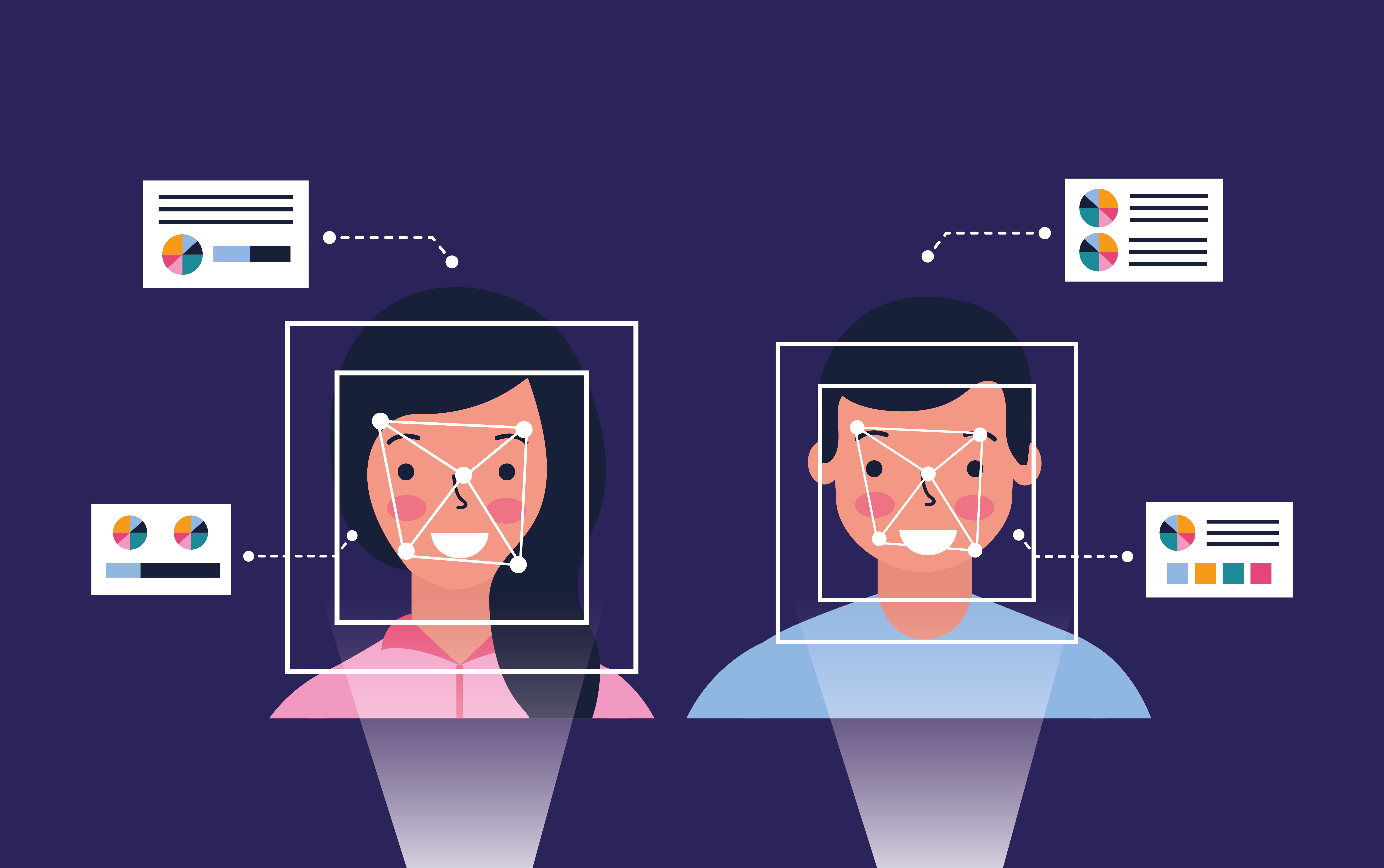
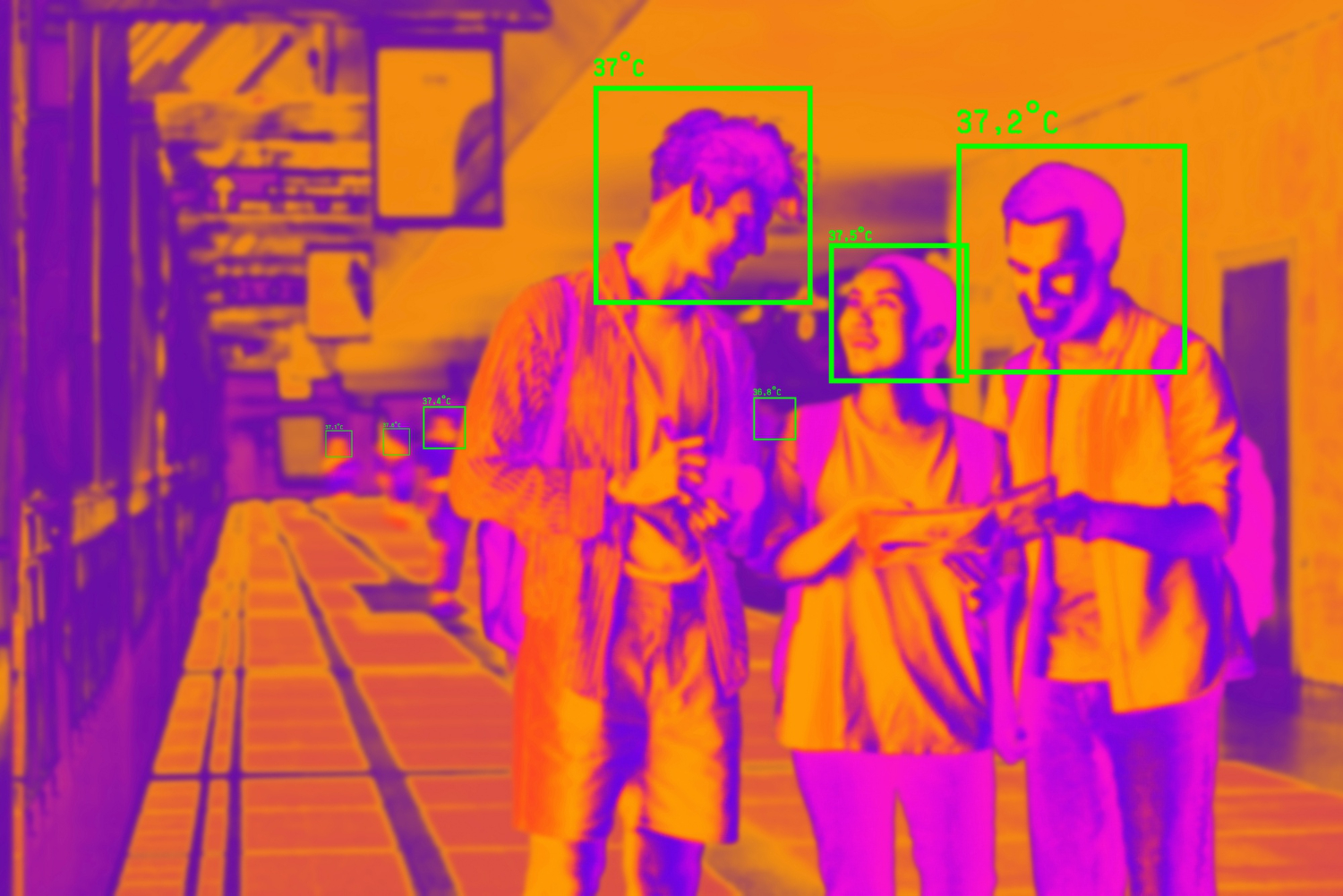
For CV-driven agents, “what it saw” is literal. The perception layer produces detections, classifications, segmentation masks, and — critically — confidence scores that carry real information about how sure the model is. A 12-factor CV agent treats those signals as data it is accountable for, not a black box it trusts by default.
Which factors matter most for agents built on CV outputs?
When computer vision drives decisions, three specific factors dominate operational success. The rest support these three.
| Factor cluster | What it governs | Why it bites hardest for CV agents |
|---|---|---|
| Explicit state | Everything the agent believes is written down, including perception confidence | A degraded detector produces the same shape of output — the accuracy loss only shows up if confidence is state you track over time |
| Own your control flow | The agent decides its next step from inspectable rules, not an opaque model loop | When perception is uncertain, control flow is where the agent chooses to pause, escalate, or lower its action threshold |
| Owned error handling + human checkpoints | Failures surface as structured signals routed to a human at defined gates | A wrong action driven by drift is only catchable if the error path exists before the wrong action executes |
The reason these three dominate is that they are the factors that convert an opaque perception-to-action pipeline into one where drift and annotation error surface as measurable signals rather than untraceable bad decisions. The remaining factors — clean context management, stateless reduction, structured tool calls — make these three cheaper to implement, but they are not where reliability is won or lost.
The distinction between the kind of uncertainty a confidence score represents matters here too. A detector that is uncertain because the scene is genuinely ambiguous is a different problem from one that is uncertain because it has drifted away from its training distribution — the difference between aleatoric and epistemic uncertainty in production ML changes what a 12-factor agent should do about it. Both should be first-class state; only one is fixable by retraining.
How does treating perception confidence as explicit state catch drift?
Wrapper scripts call models; agents reason about the data those models produce. Consider what happens without it.
A shelf-monitoring agent reads an object detector, counts stock, and triggers replenishment orders. The detector was trained on well-lit intake photos; in production the store’s evening lighting shifts, and the model’s per-detection confidence quietly falls from a typical range near 0.9 down toward 0.6 (illustrative figures — the exact numbers depend on your model and scene). The detector still returns detections. The agent still counts. Orders still fire. Nothing errors. But the counts are now wrong more often, and the first anyone hears of it is a warehouse discrepancy weeks later.
Now add the factor. Perception confidence is written into the agent’s state on every cycle, aggregated over time, and compared against a baseline. When the mean confidence for a camera drifts down, that is a signal — not a silent condition. The agent can lower its action threshold, route uncertain frames to a human, or refuse to act until the distribution recovers. The drift that used to compound invisibly now surfaces as a measurable trend the moment it starts. This is the observed pattern we see repeatedly: teams that log perception confidence as state catch distribution shift days or weeks before it shows up in a downstream business metric, whereas teams that discard it learn about drift from the damage (observed across engagements; not a benchmarked rate).
The mechanism is simple and easy to underrate. Confidence was already being produced by the model — the failure is not that the signal is missing, it is that the agent throws it away between perception and action. Making it explicit state costs almost nothing and changes what is knowable.
Why does owning your control flow matter when the model can silently degrade?
Framework-driven execution patterns impose implicit control flow that undermines agent autonomy. Control flow is implicit and uninterrogable. That is fine until the model’s outputs stop being trustworthy — and a CV model’s outputs can stop being trustworthy without any accompanying signal that they have.
Owning your control flow means the agent’s next-step decision is code you can read, driven by state you can inspect. When perception confidence is a variable in that decision, the agent can behave differently as conditions change. Below a confidence floor, it escalates. When two frames disagree, it holds. When drift is detected, it drops into a conservative mode. None of this is possible when the loop is a black box that only knows how to call-and-act.
There is a diagnostic value here beyond safety. When you own control flow and log the state that drove each decision, a wrong action becomes traceable back to its cause. Was the action wrong because the detector’s confidence was low and the agent acted anyway (a control-flow bug), or because the detector was confidently wrong (a perception problem — likely drift or an annotation error in training data)? A 12-factor agent lets you tell those apart. A wrapper leaves you guessing, and guessing is expensive: mean-time-to-diagnosis on agent failures is dominated by the time spent reconstructing what happened, and explicit state collapses that reconstruction to a query.
The same reasoning underpins the broader argument for reliability principles in production CV pipelines, where the agent is one component of a larger system that also has to be legible end to end.
Where do human-in-the-loop checkpoints fit, and what should they gate?
Verification gates should interrupt agent operation proactively, not rescue it after failure. They are a factor you design in from the start, and their placement is a real engineering decision. The wrong instinct is to gate everything — that turns the agent into a slow, expensive suggestion engine and trains reviewers to rubber-stamp. The right placement gates the decisions where a wrong action is costly and where the agent’s own state says it is uncertain.
A useful checklist for placing checkpoints in a CV-driven agent:
- Gate on low perception confidence, not on action type alone. A high-stakes action taken on high-confidence perception may not need review; the same action on drifted perception should.
- Gate on disagreement. When two frames, two cameras, or two model versions disagree, that is a signal worth a human’s attention regardless of confidence.
- Gate on distribution shift, not just per-decision uncertainty. An individual detection can be fine while the aggregate has drifted; the checkpoint should fire on the trend.
- Route the checkpoint with enough state to decide. A reviewer who sees only “approve this action?” cannot help. A reviewer who sees the frame, the confidence, the baseline, and the drift signal can.
- Feed the checkpoint outcome back as a label. Human decisions at the gate are exactly the annotations you need to retrain the drifted model — the checkpoint is a data-collection surface, not just a brake.
That last point closes a loop. The human checkpoint is where a 12-factor CV agent turns its own failures into training data, which is why the discipline connects so directly to the data-quality work underneath the perception model rather than sitting above it as pure orchestration.
How do 12-factor principles make failures traceable to annotation or drift problems?
Reconstruction of decision provenance depends on comprehensive factor observance. When a CV-driven agent takes a wrong action, the question that matters is what caused it — and there are only a few root causes worth distinguishing: the perception was correct but the agent’s logic was wrong; the perception was uncertain and the agent should not have acted; or the perception was confidently wrong because the underlying model has drifted or was trained on mislabelled data.
A 12-factor agent makes these distinguishable because it records the state that separates them. Explicit perception confidence tells you whether the model was sure. Owned control flow tells you what rule fired. Structured error handling tells you whether the failure was caught or slipped through. Put together, they let a team say “this wrong action traces to a detector whose confidence on this camera has been drifting for two weeks” instead of “the agent messed up, we’re not sure why.”
That attribution is the same discipline that a production CV readiness assessment applies to the data layer — auditing where annotation error and distribution shift enter a pipeline. The 12-factor factors around state, error handling, and checkpoints extend that audit up into the agent that consumes the CV outputs, so the whole path from pixel to action is accountable rather than just the model in the middle.
FAQ
How does 12-factor agent work?
Autonomous systems become legible when decomposed into inspectable factors: explicit state tracking, owned control flow, structured error handling, and human checkpoints that preserve decision transparency during execution. In practice it means every wrong action is traceable: you can reconstruct what the agent saw, what it believed, and which factor let the decision through, rather than guessing after the fact.
What are the twelve factors, and which ones matter most for agents built on computer vision outputs?
Three factors do the heavy lifting for CV agents: explicit state (so perception confidence is tracked over time), owning your control flow (so the agent decides its next step from inspectable rules), and owned error handling with human checkpoints (so failures surface as structured signals). The remaining factors — clean context management, stateless reduction, structured tool calls — support these three but are not where reliability is won.
How does treating perception confidence as explicit agent state help catch data drift before it drives bad actions?
A CV model produces confidence scores whether or not the agent uses them; a data-aware agent writes those scores into its state, aggregates them, and compares against a baseline. When mean confidence drifts down — from lighting change, distribution shift, or degradation — that becomes a measurable trend the agent can act on immediately, rather than a silent condition discovered later through a downstream business discrepancy.
Why does owning your control flow and error handling matter when an agent consumes a model whose accuracy can silently degrade?
A CV model can stop being trustworthy without throwing any error, so an agent that inherits an opaque call-and-act loop keeps acting on degraded perception. Owning control flow lets the agent read confidence as a variable and escalate, hold, or drop into a conservative mode when it is low — and logging the driving state makes a wrong action traceable to either a control-flow bug or a perception problem.
Where do human-in-the-loop checkpoints fit into a 12-factor CV agent, and what should they gate?
Checkpoints are designed in from the start and should gate decisions that are both costly and flagged uncertain by the agent’s own state — low perception confidence, frame or model disagreement, and distribution shift, rather than action type alone. The reviewer must receive enough state to decide (frame, confidence, baseline, drift signal), and each checkpoint outcome should feed back as a label to retrain the drifted model.
How do 12-factor principles make agent failures traceable back to annotation or drift problems in the underlying CV model?
The factors record the state that separates root causes: explicit confidence shows whether the model was sure, owned control flow shows what rule fired, and structured error handling shows whether the failure was caught. Together they let a team attribute a wrong action to a specific cause — such as a detector whose confidence on one camera has drifted for weeks — instead of writing it off as an unexplained agent error.
The uncomfortable version of this: every day a CV-driven agent runs without perception confidence as first-class state is a day of unmeasured, compounding error you will only discover downstream. The failure class is silent accuracy loss inherited by an acting agent — and the artifact that catches it early is a readiness assessment that audits the data layer feeding the agent, not just the agent’s own logic.
Why computer vision agents break differently
Silent errors and spurious rejections both stem from insufficient instrumentation around decision points. Everything else is detail.