A PCB AOI deployment that passes its pilot is not the same thing as a PCB AOI deployment that survives the line. The first production change your staged validation never saw — a glare angle, a tombstoned component, a reflow tweak — is where the accuracy number quietly stops meaning what you think it means.
Automated optical inspection on a printed circuit board line is one of the most mature applications of production computer vision, and also one of the most quietly fragile. The maturity is real: cameras over the conveyor, image capture synchronised to board indexing, and a model — classical rule-based or learned — that flags solder, placement, and polarity defects faster than any human bench inspector. The fragility is structural. The thing that makes AOI useful on day one is the thing that erodes by week six, and most lines don’t instrument the erosion until operators have already stopped trusting the calls.
How Does Automated Optical Inspection PCB Work, and What Does It Mean in Practice?
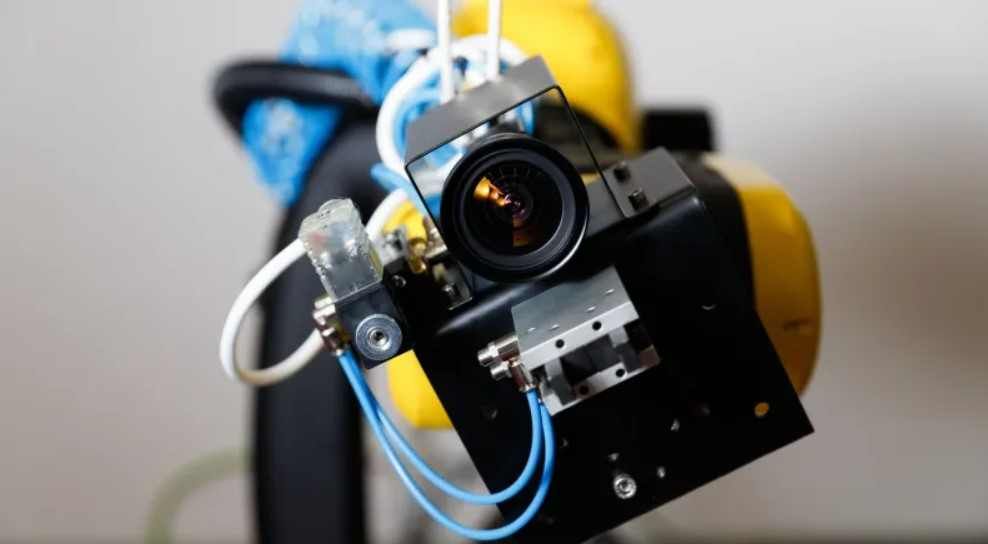
Illumination, imaging, pattern matching, and threshold logic combine to distinguish acceptable boards from those requiring rework. A board enters the inspection station, gets illuminated under a controlled lighting array — typically multi-angle, often multi-colour to separate solder topology from silkscreen — and one or more cameras capture high-resolution images of each region of interest. The inspection logic then compares what it sees against a reference: a golden-board template for classical systems, or a learned model of “in-spec” for the machine-vision generation. Each component, pad, and joint is scored, and anything outside tolerance is raised as a defect call.
In practice, “how it works” splits into two questions that get conflated. The first is how the inspection decision is made — the comparison logic above. The second is how that decision stays correct as the line changes — and this is where reliable AOI is actually defined. A model trained or configured against a golden board and validated against a staged defect set produces a clean pilot accuracy number. That number is a snapshot of a frozen world. The line is not frozen.
We see this distinction collapse in procurement conversations all the time: the accuracy figure from the staged validation gets treated as the release criterion, and the question of what happens to it three board revisions later never comes up. Pilot accuracy is a necessary input. It is not a reliability claim. The broader pattern — what separates a model that catches failures from one that becomes one — is covered in our treatment of production AI reliability as an engineering discipline, and PCB AOI is a textbook instance of it.
What PCB Defect Classes Can AOI Reliably Catch, and Which Need Confirmation?
Solder shorts, skewed passives, lifted leads, and absent capacitors all register as optical anomalies within the system’s detection range. The classes it catches reliably share one property: they leave a visible signature in the inspection plane.
| Defect class | AOI confidence | Notes |
|---|---|---|
| Missing component | High | Strong template/learned signal; rarely ambiguous |
| Wrong component / polarity reversal | High–medium | Depends on package marking visibility and lighting |
| Tombstoning, billboarding, skew | High | Geometric signature is distinctive |
| Solder bridging (visible) | High | Clear topology change between pads |
| Insufficient / excess solder (fillet) | Medium | Lighting-sensitive; multi-angle helps materially |
| Lifted lead, open joint (visible) | Medium | Catches the visible cases, misses the hidden ones |
| BGA solder voids and hidden joints | Out of scope | No line of sight — needs automated X-ray inspection (AXI) |
| Internal cracks, head-in-pillow under BGA | Out of scope | Requires X-ray or cross-section |
The honest framing is that AOI inspects what the camera can see. Anything underneath a ball-grid array, inside a via, or hidden by package geometry is invisible to optical inspection by definition. This is not a tuning problem — it is a physics boundary, and treating it as a tuning problem is how escapes accumulate.
How Does PCB AOI Compare to or Combine With Automated X-Ray Inspection?
They are complements, not competitors. AOI is fast, inline, and covers the full visible surface at line speed; AXI sees through packages to inspect BGA solder voids, hidden joints, and internal defects that no optical system can reach. A typical high-reliability line runs AOI inline on every board and routes a sampled or risk-flagged subset to AXI. The decision of which defect classes justify the slower, costlier X-ray pass is a coverage question, not a head-to-head accuracy contest — you are partitioning the defect taxonomy across two inspection modalities, each owning the classes it can actually resolve. Whether a given board’s defect mix even justifies a CV inspection model in the first place is the prior question, and it belongs in a feasibility assessment before any pilot.
Why Does a PCB AOI Model That Passed Staged Validation Start Producing More False Calls?
Staged validation records only initial conditions; conveyor wear, paste aging, humidity swings, and supplier lot changes all introduce drift afterward. Several drift sources stack:
- Solder-paste variance. Stencil wear, paste viscosity shifts with ambient humidity, and squeegee pressure changes alter fillet geometry. The model learned one distribution of “good” fillets; the line drifts to a neighbouring one.
- Lighting drift. LED arrays age, ambient light leaks in as shifts change, and a reflective conformal coating introduces glare the staged boards never had. A glare angle the validation set never contained reads as a defect.
- Component-package revisions. A supplier ships the same part in a slightly different package, or changes the silkscreen marking. The polarity-detection logic, anchored to the old marking, starts mis-calling.
- New board revisions. A revision arrives within weeks of go-live with a moved component or a new footprint, and the model has no reference for it.
Each of these shifts the false-call rate, the defect-escape rate, or both — and a model with no drift telemetry shifts them silently. The first symptom is usually operators overriding calls, then losing trust, then quietly reverting to manual re-review. Once that happens, the inspection savings that justified the deployment are absorbed by the manual labour they were supposed to replace. On untracked lines, this reversion commonly lands within a quarter of go-live (observed pattern across industrial-CV engagements; not a benchmarked rate). The mechanism is the same compound-failure structure we describe in our work on industrial CV inspection production reliability — small environmental shifts stacking into escapes.
What Drift Telemetry Should a PCB AOI Deployment Instrument?
Inspection throughput cannot choke line capacity, so telemetry architecture must operate within strict cycle-time budgets. Inspection happens at takt time; anything that adds latency to the inspection decision is dead on arrival. So the useful telemetry is computed alongside the inspection decision, not in its critical path, and aggregated off-line.
The minimum set we instrument:
- False-call rate, tracked continuously — calls overturned by downstream verification or operator override, as a rolling rate per board type and per defect class. A drifting false-call rate is the earliest, cheapest drift signal you have.
- Defect-escape rate — defects that passed AOI but were caught downstream (functional test, AXI, field return). Escapes are rarer and lag, but they are the rate that actually matters for product quality.
- Confidence-score distributions — for learned models, the distribution of decision scores per class. A distribution that drifts toward the threshold is drift before it becomes a rate change.
- Per-region image statistics — brightness, contrast, and glare metrics per region of interest, which catch lighting drift before it reaches the decision.
The deeper treatment of which signals fire first and how to set thresholds without drowning in noise is in our piece on model drift detection signals, thresholds, and telemetry. The PCB-specific point is that false-call rate and escape rate are not two views of one number — they trade off against each other, and tracking only one hides the cost of the other.
How Is the Model Re-Validated When a Board Revision or Reflow Profile Changes?
Design revisions and process-parameter changes carry formal documentation; use that traceability to gate re-qualification rather than allowing silent config drift. The discipline is to pin what the model is measured against and to re-baseline against it whenever the inputs move.
Concretely, the re-validation loop looks like this:
- Capture the change. New board revision, new reflow profile, new component package — log it against the affected board type.
- Re-baseline on a controlled run. Inspect a known-good sample of the new configuration and a staged set of the relevant defect classes.
- Compare false-call and escape rates against the pinned baseline. If they hold, the change is absorbed. If they shift, the model needs adjustment before the change goes to volume.
- Re-pin the baseline for the new configuration so future drift is measured against the right reference.
This loop only works if there is a fixed reference to measure against. That reference — the pinned model version, the defect taxonomy, and the false-call/escape baselines — is the validation artefact, and it is the same structural object that line-side drift telemetry compares against day to day. The general engineering relationship between a frozen baseline and a regression check is the same one we describe in regression testing for production AI.
What Does a Rollback Path Look Like When an AOI Update Raises the Escape Rate?
Overcalls prompt immediate feedback loops and corrective tuning; undercalls escape notice until customer returns force retrospective root-cause analysis. It is the silent escape: a model update that quietly raises the defect-escape rate while the false-call rate looks fine or improves. Nobody complains, because the symptom shows up downstream, days later, as functional-test failures or field returns. By then the bad model has inspected thousands of boards.
A workable rollback path has three properties:
- Model-version pinning. Every inspection decision is attributable to a specific, immutable model version. You cannot roll back what you cannot identify.
- A pre-defined rollback runbook. The decision to revert is made against a tripwire — an escape-rate threshold — not against a meeting. The runbook names the threshold, the responsible operator, and the previous known-good version.
- Recovery measured in hours. An instrumented line detects the escape-rate climb from downstream telemetry and reverts to the pinned previous version within hours; an untracked line discovers it days later from field data, after the cost has compounded.
The contrast is the whole point. The same drift incident costs hours on an instrumented line and days on an untracked one, and the difference is entirely in the artefacts — version pinning and the rollback runbook — that were in place before the incident, not in the response after it.
How Is False-Call Rate Versus Defect-Escape Rate Tracked So Operators Keep Trusting the Calls?
Once operators lose confidence, AOI becomes theater—boards still pass through the station, but decisions revert to human judgment and the capital investment goes idle. Trust erodes from two directions, and they pull in opposite ways. Too many false calls and operators learn to override everything, including the real defects. Too many escapes and operators learn the AOI misses things, so they re-review anyway. Tuning the model toward one rate moves the other — tighten the threshold to cut escapes and the false-call rate climbs; loosen it to cut false calls and escapes slip through.
The only stable answer is to track both rates explicitly, per board type and per defect class, against a pinned baseline, and to treat a move in either as a drift signal worth acting on. That is not a one-time configuration; it is a standing measurement that the validation artefact anchors and that line telemetry feeds continuously.
FAQ
How does automated optical inspection pcb work, and what does it mean in practice?
A board is illuminated under a controlled lighting array and imaged by one or more cameras, and the inspection logic scores each component, pad, and joint against a reference — a golden-board template or a learned model of “in-spec.” In practice this splits into two questions that get conflated: how the inspection decision is made, and how that decision stays correct as the line changes. Reliable AOI is defined by the second.
What PCB defect classes can AOI reliably catch, and which need x-ray or manual confirmation?
AOI reliably catches surface-visible defects — missing or wrong components, polarity reversal, tombstoning, skew, visible solder bridging, and fillet defects — because they leave a signature in the inspection plane. Hidden defects such as BGA solder voids, internal cracks, and joints under packages are a physics boundary, not a tuning problem, and require automated X-ray inspection (AXI) or cross-section.
Why does a PCB AOI model that passed staged validation start producing more false calls on the production line?
Staged validation captures a single frozen frame of the line, while production drifts: solder-paste variance, ageing LED arrays and glare, component-package revisions, and new board revisions all shift the input distribution. A model with no drift telemetry shifts its false-call and escape rates silently, and the usual first symptom is operators overriding calls and reverting to manual review.
What drift telemetry should a PCB AOI deployment instrument without slowing line throughput?
Compute telemetry alongside the inspection decision rather than in its critical path: rolling false-call rate and defect-escape rate per board type and defect class, confidence-score distributions for learned models, and per-region image statistics like brightness and glare. False-call rate and escape rate trade off against each other, so tracking only one hides the cost of the other.
How is the AOI model re-validated when a board revision or reflow profile changes?
Treat the change as a re-validation trigger: log it, re-baseline on a controlled run of known-good boards and staged defects, compare false-call and escape rates against the pinned baseline, and re-pin the baseline for the new configuration. The loop only works because there is a fixed reference — pinned model version, defect taxonomy, and baselines — to measure against.
What does a rollback path look like when an AOI update raises the defect-escape rate?
It rests on model-version pinning so every decision is attributable to an immutable version, a pre-defined runbook that triggers reversion against an escape-rate tripwire rather than a meeting, and recovery measured in hours. The silent escape is the dangerous case because no one complains until downstream test or field returns surface the cost.
How is false-call rate versus defect-escape rate tracked so operators keep trusting the AOI calls?
Both rates are tracked explicitly, per board type and per defect class, against a pinned baseline, with any move in either treated as a drift signal worth acting on. Tuning toward one rate moves the other, so trust is preserved only by watching both continuously rather than optimising one in isolation.
How does PCB AOI compare to or combine with automated X-ray inspection (AXI) for defect classes that surface inspection cannot see, such as BGA solder voids?
They are complements: AOI is fast and inline over the full visible surface, while AXI sees through packages to inspect BGA solder voids and hidden joints. High-reliability lines run AOI on every board and route a sampled or risk-flagged subset to AXI, partitioning the defect taxonomy across the two modalities by what each can physically resolve.
What does AOI software configuration involve when standing up a new PCB line, and how does that initial setup relate to keeping the model reliable afterward?
Initial configuration establishes the golden-board reference, the defect taxonomy, lighting setup, and the pilot false-call/escape baselines. That setup is the input to reliability, not the guarantee of it — the same baselines it produces become the pinned reference that ongoing drift telemetry and re-validation measure against once the line changes.
Three Variables That Determine System Longevity
Sustained reliability derives from systematic lamp maintenance, disciplined defect-class versioning, and algorithms resilient to solder-mask shade variation across batches. The more useful question is how the line will know when that accuracy stops holding, and what it will do in the hours after it notices. Solder-paste drift, a reflow tweak, a quietly revised package — these are not edge cases, they are the normal life of a board line, and a deployment that treats them as anomalies is a deployment that reverts to manual review within a quarter.
The reliability lives in the artefacts that survive the change: the pinned model version, the defect taxonomy, the false-call and escape baselines that line telemetry is measured against. That validation pack — the same industrial-CV validation lens we apply across line-side inspection through our work on production AI reliability — is what lets the line detect drift and recover from it on the timescale of a shift rather than a field-return cycle. Pilot accuracy buys you the deployment. The artefact buys you the second quarter.