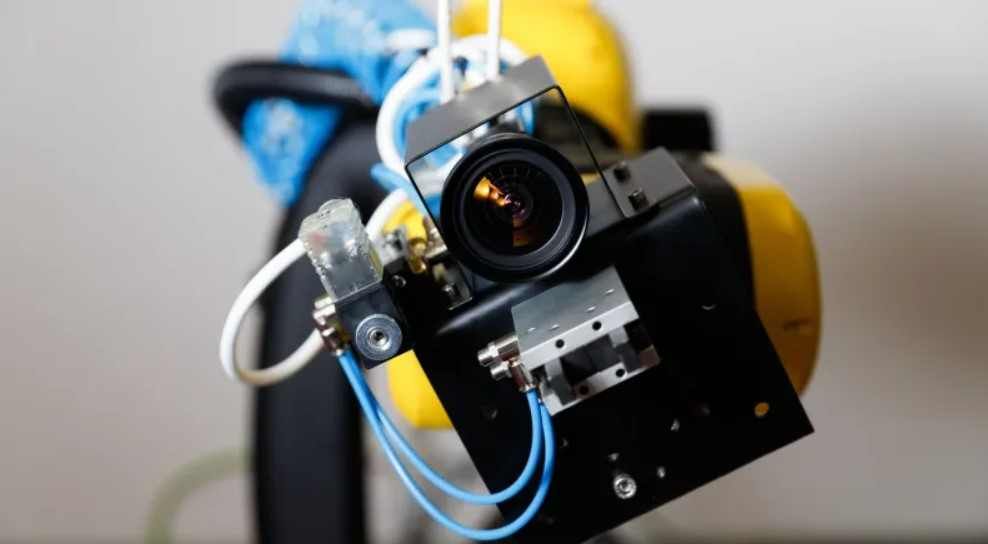
A CV inspection model on the line produces a stream of pass/fail decisions, frame by frame. Treat each result as an isolated verdict and you get one of two failure modes: operators chasing every borderline frame, or a slow defect-rate drift that nobody notices until it becomes a regression. Statistical process control is the discipline that turns that stream into something operations can read — a signal that separates a real process excursion from the noise that always surrounds it.
This is not a new idea borrowed for AI. SPC has run on factory floors since Walter Shewhart formalised control charts at Bell Labs in the 1920s, and the same logic that watches a milling machine’s bore diameter watches a defect-detection model’s output rate. What changes is the input. Instead of a caliper reading, you are charting the rate at which a vision model flags parts as defective. The mathematics is the same; the instrumentation is the part most CV teams skip.
Why Treating Each Inspection Result as Independent Fails
Responding to individual frames feels instinctive but rarely proves optimal. A part scores 0.51 on the defect classifier, just over the threshold, and the line stops. The next part scores 0.49 and passes. An operator who reacts to each of these is reacting to noise — the natural frame-to-frame variation that any classifier produces near its decision boundary. Over a shift, this generates a stream of line stops that turn out to be nothing, and the operators learn to ignore the alarms entirely. That is the worst outcome: the monitoring is on, and nobody trusts it.
The opposite failure is quieter and more dangerous. A model’s effective defect-detection rate drifts slowly — lighting changes across a shift, a camera lens accumulates haze, the incoming part population shifts after a supplier change. None of these trip an individual-frame alarm. The defect escape rate creeps up by a fraction of a percent per day. By the time anyone notices, a regression has already shipped. We see this pattern regularly: the model that passed its pilot keeps running, the numbers look fine on any single day, and the slow shift hides in plain sight.
SPC exists precisely to resolve this tension. A control chart distinguishes common-cause variation — the inherent noise of a stable process — from special-cause variation, the signal that something has actually changed. You do not react to common cause; you react to special cause. The whole value of the method is that it tells you which is which, with a defined statistical basis rather than an operator’s gut feel.
How Does Statistical Process Control Work on a Defect-Detection Stream?
Begin with available data: aggregate per-part classifications into rates. The most direct chart for a pass/fail stream is a p-chart, which tracks the proportion of defective parts in successive samples. You collect parts into rational subgroups — say, every 100 parts, or every 30 minutes of production — and compute the defect proportion for each subgroup. That proportion is the point you plot.
The control limits come from the process itself, not from a target. You establish a baseline over a period when the line is known to be running well, compute the mean defect proportion (the centre line) and its standard deviation, and set the upper and lower control limits at roughly three standard deviations from the centre. Under a stable process, points fall inside those limits about 99.7% of the time — that is the well-known property of the three-sigma band on a normal distribution. A point outside the limits is, by construction, a rare event under stability: strong evidence that the process has shifted rather than just wobbled.
The critical discipline is that control limits are computed from observed variation, not set by wishful targets. A specification limit (“we accept no more than 2% defects”) is a customer requirement. A control limit (“this process naturally varies between 0.4% and 1.1%”) is a statement about what the process actually does. Confusing the two is the most common way SPC gets misapplied — teams set control limits to their quality target and then wonder why the chart is always out of control. The chart describes reality; the target is a separate conversation.
What SPC Charts and Control Limits Apply to CV Inspection Output?
Defect-detection streams require specific chart architectures. The choice depends on what you are measuring.
| Chart | What it tracks | Best fit for CV inspection |
|---|---|---|
| p-chart | Proportion defective in variable-size subgroups | Defect-detection rate when batch sizes vary across the line |
| np-chart | Count of defectives in fixed-size subgroups | Same, when every subgroup is the same fixed count of parts |
| c-chart | Count of defects per unit | Multi-defect inspection — counting flaws per part, not pass/fail |
| u-chart | Defects per unit, variable area | Surface inspection where inspected area varies per part |
| Individuals (I-MR) | Single continuous measurements | Charting the model’s mean confidence score, not its discrete verdict |
A practical addition that pure-SPC textbooks omit: chart the model’s confidence distribution, not only its binary output. An I-MR chart on the mean classifier confidence per subgroup will often catch drift before the binary defect rate moves, because the confidence shifts continuously while the thresholded decision is a step function. When haze accumulates on a lens, confidence degrades smoothly for a while before any decision flips. The confidence chart is your early-warning instrument; the p-chart is your operations-facing instrument. Both belong on a hardened line.
For the chart-construction detail — subgroup design, limit recalculation, and the trade-offs between these chart types on a CV output stream — we go deeper in our walkthrough of SPC control charts for CV defect-detection.
The Run Rules: Reading a Chart Beyond the Limits
Three-sigma breaches constitute clear signals. The more sensitive part of SPC is the set of run rules — patterns within the limits that indicate a shift before any point breaches them. The Western Electric rules, codified in the 1956 Statistical Quality Control Handbook, are the classic set; the “7 rules of SPC” you will see referenced are variants of the same idea.
Here is which ones map cleanly onto a CV defect-detection output stream and which do not:
- One point beyond three sigma — maps directly. A sudden defect-rate spike: a fixture shifted, a new defect type appeared, the model hit an out-of-distribution part population.
- Eight (or seven) consecutive points on one side of the centre line — maps directly and is your single most useful drift detector. A sustained run above the centre line is exactly the slow degradation that individual-frame alarms miss.
- Two of three points beyond two sigma on the same side — maps well. An emerging excursion before it fully breaches the limit.
- Six points steadily increasing or decreasing — maps to gradual lens haze, lighting drift, or a slowly shifting input population.
- Fourteen points alternating up and down — maps poorly for CV output and is often noise; treat with caution on inspection streams, where alternation rarely encodes a real mechanism.
The eight-in-a-row rule is the one that earns its keep on a CV line, because it catches the failure mode that costs the most: the quiet, sustained shift. The detail of mapping each Western Electric rule to a defect-detection stream — including where they generate false positives on vision output — is the subject of our SPC tools paired with CV defect detection breakdown.
A Worked Example on the Line
Picture a surface-inspection line deploying CV defect detection, with all underlying assumptions documented for reproducibility.
- Baseline period: two weeks of stable production, used to set limits.
- Subgroup: 200 parts, sampled every 30 minutes.
- Baseline mean defect proportion: 0.8% (centre line, operational measurement over the baseline period).
- Three-sigma band for p = 0.008, n = 200: roughly 0% to 2.7%.
Now three scenarios play out:
- A single subgroup hits 3.5% (operational measurement in this scenario). Outside the upper control limit. Special cause — stop and investigate. This turns out to be a jammed feeder presenting damaged parts. Real excursion, correctly flagged.
- Nine consecutive subgroups sit between 1.1% and 1.6% (operational measurement in this scenario) — all inside the limits, all above the centre line. No single point alarms. The run rule fires. Investigation finds a camera lens slowly hazing. Caught before the escape rate breached the customer spec.
- Subgroups bounce between 0.3% and 1.4% (illustrative range), randomly straddling the centre. No rule fires. This is common-cause variation. An operator who stopped the line here would be chasing noise.
The difference between scenario 2 and an un-instrumented line is the entire ROI of SPC: a quantified time-to-detect on the slow shift, measured in subgroups rather than in shipped regressions. The numbers above are illustrative — set yours from your own baseline — but the structure is exactly what an SPC-instrumented line gives you. For more end-to-end cases drawn from defect-detection output, see our collection of SPC examples for CV defect detection.
How SPC Feeds Time-to-Detect on Drift
For CV deployments, SPC delivers what production environments demand: quantified drift-detection latency. A model that survives the move from pilot to the production line will drift — the only questions are how fast and how soon you will know. SPC answers the second. The run-rule trigger time, measured from the onset of a shift to the first rule firing, is a quantified, auditable number. Without SPC, time-to-detect is “whenever someone notices,” which is not a number you can put in a contract or a quality review.
This is where SPC instrumentation becomes part of the reliability story rather than a side activity. Control charts and control limits are among the inspection reliability artefacts a hardened CV deployment produces and signs against — they are the evidence that the line is monitored, not merely running. We treat them as first-class deliverables, the same way we treat the artefacts that keep a line-side model running. The chart is not a dashboard nicety; it is the legible record that the model’s behaviour stays inside known bounds, and the alarm that fires with a defined statistical basis when it does not.
If your team is building the inspection system itself rather than its monitoring layer, the broader engineering picture lives on our computer vision practice page, and the way we scope this kind of monitoring work into an engagement is covered on the services overview.
Where SPC Sits in a Six Sigma Quality Programme
Six Sigma incorporates SPC as an essential tool rather than treating it as an alternative framework. Six Sigma’s DMAIC cycle — Define, Measure, Analyse, Improve, Control — ends in Control, and SPC charts are the primary control-phase instrument. A plant that already runs a Six Sigma programme has the organisational vocabulary and the control-plan structure to absorb CV-inspection SPC directly. The model’s defect-detection output becomes another characteristic on the control plan, charted like any other, with its own control limits and reaction plan.
The integration point that teams miss is the reaction plan. A control chart with no documented response is monitoring theatre. Each rule violation needs a defined action: who is notified, what is checked first, when the line stops. For a CV model, the reaction plan also has to distinguish a process problem (a real defect-rate excursion) from a model problem (drift in the detector itself) — the same chart can flag both, and the investigation diverges sharply depending on which it is.
FAQ
How does statistical process control work, and what does it mean in practice?
SPC charts a process characteristic over time against control limits derived from the process’s own variation. It distinguishes common-cause variation (inherent noise you do not react to) from special-cause variation (a real shift you do). In practice on a CV line, you aggregate the model’s defect decisions into subgroups, plot the defect proportion, and act only when a point breaches the limits or a run rule fires.
What statistical process control tools and charts apply to CV inspection output?
For a pass/fail defect-detection stream, the p-chart (proportion defective in variable subgroups) and np-chart (count in fixed subgroups) are the direct fits. A c-chart or u-chart suits multi-defect counting per part. An individuals (I-MR) chart on the model’s mean confidence score is a valuable addition that often catches drift earlier than the binary defect rate, because confidence moves continuously while the thresholded decision is a step function.
What are some statistical process control examples on a production line using defect-detection model results?
A single subgroup spiking above the upper control limit flags a real excursion — a jammed feeder presenting damaged parts. Nine consecutive subgroups sitting above the centre line, all inside the limits, fire a run rule and reveal a slowly hazing lens before the escape rate breaches spec. Subgroups bouncing randomly across the centre line are common-cause noise and require no action.
How do SPC control limits separate genuine model drift from normal process variation?
Control limits are set at roughly three standard deviations from the centre line, computed from a stable baseline period. Under a stable process, points fall inside about 99.7% of the time, so a breach is strong evidence of a real shift rather than noise. Run rules — like eight consecutive points on one side of the centre — catch sustained drift that stays inside the limits but is statistically improbable under stability.
How does SPC instrumentation feed the hub’s time-to-detect-on-drift metric for a hardened CV deployment?
The time from the onset of a shift to the first run-rule firing is a quantified, auditable time-to-detect. Without SPC, time-to-detect is “whenever someone notices” — not a number you can commit to. The control chart turns drift detection into a measured property of the line with a defined statistical basis.
How do you avoid false-alarm line stops while still catching real defect-rate excursions?
Do not react to individual frames or single borderline scores — that is chasing common-cause noise. Aggregate into rational subgroups, set control limits from observed variation rather than from quality targets, and act only on limit breaches and run-rule triggers. This holds false-alarm stops down while the run rules still catch both sudden excursions and slow drift.
What are the run rules for reading a control chart, and which ones map cleanly to a CV defect-detection output stream?
The Western Electric rules (the “7 rules of SPC”) are the classic set. One point beyond three sigma, eight consecutive points on one side of the centre line, two of three beyond two sigma, and six steadily increasing or decreasing all map cleanly to a defect-detection stream. The eight-in-a-row rule is the most useful, catching slow drift. The fourteen-points-alternating rule maps poorly and is often noise on vision output.
How does SPC relate to a Six Sigma quality programme, and where does CV-inspection SPC instrumentation fit?
SPC is the primary instrument of the Control phase in Six Sigma’s DMAIC cycle. A plant already running Six Sigma can absorb CV-inspection SPC directly: the model’s defect output becomes a characteristic on the existing control plan, with its own limits and reaction plan. The reaction plan must distinguish a process excursion from drift in the detector itself, since the same chart flags both.
The question SPC leaves open is not whether to chart the model’s output — that much is settled discipline — but whether your reaction plan can tell a process excursion from a model excursion when the same point breaches the same limit. Until that distinction is written down and owned, the chart is watching, but the line still does not know what it is looking at.
Stability before capability
Performance consistency across inference runs outweighs peak accuracy; control charts isolate meaningful shifts from background variation. Everything else is detail.