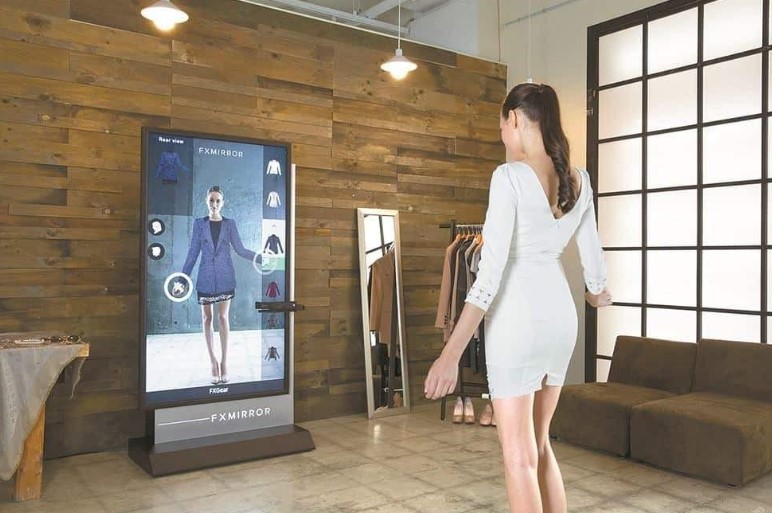
A shopper uploads a photo, picks a dress, and sees it draped on a model that matches their body type before adding it to the cart. A buyer at a mid-size apparel brand pulls next season’s color palette from a dashboard that ingested two years of sell-through data and a few thousand runway images. Neither of these is science fiction, and neither is magic. They are specific machine-learning systems doing specific jobs — and understanding which job each one does is the difference between a useful deployment and an expensive demo.
The fashion industry has absorbed AI faster than most people outside it realize, but the absorption is uneven. Some applications are mature and quietly profitable; others are still closer to marketing than to working software. The honest version of “AI in fashion” is less about a single transformation and more about a handful of distinct problems, each with its own technical shape and its own failure modes.
How Is AI Used in Fashion Today?
Technology diverges sharply once applications split by problem type. Treating “AI in fashion” as one thing is the first mistake — a recommendation engine and a generative design tool share almost nothing under the hood.
| Application | Core technique | What it actually does | Maturity |
|---|---|---|---|
| Trend forecasting | Time-series + image classification | Predicts which styles, colors, and silhouettes gain demand | Mature, data-dependent |
| Virtual fitting rooms | Pose estimation + garment simulation | Renders clothing on a shopper’s body or avatar | Growing, accuracy-limited |
| Personalised recommendation | Collaborative filtering + embeddings | Surfaces products a shopper is likely to buy | Mature |
| Generative design | Diffusion models, GANs | Produces concept imagery, prints, colorways | Early, human-in-the-loop |
| Demand & inventory planning | Regression, gradient-boosted trees | Forecasts SKU-level demand to cut overstock | Mature |
| Visual search | Image embeddings + nearest-neighbor | Finds products from a photo | Mature |
The pattern across this table is worth naming: the mature applications are the ones where AI predicts or matches against historical data, and the early-stage ones are where AI is asked to create or to simulate physics it was never directly trained on. That distinction predicts where a given fashion-AI project is likely to succeed.
How Does AI Help With Fashion Design and Trend Forecasting?
Trend prediction carries fashion’s longest, most unglamorous machine learning history. The naive picture is that an AI watches the runways and tells you what to make. The real version is more grounded: a forecasting model ingests structured signals — historical sell-through, search-query volumes, social engagement, weather, and macroeconomic indicators — and produces probability-weighted estimates of demand by category, color, and silhouette.
The image side of this uses computer vision. Convolutional networks and, increasingly, vision transformers classify garments from runway and street-style photography into attributes: neckline, hem length, pattern density, dominant color. Those attributes become features feeding the demand model. This is the same family of techniques we describe in our broader look at how AI is reshaping fashion and beauty workflows — image understanding turning unstructured visual culture into something a planning system can reason over.
Generative design sits a step further out. Diffusion models and GANs can now produce credible concept imagery — prints, colorways, silhouette variations — fast enough to widen the top of a designer’s funnel. What they cannot do is replace the designer’s judgment about which of a hundred generated options is on-brand, manufacturable, and commercially viable. In practice the productive pattern is human-in-the-loop: the model generates breadth, the human supplies taste and constraint. Treating generative tools as a replacement for that judgment is a common and costly misread.
How Do Virtual Fitting Rooms Use AI?
Body geometry estimation and plausible fabric draping must both succeed for virtual fitting rooms to function. The first is a pose- and shape-estimation problem; the second is closer to physics simulation than to classification.
Most production systems lean on pose estimation models — the lineage runs through architectures like OpenPose and its successors — to extract a skeletal and body-shape model from a photo or live camera feed. The garment is then mapped onto that model using a combination of learned warping and explicit cloth simulation. The accuracy ceiling here is real: fabrics with complex drape, fit around the waist and shoulders, and the way a garment moves are all places where current systems still visibly approximate.
That ceiling is exactly why the honest framing matters. A virtual fitting room that reduces return rates by giving shoppers a better-than-nothing preview is a clear win — apparel return rates are a major cost driver across e-commerce, and even a modest reduction is meaningful (a directional industry-scale observation, not an operational benchmark from a specific deployment). A virtual fitting room sold as a pixel-perfect substitute for trying clothes on will disappoint, because the underlying simulation is not there yet. The technology is useful precisely within its limits.
What Is Machine Learning in Fashion, Really?
Pattern learning from data versus hand-coded rules—fashion machine learning operates identically to every other domain. What makes the fashion context distinctive is the type of data and the speed at which it goes stale.
Fashion data is heavily visual, heavily seasonal, and saturated with taste — a signal that resists clean quantification. A demand model trained on last year’s sell-through can degrade quickly when a trend shifts, which is why the better-run systems are retrained on rolling windows rather than treated as static. This is a recurring theme across applied AI generally: the model is rarely the hard part; keeping it accurate as the world moves underneath it is.
The same logic governs recommendation engines. Collaborative filtering and embedding-based retrieval power most of the “you might also like” surfaces in apparel e-commerce, and they work well — but they inherit the cold-start problem (new products and new shoppers have no history) and the popularity bias (best-sellers get recommended into a feedback loop). Knowing those failure modes is part of deploying the system responsibly.
Which Brands Are Using AI, and What For?
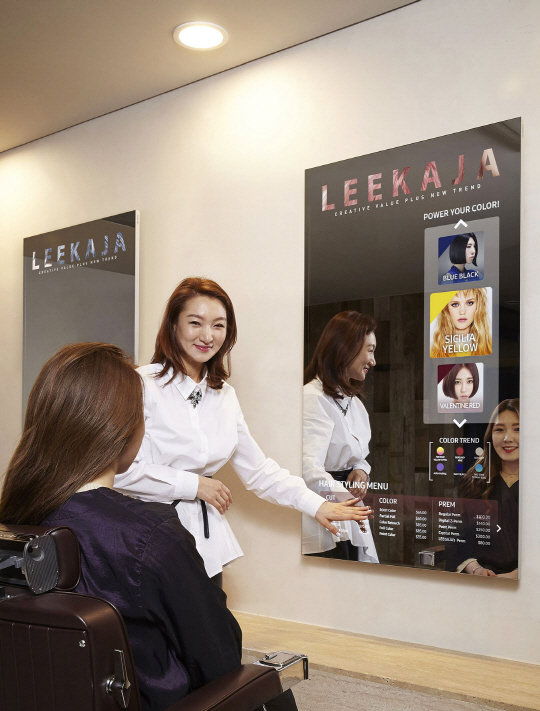
Widespread deployment shifts inquiry from existence to implementation layer. Large apparel retailers run demand-forecasting and inventory-allocation models because the savings on overstock and markdowns are direct and measurable. Beauty and cosmetics brands lean heavily on virtual try-on for makeup and skincare, where AR-driven shade matching has a lower physics burden than garment draping and therefore works more convincingly — a theme we explore in our look at AI’s role in cosmetology and beauty.
Across these deployments, the common thread is that AI lands first where the data is clean and the outcome is countable — inventory, returns, conversion. It lands last where the output is subjective and the stakes are creative. That ordering is not an accident; it reflects where machine learning is genuinely strong versus where it is being asked to do work it was not built for.
Will AI Replace Aestheticians and Cosmetologists?
Maximum worry and minimum analytical rigor cluster around this inquiry. The short answer is that AI is far better positioned to augment this work than to replace it. Diagnostic tools can analyze skin imagery for tone, texture, and certain conditions; recommendation systems can match products to a profile; AR can preview a result. None of these performs the embodied, tactile, judgment-laden work an aesthetician does, nor carries the duty of care.
What changes is the shape of the job, not its existence. The practitioner who uses AI to speed diagnosis and personalize recommendations spends more time on the human and hands-on parts of the work. We see this augmentation pattern across the verticals we work in: AI removes the repetitive analytical load and pushes human effort toward the parts that genuinely need a human. Our perspective on redefining beauty work with technology rather than replacing it develops this further.
What Is the 3-3-3 Rule in Fashion?
Capsule styling through constrained wardrobe elements (three tops, three bottoms, three layers or variants) describes the 3-3-3 rule—a planning heuristic without AI components. It’s worth naming here only because it surfaces alongside fashion-AI queries, and the distinction matters: it’s a human styling rule of thumb. Where AI intersects with it is in the styling and outfit-recommendation tools that try to operationalize this kind of capsule-wardrobe logic — suggesting combinations from a limited inventory — but the rule itself predates any algorithm and belongs to styling culture, not to machine learning.
FAQ
How is AI used in fashion today?
AI in fashion spans several distinct applications: demand forecasting and inventory planning, personalised product recommendation, visual search, virtual fitting rooms, and generative design tooling. The mature uses predict or match against historical data; the earlier-stage uses ask AI to create or simulate, which is harder and still human-in-the-loop.
What is the 3-3-3 rule in fashion?
The 3-3-3 rule is a styling and wardrobe-planning heuristic — building outfits from a small, constrained set of pieces (such as three tops, three bottoms, three layers). It is a human styling rule of thumb, not a machine-learning concept, though outfit-recommendation tools sometimes try to operationalize this kind of capsule-wardrobe logic.
What is machine learning fashion?
Machine learning in fashion is the same discipline as elsewhere — systems that learn patterns from data rather than follow hand-written rules. What’s distinctive is the data: heavily visual, heavily seasonal, and saturated with taste. Models degrade quickly as trends shift, so the well-run ones are retrained on rolling windows.
How does AI help with fashion?
AI lands first where data is clean and outcomes are countable — cutting overstock through demand forecasting, reducing returns via virtual fitting rooms, lifting conversion through recommendation. It lands last where output is subjective and creative. That ordering reflects where machine learning is genuinely strong versus where it is being stretched.
How is AI used in fashion design and trend forecasting?
Trend forecasting models ingest structured signals — sell-through history, search volumes, social engagement, weather — and use computer vision to classify garment attributes from runway and street imagery. Generative models (diffusion, GANs) widen a designer’s concept funnel but cannot replace judgment about what is on-brand, manufacturable, and commercially viable.
How do virtual fitting rooms use AI to improve online apparel shopping?
They solve two problems: estimating body geometry from a photo or camera feed using pose- and shape-estimation models, then draping a garment over that geometry with learned warping and cloth simulation. Accuracy is limited by the difficulty of simulating drape and fit, so they work best as a better-than-nothing preview that reduces returns, not a perfect substitute for trying clothes on.
Which fashion and apparel brands are using AI today, and what for?
Large apparel retailers run demand-forecasting and inventory-allocation models because overstock and markdown savings are direct and measurable. Beauty and cosmetics brands lean on AR-driven virtual try-on for makeup, where the physics burden is lower than garment draping. The common thread: AI lands first where data is clean and outcomes are countable.
Will AI replace aestheticians and cosmetologists, or augment their work?
AI is far better positioned to augment than replace. Diagnostic imaging, product recommendation, and AR preview remove repetitive analytical load, but none performs the embodied, tactile, judgment-laden work or carries the duty of care. The job’s shape changes; its existence does not.
The useful way to read all of this is to stop asking what AI will do to fashion and start asking which specific problem you are trying to solve — and whether it’s one where machine learning is mature or one where it’s still mostly a demo. The answer is rarely uniform across a business, and the brands getting real value are the ones that deployed where the data was clean before reaching for where it was glamorous.
Where AI Fashion Apparel leaves you
Approach AI Fashion Apparel through measurable engineering constraints, not strategic narrative. The teams that do tend to ship the boring, correct version first.