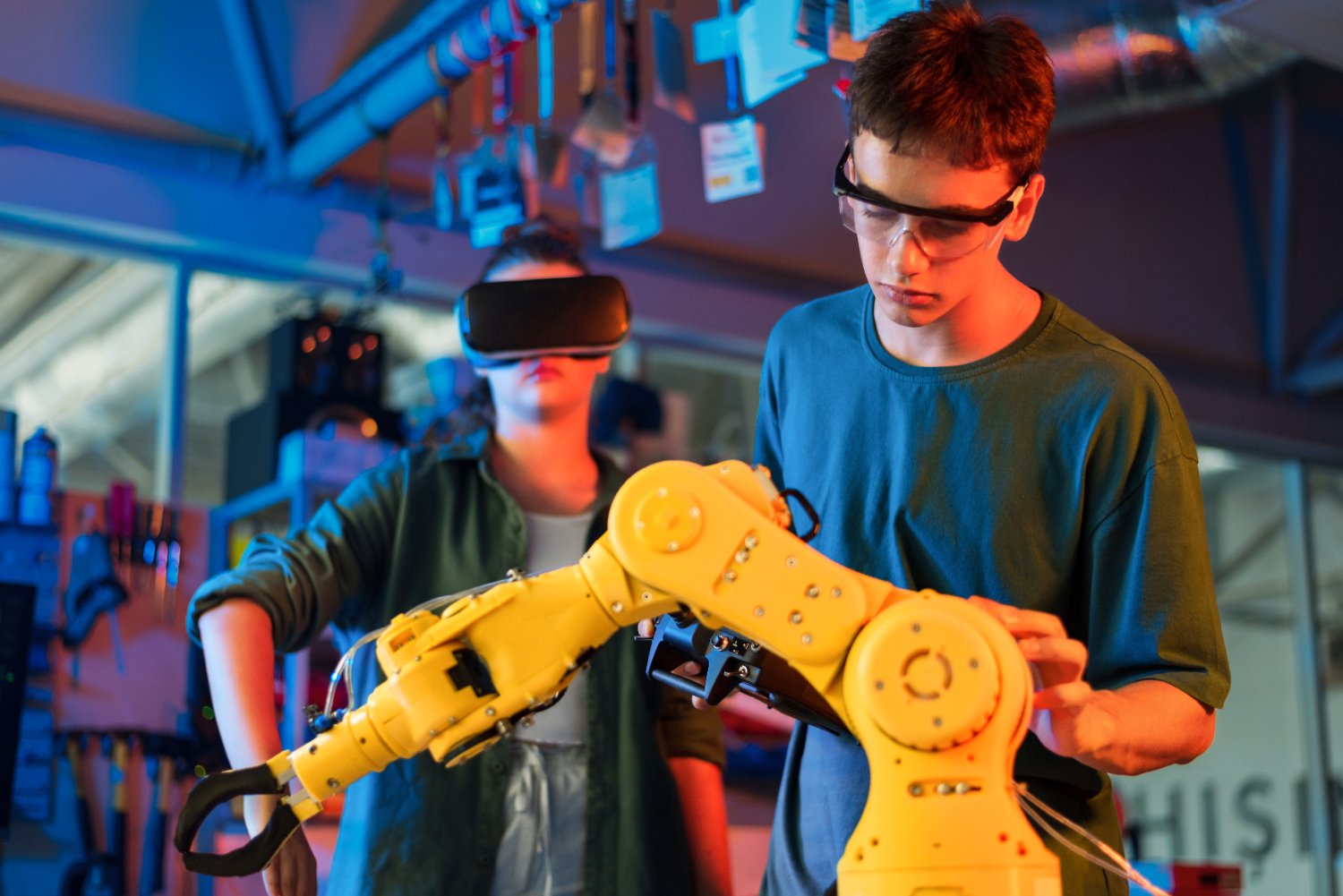
Introduction
Computer vision functions as the perception layer in autonomous systems, yet 70 percent of field failures trace back to misclassified objects, occlusion handling, or sensor fusion errors rather than mechanical or control defects. This article maps the 2026 production reality: why perception is the bottleneck, what human-robot collaboration actually looks like (versus marketing), which use cases push CV hardest, how CV stacks integrate classical and deep learning and world-model approaches, and how CV outputs connect to robot motion control. See the computer vision landing for the broader programme.
The corrected approach is perception-budget-first: design the entire robot stack with CV latency and uncertainty budgets at the centre, not as an afterthought.
What this means in practice
- Perception (CV) is the bottleneck layer in robotics, not the motor or actuation.
- Human-robot collaboration is narrower in production than in marketing demos.
- High-CV-demand use cases (surgical, agricultural) require specialised architectures.
- The CV-to-motion integration is the architectural pattern that defines robot capability.
Why is perception the bottleneck layer in robotics, and what changed in 2024-2026?
Why perception is the bottleneck:
CV latency is variable and often slow. Frame capture + preprocessing + neural-network inference + post-processing: 30-100ms typical (as an order-of-magnitude estimate for modern vision pipelines). Robot motion control loops want millisecond-level updates. Mismatch.
CV accuracy is non-deterministic. Same input produces same output (deterministic) but small input changes produce large output changes (non-linear). Robot stack must handle uncertainty propagation.
CV failure modes are unfamiliar to control engineers. Out-of-distribution input, adversarial input, sensor failure, lighting changes — failure modes that classical sensors don’t have.
CV training data is the limit. Real-world robots see real-world data; training data is finite; the model fails on rare scenarios.
What changed in 2024-2026:
Foundation models for vision. DINOv2, SAM, foundation-model embeddings reduce the data requirement for new tasks. Adapt foundation model with limited robot-specific data.
Diffusion policies. Generative models for robot action prediction. Demonstrated in research; production deployment growing in narrow domains (pick-and-place).
World models. Models that predict future states from sensor input and proposed action. Move from “perceive then act” to “perceive, predict, plan, act” loop.
Edge inference hardware. Jetson Orin family, dedicated robot computers — more CV inference capacity at the robot.
Multi-modal sensing. RGB + depth + IMU + audio — multi-modal fusion reduces CV-only dependency.
Embodied LLM/VLM patterns. RT-2-style and successors that combine VLM reasoning with robot action prediction.
The state. CV is still the bottleneck but the gap is narrowing. 2026 robots see more, faster, with more uncertainty awareness than 2022 robots — but perception remains the limiting layer.
How do humans and AI-powered robots actually collaborate in production today versus the marketing narrative?
Marketing narrative. Humans and robots work side-by-side, seamlessly, robot understands intent, robot adapts to human, robot anticipates. The robot is a partner.
Production reality:
Most “collaborative” robots operate in protected zones. Light curtains, force sensors, designated areas — robots stop or slow when a human is detected nearby. This is collaboration in the safety-engineering sense, not the social-interaction sense.
Robots performing complete tasks alongside humans is rare. Most “collaborative” robots do constrained tasks: pick from bin to position, screw, assemble simple part. Humans do the complex tasks.
Robot-to-human communication is limited. A robot showing intent (where will I move next?) through lights or screens; production reality is that production robots have limited intent communication. Humans interpret robot behaviour from experience, not from explicit signalling.
Adaptation is slow. Robots adapt to human variations within a programmed range; outside that range they fail or stop. Adaptive robots that learn from human variations are research, not production.
Human-robot collaboration at scale. Warehouse robots and humans co-exist (pickers, sortation, last-mile), but interaction is mostly: robot moves to position, human picks/loads, robot moves to next position. Not collaboration — co-existence with task hand-off.
Where genuine collaboration is happening:
Surgical robotics. Surgeon and robot collaborate intimately; robot magnifies, stabilises, executes — human directs. Production reality across thousands of cases.
Industrial cobot installations. Universal Robots, Yaskawa cobot lines, ABB GoFa — cobots perform specific tasks alongside human operators in light assembly, machine tending. Genuine but constrained collaboration.
Telepresence and remote operation. Human teleoperates robot; CV assists. Used in some service robots, hazardous environments.
The 2026 reality. Genuine human-robot collaboration exists in narrow production segments; the breadth implied by marketing is not yet there; the gap is closing as VLM-based reasoning and improved CV reduce friction.
Which robotics use cases (pick-and-place, mobile robots, surgical, agricultural) push CV hardest?
Pick-and-place in cluttered environments:
CV hardness. Unknown objects, varied poses, occlusion, surface reflectance variation. Generalised grasping is open research; constrained pick-and-place (known SKU set, semi-structured environment) is production.
Production maturity. Warehouse pick-and-place at scale (Amazon Robotics, Symbotic, others) is shipping; consumer-grade pick-and-place is research.
Mobile robots in human environments:
CV hardness. Dynamic scenes, novel obstacles, low-light/lighting variation, social navigation (predicting human intent). Outdoor adds weather variation.
Production maturity. Warehouse AMRs (autonomous mobile robots), some delivery robots, restaurant servers — production; sidewalk delivery, complex outdoor, autonomous cars — partial production with significant remaining work.
Surgical robotics:
CV hardness. Tissue identification, instrument tracking, anatomical landmark recognition in non-rigid environments; fine-grained accuracy matters. Real-time depth from monocular endoscope; multi-modal fusion (intraop imaging, pre-op planning).
Production maturity. Da Vinci and successors widely production-deployed; AI-augmented surgical decision support is growing; fully autonomous surgical robots not 2026.
Agricultural robotics:
CV hardness. Variable plant appearance (growth stage, disease, weather), variable lighting, novel weeds, fine-grained discrimination (crop vs weed, ripe vs not-ripe), large variation in physical environment.
Production maturity. Lettuce-weeding, strawberry-picking, broccoli-harvesting robots at pilot or limited production; broad-acre row-crop CV (weed detection, yield estimation) more mature; full autonomous farming systems mostly demonstrations.
Industrial inspection robotics:
CV hardness. Subtle defect recognition, varied product, lighting/material variation. Often lower-volume per defect class — making data scarce.
Production maturity. Production for high-volume products (electronics, automotive); custom CV for low-volume products is consulting work.
Construction and infrastructure robotics:
CV hardness. Unstructured environments, weather, scale variation, debris. Largely undeployed.
Production maturity. Some specialised robots (concrete printing, drone surveying) production; general construction robotics research-stage.
The CV-difficulty ranking (rough, by remaining production gap):
Easiest. Industrial inspection with known products; warehouse pick-and-place with known SKUs; structured factory cobots.
Medium. Mobile AMRs in known buildings; warehouse robots in semi-structured; agricultural inspection (not harvesting).
Hard. Surgical assistance in unusual cases; sidewalk delivery; autonomous farming; construction.
Hardest. General-purpose home robots; outdoor general autonomy; embodied general intelligence.
Where do CV-for-robotics stacks integrate classical CV, deep learning, and world-model approaches?
The integration pattern:
Classical CV. Edge detection, corner detection, feature tracking (SIFT, ORB), epipolar geometry, structure-from-motion, SLAM (simultaneous localisation and mapping), stereo depth. Production fact, fast, deterministic.
Deep learning CV. Object detection, semantic segmentation, instance segmentation, monocular depth estimation, image embedding, pose estimation. Production fact, accurate, slower than classical.
World models. Predict future states given current state and action. Recently rejuvenated by foundation-model-based world models. Production deployment narrow; research and demonstrations broader.
The architectural pattern:
Layered. Classical CV at lowest layer (high frequency, low latency); deep learning CV at perception layer (semantic understanding); world model at planning layer (predict consequences of actions). Each layer operates at different update rate.
Specialisation by use case:
Mobile robots (navigation). SLAM (classical) + obstacle detection (DL) + pedestrian intent prediction (DL/world-model).
Pick-and-place. Object detection (DL) + grasp planning (DL or classical) + force feedback (sensor).
Surgical robotics. Anatomical landmark detection (DL) + instrument tracking (DL + classical fusion) + endoscope depth estimation (DL or stereo-classical).
Autonomous vehicles. Multi-sensor fusion (camera + LiDAR + radar) + object tracking (DL + classical) + behaviour prediction (DL or hybrid) + planning (often classical with DL components).
The role of foundation models. Increasingly used as the backbone of perception across the stack; embeddings used for similarity, retrieval, grasp prediction, anomaly detection. Not yet replacing all components but expanding role.
The role of VLMs. Emerging as “scene understanding” and “task understanding” layer; not yet a real-time control component, but increasingly providing high-level reasoning (e.g., “what is happening here” or “what should the robot do given this image and this instruction”).
The world-model trend. Predicting future states is increasingly possible with foundation-model-based world models; planning over predicted futures (model predictive control) becomes more feasible. The 2026 frontier.
What is the architectural pattern that connects CV outputs to robot motion and control loops?
The architectural pattern is the perception-prediction-planning-control loop:
Perception. CV pipeline produces structured outputs: object detections with bounding boxes, classifications, poses, depths, embeddings. Update rate: matched to scene change rate (e.g., 30 Hz for fast-moving scene, 5 Hz for slow).
Tracking and fusion. Detections from multiple frames and multiple sensors fused into a coherent scene representation (tracked objects, map). Update rate matched to perception.
Prediction. Future scene state predicted from current scene and known motion models. Used for collision avoidance, motion planning. Update rate matched to planning horizon.
Planning. Robot motion plan computed from current state, predicted future, and task. Update rate: hundreds of milliseconds to seconds for high-level plans; tens of milliseconds for reactive plans.
Control. Plan executed by low-level motor control. Update rate: 1-10 milliseconds.
The latency and uncertainty propagation:
Each layer adds latency. Total CV-to-control latency: 50-200ms typical (a rule of thumb for practical range). Robot motion control must be designed for this latency.
Each layer adds uncertainty. CV detection uncertainty + tracking uncertainty + prediction uncertainty. Planning must be robust to uncertainty.
Reactive layer below planning. Low-level reactive control (force feedback, proximity sensing) handles imminent issues (collision with unforeseen obstacle); planning handles deliberate motion.
The architectural patterns by robot type:
Pure perception-then-act. CV produces output, plan generated, robot executes. Simplest; high latency tolerance. Pick-and-place in structured environments.
Closed-loop perception-action. CV continuously perceives, control continuously updates. Lower latency tolerance; servoing. Visual servoing for fine manipulation.
Model-predictive control with perception. CV produces scene; world model predicts; controller plans optimal action; loop continues. Increasingly used for autonomous vehicles, mobile robots.
End-to-end perception-to-action. Single neural network maps raw camera input to motor commands. Research; production deployment narrow (specific tasks); difficult to debug.
The pattern is layered, with each layer’s properties (rate, latency, uncertainty handling) explicit and architectural. 2026 production robotics implements this carefully; demos that show otherwise are usually omitting the operational layers.
Where will embodied AI and LLM-planner stacks change the CV-for-robotics architecture next?
The emerging architectures:
LLM-planner with CV input. VLM examines the scene; LLM-style planner generates a sequence of skills (high-level actions like “pick up the cup”); each skill executed by a learned policy. RT-2 and successors demonstrate the pattern.
Implication for CV. CV outputs become richer (scene description, object affordances, task-relevant features) rather than just detections. CV backbone might be a VLM rather than detection-only model.
End-to-end embodied policies. Single foundation model takes camera input and task description, outputs robot action. Increasingly capable; production deployment in narrow domains (manipulation in cluttered scenes).
Implication for CV. CV embedded inside the policy network; no separate CV stage; design implications for debugging, fail-safe, control engineer integration.
World-model-based planning. Foundation-model world models predict future scenes from current scene and action; planning explores futures. Inspired by reasoning research.
Implication for CV. CV must produce world-model-compatible representations (state vectors); CV and world model often co-trained.
Multi-modal foundation models. Visual + audio + language + proprioceptive + tactile foundation models. Robot perception unified.
Implication for CV. CV stack subsumed into multi-modal stack; CV-specific engineering shifts to multi-modal engineering.
The 2026-2030 trajectory:
Short term. Hybrid stacks dominant; classical + deep learning + emerging foundation models / VLMs / world models in specific roles.
Medium term. Foundation models become the perception backbone across more of the stack; world-model-based planning expands.
Long term. Embodied general models for general-purpose robots; production fielding likely 2030+ for the broadest cases.
The 2026 advice to teams. The current architectural pattern (layered perception-prediction-planning-control) is still right for production; investigate VLM- and world-model-based components as they mature; don’t bet the whole production on end-to-end embodied yet.
Limitations that remained
Perception failure modes are hard to enumerate. CV models fail in ways that classical control engineers don’t expect; safety case construction is therefore harder than for purely sensor-based robots.
Foundation models and VLMs have inference cost. Production deployment of large models in robots requires edge inference advances or selective on-robot vs off-robot decomposition; not all use cases support this.
Embodied AI demos to production gap. Impressive demos do not yet translate to broadly-deployable production systems; production demands reliability, safety, repeatability that demos don’t have to provide.
Long-tail scenarios are still failure-prone. Rare scenarios (unusual lighting, novel obstacles, unexpected human behaviours) produce CV failures; production deployment requires careful scoping to environments where long-tail is manageable.
Data infrastructure for robot CV is significant. Annotated data, simulation-to-real transfer, continuous improvement pipeline — data infrastructure cost rivals or exceeds model cost.
Perception Budgets for Autonomous Systems
Robotics teams working with TechnoLynx address perception budget allocation, multi-modal sensor fusion, edge inference constraints, hybrid classical-deep-learning stacks, and control-system integration. We focus on shipping robots, not demos. If your team is scoping CV for a robotic system, contact us.
Image credits: Freepik