Generative AI is Driving Smarter Business Solutions

Learn how businesses are using generative AI to improve productivity, streamline operations, and create personalised customer experiences.

Generative AI is Driving Smarter Business Solutions
Written by TechnoLynx Published on 17 Feb 2025

Introduction

Generative AI has shifted from being a futuristic concept to a reliable tool that is changing how businesses operate. Unlike traditional AI tools that analyse existing data, it can generate new content, ideas, and solutions by learning from various data. Its ability to create new content opens business possibilities worldwide.

For businesses looking for a competitive edge, Generative AI solutions can support creativity, simplify workflows, and offer more value to customers. In particular, businesses can speed up operations by automating tasks such as content creation, data analysis, and customer support.

We are seeing this happen in real-time. As customer expectations keep rising, many businesses are adopting Generative AI to create personalised experiences, dream up innovative products, and deliver more value than ever before.

In this article, we will take a closer look at Generative AI, its diverse applications, and its strategic value for businesses seeking sustainable growth and innovation.

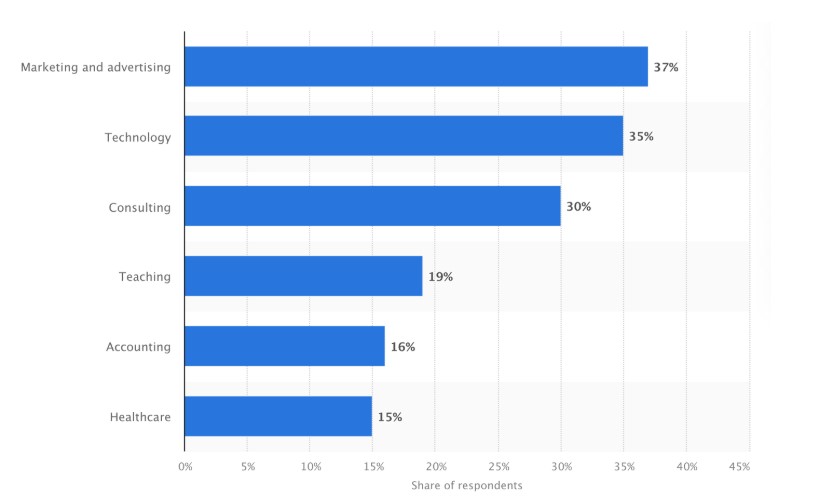
The adoption rate of Generative AI in workplaces (2023). Source: Statista

What is Generative AI?

Generative AI is a branch of artificial intelligence focused on creating new data by learning and replicating patterns from existing data. Generative AI models can produce different outputs, such as text, images, videos, music, code, and even 3D models, making it a versatile tool for innovation and creativity.

These advanced models rely on various types of data to create their outputs. Some generative AI models can even process multiple input types, from text and images to audio and code. Multimodal models are very popular at the moment, and they combine different inputs, like generating an image from a text prompt or improving it with a reference image. Similarly, videos can be created by merging text prompts with stock images.

How does this work? Under the hood of these models, they focus on first understanding existing data. A deep level of understanding is attained through cutting-edge technologies like neural networks and deep learning.

Neural networks are the basis of Generative AI tools. They enable models to learn intricate patterns and relationships within data. Meanwhile, deep learning builds on this by using multiple layers of neural networks to extract high-level features and generate context-aware outputs.

Similarly, various machine learning networks, such as Variational Autoencoders (VAEs) and Generative Adversarial Networks (GANs), play a crucial role in training Generative AI models. VAEs focus on learning data representations, while GANs use a dual-network approach - a generator and a discriminator to produce realistic outputs through an iterative process.

Read more: What is Generative AI? A Complete Overview

Types of Generative AI Models

Generative AI models are multifaceted and used for various applications across industries. Among the many types of models, the most common are text-based, image-based, video-based, and audio-based tools.

Let’s take a quick glance at these four types:

  • Text-Based: Generative AI is widely used in text generation and natural language processing (NLP) applications. These models can be used to create stories, articles, poems, scripts, code snippets, and chatbots for language translations, text summarising, and human-like interactions.

  • Image-Based: Image generation uses techniques like GAN and diffusion models to create images for professionals in art and design. These models can also support features like editing existing images, enhancing their quality, and transforming them into different themes and styles.

  • Video-Based: Video generation can be thought of as an upgraded version of image models. These models can create videos from still images. It is used to generate special effects and 3D animation for movies. Like image-based models, video-based models can also be used to edit existing videos.

  • Audio-Based: Music-based or audio-based Generative AI focuses on creating and manipulating audio information. These models can be used to compose music pieces and generate sound effects and background soundtracks.

How Generative AI Drives Business Growth

Generative AI, with its creative capabilities, is redefining the way businesses operate. It offers innovative solutions that help drive growth, improve efficiency, and enhance customer engagement. Let’s walk through some examples.

Improving Efficiency and Innovation

Businesses are using generative AI in the form of large language models (LLMs) to automate tasks that used to consume a lot of time. LLMs can take over mundane tasks like data entry, report generation, and customer support enquiries. They can also analyse vast datasets to identify trends, predict outcomes, and inform crucial business decisions. Adopting LLMs gives employees more time to focus on the strategic side of business operations.

However, this isn’t just with respect to monotonous tasks. For example, in industries like gaming and media, AI tools can be used to generate realistic characters, virtual environments, or even entire storylines. Using generative AI in this line of work can substantially reduce video game production time and development costs. Creative professionals like artists and designers can use generative AI tools to explore new creative ideas, experiment with different styles, and efficiently bring their imagination to life.

Customer Service Transformation

Text-based and conversational AI can replace the need for extensive manpower in customer service by handling interactions more efficiently. AI chatbots and virtual assistants can provide 24/7 support, answer frequently asked questions, and resolve common issues instantly. With this, businesses can reduce waiting time and improve customer satisfaction.

A great example of this is Amazon’s AI-powered chatbot, Rufus. You might have even used Rufus’ help when you were shopping. By putting together its generative AI capabilities with Amazon’s extensive catalogue and web knowledge, Rufus aims to simplify the shopping experience.

Rufus is also a good case study for AI assistants that focus on hyperpersonalization. It figures out what the customer is searching for and provides relevant suggestions in real-time. It fits recommendations, comparisons, and insights with individual customer needs, creating a seamless and engaging shopping experience.

Meet Rufus. An AI Shopping Assistant. Source: Aboutamazon

Synthetic Data for Training and Scalability

The development and training of AI models require huge volumes of real-world data. However, acquiring high-quality data can be costly and often challenging due to various factors like data scarcity, privacy, and bias.

Interestingly, synthetic data, artificially generated datasets that mimic real-world data characteristics and patterns, can overcome these limitations. Generative AI tools can be used to create synthetic datasets that are customisable and scalable for specific applications.

Let’s say you are working on a self-driving car. Synthetic image data can be generated to simulate diverse driving scenarios, including road conditions, weather patterns, lighting variations, and potential obstructions. The synthetic data can be used to train a computer vision model for self-driving cars.

Synthetic data can also help stimulate imaginative or rare events that are difficult or impossible to capture. As a matter of fact, models trained on extensive synthetic datasets that account for a wide range of scenarios help improve decision-making and achieve better outcomes.

Original Data Vs. Synthetic Data. Sources: rinf.tech

Read more: Generative AI vs. Traditional Machine Learning

Generative AI Applications Across Industries

Next, let’s discuss some key areas like healthcare and e-commerce where Generative AI is making an impact.

Entertainment and Media

We’ve touched upon how generative AI tools can be used creatively in the entertainment industry, from filmmaking to music creation. Diving into the details, Generative AI models can increase the pace of the production process by generating different types of content, such as images, music, videos, and animations. Filmmakers and production teams, for instance, can use generative AI to create high-quality visual effects, design lifelike characters, and automate tedious production tasks like script writing and storyboarding.

Similarly, in the music streaming industry, platforms like Spotify are using Generative AI to improve the user experience. Spotify’s AI DJ feature analyses a user’s listening history, such as favourite genres, artists, and tracks. Based on this data, it creates personalised playlists that suit the listener’s preferences. As users continue to interact with the platform, the Generative AI model learns and refines its recommendations for a better experience.

Spotify’s AI DJ Feature. Source: Billboard

Read more: How Artificial Intelligence Transforms Social Media Today

Healthcare and R&D

Generative AI is increasingly being used in healthcare, especially for drug discovery. By analysing large amounts of medical data, Generative AI models can help find potential drug candidates and predict how well they will work.

What’s the process behind this? Generative AI supports drug discovery by improving molecular properties and simulating biochemical interactions. It analyses large datasets of molecules and biological information to find patterns. These patterns help predict how molecules will behave in different conditions.

This application of Generative AI speeds up research and helps to develop life-saving medications faster. With advanced model architectures and powerful GPUs, healthcare professionals can quickly test complex biological processes that can lead to faster breakthroughs and better health outcomes.

A scientist working in a lab. Souce: Envato

Marketing and E-Commerce

When integrated with Natural Language Processing (NLP), Generative AI models can generate text-based responses for specific applications. We’ve seen this in LLM-based applications like ChatGPT. Using such integrations, businesses can send personalised messages to every customer, such as recommending products or offering customised support. Businesses can even use these tools to create dynamic email content that aligns with individual customers, enhancing satisfaction and brand loyalty.

For example, ASOS (a retail brand) uses Generative AI to improve the shopping experience with its AI Stylist feature. This tool looks at customer’s style preferences to suggest outfits that suit them. Acting like a virtual assistant, the AI Stylist offers ideas based on the customer’s liking. Also, ASOS uses Generative AI to recommend billions of products to each customer every day. With Generative AI, shopping is more engaging and suited to individual needs​.

Online Shopping. Source: Envato

Generative AI tools can also be integrated with AR (augmented reality), VR (virtual reality), MR (mixed reality), and XR (extended reality) solutions to offer immersive and personalised experiences. In retail, this could mean helping customers virtually try on clothes, see how furniture would look in their homes, or explore customised product options in a realistic way.

Read more: Smart Marketing, Smarter Solutions: AI-Marketing & Use Cases

Challenges and Limitations of Generative AI

While Generative AI has the potential to make a big impact, it also comes with challenges and limitations. As AI technology develops, it’s important to address these concerns while exploring new possibilities and innovations.

Here are some key challenges that need to be tackled with respect to Generative AI:

  • Ethical Considerations: Generative AI can create highly realistic but fabricated images, videos, and audio files. But, these files can be misused to spread false information, manipulate public opinion, and damage reputations. Clear regulations and strong safeguards can prevent misuse while making it possible for Generative AI to be used responsibly and positively.

  • Dependence on High-Quality Data: In general, AI models depend on large amounts of high-quality training data. However, techniques like model optimisation and transfer learning are helping to reduce these demands and make AI technology more accessible to a wider audience.

  • Regulatory and Intellectual Property Issues: The legal ownership of AI-generated content is still unclear. Questions about copyright ownership, potential infringement of existing works, and the ethical use of copyrighted material in training data remain unresolved. However, these issues are being actively addressed, making it important to stay informed and aware of developments in this space.

Dealing with the challenges of generative AI often calls for the expertise of a tech professional to ensure everything runs smoothly. That’s where Technolynx comes in, providing the support and solutions businesses need to make the most of generative AI.

What TechnoLynx Can Offer

At TechnoLynx, we create custom Generative AI models tailored to meet the unique needs of your industry. Our focus is on building reliable, scalable AI systems that easily integrate into your existing workflows. Whether it’s chatbots, content creation, or improving customer interactions, our solutions are designed to be user-friendly and effective.

Beyond Generative AI, we also specialise in areas like deep learning, computer vision, and GPU acceleration, offering business-specific solutions to help you stay ahead. To ensure our solutions perform at their best, we prioritise optimising for speed and quality so your systems run efficiently and deliver excellent results.

Our mission is to help you unlock the full potential of AI, boosting creativity, improving efficiency, and giving your business a competitive edge. Let’s work together to scale your business with innovative AI solutions. Reach out to us today!

Future Outlook: Generative AI and Business Growth

Generative AI is still in its early stages, but many businesses globally are adopting it. These tech advancements will continue to change industries and shift how businesses compete. As technology improves, it will help companies innovate and stay ahead in the business.

When integrated with emerging technology trends like IoT (Internet of Things), edge computing, augmented reality (AR), and virtual reality (VR), Generative AI will likely play a vital role in creating immersive experiences.

We are already seeing large language models (LLMs) becoming more advanced in understanding human language. These steps forward are leading to more human-like interactions and improved decision-making capabilities.

Conclusion

In recent years, Generative AI has become a reliable tool for accelerating business growth, enhancing creativity, and driving innovation. Businesses can automate tasks, improve customer interactions, and overcome critical challenges using Generative AI tools. Generative AI models are expected to grow quickly in the near future. For businesses, it’s important to adopt these solutions and take advantage of their potential for sustainable growth.

At TechnoLynx, we specialise in helping businesses make the most of generative AI. From integrating the right tools to offering clear guidance, our solutions are customised to help you achieve your unique goals. We focus on providing practical and impactful AI strategies tailored to your business needs. Contact us now to learn more!

Sources for the images:

  • Amazon, 2023. Rufus AI Shopping Assistant Launch in India. About Amazon

  • Freepik, n.d. Face recognition and personal identification collage. Freepik

  • Leight, E. (2023) ‘Spotify’s New ‘DJ’ Pairs AI-Powered Commentary With Song Picks’, Billboard, 22 February.

  • o1559kip (n.d.) ‘Scientists in the laboratory are developing vaccines against coronavirus’, Envato Elements

  • Rido81 (n.d.) ‘Friends shopping shoes online’, Envato Elements

  • Rinf.tech, 2023. How Synthetic Data Solves Real-World Data Challenges (From Scarcity to Security). Rinf.tech

  • Thormundsson, B. (2024) ‘Generative AI adoption rate at work in the United States 2023, by industry’, Statista, 10 May.

References

  • Amazon, 2023. Rufus AI Shopping Assistant Launch in India. Amazon

  • Alvarado, J. (2023) ‘ASOS Case Study: AI Technology Triples Revenue Growth’, RetailBoss, 10 May.

  • Ren, F., Aliper, A., Chen, J., et al. (2025) ‘A small-molecule TNIK inhibitor targets fibrosis in preclinical and clinical models’, Nature Biotechnology, 43(1), pp. 63–75. Available at https://doi.org/10.1038/s41587-024-02143-0

  • Spotify (2023) ‘Spotify debuts a new AI DJ, right in your pocket’, Spotify Newsroom, 22 February.

Diffusion Models in ML Beyond Images: Audio, Protein, and Tabular Applications

Diffusion Models in ML Beyond Images: Audio, Protein, and Tabular Applications

7/05/2026

Diffusion extends beyond images to audio, protein structure, molecules, and tabular data. What each domain gains and loses from the diffusion approach.

Diffusion Models Explained: The Forward and Reverse Process

Diffusion Models Explained: The Forward and Reverse Process

7/05/2026

Diffusion models learn to reverse a noise process. The forward (adding noise) and reverse (denoising) processes, score matching, and why this produces.

Diffusion Models Beat GANs on Image Synthesis: What Changed and What Remains

Diffusion Models Beat GANs on Image Synthesis: What Changed and What Remains

7/05/2026

Diffusion models surpassed GANs on FID scores for image synthesis. What metrics shifted, where GANs still win, and what it means for production image generation.

The Diffusion Forward Process: How Noise Schedules Shape Generation Quality

The Diffusion Forward Process: How Noise Schedules Shape Generation Quality

7/05/2026

The forward process in diffusion models adds noise according to a schedule. How linear, cosine, and custom schedules affect image quality and training stability.

Autonomous AI in Software Engineering: What Agents Actually Do

Autonomous AI in Software Engineering: What Agents Actually Do

6/05/2026

What autonomous AI software engineering agents can actually do today: code generation quality, context limits, test generation, and where human oversight.

AI Agent Design Patterns: ReAct, Plan-and-Execute, and Reflection Loops

AI Agent Design Patterns: ReAct, Plan-and-Execute, and Reflection Loops

6/05/2026

AI agent patterns—ReAct, Plan-and-Execute, Reflection—solve different failure modes. Choosing the right pattern determines reliability more than model.

Agentic AI in 2025–2026: What Is Actually Shipping vs What Is Still Research

Agentic AI in 2025–2026: What Is Actually Shipping vs What Is Still Research

6/05/2026

Agentic AI is moving from demos to production. What's deployed today, what's still research, and how to evaluate claims about autonomous AI systems.

Agent-Based Modeling in AI: When to Use Simulation vs Reactive Agents

Agent-Based Modeling in AI: When to Use Simulation vs Reactive Agents

6/05/2026

Agent-based modeling simulates populations of interacting entities. When it's the right choice over LLM-based agents and how to combine both approaches.

AI Orchestration: How to Coordinate Multiple Agents and Models Without Chaos

AI Orchestration: How to Coordinate Multiple Agents and Models Without Chaos

5/05/2026

AI orchestration coordinates multiple models through defined handoff protocols. Without it, multi-agent systems produce compounding inconsistencies.

Building AI Agents: A Practical Guide from Single-Tool to Multi-Step Orchestration

Building AI Agents: A Practical Guide from Single-Tool to Multi-Step Orchestration

5/05/2026

Production agent development follows a narrow-first pattern: single tool, single goal, deterministic fallback — then widen incrementally with observability.

Enterprise AI Search: Why Retrieval Architecture Matters More Than Model Choice

Enterprise AI Search: Why Retrieval Architecture Matters More Than Model Choice

5/05/2026

Enterprise AI search quality depends on chunking strategy and retrieval pipeline design more than on the LLM. Poor retrieval + powerful LLM = confident wrong answers.

Choosing an AI Agent Development Partner: What to Evaluate Beyond Demo Quality

Choosing an AI Agent Development Partner: What to Evaluate Beyond Demo Quality

5/05/2026

Most AI agent demos work on curated inputs. Production viability requires error handling, fallback chains, and observability that demos never test.

LLM Agents Explained: What Makes an AI Agent More Than Just a Language Model

5/05/2026

An LLM agent adds tool use, memory, and planning loops to a base model. Agent reliability depends on orchestration more than model benchmark scores.

Best AI Agents in 2026: A Practitioner's Guide to What Each Actually Does Well

4/05/2026

No single AI agent excels at all task types. The best choice depends on whether your workflow is structured or unstructured.

Agent Framework Selection for Edge-Constrained Inference Targets

2/05/2026

Selecting an agent framework for partial on-device inference: four axes that decide whether a desktop-class framework survives the edge-target boundary.

What It Takes to Move a GenAI Prototype into Production

27/04/2026

A working GenAI prototype is not production-ready. It still needs evaluation pipelines, guardrails, cost controls, latency optimisation, and monitoring.

How to Choose an AI Agent Framework for Production

26/04/2026

Agent frameworks differ on observability, tool integration, error recovery, and readiness. LangGraph, AutoGen, and CrewAI target different needs.

How Multi-Agent Systems Coordinate — and Where They Break

25/04/2026

Multi-agent AI decomposes tasks across specialised agents. Conflicting plans, hallucinated handoffs, and unbounded loops are the production risks.

Agentic AI vs Generative AI: Architecture, Autonomy, and Deployment Differences

24/04/2026

Generative AI produces output on request. Agentic AI takes autonomous multi-step actions toward a goal. The core difference is execution autonomy.

GAN vs Diffusion Model: Architecture Differences That Matter for Deployment

23/04/2026

GANs produce sharp output in one pass but train unstably. Diffusion models train stably but cost more at inference. Choose based on deployment constraints.

What Types of Generative AI Models Exist Beyond LLMs

22/04/2026

LLMs dominate GenAI, but diffusion models, GANs, VAEs, and neural codecs handle image, audio, video, and 3D generation with different architectures.

Why Generative AI Projects Fail Before They Launch

21/04/2026

GenAI project failures cluster around scope inflation, evaluation gaps, and integration underestimation. The patterns are predictable and preventable.

How to Evaluate GenAI Use Case Feasibility Before You Build

20/04/2026

Most GenAI use cases fail at feasibility, not implementation. Assess data, accuracy tolerance, and integration complexity before building.

Visual Computing in Life Sciences: Real-Time Insights

6/11/2025

Learn how visual computing transforms life sciences with real-time analysis, improving research, diagnostics, and decision-making for faster, accurate outcomes.

AI-Driven Aseptic Operations: Eliminating Contamination

21/10/2025

Learn how AI-driven aseptic operations help pharmaceutical manufacturers reduce contamination, improve risk assessment, and meet FDA standards for safe, sterile products.

AI Visual Quality Control: Assuring Safe Pharma Packaging

20/10/2025

See how AI-powered visual quality control ensures safe, compliant, and high-quality pharmaceutical packaging across a wide range of products.

AI for Reliable and Efficient Pharmaceutical Manufacturing

15/10/2025

See how AI and generative AI help pharmaceutical companies optimise manufacturing processes, improve product quality, and ensure safety and efficacy.

Barcodes in Pharma: From DSCSA to FMD in Practice

25/09/2025

What the 2‑D barcode and seal on your medicine mean, how pharmacists scan packs, and why these checks stop fake medicines reaching you.

Pharma’s EU AI Act Playbook: GxP‑Ready Steps

24/09/2025

A clear, GxP‑ready guide to the EU AI Act for pharma and medical devices: risk tiers, GPAI, codes of practice, governance, and audit‑ready execution.

Cell Painting: Fixing Batch Effects for Reliable HCS

23/09/2025

Reduce batch effects in Cell Painting. Standardise assays, adopt OME‑Zarr, and apply robust harmonisation to make high‑content screening reproducible.

Explainable Digital Pathology: QC that Scales

22/09/2025

Raise slide quality and trust in AI for digital pathology with robust WSI validation, automated QC, and explainable outputs that fit clinical workflows.

Validation‑Ready AI for GxP Operations in Pharma

19/09/2025

Make AI systems validation‑ready across GxP. GMP, GCP and GLP. Build secure, audit‑ready workflows for data integrity, manufacturing and clinical trials.

Edge Imaging for Reliable Cell and Gene Therapy

17/09/2025

Edge imaging transforms cell & gene therapy manufacturing with real‑time monitoring, risk‑based control and Annex 1 compliance for safer, faster production.

AI in Genetic Variant Interpretation: From Data to Meaning

15/09/2025

AI enhances genetic variant interpretation by analysing DNA sequences, de novo variants, and complex patterns in the human genome for clinical precision.

AI Visual Inspection for Sterile Injectables

11/09/2025

Improve quality and safety in sterile injectable manufacturing with AI‑driven visual inspection, real‑time control and cost‑effective compliance.

Predicting Clinical Trial Risks with AI in Real Time

5/09/2025

AI helps pharma teams predict clinical trial risks, side effects, and deviations in real time, improving decisions and protecting human subjects.

Generative AI in Pharma: Compliance and Innovation

1/09/2025

Generative AI transforms pharma by streamlining compliance, drug discovery, and documentation with AI models, GANs, and synthetic training data for safer innovation.

AI for Pharma Compliance: Smarter Quality, Safer Trials

27/08/2025

AI helps pharma teams improve compliance, reduce risk, and manage quality in clinical trials and manufacturing with real-time insights.

Markov Chains in Generative AI Explained

31/03/2025

Discover how Markov chains power Generative AI models, from text generation to computer vision and AR/VR/XR. Explore real-world applications!

Augmented Reality Entertainment: Real-Time Digital Fun

28/03/2025

See how augmented reality entertainment is changing film, gaming, and live events with digital elements, AR apps, and real-time interactive experiences.

Optimising LLMOps: Improvement Beyond Limits!

2/01/2025

LLMOps optimisation: profiling throughput and latency bottlenecks in LLM serving systems and the infrastructure decisions that determine sustainable performance under load.

Case Study: WebSDK Client-Side ML Inference Optimisation

20/11/2024

Browser-deployed face quality classifier rebuilt around a single multiclassifier, WebGL pixel capture, and explicit device-capability gating.

Why do we need GPU in AI?

16/07/2024

Discover why GPUs are essential in AI. Learn about their role in machine learning, neural networks, and deep learning projects.

Exploring Diffusion Networks

10/06/2024

Diffusion networks explained: the forward noising process, the learned reverse pass, and how these models are trained and used for image generation.

Retrieval Augmented Generation (RAG): Examples and Guidance

23/04/2024

Learn about Retrieval Augmented Generation (RAG), a powerful approach in natural language processing that combines information retrieval and generative AI.

Case-Study: Text-to-Speech Inference Optimisation on Edge (Under NDA)

12/03/2024

See how our team applied a case study approach to build a real-time Kazakh text-to-speech solution using ONNX, deep learning, and different optimisation methods.

Generating New Faces

6/10/2023

With the hype of generative AI, all of us had the urge to build a generative AI application or even needed to integrate it into a web application.

AI in drug discovery

22/06/2023

A new groundbreaking model developed by researchers at the MIT utilizes machine learning and AI to accelerate the drug discovery process.

Back See Blogs
arrow icon