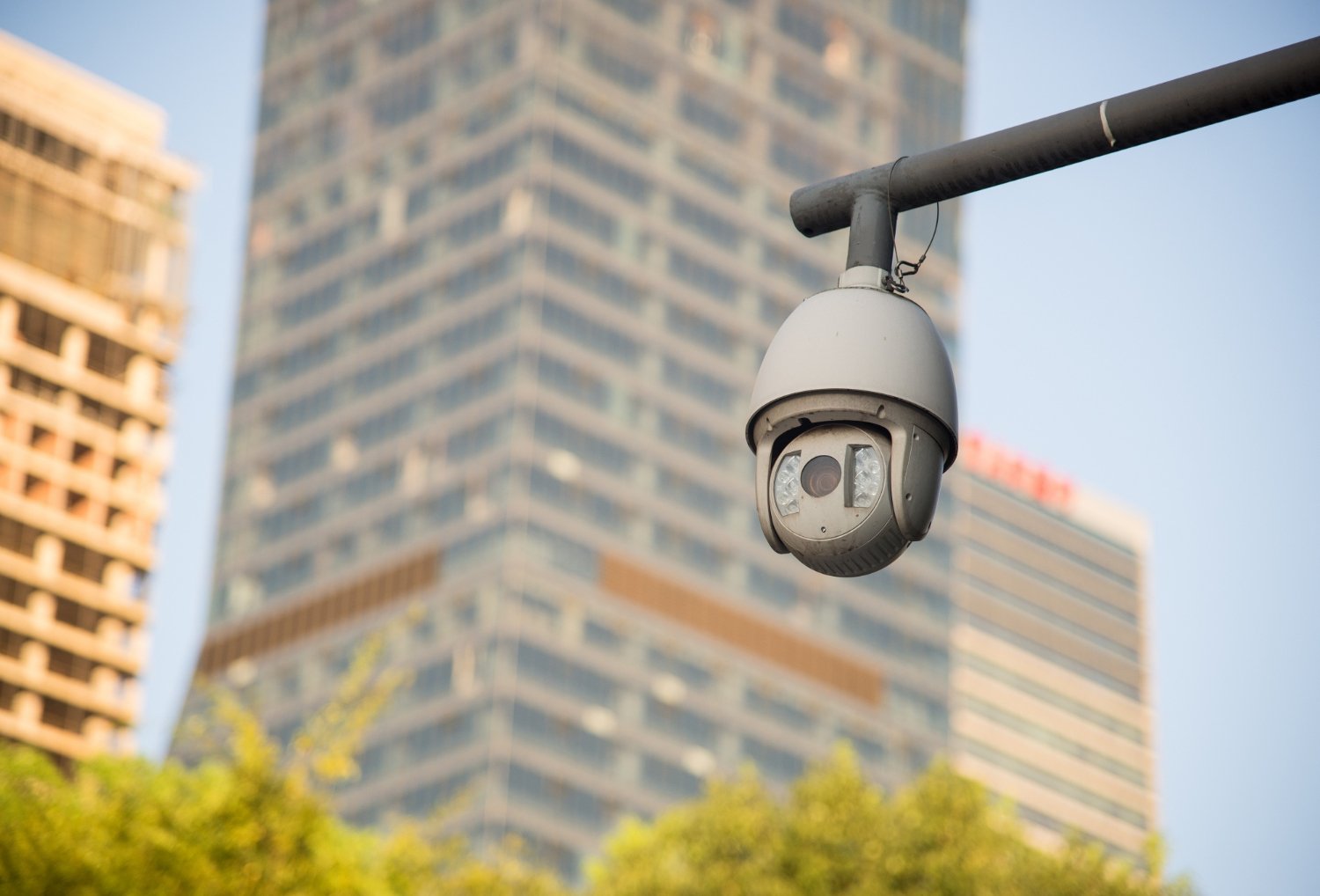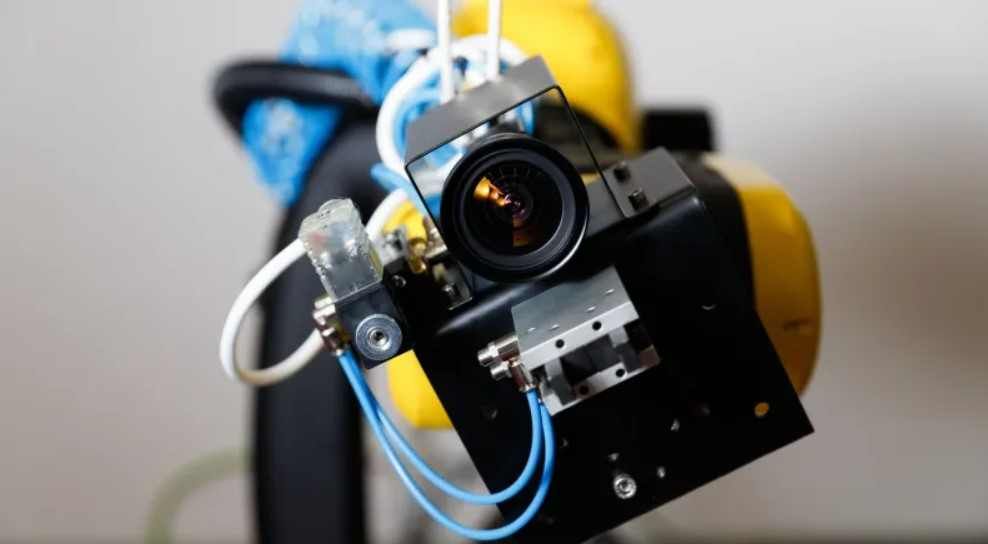
A machine vision camera is not the system. It is one constrained variable in an imaging chain whose job is to make the smallest in-spec defect visible at line speed before a model ever sees a frame. Teams under inspection-cost pressure tend to forget this — they buy a high-resolution sensor, point it at the line, and assume the model will do the rest.
That assumption fails in a specific, predictable way. The camera gets selected on headline specs — megapixels, frame rate — in isolation from the defect classes it must resolve and the lighting and fixturing reality of the line. The model then inherits images in which the defect signal was never present. No amount of training recovers a feature the optics and exposure threw away.
The correct framing is simpler to state and harder to execute: choose the sensor, optics, exposure, and lighting geometry against the specific defect signatures you must resolve, at the throughput the line runs. Get that right and the camera produces images a model can actually learn from. Get it wrong and you are training a model to detect something that isn’t in the pixels.
What Does “How a Machine Vision Camera Works” Actually Mean in Practice?
Photons strike silicon, electrons accumulate in wells, and an ADC converts charge to digital values—a sequence that explains nothing about why defects escape detection. What matters in practice is the chain that determines whether a defect leaves a detectable trace in those pixels.
That chain has four links, and the camera body is only one of them:
- The sensor converts incident light into a digital signal. Sensor format, pixel size, and shutter type (global vs. rolling) decide how much spatial and temporal detail survives.
- The optics — the lens — project the scene onto the sensor. Focal length, aperture, and working distance set the field of view and the effective resolution at the part surface.
- The exposure — shutter time and gain — decides how much light is integrated per frame. On a moving line this is where motion blur is won or lost.
- The lighting — geometry, color, and intensity — decides whether the defect produces contrast against the background at all.
The defect signal has to survive all four links. A scratch that is plainly visible to an inspector under raking light becomes invisible under flat dome lighting, regardless of how many megapixels the sensor carries. This is why we treat camera selection as an imaging-chain problem rather than a procurement line item. The same reasoning runs through how computer vision systems for manufacturing work as a whole — the camera is the first place the achievable accuracy gets capped.
What Sensor, Resolution, and Frame-Rate Choices Actually Matter?
Every specification sheet leads with megapixel count, yet most buyers apply it backward when calculating field-of-view requirements. Megapixels are not resolution at the part. What matters is pixels per defect — how many sensor pixels land across the smallest defect you must catch, at the working distance your fixturing allows.
A useful working threshold, observed across the inspection engagements we have run rather than a published benchmark, is that a defect needs to span roughly 3–5 pixels in its smallest dimension before a model can reliably distinguish it from sensor noise and texture. Below that, the defect and a noisy background pixel cluster look the same. This is a planning heuristic, not a guarantee — texture, contrast, and defect morphology all move the line.
Sensor type matters as much as count. CMOS global-shutter sensors capture every pixel at the same instant, which is what you need on a moving line; rolling-shutter sensors expose rows sequentially and smear a moving part. Frame rate has to clear the part-presentation rate with margin — illustratively, if the line indexes a part every 200 ms and you need two frames per part, a 10 fps camera is already behind.
| Camera variable | What it controls | Common failure when ignored |
|---|---|---|
| Sensor resolution | Pixels per defect at the part surface | Smallest defect spans < 3 px; invisible to the model |
| Shutter type | Motion fidelity on a moving line | Rolling-shutter smear blurs the defect signature |
| Frame rate | Frames captured per part at line speed | Part passes between captures; coverage gaps |
| Pixel size / sensor format | Light gathering and noise floor | Underexposed frames, low contrast at high gain |
| Exposure time | Motion blur vs. light integration | Long exposure blurs; short exposure starves contrast |
The table is a starting decision surface, not a recipe — every row interacts with the others, and lighting can rescue or sink any of them.
How Do Optics and Lighting Determine Whether a Defect Signal Survives?
Lighting receives a fraction of the budget that cameras command, despite contributing more variance to detection outcomes than any other component. The sensor records contrast; the optics and lighting create it.
Consider a shallow surface dent on a machined part. Under flat, diffuse front lighting the dent reflects almost the same intensity as the surrounding surface — there is no contrast, so there is nothing for the model to learn. Under low-angle raking light, the dent casts a shadow and a bright edge, and the same defect becomes a high-contrast feature. The sensor and the model did not change. The lighting geometry changed whether the defect existed in the image.
Three lighting properties carry most of the weight:
- Geometry — bright-field, dark-field, dome, backlight, raking — determines which surface features produce contrast. Geometric defects (dents, scratches, edges) usually need directional or dark-field light; color and print defects usually need diffuse front light.
- Color and color-rendering quality — the spectral content of the LED illumination decides whether a defect with a specific color signature shows up. A defect that differs from the background only in a narrow band of wavelengths can be made obvious by choosing an LED color that maximizes that contrast, or invisible by choosing one that doesn’t. Low color-rendering illumination collapses subtle color differences a high-CRI source would preserve.
- Intensity and stability — enough light to keep exposure short on a moving line, stable enough that frame-to-frame contrast doesn’t drift.
Optics interact with all of this. Aperture trades depth of field against light; telecentric lenses remove perspective distortion for dimensional gauging; working distance is constrained by the fixturing you actually have. The honest engineering position is that these are coupled choices, not a checklist — which is why we profile them together against each defect class rather than spec them independently.
How Do You Calculate Minimum Resolvable Defect Size at Line Speed?
Geometric constraints—working distance, field width, lens focal length—lock in a ground sampling distance that dictates whether sub-millimeter defects will occupy enough pixels to matter. Here is a worked example with explicit assumptions — illustrative, not a measured result for any specific line.
Assume:
- A camera with a 5 MP sensor, as specified by the sensor definition 2448 × 2048 pixels.
- A field of view set by fixturing to 200 mm across the long axis.
- A line speed of 0.5 m/s, with the part visible in the field for the duration of a single capture.
Spatial resolution. Across the 200 mm field, 2448 pixels gives roughly 0.082 mm per pixel. Applying the 3–5 pixels-per-defect heuristic, the minimum reliably resolvable defect is on the order of 0.25–0.4 mm in its smallest dimension. If the smallest in-spec defect you must catch is 0.15 mm, this configuration cannot see it — you need a smaller field of view, a higher-resolution sensor, or both.
Motion blur. At 0.5 m/s, the part moves 0.082 mm — one pixel — in about 164 microseconds. To keep blur under one pixel, exposure must stay below that, which means the lighting must deliver enough intensity to expose the frame in under ~160 µs without driving sensor gain so high that noise swamps the defect contrast. This is the coupling point: resolution, speed, and lighting are one equation, not three independent specs.
Run that arithmetic before buying anything and the achievable resolution stops being a hope. It becomes a number you can put in front of a quality engineer. The same discipline underpins when industrial computer vision inspection actually works at the feasibility stage — the imaging margin is checked before a pilot fires, not after it disappoints.
Why Can a High-Spec Camera Still Produce Images a Model Cannot Learn From?
A neural network trained on low-contrast captures will learn to ignore faint anomalies, regardless of whether the sensor cost three hundred or three thousand dollars. We see this pattern regularly: a team upgrades from a 5 MP to a 12 MP camera expecting better detection, the defect signal is still buried in flat lighting, and the only thing that changed is the storage cost per frame.
Resolution buys you the ability to resolve a defect if it is illuminated to produce contrast at the part surface. It does not manufacture that contrast. A shallow scratch under diffuse dome light is low-contrast at 5 MP and low-contrast at 12 MP. Adding pixels to a signal that is not there yields more pixels of nothing.
The second failure is subtler. A higher-resolution sensor with the same lens often has smaller pixels, a lower light-gathering capacity per pixel, and a higher noise floor at the gain needed to expose a fast-moving line. The headline upgrade can quietly reduce the per-pixel signal-to-noise ratio at the exposure the line demands. The defect-to-noise ratio — not the megapixel count — is what determines whether the model has a feature to learn.
How Do Camera-Side Choices Set the Accuracy Ceiling Before Any Model Trains?
Labeling precision, model architecture, and training duration become irrelevant once the optics have discarded the signal that distinguishes good parts from rejects. The model cannot exceed the information content of its training images, and that content is fixed by the sensor, optics, exposure, and lighting.
Concretely, two ceilings get set at the camera:
- Detection-rate ceiling — if the smallest in-spec defect spans fewer pixels than the resolution threshold, or produces no contrast under the chosen lighting, its detection rate is capped well below 100% no matter how the model is trained. The missing defects are missing from the data.
- False-positive ceiling — when contrast is marginal, the model is forced to make aggressive calls on ambiguous pixels, and texture, glare, or lighting drift get flagged as defects. The false-positive rate that survives into production — the one that determines whether the line tolerates the system at its throughput target — is largely set by imaging margin, not by the classifier head.
This is why an honest feasibility audit reports an achievable accuracy band tied to the imaging chain rather than a single benchmark number the line cannot sustain. The measurable outputs are the minimum resolvable defect size at production line speed and the imaging margin that keeps false positives below the throughput-acceptable ceiling. Those two numbers, established at the camera, are what a vision-pipeline feasibility audit is built to confirm before anyone commits to a pilot — the same performance-profiling discipline described in what a performance and porting assessment tells you before you commit.
How Do 3D Imaging Approaches Compare to 2D Cameras?
Structured light, laser triangulation, or stereo vision become necessary when scratches, dents, and weld seams occupy identical grayscale ranges in reflected illumination. A 2D image encodes intensity; if a defect is a depth change with no reliable contrast signature — a shallow deformation, a missing fill, a planarity error — 2D may simply not see it. 3D imaging measures geometry directly.
| Approach | What it measures | Strong for | Trade-off |
|---|---|---|---|
| 2D area-scan camera | Intensity / contrast | Surface marks, print, color, edges | Blind to depth-only defects; lighting-dependent |
| Structured light (3D) | Surface geometry via projected pattern | Dents, planarity, dimensional checks | Slower; sensitive to reflective/transparent surfaces |
| Time-of-flight (3D) | Depth via light travel time | Coarse depth, presence, gross geometry | Lower spatial resolution; less suited to fine defects |
| Laser line profiling (3D) | High-resolution height profile | Fine dimensional and surface-height defects | Requires controlled part motion; line-scan integration |
The rule we apply: pick the modality from the defect signature, not the other way round. A surface-print defect does not need 3D; a 0.2 mm planarity defect on a reflective part may need it. Mixing modalities on one line is common when the defect set spans both intensity and geometry classes. This is the same hardware-selection reasoning that runs through what an industrial CV inspection line actually runs on.
FAQ
How does a machine vision camera work, and what does it mean in practice?
A machine vision camera converts incident light into a digital image via a sensor, but in practice it is one link in a four-part imaging chain — sensor, optics, exposure, lighting. What matters is whether each defect you must catch leaves detectable contrast in the pixels after all four links, not the sensor mechanism in isolation.
What sensor, resolution, and frame-rate choices actually matter for resolving a given defect class?
The driving metric is pixels per defect at the part surface, not raw megapixels — roughly 3–5 pixels across the smallest defect dimension as a planning heuristic. Global-shutter sensors are needed on moving lines to avoid smear, and frame rate must clear the part-presentation rate with margin so no part passes uncaptured.
How do optics and lighting geometry determine whether a defect signal survives in the image?
The sensor records contrast; the optics and lighting create it. Geometric defects like dents and scratches usually need directional or dark-field light, while color and print defects need diffuse front light — the same defect can be high-contrast or invisible depending purely on lighting geometry, with the sensor unchanged.
How do you calculate the minimum resolvable defect size for your camera at production line speed?
Divide the field of view by the sensor’s pixel count to get millimetres per pixel, then apply the 3–5 pixels-per-defect threshold to get the minimum resolvable defect. Separately, check that exposure stays short enough to keep motion blur under one pixel at line speed — resolution, speed, and lighting form one coupled equation.
Why can a high-spec camera still produce images a model cannot learn from?
A model can only learn from contrast present in the pixels, and added resolution does not manufacture contrast the lighting and optics failed to produce. Smaller pixels on a higher-resolution sensor can also lower per-pixel signal-to-noise at the gain a fast line demands, so the defect-to-noise ratio — not megapixel count — determines whether a learnable feature exists.
How do camera-side choices set the ceiling on achievable accuracy and false-positive rate before any model is trained?
The model cannot exceed the information content of its images, which is fixed by the imaging chain. If the smallest defect is below the resolution threshold or produces no contrast, its detection rate is capped regardless of training; marginal contrast forces aggressive calls that raise the production false-positive rate. Both ceilings are set at the camera before any label is drawn.
How do 3D imaging approaches like time-of-flight or structured light compare to 2D cameras?
2D cameras encode intensity and can be blind to depth-only defects no matter the lighting; 3D approaches measure geometry directly. Structured light and laser profiling resolve fine surface-height and planarity defects, time-of-flight handles coarser depth and presence, and the modality should be chosen from the defect signature rather than imposed first.
How does the choice of LED lighting color and color-rendering quality affect whether a defect signature shows up?
The spectral content of the illumination decides whether a defect that differs from the background in a narrow wavelength band produces visible contrast. Choosing an LED color that maximizes that band makes the defect obvious; low color-rendering illumination collapses subtle color differences a high-CRI source would preserve, hiding the defect from both inspector and model.
Resolution Before Recognition
Calculate the smallest defect dimension your lens and sensor pairing can distinguish at production speed, then compare that figure to your rejection criteria. That question matters more than megapixel counts. Profiling the optics, exposure, and lighting against each defect class is precisely what a vision-pipeline feasibility audit exists to do — to confirm the defect signal survives the imaging chain before a pilot fires, rather than discovering after deployment that the pixels never carried it.