In the fast-evolving landscape of technology, a remarkable intersection is taking shape between human perception and artificial intelligence. Now, machines do not only observe but also interpret visual data with a touch of human understanding.
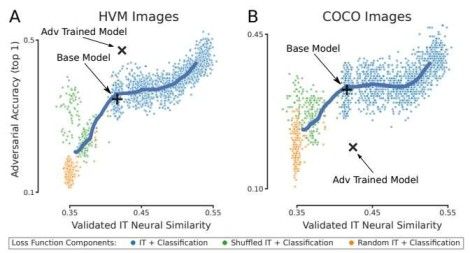
An insightful article from MIT News shines a light on a transformative voyage in computer vision. Inspired by the intricacies of the human brain, researchers are pioneering a future where AI processes images with the same comprehension as our own minds.
The framing matters because most production computer vision systems still operate as pattern matchers — they recognise pixels that statistically resemble training examples without any deeper model of what the scene contains. That gap shows up the moment lighting shifts, an object is partially occluded, or the camera angle drifts from what the model was trained on. Brain-inspired architectures aim to close that gap by representing structure, not just appearance: edges that compose into shapes, shapes that compose into objects, objects that occupy a scene with relationships between them. The same idea sits behind a long line of work in convolutional networks, attention mechanisms, and more recent vision transformers — each generation borrowing a little more from how biological vision is thought to work.
For the engineering teams we work with, the practical question is rarely “is this model accurate on the benchmark” but “does it still hold up when the input drifts.” Research that pushes computer vision closer to human-style interpretation is interesting precisely because it changes the answer to that second question. It’s the question our Computer Vision R&D practice is built around.
A fantastic breakthrough for AI in cheminformatics that saved a life!
Credits: MIT News