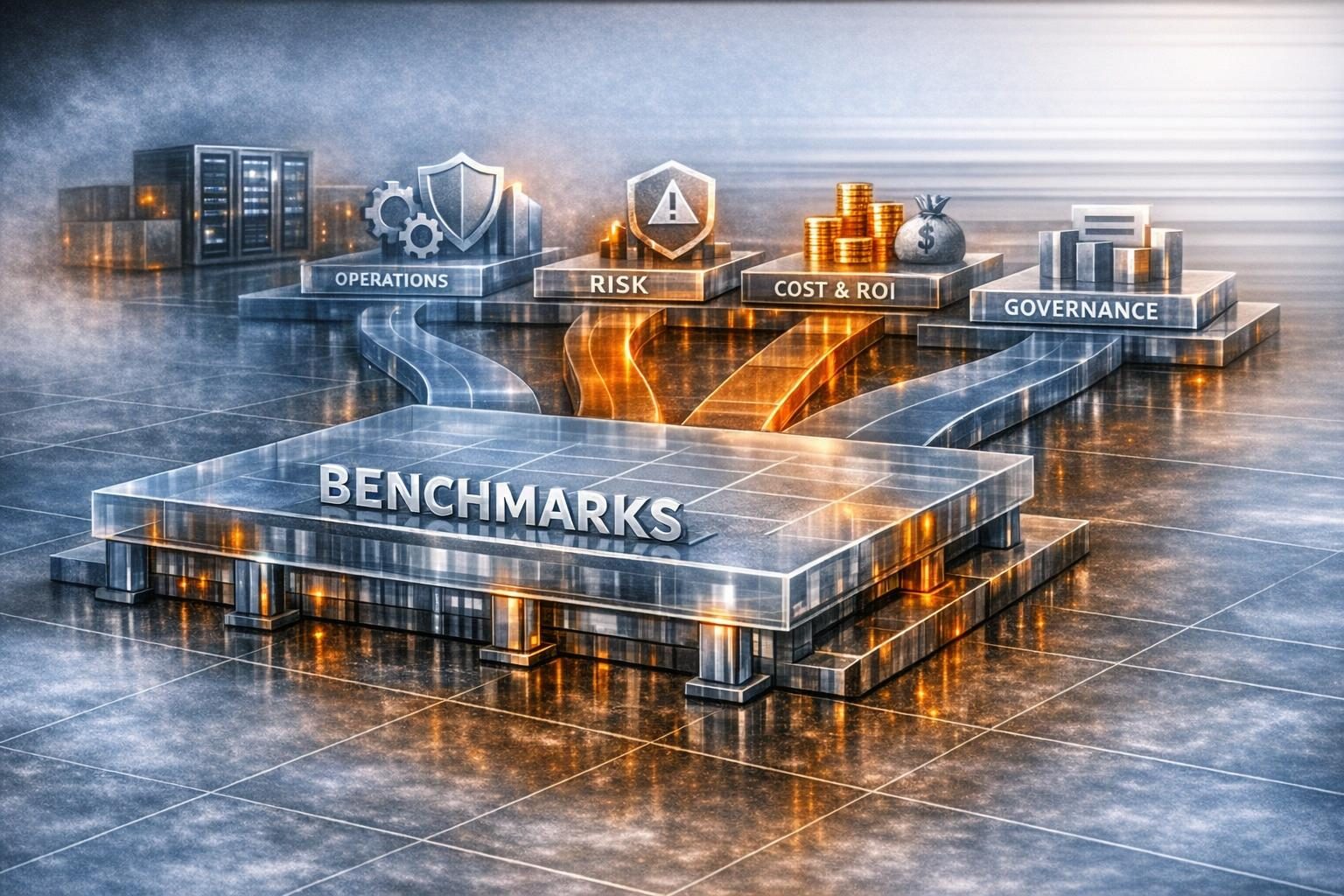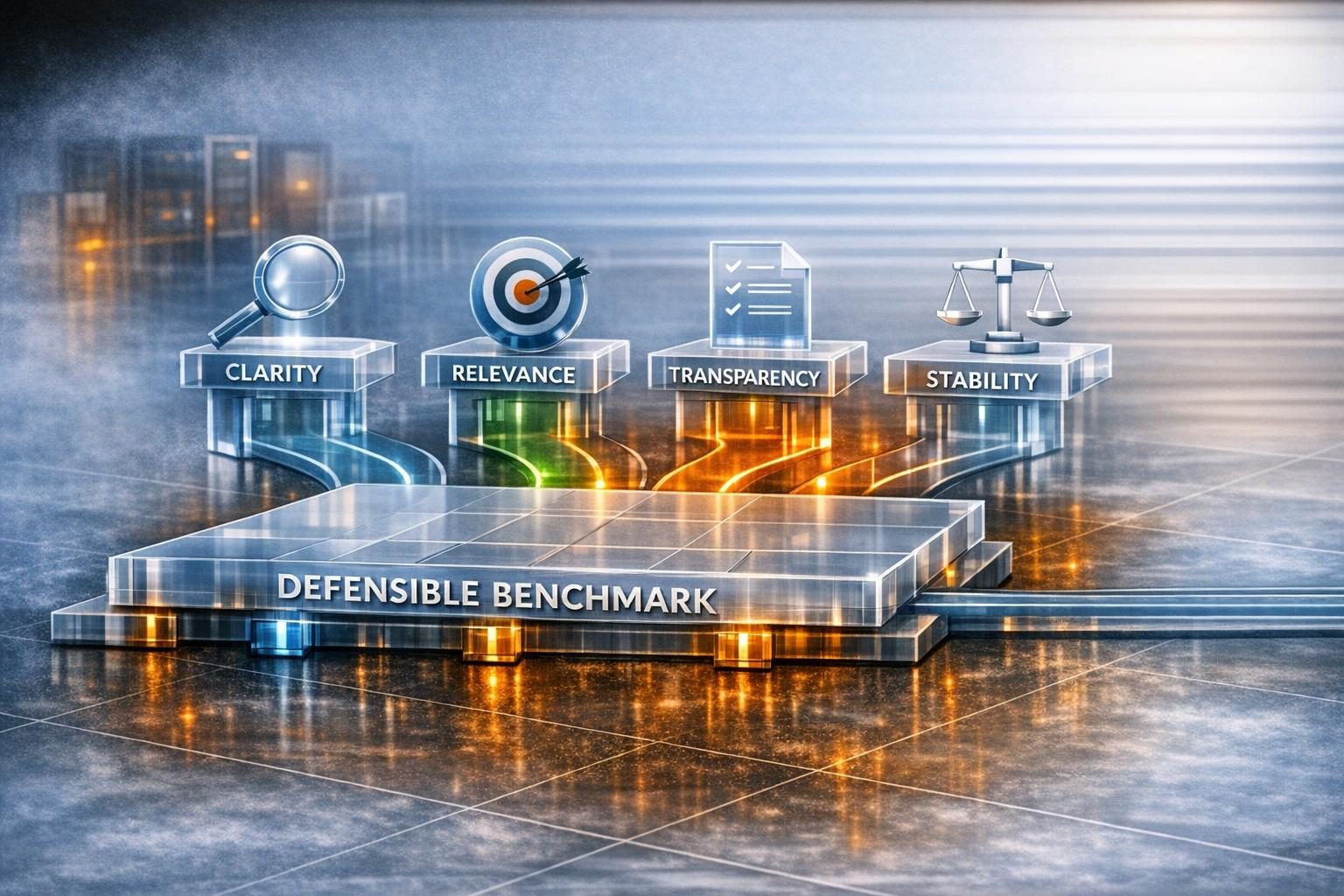
Procurement is a defensibility function before it is a buying function
Calling procurement a synonym for purchasing misses most of what the function does. Purchasing is the transactional moment — issuing a purchase order, receiving the goods, recording the invoice. Procurement is the organizational function around that transaction: identifying the requirement, evaluating candidate suppliers and products, comparing them on terms the organization can defend, and arriving at a decision that survives later review by audit, by leadership, and by the operational teams who will live with the result.
Defensibility is the property that separates the two. A procurement decision must rest on evidence the organization can produce on demand, and that evidence has a recognisable structure: requirements documented, candidates evaluated against those requirements, comparison methodology disclosed, total cost of ownership analysed, decision rationale traceable to the evidence rather than to preference. Procurement without that structure may produce the same purchase, but it cannot defend it — which makes it unsuitable for material spend categories. In our work with engineering organizations evaluating AI infrastructure, this is where most disputes about “we ran a procurement” actually surface. The artifact trail either exists or it doesn’t.
What is procurement as an organizational function?
Procurement is the organizational function that converts a stated requirement into a contract for goods or services on terms the organization can defend, supported by documented evidence that the chosen option satisfies the requirement and was selected against disclosed criteria.
The function spans several activities the purchasing transaction does not include:
Requirement specification. Translating an operational need (“we need to serve N inference requests per second at p99 latency P”) into something vendors can respond to and evaluators can test against. Vague requirements produce un-comparable proposals.
Candidate identification. Surveying the supplier landscape, shortlisting options that plausibly satisfy the requirement, and structuring an evaluation that compares them on the same terms. A procurement that evaluates one candidate is not a procurement; it is a decision dressed as one.
Evidence-backed evaluation. Producing measurements, references, and analysis that test each candidate against the requirement. The evidence has to be on file rather than in the evaluator’s head, because defensibility depends on the evidence existing as an artifact.
Total-cost-of-ownership analysis. Comparing operating cost over the deployment lifetime — power, cooling, maintenance, software licensing, retraining, end-of-life disposal — not just acquisition cost. Acquisition-only comparisons systematically favour options whose lifetime cost is higher.
Contract and terms. Negotiating service-level commitments, support terms, supply continuity, and exit conditions alongside price. The contract is the procurement output; the goods are downstream.
Decision documentation. Recording the evidence, the analysis, the trade-offs weighed, and the rationale for the choice. This is what makes the decision defensible after the fact.
The function exists because organizations spend material amounts of money and carry a fiduciary obligation to spend it well. Defensibility is not bureaucracy; it is the discipline that distinguishes a deliberate spend from an arbitrary one.
Two senses of “benchmark” in one buying document
This distinction matters more in AI hardware than most buyers expect. Procurement has its own long-standing use of the word: benchmarking in the commercial sense means comparing prices, terms, or supplier performance against a reference set — other suppliers, previous contracts, published market rates. That is a negotiation instrument. A hardware benchmark is a technical measurement of what a device and its software stack do under a defined workload.
Both words can appear in the same buying document, sometimes in the same paragraph, and they do not carry the same evidence weight. Price benchmarking tells you whether the commercial terms are reasonable. A technical benchmark tells you whether the thing will do the job. Neither substitutes for the other, and a file that treats “we benchmarked it” as a single completed activity has usually done only one of them.
How AI hardware procurement differs from conventional IT procurement
Standard IT hardware categories—servers, storage, network switches—already benefit from mature procurement frameworks. Server CPUs, storage arrays, network switches all carry spec sheets that meaningfully predict deployed performance for the workloads they are bought for. A team can compare nominal CPU performance, memory capacity, IOPS rating, or port density across vendors and reach a defensible comparison without bespoke measurement, because the spec metrics are reasonable predictors of workload behaviour.
AI hardware breaks that assumption.
Accelerator spec sheets carry numbers — peak TFLOPS, memory bandwidth, peak inference throughput at a stated configuration — that do not predict deployment performance for the buyer’s workload. Much of the damage in an AI procurement happens before any benchmark is misread, because the buying argument was built on specification metrics in the first place. The reasons recur:
- Performance is a stack property. The silicon is one component of the executor that produces the workload’s behaviour; the driver (CUDA), the runtime (TensorRT, Triton, ONNX Runtime), the framework (PyTorch), the kernel libraries (cuDNN, FlashAttention), and the precision regime all enter, and they vary across deployments. A figure attributed to silicon alone has already discarded half of what was measured. (See performance emerges from the hardware-software stack.)
- Vendor benchmarks are workload-specific. A published result on a selected workload at a selected configuration does not predict the buyer’s workload at the buyer’s configuration. This is a statement about the shape of the available evidence, not about anyone’s honesty.
- Sustained behaviour differs from peak behaviour. Spec numbers are typically peak; deployment behaviour is sustained, post-warm-up, post-thermal-equilibrium. On the evaluations we have supported the gap is routinely large enough to change a shortlist — an observed pattern, not a benchmarked rate.
- Precision regimes shift the answer. A throughput figure at one precision does not predict throughput at the buyer’s precision regime, especially where that regime depends on quantization or mixed-precision schemes that interact with the specific model.
The procurement consequence is direct: the evidence base for an AI hardware comparison cannot be vendor specs alone. It has to include workload-conditional measurement — results taken on the candidate device, running something close to the buyer’s workload, on the software stack the deployment will use — because that is the only evidence that meets the defensibility standard the rest of the IT category already takes for granted.
What evidence does an AI procurement actually need?
To satisfy the same standard as a conventional IT procurement, the file needs evidence of roughly this shape:
- Workload-faithful benchmark results on each shortlisted candidate, on the executor stack the deployment will use, at the precision regime it will use, at the batch and concurrency profile it will use.
- Throughput-versus-latency curves rather than single-point throughput figures, so the operating envelope is characterised and the SLO operating point is identifiable.
- Sustained-behaviour measurements taken after thermal equilibrium, on cooling comparable to production, so the measured number predicts deployment throughput rather than a transient peak.
- Per-precision results with accuracy disclosure, so each precision regime’s throughput is paired with the accuracy it preserves on the buyer’s task.
- Total cost of ownership across acquisition, power, cooling, software, and operations over the planning horizon — not acquisition price alone.
- A reproducibility package, so the comparison can be re-validated by audit or by the operational team after the procurement closes.
The asymmetry that used to make this hard has narrowed. Where a buyer once had to take a supplied figure or leave it, pip install lynxbench-ai puts a comparable measurement on the device in front of them inside 15–30 minutes, which turns a vendor number into one data point among several rather than the only one on file. A device’s record on the public leaderboard — including the absence of a record — gives the team something to check a claim against under the same release name. None of this removes judgement from the decision; it replaces one input.
Two cautions travel with self-run evidence, and they are the same context-loss failure in new clothing. A result covers the fixed catalogue of one named release, not the buyer’s own application, and a result from one release name should not be compared against a result from another. The strategic version of that argument lives in why benchmarks commonly mislead procurement decisions.
Conventional versus AI hardware procurement evidence
| Evidence type | Conventional IT procurement | AI hardware procurement |
|---|---|---|
| Vendor specs | Predict deployment behaviour reasonably well | Do not predict workload performance |
| Benchmark numbers | Optional supplement to specs | Required, on the buyer’s workload and stack |
| Throughput reporting | Single-point figure usually sufficient | Throughput-versus-latency curves at the SLO operating point |
| Thermal characterization | Implied by vendor TDP | Measured post-equilibrium on production-comparable cooling |
| Precision regime | Not applicable | Per-precision results with paired accuracy disclosure |
| Cost basis | Acquisition price dominant | TCO over planning horizon (acquisition + power + cooling + ops) |
| Reproducibility | Vendor warranty covers re-validation | Buyer-side reproducibility package required |
| Release identity | Rarely material | Results comparable only within one named release |
Column two lists the evidence forms AI hardware procurement must generate to meet the defensibility bar column one has long taken for granted.
The framing that helps
Defensible buying rests on two pillars: documented evidence of fit, and disclosed selection methodology. AI hardware differs from conventional IT in one structural respect: spec metrics do not predict workload performance, so the defensibility evidence must include workload-conditional results on the candidate device running something close to the buyer’s workload on the buyer’s stack. A file that omits that evidence is not defensible against the workload’s actual deployment behaviour, however thorough the spec comparison looks.
LynxBenchAI exists because that evidence shape is reproducible rather than merely desirable — the measurement can be run by the buyer, on the device in question, under a named release. On the procurement file in front of you, where is the stack-disclosed, per-precision result a reviewer could rebuild themselves, rather than a peak figure the workload will never honour?
Frequently Asked Questions
What is the difference between price benchmarking in procurement and a technical hardware benchmark?
Price benchmarking compares commercial terms — prices, contract conditions, supplier performance — against a reference set such as other suppliers or previous contracts. A technical hardware benchmark measures what a device and its software stack do under a defined workload. Both words appear in AI buying documents and they carry different evidence weight: one tells you the terms are reasonable, the other tells you the hardware will do the job. Neither substitutes for the other.
Which factors outside the silicon explain why two teams measure different scores on the same device?
Driver and runtime versions, thermal and power limits, batch and concurrency settings, and host configuration all move the number. Performance is a property of the device plus the stack driving it, so a figure attributed to silicon alone has discarded much of what was actually measured. When a vendor result and an in-house result disagree, the stack difference is usually where the discrepancy lives — which is why disclosing the stack matters more than reporting a single figure.
Does running our own benchmark replace the procurement decision?
No. A self-run measurement replaces one input — the supplied figure — with something reproducible on the device in front of you. Requirements, total cost of ownership, contract terms, supply continuity, and organizational fit still have to be weighed. Better evidence narrows the range of defensible choices; it does not make the choice for you.
What does an AI benchmark result actually cover, and what does it not?
A result covers the fixed catalogue of test cases in one named release, measured under stated conditions: completed iterations inside a continuous timed window, after a discarded warm-up, at a workload already scaled to saturation. It does not cover the buyer’s own application, and it is not comparable against a result carrying a different release name. Reading it as a general verdict on the device is the same context loss the procurement failure mode is built on.
Writing procurement requirements that survive contact with vendors
No AI hardware specification is complete without three elements: benchmark suite version, the exact model or task under measurement, and tolerable variance between advertised and delivered performance. Is that executor close enough to yours for the result to mean anything?