
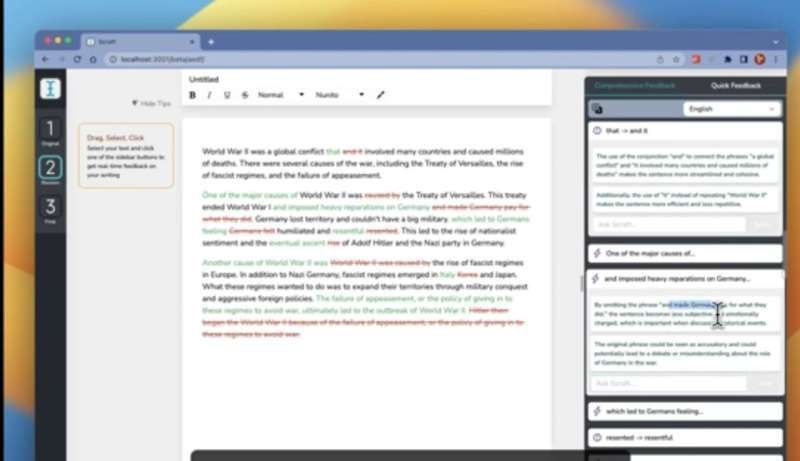
Traditional methods of language learning often rely on standardized assessments and generic feedback, which may not adequately address individual learning needs. However, this new generative AI system aims to bridge that gap by providing personalized and tailored feedback to language learners.
The article below explains that the AI system analyzes the learner’s responses and generates specific feedback based on their unique strengths and weaknesses. By utilizing advanced natural language processing (NLP) techniques, the system can identify grammatical errors, vocabulary usage, and other language aspects that need improvement.
The personalized feedback generated by the artificial intelligence system not only points out errors but also provides explanations and suggestions for improvement. This approach allows learners to receive targeted guidance and work on specific areas that require attention, ultimately enhancing their English language proficiency.
Personalized feedback can greatly enhance the learning experience, offering learners tailored support and guidance. It can also help learners overcome common language obstacles, gain confidence, and progress more effectively.
Why personalized feedback matters in language learning
What makes this kind of system useful is the shift from grading to diagnosis. A standardized test tells a learner what score they got; an NLP-driven feedback loop tells them which grammatical construction they keep missing, which collocations they overuse, and where their writing drifts away from natural usage. We see this pattern regularly in applied generative AI projects — the value is rarely in the raw model output, it is in how the system structures that output into something a learner (or a teacher) can act on the next day. Without that structuring layer, the feedback collapses back into a fancier version of the generic comments learners were already ignoring.
Did you know that TechnoLynx is also specialized in Generative AI? Read all about it here!
Credits: Techxplore
