Optimising Logistics with Computer Vision

Learn how AI-driven image processing and deep learning models enhance efficiency in the real world.

Optimising Logistics with Computer Vision
Written by TechnoLynx Published on 05 Feb 2025

Introduction

Computer vision is changing how logistics operates. It enables computers to analyse visual data, improving efficiency in supply chains, warehouses, and transportation. From inventory management to autonomous vehicles, computer vision work supports better decision-making and faster operations.

Applications of Computer Vision in Logistics

This technology plays a key role in various logistics processes. It helps classify objects, track items, and streamline workflows. With deep learning models, businesses can process digital images in real time, improving accuracy and speed.

1. Inventory Management

Managing stock is crucial in logistics. Computer vision supports inventory management by using image recognition to track items. It processes a single image or video feed to detect missing or misplaced goods. Image segmentation further improves accuracy, helping businesses keep precise records.

2. Object Detection in Warehouses

Object detection ensures efficiency in warehouses. Convolutional neural networks (CNNs) identify packages, classify objects, and detect damage. AI-driven image processing enhances the speed of operations, reducing errors.

3. Autonomous Vehicles in Logistics

Autonomous vehicles rely on computer vision. Cameras and deep learning models process real-world environments, allowing self-driving trucks to navigate safely. These systems detect obstacles, read road signs, and improve delivery efficiency.

Read more: AI for Autonomous Vehicles: Redefining Transportation

4. Quality Control in Production Lines

Computer vision improves quality control. AI scans products on the production line, detecting defects in real time. This ensures only high-quality goods reach customers.

5. Real-Time Decision-Making

Computer vision enables businesses to act quickly. It analyses data sets, providing instant insights. This improves sorting, shipping, and warehouse management.

Read more: How does artificial intelligence impact the supply chain?

Reducing Costs and Increasing Efficiency

Logistics companies benefit from reduced costs and increased efficiency. AI-driven computer vision work automates repetitive tasks, cutting labour expenses. By reducing human error, businesses avoid costly mistakes in inventory management and shipping. Automated tracking systems provide real-time updates, allowing better coordination and faster deliveries.

Improving Supply Chain Visibility

A well-managed supply chain depends on accurate data. Computer vision enables companies to monitor goods from production to delivery. Real-time tracking systems use digital images to verify shipments and identify delays. Businesses gain full visibility into their supply chains, improving planning and reducing waste.

The Role of Deep Learning in Computer Vision

Deep learning models process vast amounts of visual data. Convolutional neural networks (CNNs) help classify objects and recognise patterns. These networks improve object detection, making it easier to track inventory and identify defects. AI-driven models continue learning from new data sets, improving accuracy over time.

Enhancing Workplace Safety

Safety is essential in warehouses and logistics hubs. AI-powered computer vision detects potential hazards, reducing workplace accidents.

Cameras monitor workers and equipment, identifying unsafe behaviours. If an employee enters a restricted area, the system can send an alert. This ensures a safer work environment.

Automated Sorting and Packaging

Sorting and packaging goods is a time-consuming process. Computer vision speeds up these tasks by using image processing to identify products. Automated systems scan barcodes, classify objects, and sort them into the correct categories. This reduces errors and ensures items reach the right destinations.

Reducing Fraud and Theft

Fraud and theft are major concerns in logistics. Computer vision improves security by monitoring shipments and detecting unauthorised access. AI-powered surveillance systems track packages in real time, ensuring goods remain secure. If suspicious activity occurs, the system can alert security teams immediately.

Managing Large Data Sets

Logistics generates vast amounts of data. Computer vision processes these data sets, providing useful insights. AI analyses shipping patterns, identifies bottlenecks, and suggests improvements. Businesses can make data-driven decisions, improving overall efficiency.

Read more: Transformative Role of AI in Supply Chain Management

Adapting to Different Environments

Logistics operations vary across locations. AI-driven computer vision systems adapt to different environments. Whether in a warehouse, factory, or transport hub, these systems analyse surroundings and optimise workflows. This flexibility ensures smooth operations in various settings.

Customised Solutions for Businesses

Every business has unique needs. AI-powered computer vision offers tailored solutions. Companies can integrate custom models to address specific logistics challenges. From tracking perishable goods to automating quality checks, businesses can improve efficiency with targeted applications.

Expanding the Role of AI in Logistics

Computer vision is not limited to warehouses and transportation. Businesses use this technology to monitor loading docks, distribution centres, and last-mile delivery. AI processes real-time visual data, ensuring smooth operations across the entire supply chain.

Integration with Other Technologies

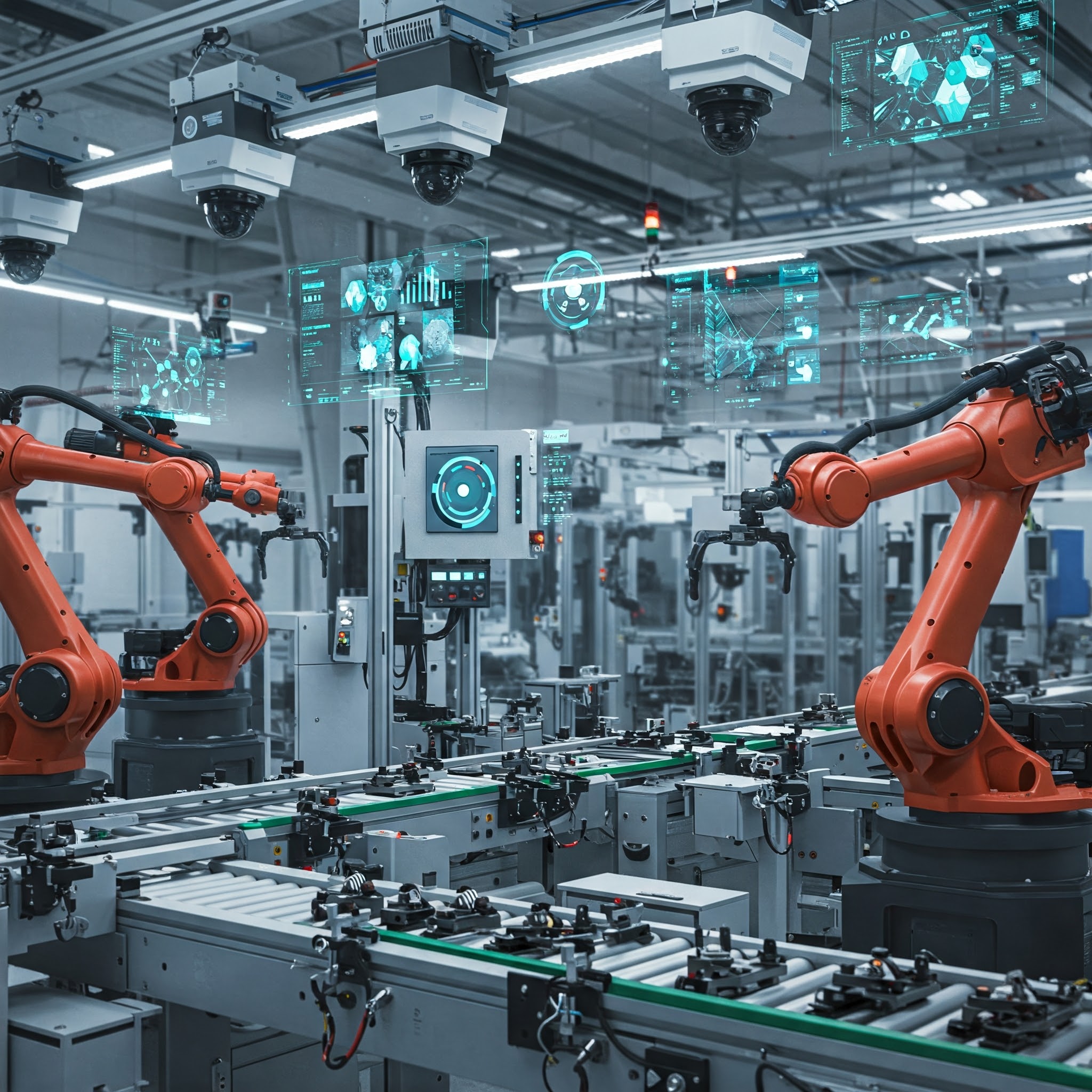
AI-powered computer vision works alongside other digital tools. Businesses integrate it with robotics, IoT devices, and cloud computing. This creates a seamless logistics network where data flows between systems. Automated warehouses use robots guided by AI-driven image recognition to sort and move items efficiently.

Predictive Maintenance and Equipment Monitoring

Logistics companies rely on machinery and vehicles. Computer vision detects early signs of wear and tear. Cameras and AI models monitor equipment performance.

If a machine shows signs of failure, the system alerts maintenance teams. This prevents breakdowns and reduces downtime.

Optimising Last-Mile Delivery

The final stage of delivery is critical. AI-driven computer vision improves last-mile logistics by analysing road conditions, traffic patterns, and delivery routes. It helps autonomous vehicles and delivery drones navigate safely. This ensures faster and more efficient deliveries.

AI in Cold Chain Logistics

Temperature-sensitive goods need special handling. Computer vision monitors perishable items in cold storage. AI analyses digital images to check for damage, leaks, or contamination. This ensures food, pharmaceuticals, and other perishable goods remain in perfect condition during transit.

Enhancing Customer Satisfaction

Fast and accurate deliveries improve customer experience. AI-driven logistics ensures packages arrive on time. Businesses reduce errors, improving reliability. Real-time tracking provides customers with accurate delivery updates, increasing trust and satisfaction.

Reducing Environmental Impact

Sustainability is a growing focus in logistics. AI-powered computer vision helps businesses reduce waste. By improving inventory management, companies avoid overstocking and minimise expired goods. Smart routing systems reduce fuel consumption, cutting carbon emissions.

Read more: Smart Solutions for Sustainable Tomorrow: AI & Energy Management

Challenges in Adopting Computer Vision

Despite its benefits, some challenges remain. AI systems need high-quality data sets for accurate performance. Poor lighting or camera angles can affect image recognition.

Businesses must invest in advanced hardware and software. However, as technology improves, these challenges will lessen.

Handling Supply Chain Disruptions

Unexpected events can disrupt logistics. Natural disasters, global crises, or supplier delays affect deliveries. Computer vision helps businesses respond faster.

AI analyses visual data from warehouses and transport routes. It detects delays, predicts stock shortages, and suggests alternative shipping options.

Real-time image processing ensures better decision-making. If a production line slows down, AI can pinpoint the cause. Businesses can reroute shipments or adjust supply levels before issues escalate. This minimises losses and keeps operations running smoothly.

Integration Challenges in Logistics

Many logistics companies rely on outdated systems. Integrating AI-driven computer vision can be challenging. Legacy infrastructure often lacks the computing power to process large data sets. Businesses need modern hardware and software to handle complex image recognition tasks.

Cloud-based solutions offer a practical approach. Companies can process digital images and video feeds remotely. This reduces costs and allows seamless integration with existing systems. AI-powered platforms can also work alongside traditional inventory management tools, improving efficiency without a complete overhaul.

The Role of Regulatory Compliance

Strict regulations govern logistics and transportation. Companies must follow safety, security, and quality standards. AI-powered computer vision helps businesses stay compliant. It ensures proper handling of goods and monitors adherence to safety protocols.

For example, automated systems check if packages meet regulatory requirements. AI scans barcodes and labels, confirming shipments match legal guidelines. In warehouses, computer vision monitors employees, ensuring they follow safety rules. If a worker lifts heavy items incorrectly, the system sends an alert, preventing injuries.

Governments are also introducing AI regulations. Logistics firms must balance automation with compliance. Transparent AI systems provide detailed reports on decision-making processes. This helps businesses meet regulatory standards while benefiting from AI-driven efficiency.

Future Prospects of AI in Logistics

AI-driven computer vision will continue shaping logistics. As deep learning models advance, object detection and image segmentation will improve. Businesses will adopt AI-powered automation on a larger scale. This will lead to faster, safer, and more efficient logistics operations.

The logistics industry continues to evolve. AI-driven computer vision will play an even bigger role in the future. Companies will adopt more advanced deep learning models to improve automation. AI will enhance predictive analytics, helping businesses forecast demand and prevent stock shortages.

Autonomous vehicles will also become more common. Self-driving trucks will rely on AI to process real-world environments. Advanced image segmentation will allow better navigation and obstacle detection. This will make long-haul transport safer and more efficient.

Smaller logistics firms will also benefit. Previously, AI-driven solutions were costly and complex. Now, cloud-based platforms and pre-trained AI models make adoption easier. Even a small group of businesses can implement AI-powered inventory management and tracking systems.

Conclusion

Computer vision is transforming logistics. From inventory management to regulatory compliance, AI-driven solutions improve efficiency and accuracy. Companies that embrace this technology will stay ahead in a competitive market. With continued advancements, AI will reshape logistics, making supply chains smarter and more resilient.

How TechnoLynx Can Help

TechnoLynx provides AI-powered computer vision solutions for logistics. Our expertise in image processing, object detection, and deep learning ensures better inventory management and automation. Whether you need enhanced quality control or autonomous vehicle support, we deliver tailored solutions for your business.

Continue reading: Facial Recognition in Computer Vision Explained

Image credits: Freepik

Pharmaceutical Supply Chain: Where AI and Computer Vision Solve Visibility Gaps

Pharmaceutical Supply Chain: Where AI and Computer Vision Solve Visibility Gaps

10/05/2026

Pharma supply chains span API sourcing to patient delivery. AI addresses the serialisation, cold chain, and counterfeit detection gaps manual tracking.

Vision Systems for Manufacturing Quality Control: Inline vs Offline, Hardware and PLC Integration

Vision Systems for Manufacturing Quality Control: Inline vs Offline, Hardware and PLC Integration

10/05/2026

Industrial vision systems for manufacturing quality control: inline vs offline inspection, line-scan vs area cameras, PLC integration, and realistic.

AI Video Surveillance for Apartment Buildings: Analytics, Privacy Zones, and False Alarm Rates

AI Video Surveillance for Apartment Buildings: Analytics, Privacy Zones, and False Alarm Rates

9/05/2026

AI video surveillance for apartment buildings: access control integration, package detection, loitering alerts, privacy zones, and false alarm rates in.

Retail Shrinkage and Computer Vision: What CV Can and Cannot Detect

Retail Shrinkage and Computer Vision: What CV Can and Cannot Detect

9/05/2026

Retail shrinkage from theft, admin error, and vendor fraud: how CV systems address each, what they miss, and realistic shrinkage reduction numbers.

Object Detection Model Selection for Production: YOLO vs Transformers, Speed/Accuracy, and Deployment

Object Detection Model Selection for Production: YOLO vs Transformers, Speed/Accuracy, and Deployment

9/05/2026

Object detection model selection for production: YOLO variants vs detection transformers, speed/accuracy tradeoffs, edge vs cloud deployment, mAP vs.

Manufacturing Safety AI: Gun Detection and Threat Monitoring with Computer Vision

Manufacturing Safety AI: Gun Detection and Threat Monitoring with Computer Vision

9/05/2026

AI gun detection in manufacturing uses CV to identify weapons in camera feeds. What the technology detects, accuracy limits, and deployment considerations.

Machine Vision Image Sensor Selection: CCD vs CMOS, Resolution, and Illumination

Machine Vision Image Sensor Selection: CCD vs CMOS, Resolution, and Illumination

9/05/2026

How to select image sensors for machine vision: CCD vs CMOS tradeoffs, resolution, frame rate, pixel size, and illumination requirements by inspection.

Facial Recognition Cameras for Commercial Deployment: Matching, Enrollment, and Legal Framework

Facial Recognition Cameras for Commercial Deployment: Matching, Enrollment, and Legal Framework

9/05/2026

Commercial facial recognition deployments: enrollment management, 1:1 vs 1:N matching, false acceptance rates, consent requirements, and hardware.

Facial Detection Software: Open Source vs Commercial APIs, Accuracy, and Production Integration

Facial Detection Software: Open Source vs Commercial APIs, Accuracy, and Production Integration

8/05/2026

Facial detection software options: OpenCV, dlib, DeepFace vs commercial APIs, when to build vs buy, demographic accuracy, and production pipeline.

Face Detection Camera Systems: Resolution, Lighting, and Real-World False Positive Rates

Face Detection Camera Systems: Resolution, Lighting, and Real-World False Positive Rates

8/05/2026

Face detection camera prerequisites: resolution minimums, angle and lighting requirements, MTCNN vs RetinaFace vs MediaPipe, and real-world false positive.

Embedded Edge Devices for CV Deployment: Jetson vs Coral vs Hailo vs OAK-D

Embedded Edge Devices for CV Deployment: Jetson vs Coral vs Hailo vs OAK-D

8/05/2026

Embedded edge devices for CV: NVIDIA Jetson vs Coral TPU vs Hailo vs OAK-D — power, inference throughput, and model optimisation requirements compared.

Driveway CCTV Cameras with AI Detection: Vehicle Classification, Night Performance, and False Alarm Reduction

Driveway CCTV Cameras with AI Detection: Vehicle Classification, Night Performance, and False Alarm Reduction

8/05/2026

Driveway CCTV AI detection: vehicle vs person classification, IR vs starlight night performance, reducing animal and shadow false alarms, home automation.

Digital Shelf Monitoring with Computer Vision: What Retail AI Actually Detects

7/05/2026

Digital shelf monitoring uses CV to detect out-of-stocks, planogram compliance, and pricing errors. What systems detect and where accuracy drops.

Deep Learning for Image Processing in Production: Architecture Choices, Training, and Deployment

7/05/2026

Deep learning for image processing in production: CNN vs ViT tradeoffs, training data requirements, augmentation, deployment optimisation, and.

AI vs Real Face: Anti-Spoofing, Liveness Detection, and When Custom CV Models Are Necessary

7/05/2026

When synthetic faces defeat pretrained detectors: anti-spoofing challenges, liveness detection requirements, and when custom models are unavoidable.

AI-Based CCTV Monitoring Solutions: Automation vs Human Review and What Each Handles Well

7/05/2026

AI CCTV monitoring vs human monitoring: cost comparison, coverage capability, response time tradeoffs, and what AI handles well vs where human judgment is.

CCTV Face Recognition in Production: Why It Fails More Than Demos Suggest

7/05/2026

CCTV face recognition: resolution requirements, angle and lighting challenges, false positive rates, GDPR compliance, and why production performance lags.

AI-Enabled CCTV for Building Security: Analytics, Camera Placement, and Infrastructure

6/05/2026

AI CCTV for building security: intrusion detection, people counting, loitering analytics, camera placement strategy, and storage and bandwidth.

Best Wired CCTV Systems for AI Video Analytics: What Matters Beyond Resolution

6/05/2026

Wired CCTV for AI analytics needs more than resolution. Codec support, edge processing, and integration architecture decide analytics quality.

Automated Visual Inspection in Pharma: How CV Systems Replace Manual Quality Checks

6/05/2026

Automated visual inspection in pharma uses computer vision to detect defects in vials, syringes, and tablets — faster and more consistently than human.

Automated Visual Inspection Systems: Hardware, Model Selection, and False-Reject Rates

6/05/2026

Build automated visual inspection systems that work: hardware setup, model selection (classification vs detection vs segmentation), and managing.

Aseptic Manufacturing in Pharma: Process Control, Risks, and Where AI Fits

6/05/2026

Aseptic manufacturing prevents microbial contamination during sterile drug production. AI monitoring addresses the environmental control gaps humans miss.

4K Security Cameras and AI Analytics: When Higher Resolution Helps and When It Doesn't

6/05/2026

4K security cameras for AI analytics: bandwidth and storage costs, where higher resolution improves results, compression artifacts and AI accuracy.

Computer Vision in Pharmacy Retail: Inventory Tracking, Planogram Compliance, and Shrinkage Reduction

5/05/2026

CV in pharmacy retail addresses unique challenges: regulated product tracking, controlled substance security, and planogram compliance across thousands of SKUs.

Visual Inspection Equipment for Manufacturing QC: Where AI Adds Value and Where Rules Still Win

5/05/2026

AI-enhanced visual inspection replaces rule-based defect detection with learned representations — but requires validated training data matching production variability.

Facial Recognition in Video Surveillance: Why Lab Accuracy Doesn't Transfer to CCTV

5/05/2026

Facial recognition accuracy drops 10–40% between controlled enrollment conditions and production CCTV due to angle, lighting, and resolution.

Computer Vision Store Analytics: What Cameras Can Actually Measure in Retail

5/05/2026

Store analytics CV must distinguish 'detected' from 'measured with business-decision confidence.' Most deployments conflate the two.

AI in Pharmaceutical Supply Chains: Where Computer Vision and Predictive Analytics Deliver ROI

5/05/2026

Pharma supply chain AI delivers measurable ROI in three areas: serialisation verification, cold-chain anomaly prediction, and visual inspection automation.

Computer Vision for Retail Loss Prevention: What Works, What Breaks, and Why Scale Matters

5/05/2026

CV-based loss prevention must handle thousands of SKUs under variable lighting. Single-model approaches produce unactionable alert volumes at scale.

Intelligent Video Analytics: How Modern CCTV Systems Detect Behaviour Instead of Motion

4/05/2026

IVA shifts surveillance alerting from pixel-change detection to behaviour understanding. But only modular pipeline architectures deliver this in practice.

Cross-Platform TTS Inference Under Real-Time Constraints: ONNX and CoreML

1/05/2026

Cross-platform TTS to iOS, Android and browser stays consistent only if compression is decided at training time — distill once, export to ONNX.

Production Anomaly Detection in Video Data Pipelines: A Generative Approach

1/05/2026

Generative models trained on normal frames detect rare video anomalies without labelled anomaly data — reconstruction error is the score.

Designing Observable CV Pipelines for CCTV: Modular Architecture for Security Operations

30/04/2026

Operators stop trusting CV alerts when the pipeline is opaque. Observable, modular CCTV pipelines decompose decisions into auditable stages.

The Unknown-Object Loop: Designing Retail CV Systems That Improve Operationally

30/04/2026

Retail CV deployments meet products outside the training catalogue. The architectural choice: silent misclassification or a designed review loop.

Why Client-Side ML Projects Miss Latency Targets Before Deployment

29/04/2026

Client-side ML misses latency targets when the device capability baseline is set after architecture selection rather than before. Sequence matters.

Building a Production SKU Recognition System That Degrades Gracefully

29/04/2026

Graceful degradation in production SKU recognition is an architectural property: predictable automation rate as the catalogue grows.

Why AI Video Surveillance Generates False Alarms — And What Pipeline Architecture Reduces Them

28/04/2026

Surveillance false alarms are an architecture problem, not a sensitivity setting. Modular pipelines reduce them; monolithic ones cannot.

Why Computer Vision Fails at Retail Scale: The Compound Failure Class

28/04/2026

CV models that pass accuracy tests at 500 SKUs fail in production above 1,000 — not from one cause but from four simultaneous failure axes.

When to Build a Custom Computer Vision Model vs Use an Off-the-Shelf Solution

26/04/2026

Custom CV models are justified when the domain is specialised and off-the-shelf accuracy is insufficient. Otherwise, customisation adds waste.

How to Deploy Computer Vision Models on Edge Devices

25/04/2026

Edge CV trades accuracy for latency and bandwidth savings. Quantisation, model selection, and hardware matching determine whether the trade-off works.

What ROI Computer Vision Actually Delivers in Retail

24/04/2026

Retail CV ROI comes from shrinkage reduction, planogram compliance, and checkout automation — not AI dashboards. Measure what changes operationally.

Data Quality Problems That Cause Computer Vision Systems to Degrade After Deployment

23/04/2026

CV system degradation after deployment is usually a data problem. Annotation inconsistency, domain shift, and data drift are the structural causes.

How Computer Vision Replaces Manual Visual Inspection in Pharmaceutical Quality Control

23/04/2026

CV-based pharma QC inspection is a production engineering problem, not a model accuracy problem. It requires data, validation, and pipeline design.

How to Architect a Modular Computer Vision Pipeline for Production Reliability

22/04/2026

A production CV pipeline is a system architecture problem, not a model accuracy problem. Modular design enables debugging and component-level maintenance.

Machine Vision vs Computer Vision: Choosing the Right Inspection Approach for Manufacturing

21/04/2026

Machine vision is deterministic and auditable. Computer vision is adaptive and generalisable. The choice depends on defect complexity, not preference.

Why Off-the-Shelf Computer Vision Models Fail in Production

20/04/2026

Off-the-shelf CV models degrade in production due to variable conditions, class imbalance, and throughput demands that benchmarks never test.

Deep Learning Models for Accurate Object Size Classification

27/01/2026

A clear and practical guide to deep learning models for object size classification, covering feature extraction, model architectures, detection pipelines, and real‑world considerations.

Mimicking Human Vision: Rethinking Computer Vision Systems

10/11/2025

Why computer vision systems trained on benchmarks fail on real inputs, and how attention mechanisms, context modelling, and multi-scale features close the gap.

Back See Blogs
arrow icon