Advanced decision-making with Computer Vision (CV) analytics

Discover how computer vision enhances decision-making in healthcare, retail, and more.

Advanced decision-making with Computer Vision (CV) analytics
Written by TechnoLynx Published on 19 Mar 2025

Introduction

Computer vision (CV) is transforming how businesses and industries make decisions. CV-powered analytics study digital images and videos. This helps decision-makers get insights to act faster and more accurately. From healthcare to retail, CV bridges the gap between visual data and actionable strategies.

How Computer Vision Works

CV uses neural networks and machine learning to process visual data. Here’s a simple breakdown:

  • Image Processing: Enhances image quality and removes noise.

  • Object Detection: Identifies items in images, like defects in manufacturing.

  • Optical Character Recognition (OCR): Extracts text from images, useful for digitising documents.

  • Image Segmentation: Divides images into parts, such as isolating tumours in medical scans.

These steps allow CV systems to classify images, solve problems, and support decision-making processes.

Read more: The Impact of Computer Vision on Real-Time Face Detection

Applications of CV in Decision-Making

Healthcare: Accurate Diagnoses

Computer vision analyses medical images like X-rays to detect early signs of diseases. For example, neural networks can spot anomalies in MRI scans, helping doctors make timely treatment decisions. This reduces human error and speeds up diagnoses.

Manufacturing: Quality Control

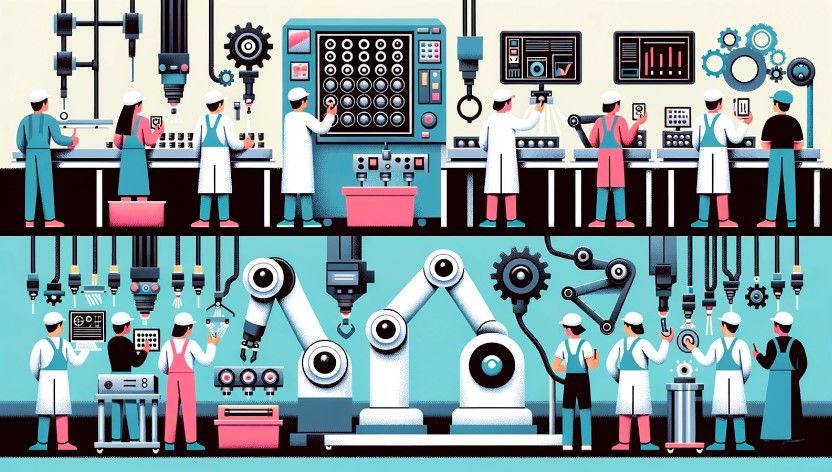
In factories, CV systems inspect products in real time. They identify defects using object detection, ensuring only high-quality items reach the market. This cuts costs and boosts customer trust.

Read more: Inventory Management Applications: Computer Vision to the Rescue!

Retail: Customer Insights

Retailers use computer vision to analyse social media images and track customer behaviour. CV can show how shoppers use products in stores. This helps businesses improve layouts and stock popular items.

Retail Loss Prevention: Stopping Theft

Stores use computer vision to detect shoplifting. Cameras follow suspicious movements, like lingering near high-value items. Alerts prompt staff to intervene discreetly.

This reduces losses and helps retailers decide where to place security staff. It also identifies peak theft times, allowing better resource planning.

Logistics: Inventory Management

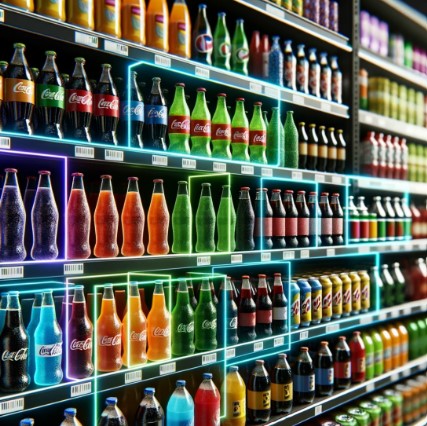
CV-powered object detection monitors warehouse shelves, alerting teams when stock runs low. This prevents delays and improves supply chain efficiency.

Read more: Real-World Applications of Computer Vision

Document Processing: Reducing Errors

Optical character recognition (OCR) turns scanned documents into editable text. Banks process cheques faster, reducing manual data entry errors. Hospitals digitise patient records accurately, cutting administrative mistakes.

OCR also helps retailers manage invoices. Staff quickly search digital records instead of paper files, speeding up audits. This leads to good decisions about resource allocation and process improvements.

Workplace Safety: Protecting Employees

Computer vision ensures safer workplaces by monitoring compliance with safety gear. Cameras detect if workers wear helmets, gloves, or masks in high-risk areas. Alerts notify managers immediately if someone breaks protocols. This reduces accidents and helps leaders make good decisions about safety investments.

Construction sites use this tech to enforce PPE rules. Factories track machinery zones to prevent unauthorised access. These systems reduce injuries and insurance costs, creating safer environments.

Waste Management: Cutting Costs and Emissions

Businesses use computer vision to track waste levels in bins. Sensors take images of containers, and AI checks how full they are. This data schedules pickups only when needed, saving fuel and labour costs.

Cities adopt this approach for public bins. Parks and streets stay cleaner, and councils allocate resources better. This leads to good decisions about sustainability budgets and community services.

Road Maintenance: Fixing Issues Faster

Governments use computer vision to inspect roads. Cameras on vehicles scan pavements for cracks or potholes. AI classifies damage severity and maps locations needing repairs. This prioritises maintenance work, ensuring funds go where they’re most needed.

For example, RoadAI automates road assessments. It helps transport teams decide which roads to fix first, improving infrastructure efficiently.

Predictive Maintenance: Avoiding Downtime

Sensors and cameras monitor equipment in real time. AI spots wear and tear before failures occur. Factories replace parts during planned downtime, avoiding costly unplanned stops.

A food packaging plant might track conveyor belts. Early detection of misalignments prevents product jams. Managers decide maintenance schedules confidently, keeping production smooth.

Read more: Computer Vision, Robotics, and Autonomous Systems

Agriculture: Smarter Farming Decisions

Farmers use computer vision to monitor crops and livestock. Drones capture images of fields, and systems analyse plant health using image classification. For example, AI detects drought stress or pest damage early. This helps farmers decide when to irrigate or apply pesticides, improving yields.

In livestock management, cameras track animal behaviour. Systems flag signs of illness, like reduced movement in cattle. Farmers act quickly, preventing disease spread. This leads to healthier herds and higher profits.

Security: Real-Time Threat Detection

Security systems use computer vision to monitor live camera feeds. They detect unusual activities, like unauthorised access, and alert staff instantly. For example, airports use facial recognition to spot persons of interest in crowds. This speeds up responses and prevents incidents.

In retail, AI watches for shoplifting. It alerts staff when someone hides items, reducing theft losses. These systems make security decisions faster than human guards alone.

Environmental Monitoring: Protecting Ecosystems

Satellites with computer vision track deforestation and wildlife. They capture images of forests and analyse changes over time. Governments use this data to enforce conservation laws and protect endangered species.

In oceans, AI analyses underwater footage to monitor coral health. Researchers use these insights to decide where to focus restoration efforts. This supports sustainable environmental decisions.

Customer Experience: Personalised Interactions

Stores use computer vision to study shopper behaviour. Cameras track how customers move through aisles and interact with products. Retailers adjust layouts to place popular items in high-traffic zones, boosting sales.

AI also personalises offers in real time. For example, smart mirrors in fitting rooms suggest matching accessories based on clothes customers try. This tailored approach improves satisfaction and loyalty.

Read more: Computer Vision In Media And Entertainment

Why These Applications Matter

These examples show how computer vision supports good decision-making. By providing accurate, real-time data, businesses can:

  • Allocate budgets wisely

  • Prioritise safety and sustainability

  • Optimise operations

  • Reduce risks

As industries adopt more applications of computer vision, leaders gain clearer insights. This drives smarter strategies and builds trust with customers and employees.

Overcoming Cognitive Biases

Human decision-makers often face cognitive biases like confirmation bias, where they favour information that supports existing beliefs. CV provides objective data to counteract this.

Example: In hiring, CV analyses video interviews to assess candidates based on facial expressions and speech patterns. This reduces bias compared to traditional methods.

Human decisions often suffer from biases like favouring familiar options. Computer vision provides neutral insights. For example, hiring tools analyse video interviews for consistent traits like speech clarity, ignoring subjective factors like appearance.

In finance, AI reviews loan applications without demographic bias. It bases approvals on income and credit history, promoting fairness.

Edge AI: Faster, Safer Decisions

Edge AI processes data on local devices instead of distant servers. This reduces delays, enabling real-time decisions. For example, self-driving cars use edge AI to analyse road conditions instantly, avoiding collisions.

Factories benefit too. Cameras on assembly lines inspect products locally. They spot defects and halt production immediately, preventing waste. Edge AI also keeps sensitive data on-site, enhancing privacy in sectors like healthcare.

Multimodal AI: Richer Insights

Multimodal AI combines visual data with text, sound, or sensor inputs. This improves decision-making accuracy. For instance, a traffic system might merge camera feeds with weather data to predict accidents during storms.

In healthcare, AI analyses X-rays alongside patient records. Doctors get fuller insights, leading to better treatment plans. This approach reduces errors caused by incomplete data.

Read more: Brain Analysis with 3D Computer Vision

  • 5G Integration: Faster networks will let AI process high-quality video in real time. Emergency services could use this to assess accidents via drone feeds instantly.

  • Lightweight Models: Smaller AI models will run on basic devices, bringing vision tech to rural areas. Farmers with smartphones might check crop health without internet.

  • Ethical AI: Tools will audit decision-making processes, ensuring transparency. Hospitals could verify why an AI recommended surgery, building trust.

  • Social Media Monitoring: CV will track brand mentions in social media images, helping companies respond to trends instantly.

  • AI Integration: Combining CV with other AI tools will improve problem-solving. For instance, self-driving cars use Computer vision and sensors to navigate safely.

  • Real-World Adaptations: CV will better handle varied lighting or angles in real-world scenarios, boosting reliability.

Challenges in Computer vision Implementation

  • Data Quality: Computer vision models need diverse data sets to avoid biases. For example, training a model on limited medical images might miss rare conditions.

  • Real-Time Processing: Analysing video feeds requires more resources than single images.

  • Explainability: Neural networks can act as “black boxes”, making it hard to understand how they reach decisions.

Conclusion

Computer vision turns visual data into actionable insights, driving better choices across industries. From farms to hospitals, it offers speed, accuracy, and fairness. As technology evolves, businesses that adopt AI vision will lead in efficiency and innovation.

How TechnoLynx Can Help

TechnoLynx develops custom CV solutions to enhance your decision-making. We create tools for object detection, document processing, and image sorting. These work in industries like healthcare, retail, and more! Our team ensures seamless integration with your workflows while addressing challenges like data bias and explainability.

We offer custom CV tools for smarter decisions. These work for quality checks in factories or studying customer behaviour in shops. Contact us now to start collaborating!

Continue reading: Explainability In Computer Vision

Image credits: Freepik

Pharmaceutical Supply Chain: Where AI and Computer Vision Solve Visibility Gaps

Pharmaceutical Supply Chain: Where AI and Computer Vision Solve Visibility Gaps

10/05/2026

Pharma supply chains span API sourcing to patient delivery. AI addresses the serialisation, cold chain, and counterfeit detection gaps manual tracking.

Vision Systems for Manufacturing Quality Control: Inline vs Offline, Hardware and PLC Integration

Vision Systems for Manufacturing Quality Control: Inline vs Offline, Hardware and PLC Integration

10/05/2026

Industrial vision systems for manufacturing quality control: inline vs offline inspection, line-scan vs area cameras, PLC integration, and realistic.

AI Video Surveillance for Apartment Buildings: Analytics, Privacy Zones, and False Alarm Rates

AI Video Surveillance for Apartment Buildings: Analytics, Privacy Zones, and False Alarm Rates

9/05/2026

AI video surveillance for apartment buildings: access control integration, package detection, loitering alerts, privacy zones, and false alarm rates in.

Retail Shrinkage and Computer Vision: What CV Can and Cannot Detect

Retail Shrinkage and Computer Vision: What CV Can and Cannot Detect

9/05/2026

Retail shrinkage from theft, admin error, and vendor fraud: how CV systems address each, what they miss, and realistic shrinkage reduction numbers.

Object Detection Model Selection for Production: YOLO vs Transformers, Speed/Accuracy, and Deployment

Object Detection Model Selection for Production: YOLO vs Transformers, Speed/Accuracy, and Deployment

9/05/2026

Object detection model selection for production: YOLO variants vs detection transformers, speed/accuracy tradeoffs, edge vs cloud deployment, mAP vs.

Manufacturing Safety AI: Gun Detection and Threat Monitoring with Computer Vision

Manufacturing Safety AI: Gun Detection and Threat Monitoring with Computer Vision

9/05/2026

AI gun detection in manufacturing uses CV to identify weapons in camera feeds. What the technology detects, accuracy limits, and deployment considerations.

Machine Vision Image Sensor Selection: CCD vs CMOS, Resolution, and Illumination

Machine Vision Image Sensor Selection: CCD vs CMOS, Resolution, and Illumination

9/05/2026

How to select image sensors for machine vision: CCD vs CMOS tradeoffs, resolution, frame rate, pixel size, and illumination requirements by inspection.

Facial Recognition Cameras for Commercial Deployment: Matching, Enrollment, and Legal Framework

Facial Recognition Cameras for Commercial Deployment: Matching, Enrollment, and Legal Framework

9/05/2026

Commercial facial recognition deployments: enrollment management, 1:1 vs 1:N matching, false acceptance rates, consent requirements, and hardware.

Facial Detection Software: Open Source vs Commercial APIs, Accuracy, and Production Integration

Facial Detection Software: Open Source vs Commercial APIs, Accuracy, and Production Integration

8/05/2026

Facial detection software options: OpenCV, dlib, DeepFace vs commercial APIs, when to build vs buy, demographic accuracy, and production pipeline.

Face Detection Camera Systems: Resolution, Lighting, and Real-World False Positive Rates

Face Detection Camera Systems: Resolution, Lighting, and Real-World False Positive Rates

8/05/2026

Face detection camera prerequisites: resolution minimums, angle and lighting requirements, MTCNN vs RetinaFace vs MediaPipe, and real-world false positive.

Embedded Edge Devices for CV Deployment: Jetson vs Coral vs Hailo vs OAK-D

Embedded Edge Devices for CV Deployment: Jetson vs Coral vs Hailo vs OAK-D

8/05/2026

Embedded edge devices for CV: NVIDIA Jetson vs Coral TPU vs Hailo vs OAK-D — power, inference throughput, and model optimisation requirements compared.

Driveway CCTV Cameras with AI Detection: Vehicle Classification, Night Performance, and False Alarm Reduction

Driveway CCTV Cameras with AI Detection: Vehicle Classification, Night Performance, and False Alarm Reduction

8/05/2026

Driveway CCTV AI detection: vehicle vs person classification, IR vs starlight night performance, reducing animal and shadow false alarms, home automation.

Digital Shelf Monitoring with Computer Vision: What Retail AI Actually Detects

7/05/2026

Digital shelf monitoring uses CV to detect out-of-stocks, planogram compliance, and pricing errors. What systems detect and where accuracy drops.

Deep Learning for Image Processing in Production: Architecture Choices, Training, and Deployment

7/05/2026

Deep learning for image processing in production: CNN vs ViT tradeoffs, training data requirements, augmentation, deployment optimisation, and.

AI vs Real Face: Anti-Spoofing, Liveness Detection, and When Custom CV Models Are Necessary

7/05/2026

When synthetic faces defeat pretrained detectors: anti-spoofing challenges, liveness detection requirements, and when custom models are unavoidable.

AI-Based CCTV Monitoring Solutions: Automation vs Human Review and What Each Handles Well

7/05/2026

AI CCTV monitoring vs human monitoring: cost comparison, coverage capability, response time tradeoffs, and what AI handles well vs where human judgment is.

CCTV Face Recognition in Production: Why It Fails More Than Demos Suggest

7/05/2026

CCTV face recognition: resolution requirements, angle and lighting challenges, false positive rates, GDPR compliance, and why production performance lags.

AI-Enabled CCTV for Building Security: Analytics, Camera Placement, and Infrastructure

6/05/2026

AI CCTV for building security: intrusion detection, people counting, loitering analytics, camera placement strategy, and storage and bandwidth.

Best Wired CCTV Systems for AI Video Analytics: What Matters Beyond Resolution

6/05/2026

Wired CCTV for AI analytics needs more than resolution. Codec support, edge processing, and integration architecture decide analytics quality.

Automated Visual Inspection in Pharma: How CV Systems Replace Manual Quality Checks

6/05/2026

Automated visual inspection in pharma uses computer vision to detect defects in vials, syringes, and tablets — faster and more consistently than human.

Automated Visual Inspection Systems: Hardware, Model Selection, and False-Reject Rates

6/05/2026

Build automated visual inspection systems that work: hardware setup, model selection (classification vs detection vs segmentation), and managing.

Aseptic Manufacturing in Pharma: Process Control, Risks, and Where AI Fits

6/05/2026

Aseptic manufacturing prevents microbial contamination during sterile drug production. AI monitoring addresses the environmental control gaps humans miss.

4K Security Cameras and AI Analytics: When Higher Resolution Helps and When It Doesn't

6/05/2026

4K security cameras for AI analytics: bandwidth and storage costs, where higher resolution improves results, compression artifacts and AI accuracy.

Computer Vision in Pharmacy Retail: Inventory Tracking, Planogram Compliance, and Shrinkage Reduction

5/05/2026

CV in pharmacy retail addresses unique challenges: regulated product tracking, controlled substance security, and planogram compliance across thousands of SKUs.

Visual Inspection Equipment for Manufacturing QC: Where AI Adds Value and Where Rules Still Win

5/05/2026

AI-enhanced visual inspection replaces rule-based defect detection with learned representations — but requires validated training data matching production variability.

Facial Recognition in Video Surveillance: Why Lab Accuracy Doesn't Transfer to CCTV

5/05/2026

Facial recognition accuracy drops 10–40% between controlled enrollment conditions and production CCTV due to angle, lighting, and resolution.

Computer Vision Store Analytics: What Cameras Can Actually Measure in Retail

5/05/2026

Store analytics CV must distinguish 'detected' from 'measured with business-decision confidence.' Most deployments conflate the two.

AI in Pharmaceutical Supply Chains: Where Computer Vision and Predictive Analytics Deliver ROI

5/05/2026

Pharma supply chain AI delivers measurable ROI in three areas: serialisation verification, cold-chain anomaly prediction, and visual inspection automation.

Computer Vision for Retail Loss Prevention: What Works, What Breaks, and Why Scale Matters

5/05/2026

CV-based loss prevention must handle thousands of SKUs under variable lighting. Single-model approaches produce unactionable alert volumes at scale.

Intelligent Video Analytics: How Modern CCTV Systems Detect Behaviour Instead of Motion

4/05/2026

IVA shifts surveillance alerting from pixel-change detection to behaviour understanding. But only modular pipeline architectures deliver this in practice.

Cross-Platform TTS Inference Under Real-Time Constraints: ONNX and CoreML

1/05/2026

Cross-platform TTS to iOS, Android and browser stays consistent only if compression is decided at training time — distill once, export to ONNX.

Production Anomaly Detection in Video Data Pipelines: A Generative Approach

1/05/2026

Generative models trained on normal frames detect rare video anomalies without labelled anomaly data — reconstruction error is the score.

Designing Observable CV Pipelines for CCTV: Modular Architecture for Security Operations

30/04/2026

Operators stop trusting CV alerts when the pipeline is opaque. Observable, modular CCTV pipelines decompose decisions into auditable stages.

The Unknown-Object Loop: Designing Retail CV Systems That Improve Operationally

30/04/2026

Retail CV deployments meet products outside the training catalogue. The architectural choice: silent misclassification or a designed review loop.

Why Client-Side ML Projects Miss Latency Targets Before Deployment

29/04/2026

Client-side ML misses latency targets when the device capability baseline is set after architecture selection rather than before. Sequence matters.

Building a Production SKU Recognition System That Degrades Gracefully

29/04/2026

Graceful degradation in production SKU recognition is an architectural property: predictable automation rate as the catalogue grows.

Why AI Video Surveillance Generates False Alarms — And What Pipeline Architecture Reduces Them

28/04/2026

Surveillance false alarms are an architecture problem, not a sensitivity setting. Modular pipelines reduce them; monolithic ones cannot.

Why Computer Vision Fails at Retail Scale: The Compound Failure Class

28/04/2026

CV models that pass accuracy tests at 500 SKUs fail in production above 1,000 — not from one cause but from four simultaneous failure axes.

When to Build a Custom Computer Vision Model vs Use an Off-the-Shelf Solution

26/04/2026

Custom CV models are justified when the domain is specialised and off-the-shelf accuracy is insufficient. Otherwise, customisation adds waste.

How to Deploy Computer Vision Models on Edge Devices

25/04/2026

Edge CV trades accuracy for latency and bandwidth savings. Quantisation, model selection, and hardware matching determine whether the trade-off works.

What ROI Computer Vision Actually Delivers in Retail

24/04/2026

Retail CV ROI comes from shrinkage reduction, planogram compliance, and checkout automation — not AI dashboards. Measure what changes operationally.

Data Quality Problems That Cause Computer Vision Systems to Degrade After Deployment

23/04/2026

CV system degradation after deployment is usually a data problem. Annotation inconsistency, domain shift, and data drift are the structural causes.

How Computer Vision Replaces Manual Visual Inspection in Pharmaceutical Quality Control

23/04/2026

CV-based pharma QC inspection is a production engineering problem, not a model accuracy problem. It requires data, validation, and pipeline design.

How to Architect a Modular Computer Vision Pipeline for Production Reliability

22/04/2026

A production CV pipeline is a system architecture problem, not a model accuracy problem. Modular design enables debugging and component-level maintenance.

Machine Vision vs Computer Vision: Choosing the Right Inspection Approach for Manufacturing

21/04/2026

Machine vision is deterministic and auditable. Computer vision is adaptive and generalisable. The choice depends on defect complexity, not preference.

Why Off-the-Shelf Computer Vision Models Fail in Production

20/04/2026

Off-the-shelf CV models degrade in production due to variable conditions, class imbalance, and throughput demands that benchmarks never test.

Deep Learning Models for Accurate Object Size Classification

27/01/2026

A clear and practical guide to deep learning models for object size classification, covering feature extraction, model architectures, detection pipelines, and real‑world considerations.

Mimicking Human Vision: Rethinking Computer Vision Systems

10/11/2025

Why computer vision systems trained on benchmarks fail on real inputs, and how attention mechanisms, context modelling, and multi-scale features close the gap.

Back See Blogs
arrow icon